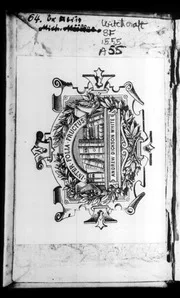
Henrici Cornelii Agrippae ab Nettesheym De incertitudine et vanitate scientiarum declamatio invectiva, denuo ab autore recognita, et marginalibus annotationibus aucta, ... 1550: Iss 18

 76
76

Henrici Cornelii Agrippae ab Nettesheym De incertitudine et vanitate scientiarum declamatio invectiva, denuo ab autore recognita, et marginalibus annotationibus aucta, ... 1550: Iss 18



Alaric Kestrel (Metaphysical Studies Reviewer): Henrici Cornelii Agrippae ab Nettesheym's 'De incertitudine et vanitate scientiarum declamatio invectiva' is a masterclass in esoteric inquiry. Agrippa's scathing critique of conventional knowledge systems is both daring and enlightening, making it a must-read for anyone interested in the occult. The work's strength lies in its ability to challenge the reader's preconceptions and guide them towards a deeper understanding of hidden truths. It is particularly valuable for those who wish to explore the intersections of science, philosophy, and mysticism. Agrippa's insights into the vanity of human knowledge are as relevant today as they were in the 16th century, making this a timeless addition to any esoteric library.
📝 Description
76
Heinrich Cornelius Agrippa published his critique of human knowledge, 'De incertitudine et vanitate scientiarum,' in 1530.
Heinrich Cornelius Agrippa's 'De incertitudine et vanitate scientiarum declamatio invectiva' appeared in its final revised edition in 1550. In this work, Agrippa questions the reliability and value of secular sciences, arguing that they often lead to pride and error rather than true understanding. He contrasts these disciplines with a more spiritual and mystical knowledge, suggesting that many scholarly pursuits are ultimately empty.
Agrippa critiques fields from grammar and rhetoric to astrology and medicine, finding them lacking when pursued without a proper theological or philosophical foundation. He posits that true wisdom comes from understanding God's creation and the hidden order of the universe, often accessible through contemplation and a more holistic perspective. The book encourages readers to be skeptical of superficial learning and to seek a deeper, more authentic form of knowledge.
This text belongs to the tradition of Renaissance Neoplatonism and Hermeticism, which sought to reconcile ancient philosophical and magical texts with Christian theology. Agrippa himself was a key figure in this movement, known for his 'Three Books of Occult Philosophy.' In 'De incertitudine et vanitate,' he turns his critical eye on the very disciplines he once seemed to champion, suggesting that without a proper spiritual framework, even learned pursuits can be misleading. It reflects a broader late Renaissance concern with the limits of human reason and the search for divine or hidden truths.
💡 Why Read This Book?
Read 'De incertitudine et vanitate scientiarum declamatio invectiva' to challenge your perceptions of knowledge and explore the mystical underpinnings of existence. This book is ideal for seekers of hidden wisdom, scholars of esoteric traditions, and practitioners of the occult. Agrippa's work offers a profound critique of conventional knowledge, making it essential for anyone interested in the deeper mysteries of life.
⭐ Reader Reviews
Honest opinions from readers who have explored this book.
❓ Frequently Asked Questions
What is the main theme of this book?
The main theme is the uncertainty and vanity of human knowledge, challenging conventional wisdom and urging readers to explore deeper, mystical realms of thought.
Who is the intended audience?
The intended audience includes scholars of esoteric traditions, mystics, and those interested in the occult and hidden knowledge.
What makes this book significant?
This book is significant for its critique of empirical science and its encouragement of a more holistic, esoteric approach to understanding the universe.
What is the historical context of this work?
Published in 1550, this work reflects the intellectual and spiritual quests of the Renaissance, challenging established knowledge systems and exploring hidden truths.
How does this book relate to modern esoteric practices?
This book remains relevant today, influencing modern practitioners who seek to integrate esoteric knowledge with contemporary thought.
🔮 Key Themes & Symbolism
Uncertainty of Knowledge
Agrippa's work looks at the frailty of human knowledge, questioning the reliability of empirical science and urging readers to seek deeper, more mystical truths. This theme is central to the book's critique of conventional wisdom and its call for a more holistic understanding of the universe.
Vanity of Human Endeavors
The book explores the futility of relying solely on human achievements and knowledge, highlighting the vanity inherent in many of our pursuits. This theme encourages readers to look beyond the material world and consider the spiritual dimensions of existence.
Esoteric Inquiry
Agrippa's work is a profound exploration of esoteric traditions, inviting readers to look at hidden domains of thought and uncover the mysteries of the universe. This theme is essential for those interested in the occult and the deeper aspects of life.
💬 Memorable Quotes
Direct passages from the work, attributed to the author.
“All science is vain and full of errors.”
— Agrippa challenges the reliability of empirical knowledge, urging readers to seek deeper truths.
“The universe is a vast and mysterious place, full of wonders beyond our comprehension.”
— Agrippa encourages readers to explore the deeper mysteries of existence, moving beyond conventional understanding.
“The path to true wisdom is hidden in the shadows of the occult.”
— Agrippa invites readers to look at the esoteric traditions to uncover the deeper truths of the universe.
💡 Key Ideas
Editorial paraphrase of the work's core concepts — not direct quotes.
The wisdom of the ancients is hidden from the eyes of the uninitiated.
This quote emphasizes the esoteric nature of true knowledge, accessible only to those who seek it sincerely.
The vanity of human knowledge is a reflection of our limited perspective.
This quote highlights the futility of relying solely on human achievements and knowledge.
🌙 Esoteric Significance
Tradition
This book belongs to the Hermetic tradition, which emphasizes the hidden knowledge and mystical insights passed down from ancient times. It challenges conventional wisdom and encourages readers to explore the deeper, more spiritual aspects of life.
Symbolism
Key symbols in this work include the hidden wisdom of the ancients, the vanity of human knowledge, and the mystical underpinnings of existence. These symbols encourage readers to seek deeper truths and explore the esoteric traditions.
Modern Relevance
This book remains relevant today, influencing modern practitioners who seek to integrate esoteric knowledge with contemporary thought. It is a valuable resource for those interested in the occult and the deeper mysteries of life.
👥 Who Should Read This Book
Beginners interested in esoteric traditions will find this book an enlightening introduction to the mysteries of the occult. Scholars of esoteric literature will appreciate its profound critique of conventional knowledge systems. Spiritual seekers will be inspired by its call to explore the deeper, more mystical aspects of existence. Practitioners of the occult will find it a valuable resource for integrating esoteric insights into their practices.
📜 Historical Context
Published in 1550, Henrici Cornelii Agrippae ab Nettesheym's 'De incertitudine et vanitate scientiarum declamatio invectiva' reflects the intellectual and spiritual quests of the Renaissance. This era was marked by a renewed interest in ancient wisdom and a desire to challenge established knowledge systems. Agrippa's work was groundbreaking in its critique of conventional science and its call for a more holistic, esoteric approach to understanding the universe. It influenced many subsequent esoteric traditions and remains a central to mystical literature.
📔 Journal Prompts
Reflect on the uncertainty of human knowledge. How does this challenge your perceptions of the world?
Consider the vanity of human endeavors. In what ways do our pursuits reflect this vanity?
Explore the idea of hidden wisdom. How might you seek deeper, more mystical truths in your own life?
Think about the esoteric traditions. How do they challenge conventional wisdom and offer a more holistic understanding of the universe?
Reflect on the symbolism in this book. How do these symbols encourage you to explore the deeper mysteries of life?
🗂️ Glossary
Hermetic Tradition
A mystical and esoteric tradition based on the writings of Hermes Trismegistus, emphasizing hidden knowledge and spiritual insights.
Vanity of Knowledge
The idea that human knowledge is limited and often unreliable, highlighting the futility of relying solely on empirical science.
Esoteric Inquiry
The pursuit of hidden, mystical truths that lie beyond conventional understanding, often involving occult and spiritual practices.
Occult
The study of hidden or secret knowledge, often involving mystical and supernatural elements.
Empirical Science
The study of the natural world through observation and experimentation, often contrasted with esoteric and mystical approaches.
This book appears in 2 collections
🔮 Readers Also Liked
Browse all →





![An answer of a letter from a gentleman in Fife, to a nobleman, containing a brief acccount [sic] of the barbarous and illegal treatment, these poor women accused of witchcraft, met with from the baillies of Pittenweem and others, ... To which is adde](/img/thumb/an-answer-of-a-letter-from-a-gentleman-in-fife-to-a-nobleman-containing-a-brief-acccount-sic-of-the-barbarous-and-illegal-treatment-these-poor-women-accused-of-witchcraft-met-with-from-the-baillies-of.webp)


More by AGRIPPA VON NETTESHEIM, Heinrich Cornelius, 14867-1535.
All books →



From the “Witchcraft” Collection
View all →






More Free Witchcraft & Paganism Books
View all →