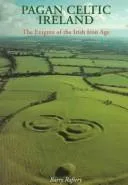
Pagan Celtic Ireland
 82
82

Pagan Celtic Ireland
Barry Raftery's Pagan Celtic Ireland offers a sober and evidence-driven account of a complex subject. The strength of the work lies in its rigorous synthesis of disparate sources, from the artifacts unearthed at Iron Age settlements to the intricate genealogies preserved in monastic compilations. Raftery is particularly adept at dissecting the layers of interpretation that have accrued around Celtic mythology, prioritizing archaeological data and linguistic analysis over later romantic or nationalist narratives. A notable passage details the astronomical alignments found at passage tomb sites, connecting them to potential calendrical or ritualistic functions. However, the book's academic rigor, while commendable, can also be its limitation; the prose is dense, and the constant engagement with scholarly debate may prove challenging for the casual reader. Despite this, Pagan Celtic Ireland remains a valuable resource for understanding the historical underpinnings of Celtic paganism. It is an indispensable, albeit demanding, scholarly contribution.
📝 Description
82
Barry Raftery's 1994 work reconstructs pre-Christian Irish religious and social structures using archaeology and early texts.
Pagan Celtic Ireland offers a scholarly examination of the religious and social frameworks of pre-Christian Ireland. Barry Raftery meticulously reconstructs ancient beliefs, rituals, and societal norms. His approach draws on archaeological evidence, early Irish literature, and comparative mythology, deliberately avoiding romanticized notions. The book focuses instead on the tangible remnants of a complex pagan worldview.
This work is intended for serious students of ancient European religions, Celtic studies, and early medieval history. It appeals to those who seek a fact-based understanding of paganism, moving beyond modern interpretations to consider the historical context of Irish indigenous beliefs. Readers interested in comparative religion and the evolution of spiritual practices will find significant value in its grounded analysis.
Published in 1994, this book emerged during a period of renewed academic interest in pre-Christian European religions. It countered earlier, more speculative works by grounding its analysis in archaeological findings and textual evidence. Raftery's scholarship engages with debates on Roman influence and the dating of early Irish myths, placing it in dialogue with contemporary scholars. The work examines the transition from oral tradition to written records, highlighting the challenges for historical reconstruction of ancient belief systems.
💡 Why Read This Book?
• Gain a factual understanding of pre-Christian Irish religious practices, moving beyond modern romanticism, by examining archaeological evidence from sites like Tara. • Understand the historical context of early Irish mythology and its transmission through manuscript culture, as discussed in relation to the compilation of texts like the *Lebor Gabála Érenn*. • Explore the societal roles of figures such as druids and ancient Irish deities, as Raftery reconstructs their functions based on textual and material evidence from the Iron Age.
⭐ Reader Reviews
Honest opinions from readers who have explored this book.
❓ Frequently Asked Questions
What is the primary focus of Barry Raftery's Pagan Celtic Ireland?
The book's primary focus is a scholarly reconstruction of the religious beliefs, rituals, and social structures of pre-Christian Ireland, based on archaeological findings and early Irish literature.
What kind of evidence does Raftery use to support his claims about Pagan Celtic Ireland?
Raftery utilizes a range of evidence, including archaeological artifacts from sites like Dun Aengus, early Irish sagas and myths, and comparative mythological studies of Indo-European cultures.
Does Pagan Celtic Ireland discuss the role of druids?
Yes, the work explores the historical and mythological roles attributed to druids and other religious practitioners within ancient Celtic society.
When was Pagan Celtic Ireland first published?
Pagan Celtic Ireland by Barry Raftery was first published in 1994, contributing to academic discourse on the subject during that era.
Is this book suitable for beginners interested in Celtic mythology?
While informative, the book's academic depth and reliance on scholarly sources might make it more suitable for those with some prior background in history or mythology.
What does the book say about sacred landscapes in Ireland?
The work examines the significance of natural features and specific locations, such as sacred groves and water sources, in the religious practices of ancient Ireland.
🔮 Key Themes & Symbolism
Reconstructing Pre-Christian Beliefs
This book meticulously reconstructs the religious field of ancient Ireland before the advent of Christianity. Raftery moves beyond later Christian interpretations or romanticized views, focusing on the tangible evidence. He analyzes archaeological finds from ritual sites and settlements, alongside early Irish literary traditions, to piece together a picture of indigenous spiritual practices. The work acknowledges the difficulty in separating historical fact from mythological embellishment, but strives for an evidence-based approach to understanding ancient Irish cosmology and divine concepts.
The Social Fabric of Pagan Ireland
Beyond religious doctrine, Raftery looks at the societal structures that underpinned pagan Celtic life. He examines the roles of various social strata, from kings and warriors to artisans and farmers, and crucially, the specialized functions of religious specialists like druids, bards, and seers. The organization of society, its laws, and its customs are presented as intrinsically linked to its spiritual framework. Understanding these interconnections is vital to grasping the holistic worldview of the era.
Sacred Geography and Mythology
The relationship between the ancient Irish people and their landscape was deeply spiritual. Raftery highlights the importance of sacred natural sites – mountains, rivers, wells, and groves – as focal points for worship and ritual. He also explores the collection of Irish mythology, examining the pantheon of deities, heroic figures, and the narratives that explained the world's origins and workings. This section connects the physical environment to the conceptual universe of the Celts.
The Challenge of Source Material
A significant aspect of Raftery's work is its critical engagement with the surviving source material. He addresses the challenges posed by the fact that much of early Irish literature was written down by Christian monks centuries after the events described. This critical perspective is essential for understanding the potential biases and accretions within the texts. Raftery navigates these complexities to extract the most reliable historical and cultural information possible.
💬 Memorable Quotes
Direct passages from the work, attributed to the author.
“The evidence for pre-Christian religion in Ireland is fragmentary and requires careful interpretation.”
— This statement underscores the book's methodological approach, emphasizing that understanding ancient beliefs is an interpretive process reliant on piecing together limited historical and archaeological clues.
“Sacred sites were not merely places of worship but integral components of the social and political order.”
— This highlights the interconnectedness of religion, society, and power in ancient Celtic Ireland, suggesting that spiritual centers played a role in community organization and authority.
“Later literary sources often present a syncretic view, blending older pagan elements with Christian concepts.”
— This observation points to the challenge of distinguishing purely pre-Christian traditions from those influenced by later religious developments, a key consideration for historical accuracy.
“The archaeological record reveals a continuity of settlement and ritual practice across centuries.”
— This suggests that the book finds evidence for long-standing traditions and established practices in the material culture of ancient Ireland, indicating a stable cultural foundation.
“Understanding the function of figures like the druid requires examining both textual descriptions and the societal context.”
— This emphasizes a multi-faceted approach to studying ancient roles, combining literary accounts with an analysis of their place within the social hierarchy and community.
🌙 Esoteric Significance
Tradition
While not explicitly aligning with a specific esoteric tradition like Hermeticism or Theosophy, Pagan Celtic Ireland serves as a foundational text for modern practitioners and scholars of Celtic Neopaganism and related animistic or earth-based spiritual paths. It provides the historical and mythological grounding that many modern Celtic-inspired traditions seek to reconnect with, offering an alternative to purely romanticized or New Age interpretations of ancient European spirituality.
Symbolism
The work frequently touches upon key symbols within Celtic culture. The triple spiral motif, often found in megalithic art and later Celtic designs, is explored for its potential connections to concepts of birth, death, and rebirth, or the interconnectedness of past, present, and future. Sacred trees, such as the oak, were venerated not just for their physical presence but as conduits between the earthly and spiritual realms, representing wisdom and divine connection.
Modern Relevance
Contemporary movements like Ásatrú and various forms of modern Druidry draw heavily on scholarly reconstructions of ancient European paganisms. Works like Raftery's are essential for these groups seeking to establish authentic historical connections, informing ritual practices, ethical frameworks, and theological understandings. Thinkers and practitioners exploring animism, ecological spirituality, and indigenous European traditions find Raftery's rigorous approach useful for building a credible foundation for their modern spiritual endeavors.
👥 Who Should Read This Book
• Students of comparative religion and ancient European history seeking a scholarly overview of pre-Christian Irish beliefs. • Modern Druids, Celtic Pagans, and animistic practitioners looking for historically-informed insights into their spiritual heritage. • Archaeologists and folklorists interested in the intersection of material culture, mythology, and societal structures in the Iron Age.
📜 Historical Context
Published in 1994, Barry Raftery's Pagan Celtic Ireland arrived at a significant juncture in the study of ancient European religions. The preceding decades had seen a surge in archaeological discoveries and a growing academic willingness to re-examine pre-Christian traditions beyond the confines of classical sources. Raftery's work engaged with the ongoing scholarly debate regarding the extent to which early Irish literature accurately reflected pre-Christian beliefs, a discussion heavily influenced by the monastic origins of most surviving texts. He stood in dialogue with scholars like Proinsias Mac Cana, who also worked to disentangle historical layers in Celtic mythology. While not a period of overt censorship, the academic reception of such works often involved rigorous peer review, scrutinizing the interpretation of evidence from sites like Hill of Tara against established historical and linguistic paradigms. The book offered a grounded perspective amidst a broader intellectual current that sought to understand indigenous European spiritualities independently of Greco-Roman or later Christian frameworks.
📔 Journal Prompts
The role of sacred geography in ancient Irish life, referencing specific sites discussed.
The interpretation of druidic functions based on textual and archaeological evidence.
The concept of cyclical time as understood in pre-Christian Ireland.
The significance of ancestor veneration in early Irish spiritual practices.
The relationship between early Irish myths and the natural landscape.
🗂️ Glossary
Druid
A member of the high-ranking professional class in ancient Celtic societies, believed to have functioned as priests, philosophers, judges, and advisors. Their exact role and beliefs are subject to scholarly interpretation.
Passage Tomb
A type of Neolithic or Bronze Age megalithic tomb containing a long stone passage leading to a burial chamber, often elaborately decorated, such as those found at Newgrange.
Tripartite Structure
A conceptual framework suggesting that ancient Celtic society was organized into three distinct, interdependent classes, often described as warriors, priests, and producers.
Aes Sídhe
In Irish mythology, supernatural beings often associated with mounds, hills, or other natural features, sometimes considered the remnants of an older divine race or ancestral spirits.
Lebor Gabála Érenn
A medieval Irish compilation of myths and legends purporting to recount the history of Ireland, detailing successive invasions and settlements, written down by Christian monks.
Sacred Grove
A natural wooded area considered holy or dedicated to religious purposes in ancient pagan traditions, often associated with ritual activity and worship.
Ogham
An ancient Celtic alphabet, primarily used for inscriptions on stone monuments, consisting of a system of notches and lines.
🔮 Readers Also Liked
Browse all →






More Free Witchcraft & Paganism Books
View all →