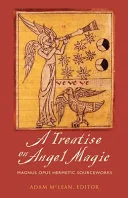
A Treatise on Angel Magic
 72
72

A Treatise on Angel Magic
Adam McLean's presentation of this 17th-century grimoire offers a starkly unadorned look at historical angel magic. Unlike many modern compilations that dress up old material with extensive commentary, McLean's approach is largely archival, allowing the source text to speak for itself. This fidelity is its greatest strength, providing practitioners and historians direct access to the methods and beliefs of the era. However, the lack of extensive annotation or comparative analysis might leave newcomers to the subject feeling adrift in the dense, archaic language and ritualistic structure. A notable section details the necessary preparations for invoking specific angelic hosts, requiring meticulous attention to material components and symbolic gestures. The work's value lies in its unvarnished historical data, though its accessibility is certainly a secondary concern.
📝 Description
72
Adam McLean transcribed a rare 17th-century grimoire on angel magic in 2006.
This volume presents a full transcription of a 17th-century manuscript dedicated to angelic operations. Adam McLean edited the text, keeping his additions minimal to ensure the original grimoire's integrity. This approach offers readers a direct connection to historical angelic magic. The book is for serious students of Western esotericism, particularly those interested in ceremonial magic, angelology, and the historical development of occult orders. It also serves scholars of magical history who require primary source materials and practitioners working with older magical systems. A prior understanding of esoteric concepts is beneficial for fully grasping the text's context and applications.
The original manuscript originates from the 17th century, a time of considerable occult exploration before the rise of Enlightenment rationalism. Angelic magic, as detailed here, was a notable part of Western esotericism, often incorporating Kabbalistic frameworks and Neoplatonic thought. The publication of this work in 2006 by McLean aligns with a renewed interest in historical magical traditions from the late 20th and early 21st centuries, particularly those that influenced groups like the Hermetic Order of the Golden Dawn.
This grimoire is situated within the Western esoteric tradition, specifically the branch concerned with ceremonial magic and angelology. Its 17th-century origins place it during a period where Kabbalistic and Neoplatonic ideas were frequently synthesized with magical practices. The text details methods for contacting angelic intelligences, a practice common in earlier magical systems that influenced later occult orders. By publishing this primary source, McLean makes available a direct example of historical angelic magic, connecting it to the broader lineage of Western ceremonial magic and its development through figures and organizations interested in such traditions.
💡 Why Read This Book?
• Gain direct exposure to historical angelic invocation techniques as found in a 17th-century manuscript, offering methods distinct from modern interpretations. • Understand the practical magical procedures and correspondences used by practitioners of ceremonial magic prior to the formation of the Hermetic Order of the Golden Dawn. • Examine the specific angelic hierarchies and divine names presented, providing primary source material for comparative study with Kabbalistic and other Western esoteric systems.
⭐ Reader Reviews
Honest opinions from readers who have explored this book.
❓ Frequently Asked Questions
What is the primary focus of A Treatise on Angel Magic?
The book's primary focus is a complete transcription of a rare 17th-century manuscript detailing angel magic, including rituals, conjurations, and angelic correspondences for practitioners.
Who edited and published this modern edition of A Treatise on Angel Magic?
The modern edition was compiled and published by Adam McLean, who first made it available in 2006.
What historical occult traditions does this book connect to?
It is seen as a significant link between the angelic magic practices of figures like John Dee and later occult movements such as the Golden Dawn and the O.T.O.
Is this book suitable for beginners in occult studies?
While valuable, it is best suited for those with some prior knowledge of esoteric concepts and ceremonial magic due to its historical source material and direct presentation.
What kind of information can be found within the 17th-century text?
The text contains detailed instructions for angelic invocation, the creation of magical tools, divine names, and descriptions of angelic powers and hierarchies.
What distinguishes this edition from other books on angel magic?
This edition is notable for its exact transcription of a rare historical manuscript and Adam McLean's focused editorial approach, prioritizing textual integrity over extensive modern interpretation.
🔮 Key Themes & Symbolism
Angelic Invocation Rituals
The core of the treatise is dedicated to the practical application of angel magic. It details specific rituals, including the necessary conjurations, prayers, and the symbolic language required to address angelic intelligences. The text emphasizes precise adherence to the prescribed methods, suggesting that accuracy in ritual execution is paramount for successful communication and operation with these celestial beings. This focus provides a window into the operational magics of the 17th century.
Hierarchies and Divine Names
Central to the angelic operations described are the celestial hierarchies and the divine names associated with them. The book outlines a structured understanding of angelic ranks and their respective domains of influence. The correct pronunciation and application of divine names are presented as critical components for invoking specific angels, reflecting a long-standing tradition within Western esotericism that imbues sacred names with potent magical efficacy.
Magical Tools and Preparations
The practical aspect of angel magic is further elaborated through the necessary preparations and the creation of specific magical tools. This includes instructions for crafting talismans, preparing ritual spaces, and the personal purification of the practitioner. The meticulous attention to detail in these preparations underscores the belief that the material and spiritual realms are intricately connected, and that physical actions directly influence magical outcomes.
Historical Esoteric Lineage
This treatise serves as a vital link in the lineage of Western esoteric thought, particularly connecting early modern occultism with later revivalist movements. Its content reflects practices and beliefs prevalent before the formalization of groups like the Golden Dawn, offering a direct historical source for understanding the evolution of ceremonial magic and angelology in Western occultism.
💬 Memorable Quotes
Direct passages from the work, attributed to the author.
“The necessary preparations for angelic operations are meticulously detailed.”
— This highlights the practical, hands-on nature of the magic presented, emphasizing that successful invocation requires specific material and ritualistic groundwork.
“Specific divine names are crucial for addressing angelic hosts.”
— This points to the importance of precise nomenclature and the inherent power attributed to certain names within the system of angel magic described.
“The text outlines a clear hierarchy of angelic beings.”
— This interpretation emphasizes the structured cosmology and the systematic approach to understanding and interacting with the angelic realms presented in the work.
“Talismans and symbolic tools are integral to the rituals.”
— This suggests that the magic described is not purely mental or verbal, but involves the creation and use of physical objects imbued with symbolic meaning.
“The manuscript provides a direct transcription of 17th-century practices.”
— This emphasizes the book's value as an unadulterated historical document, offering an authentic glimpse into past magical traditions.
🌙 Esoteric Significance
Tradition
This work firmly sits within the Western Esoteric Tradition, specifically drawing from the lineage of ceremonial magic that synthesizes Kabbalistic, Hermetic, and angelic lore. It represents a practical application of the theoretical frameworks established by earlier figures and offers a direct view into the operational methods that would later inform and influence groups like the Golden Dawn. It departs from purely theoretical Kabbalah by providing detailed instructions for direct angelic interaction.
Symbolism
Key symbols include divine names, which are treated not merely as labels but as potent keys to invoking specific angelic powers. Hierarchical diagrams of angelic beings represent a structured cosmology, mirroring the ordered universe sought by practitioners. The creation of talismans, often inscribed with sacred geometry or divine sigils, serves as a focal point for channeling spiritual energies into tangible forms, bridging the earthly and celestial planes.
Modern Relevance
Contemporary practitioners of ceremonial magic, particularly those interested in historical accuracy and direct engagement with angelic forces, find this text invaluable. It provides source material for understanding the evolution of Western magical orders and offers alternative or complementary methods to modern angelology. Thinkers and practitioners exploring the historical development of occultism and comparative angelology also draw upon its content for scholarly research.
👥 Who Should Read This Book
• Students of Western Esotericism seeking primary source material on 17th-century magical practices, particularly concerning angelic operations. • Practitioners of ceremonial magic interested in historical methods of invocation and the structure of angelic hierarchies as understood prior to the late 19th century. • Scholars of occult history and comparative religion who wish to examine the development of angelology and its role within magical traditions.
📜 Historical Context
The 17th century was a period of fervent occult exploration in Europe, a time when figures like John Dee were still influential and the lines between natural philosophy, theology, and magic were often blurred. Angelic magic, as represented in this treatise, formed a significant part of this landscape, drawing heavily from Kabbalistic traditions and earlier Neoplatonic thought. While the Enlightenment's rationalism would later push such practices to the fringes, this work captures a moment when direct engagement with celestial intelligences was a recognized, albeit specialized, field of inquiry. Its publication in 2006 by Adam McLean occurred during a resurgence of interest in historical magical systems, positioning it as a key primary source for understanding the roots of modern ceremonial magic, particularly its influence on foundational groups like the Hermetic Order of the Golden Dawn.
📔 Journal Prompts
The specific conjurations detailed for angelic summoning.
The role of divine names in angelic communication.
The creation and purpose of magical talismans within the text.
The understanding of angelic hierarchies presented.
The personal preparations required for ritual work.
🗂️ Glossary
Angel Magic
A branch of ceremonial magic focused on the invocation, communication, and working with angelic beings for various purposes, often involving spiritual development or practical ends.
Grimoire
A textbook of magic, typically containing instructions on how to create magical tools, perform rituals and spells, and invoke supernatural beings, often attributed to historical or legendary figures.
Conjuration
A formal ritual or invocation used to summon or compel the presence or action of a spirit, angel, or other supernatural entity.
Divine Names
Specific names or terms believed to hold inherent power or authority when used in magical operations, particularly when addressing or invoking celestial or divine beings.
Talismans
Objects inscribed with magical symbols, sigils, or divine names, believed to possess inherent power and serve as focal points for channeling specific energies or influences.
Hierarchy
In an esoteric context, a structured system or ranking of spiritual beings, such as angels, often based on perceived levels of power, proximity to the divine, or specific functions.
Ceremonial Magic
A formalized system of magical practice involving elaborate rituals, symbolic gestures, specific tools, and often requiring precise timing and incantations to achieve desired effects.
This book appears in 1 collection
🔮 Readers Also Liked
Browse all →





![All Things Ancient Egypt [2 volumes]](/img/thumb/all-things-ancient-egypt-2-volumes-lisa-k-sabbahy-855122.webp)



From the “Magnum Opus” Collection
View all →






More Free Occult Philosophy Books
View all →