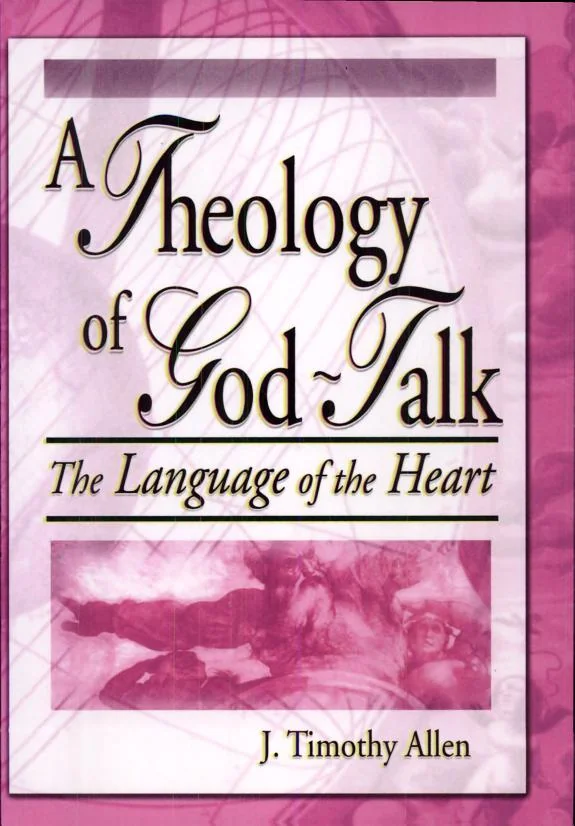
A Theology of God-talk
 76
76

A Theology of God-talk
J. Timothy Allen’s *A Theology of God-talk*, first published in 2002, confronts a common linguistic and psychological phenomenon: the language of faith uttered in extremis. Allen doesn't shy away from the colloquial, examining phrases like “God’s will” or the grimly humorous “The Lord took Uncle Harry.” He positions these not as mere platitudes but as expressions of deep-seated psychological needs and theological anxieties. The book’s strength lies in its interdisciplinary approach, drawing judiciously from psychology and narrative theory to illuminate theological discourse. A particular challenge, however, is the dense academic prose which, while precise, can sometimes obscure the very human experiences it seeks to describe. Allen's exploration of the concept of "naming" God, particularly in moments of crisis, offers a compelling re-framing of familiar, often awkward, expressions of belief. It’s a work that demands careful reading but rewards with a more nuanced understanding of how we articulate faith when it matters most.
📝 Description
76
J. Timothy Allen's 1989 work addresses the fundamental questions of how humans can speak about God.
This book examines the philosophical and theological challenges inherent in discussing the divine. Allen argues that traditional language often fails to adequately represent God's nature, leading to misunderstandings and limitations in our comprehension. He proposes that a more fruitful approach involves understanding theological statements not as literal descriptions, but as pointers or expressions of human experience in relation to the divine.
The author critiques various historical attempts to articulate God-talk, highlighting their strengths and weaknesses. He advocates for a hermeneutical perspective, suggesting that meaning is constructed through interpretation and that our discourse about God is always situated within specific historical and linguistic contexts. The work encourages a careful and critical engagement with theological language, urging readers to be aware of the inherent ambiguities and assumptions involved.
Allen's work engages with traditions that question the direct apprehension of the divine through conventional means. While not strictly an esoteric text itself, it speaks to the broader concerns found in mystical and apophatic theology, which emphasize the ineffability of God and the inadequacy of positive affirmations. The book's focus on the limitations of human language resonates with esoteric approaches that often employ symbolic, allegorical, or indirect methods to point toward ultimate realities that transcend ordinary understanding.
💡 Why Read This Book?
• Gain a fresh perspective on the language of crisis, understanding how phrases like 'God's will' function psychologically and theologically, as explored in Allen's analysis of theological discourse. • Develop a deeper appreciation for the intersection of psychology and theology, learning how narrative theory can illuminate faith expressions following Allen's synthesis of these fields. • Re-evaluate your own language of faith by examining specific examples of God-talk discussed in the book, prompting personal reflection on articulated beliefs.
⭐ Reader Reviews
Honest opinions from readers who have explored this book.
❓ Frequently Asked Questions
What specific psychological theories does J. Timothy Allen reference in 'A Theology of God-talk'?
While not exhaustively detailing every theory, Allen integrates concepts from psychology, particularly in relation to how individuals process trauma and express faith during crisis, influencing the theological interpretation of phrases like 'It must have been God's will'.
What is the primary theological question 'A Theology of God-talk' seeks to answer?
The book addresses how people articulate their faith and understanding of God during times of crisis, specifically examining the meaning and function of common phrases used in such situations.
Does 'A Theology of God-talk' offer practical advice for clergy or counselors?
While not a direct how-to guide, its insights into the language of the heart can equip clergy and counselors with a more nuanced understanding of congregants' expressions of faith during difficult times.
What role does narrative theory play in Allen's analysis?
Narrative theory helps Allen explore how individuals construct meaning and coherence through stories, particularly in how they frame events as divinely ordered or influenced when discussing God-talk.
Is 'A Theology of God-talk' accessible to a general audience or primarily for academics?
The book is academically rigorous, drawing on psychology, theology, and narrative theory. While accessible to those with an interest in these fields, it requires focused reading rather than casual perusal.
When was 'A Theology of God-talk' first published?
The book was first published in 2002, offering a theological interpretation of God-talk that remains relevant for understanding faith expressions in crisis.
🔮 Key Themes & Symbolism
Theology of Crisis Language
This theme centers on the unique linguistic patterns that emerge when individuals confront profound suffering or loss. Allen examines phrases such as 'The Lord took Uncle Harry' not as simple vernacular but as theological statements laden with implicit assumptions about divine agency and human experience. The work probes the psychological and spiritual needs these utterances fulfill, offering a framework for understanding how faith is articulated under duress, moving beyond superficial interpretations to explore the deeper currents of belief and coping mechanisms.
Intersections of Psychology and Theology
Allen skillfully bridges the gap between psychological frameworks and theological interpretation. He utilizes psychological insights to illuminate why certain theological phrases gain traction in times of crisis, suggesting that these expressions are not merely doctrinal but deeply tied to human emotional and cognitive processes. This approach allows for a more holistic understanding of religious language, treating it as a product of both spiritual belief and psychological necessity, a departure from purely dogmatic analyses.
Narrative Construction of Meaning
The book employs narrative theory to explore how individuals construct coherent understandings of their lives, especially when confronted with chaotic or inexplicable events. Allen suggests that 'God-talk' in crisis often serves as a narrative device to impose order and meaning onto suffering. By analyzing the structure and function of these personal theodicies, the work reveals how stories about God help individuals to integrate traumatic experiences into their broader life narratives, maintaining a sense of continuity and purpose.
The Language of the Heart
This theme captures the essence of Allen's focus on the deeply personal and emotional dimensions of religious expression. 'The Language of the Heart' signifies that the phrases people use when talking about God in crisis originate from profound emotional states and existential needs, rather than purely intellectual assent. The work validates these earnest, often imperfect, articulations as genuine theological utterances, worthy of careful examination and pastoral sensitivity.
💬 Memorable Quotes
Direct passages from the work, attributed to the author.
“The Lord took Uncle Harry.”
— This stark, almost darkly humorous, phrase represents a common, yet theologically complex, way people attribute death to divine action during times of grief. Allen uses it to probe the underlying beliefs about God's direct intervention in human affairs.
“It must have been God's will.”
— Allen analyzes this statement as a coping mechanism that seeks to find order and meaning in seemingly random or tragic events. It reflects a desire to reconcile suffering with a belief in a benevolent and sovereign God.
“Bringing together psychology, theology, and narrative theory.”
— This phrase expresses the interdisciplinary methodology of the book, signaling its approach to understanding God-talk not solely through a theological lens, but by integrating insights from related fields for a richer analysis.
“New ways of looking at this common reaction to crisis.”
💡 Key Ideas
Editorial paraphrase of the work's core concepts — not direct quotes.
The meaning behind phrases like 'It must have been God's will' and 'The Lord took Uncle Harry'.
This quote highlights the book's central aim: to move beyond the surface level of crisis language and uncover the profound theological and psychological underpinnings that give these phrases their significance for the speaker.
🌙 Esoteric Significance
Tradition
While not explicitly aligning with a singular esoteric lineage, *A Theology of God-talk* touches upon perennial philosophical and theological questions that resonate with Hermetic and Gnostic traditions concerning divine immanence, the nature of suffering, and the human capacity to articulate the ineffable. It departs from more overtly mystical or ritualistic traditions by focusing on the common, everyday language used to express faith, suggesting that the sacred can be found within vernacular expressions of the 'heart'.
Symbolism
The book's primary 'symbol' is the very language it analyzes—common phrases that become potent signifiers of deeper spiritual and psychological states. Concepts like 'God's will' function symbolically, representing an attempt to impose order on chaos and express trust in a higher power, even when the specifics are incomprehensible. The act of 'naming' God, as explored in the text, can be seen as a symbolic invocation, an attempt to establish connection and understanding through articulated belief.
Modern Relevance
Allen's work remains relevant for contemporary thinkers in fields such as pastoral psychology, trauma-informed ministry, and even secular existentialism. Therapists and spiritual counselors continue to find value in understanding how individuals frame their suffering. Furthermore, the book’s emphasis on authentic expression of faith appeals to modern movements that prioritize lived experience and personal narrative over rigid dogma, finding echoes in some forms of progressive theology and therapeutic spirituality.
👥 Who Should Read This Book
• Individuals grappling with personal or observed crises who seek a deeper understanding of the language used to express faith during difficult times. • Theology students and scholars interested in the intersection of psychology, narrative theory, and religious discourse, particularly concerning practical theology. • Clergy, chaplains, and pastoral counselors looking to gain nuanced insights into how congregants or clients articulate their beliefs and fears in moments of vulnerability.
📜 Historical Context
Published in 2002, *A Theology of God-talk* emerged during a period of increasing interest in the intersection of theology and psychology, building on earlier work by figures like Paul Tillich and Karl Barth, who grappled with existential human experiences. The late 20th and early 21st centuries saw a burgeoning of practical theology and pastoral care literature that sought to address the real-life concerns of individuals within their faith communities. Allen's work distinguished itself by applying sophisticated narrative theory, a field gaining prominence in literary and social sciences, to the specific domain of crisis discourse. This approach offered an alternative to purely systematic theological treatments or simplistic psychological explanations. While not a period marked by significant censorship of theological works, Allen's text contributed to a broader academic conversation, engaging with scholars like Don Browning and James Loder who were also exploring the psychological dimensions of faith and religious language.
📔 Journal Prompts
Theological statements of crisis, such as 'It must have been God's will'.
The linguistic function of 'The Lord took Uncle Harry'.
The integration of psychology and theology in understanding faith.
Narrative construction of meaning in the face of suffering.
The 'Language of the Heart' as expressed in everyday belief.
🗂️ Glossary
God-talk
Refers to the various ways individuals speak about, to, and understand God, particularly within the context of human experience and theological reflection.
Crisis Language
The specific vocabulary, phrases, and rhetorical strategies people employ when confronted with significant personal or communal adversity, often revealing underlying beliefs and coping mechanisms.
Theological Interpretation
The process of analyzing and understanding religious or spiritual language and concepts through the lens of theological frameworks and doctrines.
Narrative Theory
An approach that examines how humans use stories to make sense of their lives, experiences, and the world around them, applied here to religious expression.
Psychological Needs
The fundamental emotional and mental requirements that drive human behavior, such as the need for meaning, control, and comfort, which can be addressed through religious language.
Divine Agency
The concept that God actively intervenes in or influences the course of human events and the natural world, a belief often expressed in crisis situations.
Theodicies
Attempts to reconcile the existence of evil and suffering in the world with the belief in an all-powerful, all-knowing, and all-good God.
This book appears in 1 collection
🔮 Readers Also Liked
Browse all →









From the “Invocation” Collection
View all →




More Free Occult Philosophy Books
View all →