A Pilgrim's Path
 80
80

A Pilgrim's Path
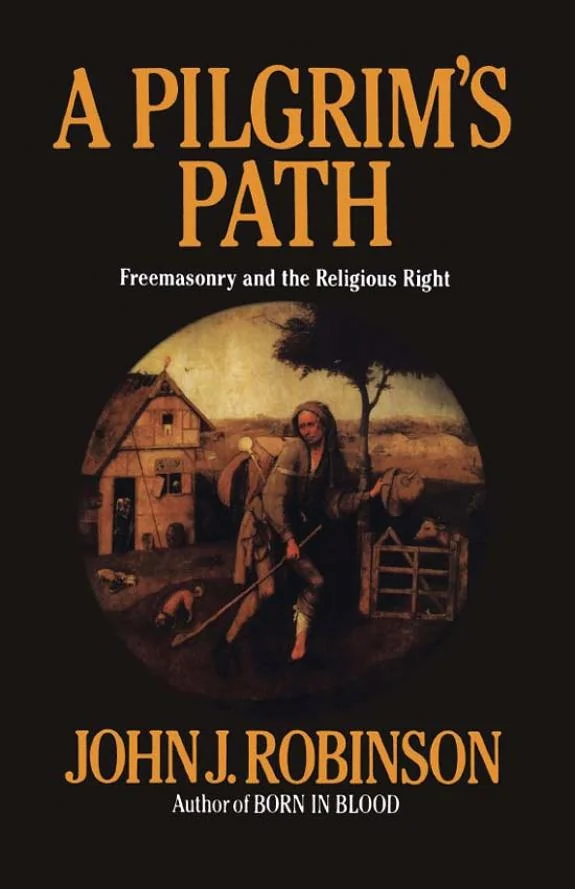
John J. Robinson's *A Pilgrim's Path* attempts a direct rebuttal to anti-Masonic sentiment, leveraging his prior research into the society's historical roots. The book's strength lies in its direct confrontation of specific criticisms, rather than vague generalizations. Robinson’s examination of the historical development of Masonic accusations, particularly those emanating from fundamentalist circles in the 1990s, offers a valuable perspective for understanding that particular cultural moment. However, the work occasionally becomes defensive, which can detract from the analytical rigor one might expect from a historical inquiry. A passage discussing the purported dangers of Masonic oaths, for instance, feels more like a polemic than an objective assessment. Robinson’s endeavor to clarify Masonic principles is commendable, though the book sometimes prioritizes refutation over deeper exploration of the esoteric dimensions that its title might imply. It remains a significant text for those seeking a specific defense against historical condemnations.
📝 Description
80
John J. Robinson published A Pilgrim's Path in 1993 to clarify Masonic principles.
First released in 1993, John J. Robinson's *A Pilgrim's Path* analyzes Freemasonry's history and core beliefs. Building on his previous book, *Born in Blood*, Robinson traces the fraternity's origins and growth. He aims to explain Masonic philosophy and practices clearly, moving past sensationalism to the society's guiding principles.
The book targets individuals interested in Freemasonry's historical path and its philosophical ideas. It is particularly for those who have encountered negative or critical views of the organization, especially from religious fundamentalist groups active in the late 20th century. Robinson provides counterarguments and factual responses to common criticisms.
Robinson's work appeared during a time of increased public examination of Freemasonry, partly due to the Fundamentalist Right's suspicion of secret societies. The book responds directly to these critiques, using historical evidence to correct misunderstandings and accusations that were circulating.
Published in 1993, *A Pilgrim's Path* engages with the esoteric tradition surrounding Freemasonry, a subject often shrouded in mystery and speculation. Robinson's work directly confronts the misinterpretations and accusations leveled against the fraternity, particularly those arising from fundamentalist critiques. He positions Freemasonry not as a nefarious cult, but as a system that preserves ancient wisdom and promotes moral development, aligning with a view of fraternal orders as carriers of symbolic knowledge and ethical teachings.
💡 Why Read This Book?
• Understand the specific historical attacks on Freemasonry during the rise of the Fundamentalist Right in the late 20th century, providing context for Robinson's defense. • Gain clarity on the core principles and historical evolution of Freemasonry, as presented by an author who sought to counter misrepresentations. • Explore the author's refutations of common criticisms, allowing for a more informed perspective on the debates surrounding the fraternity.
⭐ Reader Reviews
Honest opinions from readers who have explored this book.
❓ Frequently Asked Questions
What is the primary argument of John J. Robinson's *A Pilgrim's Path*?
The book primarily argues against condemnations and fabrications leveled against Freemasonry, particularly from fundamentalist religious perspectives prevalent in the 1990s. Robinson aims to historically and philosophically refute these criticisms.
How does *A Pilgrim's Path* relate to *Born in Blood*?
*A Pilgrim's Path* builds upon the historical research presented in Robinson's earlier work, *Born in Blood: The Lost Secrets of Freemasonry*. While *Born in Blood* explored the historical origins and secrets, *A Pilgrim's Path* focuses on defending the fraternity against its critics.
When was *A Pilgrim's Path* first published?
The book was first published in 1993, a period marked by significant public discourse and criticism directed at secret societies like Freemasonry.
Who are the main targets of Robinson's refutations in the book?
Robinson specifically targets those he identifies as the 'Fundamentalist Right,' whose condemnations and misstatements about Freemasonry he seeks to dismantle with historical evidence and reasoned arguments.
What kind of 'secrets' does Robinson discuss in relation to Freemasonry?
Robinson discusses the historical evolution and philosophical principles of Freemasonry, aiming to reveal them to the public rather than exposing secret rituals. He addresses the 'lost secrets' in the context of historical misinterpretations.
Is *A Pilgrim's Path* an exposé or a defense of Freemasonry?
The book functions primarily as a defense of Freemasonry against external criticism and historical misrepresentations. While it discusses historical aspects, its core purpose is to refute negative claims.
🔮 Key Themes & Symbolism
Refutation of Anti-Masonic Claims
A central theme is the direct confrontation and refutation of criticisms leveled against Freemasonry, particularly those arising from religious fundamentalism in the late 20th century. Robinson meticulously addresses what he terms 'fabrications and misstatements,' aiming to correct historical inaccuracies and challenge the basis of condemnation. The work positions itself as a reasoned defense, drawing on historical evidence to counter sensationalist narratives and promote a more accurate understanding of the fraternity's origins and principles.
Historical Evolution of Freemasonry
Robinson traces the historical development of Freemasonry, seeking to ground its practices and philosophy in verifiable historical events and intellectual currents. The book examines how the society has been perceived and misrepresented over time, contrasting these external views with the internal narrative and stated aims of the order. This historical perspective is crucial for understanding the context of the criticisms Robinson addresses.
Masonic Principles and Philosophy
The work endeavors to elucidate the core principles and philosophical underpinnings of Freemasonry. Robinson discusses its role as a fraternal organization focused on moral and ethical development, often drawing on symbolic interpretations and historical traditions. The aim is to present Freemasonry not as a nefarious secret society, but as an order with a long-standing tradition of self-improvement and community engagement.
The Impact of Fundamentalism
A significant aspect of the book is its engagement with the rise of the Fundamentalist Right and its specific impact on perceptions of Freemasonry. Robinson analyzes how this movement's theological or ideological stances led to particular accusations and how these claims gained traction. The book serves as a historical document reflecting this specific cultural and religious conflict of the era.
💬 Memorable Quotes
Direct passages from the work, attributed to the author.
“The author 'refut[es] their fabrications and misstatements.'”
— This concise statement from the original blurb expresses the book's primary objective: to directly challenge and correct perceived falsehoods and misunderstandings about Freemasonry that were prevalent at the time of its publication.
“Robinson describes the history and principles of the world's largest secret society.”
— This indicates the book's dual focus: providing a historical account of Freemasonry's development while also explaining its foundational tenets and philosophical basis.
“An eye-opening book for those interested in the mysteries of Freemasonry...”
— This suggests the book aims to reveal aspects of Freemasonry that might not be commonly known or understood, potentially explaining its practices and symbolism for the uninitiated.
“...and disturbed by the rise of the Fundamentalist Right.”
— This highlights a specific socio-political context for the book, indicating it was written, in part, as a response to the increasing hostility and criticism directed at Freemasonry by certain religious and ideological groups.
“The author of *Born in Blood* describes the history and principles of Freemasonry.”
— This links *A Pilgrim's Path* to Robinson's previous, well-regarded work, suggesting a continuity of research and a deep familiarity with the subject matter he is presenting and defending.
🌙 Esoteric Significance
Tradition
While not strictly adhering to a single esoteric lineage, *A Pilgrim's Path* engages with the Western esoteric tradition by examining Freemasonry as a repository and transmitter of symbolic knowledge. It touches upon themes found in Hermeticism and Rosicrucianism, particularly regarding moral philosophy and the symbolic representation of spiritual ascent. Robinson positions Freemasonry within a historical continuum of secretive or fraternal orders that have sought to preserve and impart wisdom, departing from purely religious dogma to focus on individual moral development and philosophical inquiry.
Symbolism
The work looks at the symbolic language of Freemasonry, notably the Square and Compasses, which represent morality, rectitude, and the regulation of one's actions. Another key symbol is the 'Rough and Perfect Ashlar,' representing the profane and the initiated Freemason, respectively, and the process of self-improvement and refinement through Masonic teachings. These symbols are presented not merely as decorative elements but as mnemonic devices and pedagogical tools designed to convey moral and philosophical lessons.
Modern Relevance
Contemporary discussions on fraternal organizations and their historical roles continue to draw from authors like Robinson. His work remains relevant for those studying the sociology of secret societies, the history of religious critiques of Freemasonry, and the persistent interest in Masonic symbolism. Thinkers and practitioners exploring the intersection of historical movements and their modern interpretations, especially concerning Western esotericism and its societal impact, find value in Robinson's detailed historical context and defense.
👥 Who Should Read This Book
• Individuals seeking to understand Freemasonry beyond sensationalist claims, particularly those interested in its historical context and philosophical underpinnings. • Researchers and students of religious history and sociology who are investigating the dynamics between fundamentalist movements and fraternal organizations in the late 20th century. • Members of Freemasonry or those with family connections to the fraternity looking for a reasoned defense against historical criticisms and misrepresentations.
📜 Historical Context
Published in 1993, *A Pilgrim's Path* emerged during a period of significant public discourse and often hostile scrutiny directed at Freemasonry. The late 20th century saw a resurgence of anti-Masonic sentiment, particularly amplified by the rise of the Fundamentalist Right, which frequently viewed secret societies with deep suspicion and moral condemnation. Robinson's work directly engaged with this climate, aiming to provide a scholarly counter-narrative to the waves of accusations and misinformation circulating at the time. He sought to defend the fraternity by presenting its historical development and core principles, drawing a stark contrast to the 'fabrications and misstatements' he felt were being propagated. This period was also characterized by continued academic interest in fraternal orders, though Robinson's approach leaned more towards apologetics and direct refutation than purely academic analysis. His previous book, *Born in Blood* (1989), had already established him as a significant voice on Masonic history, setting the stage for this more polemical follow-up.
📔 Journal Prompts
The concept of 'fabrications and misstatements' regarding Freemasonry as discussed by Robinson.
Robinson's refutation of specific condemnations from the Fundamentalist Right.
The historical progression of Masonic principles as outlined by the author.
Reflect on the symbolism of the Rough and Perfect Ashlar in relation to personal development.
How does Robinson's defense of Freemasonry compare to your prior understanding of the fraternity?
🗂️ Glossary
Freemasonry
A fraternal organization that traces its origins to the local guilds of stonemasons of the late Middle Ages. It uses allegorical rituals and symbols based on stonemasons' tools to impart moral and philosophical lessons to its members.
Fundamentalist Right
A socio-political and religious movement characterized by strict adherence to a particular set of beliefs, often associated with literal interpretations of religious texts and a critical stance towards secularism or perceived moral decay.
Born in Blood
The title of John J. Robinson's earlier, influential book, which explored the historical origins and alleged secrets of Freemasonry, setting the stage for his later work defending the fraternity.
Ashlar (Rough and Perfect)
In Masonic symbolism, the Rough Ashlar represents the unrefined state of an individual before receiving moral and philosophical instruction, while the Perfect Ashlar represents the completed individual, shaped and polished by Masonic teachings.
Ritual
The prescribed form or order of ceremonies used in Freemasonry. These rituals are symbolic dramas intended to teach moral and spiritual lessons to initiates and members.
Tenets
The fundamental principles or beliefs upon which a philosophy, religion, or organization is based. In this context, it refers to the core doctrines and values of Freemasonry.
Esoteric
Intended for or likely to be understood by only a small number of people with a specialized knowledge or interest. In the context of this book, it refers to the deeper symbolic and philosophical meanings within Freemasonry.
This book appears in 1 collection
🔮 Readers Also Liked
Browse all →








From the “Freemasonry” Collection
View all →





More Free Freemasonry & Secret Societies Books
View all →