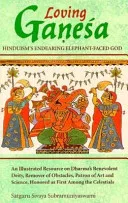
Loving Ganeśa
 76
76

Loving Ganeśa
Satguru Sivaya Subramuniyaswami’s Loving Ganesa offers a sympathetic but direct introduction to one of Hinduism’s most recognizable deities. The author’s familiarity with the subject is evident, presenting Ganesa with an insider’s perspective that avoids the often-detached tone of academic studies. The section detailing Ganesa’s iconography, particularly his role as the Remover of Obstacles, provides a clear entry point for newcomers. However, the work occasionally leans into devotional rhetoric, which might alienate readers seeking purely objective analysis. The explanation of Ganesa’s association with the muladhara chakra, while conceptually interesting, could benefit from more explicit linguistic or scriptural sourcing to strengthen its academic grounding. Ultimately, Loving Ganesa succeeds in demystifying a widely-followed deity, though its devotional fervor shapes its critical distance.
📝 Description
76
Published in 1996, Loving Ganesa explains the Hindu deity Ganesa to a Western audience.
Satguru Sivaya Subramuniyaswami's Loving Ganesa details the Hindu god Ganesa, a figure revered worldwide. The book covers his visual depictions, myths, and devotional practices. Subramuniyaswami presents Ganesa as a deity accessible to all, whose image is now recognized beyond its traditional religious settings. The author sought to clarify this popular god's significance for Westerners increasingly involved with Hindu practices.
The book targets individuals interested in Hinduism, especially those drawn to Ganesa through yoga and meditation. It is also for practitioners of Hindu-derived disciplines who want a deeper grasp of the deities they honor. Students of comparative religion and cultural studies will find its focus on a specific, widely known deity useful for examining how religions spread and adapt.
Loving Ganesa was released in 1996, a time when Western interest in Eastern religions, yoga, and meditation was growing. Subramuniyaswami, a Hindu monk and founder of the Saiva Siddhanta Church, intended to connect different cultures and beliefs. He aimed to share genuine Hindu teachings globally, correcting misunderstandings common in Western academic and popular accounts then. The book appeared as Hindu figures gained more attention in Western popular culture.
This work situates Ganesa within the devotional and philosophical framework of Saiva Siddhanta, a major school of Shaivism. It connects his worship to broader Hindu traditions and presents him as a tangible divine presence. The book aims to make the understanding of Ganesa, and by extension certain Hindu concepts, accessible to those outside the tradition, particularly in the West. It bridges the gap between popular contemporary engagement with Hindu figures and their deeper scriptural and philosophical roots.
💡 Why Read This Book?
• Understand Ganesa's specific role as the 'Remover of Obstacles,' a concept central to initiating new endeavors, as detailed in the book's early chapters. • Gain insight into the symbolism of Ganesa's unique iconography, such as his elephant head and broken tusk, as explained through the lens of Saiva Siddhanta philosophy. • Appreciate the historical context of Hindu devotional practices in the West, particularly the growing interest in figures like Ganesa around 1996, the year of the book's first publication.
⭐ Reader Reviews
Honest opinions from readers who have explored this book.
❓ Frequently Asked Questions
What is the primary significance of Ganesa in Hinduism as explained in Loving Ganesa?
Loving Ganesa presents Ganesa as the beloved Lord of Categories and the Remover of Obstacles. He is revered as the patron of arts and sciences, and the deva who governs the fundamental essence of things, making him a crucial deity for initiating any new undertaking.
Who was Satguru Sivaya Subramuniyaswami?
Satguru Sivaya Subramuniyaswami was the founder of the Saiva Siddhanta Church and a prominent spiritual leader who dedicated his life to teaching Hinduism, particularly Saivism, to a global audience. He authored numerous books aimed at demystifying Hindu philosophy and practice.
When was Loving Ganesa first published?
Loving Ganesa was first published in 1996. This timing placed it within a period of increasing Western engagement with Hindu spiritual traditions and practices.
Does the book discuss Ganesa's relationship to other Hindu deities?
Yes, the work explores Ganesa's familial connections, particularly his parentage by Lord Siva and Goddess Parvati, and his role within the broader Hindu pantheon, explaining how his worship integrates with other traditions.
What is the concept of 'Ganesa Puja' as described in the book?
The book explains Ganesa Puja as the ritual worship offered to Ganesa. It details the proper forms of invocation, offerings, and prayers intended to invoke his blessings and remove impediments.
Is Loving Ganesa suitable for someone completely new to Hinduism?
Yes, Loving Ganesa is designed to introduce Ganesa to a broad audience, including those unfamiliar with Hinduism. It explains core concepts and devotional practices in accessible language, making it a good starting point for beginners.
🔮 Key Themes & Symbolism
The Remover of Obstacles
The book foregrounds Ganesa's primary epithet: Vighneshvara, the Lord of Obstacles. It details how devotees invoke him at the commencement of any significant undertaking, from a new business venture to a spiritual path. This concept is presented not just as a mythological role but as a practical application of spiritual power for navigating life's challenges. The work explains that by appeasing Ganesa, one can ensure smooth progress and success, underscoring his universal appeal.
Ganesa's Iconography and Symbolism
Loving Ganesa meticulously deciphers the symbolic meanings embedded within Ganesa's distinct form. His elephant head signifies wisdom, intellect, and the supreme ego, while his broken tusk represents sacrifice and the ability to overcome duality. The book interprets his pot belly as symbolizing contentment and the universe, and his vehicle, the mouse, as representing the control of ego and desire. Each element is tied to profound philosophical concepts within Hinduism.
Devotional Practices and Worship
The text offers practical guidance on how to engage in Ganesa Puja, the act of worship. It outlines the essential components of devotion, including mantra recitation, offerings (such as modaka sweets), and prayers. The book emphasizes the importance of sincere devotion (bhakti) over mere ritualistic performance, presenting worship as a means to foster a personal relationship with the deity and receive his blessings.
Ganesa in Global Consciousness
Published in 1996, the book addresses the growing presence of Ganesa in Western consciousness, driven by the popularity of yoga and meditation. It highlights how this deity, central to Hinduism, is becoming a globally recognized spiritual figure. The work aims to provide an authentic understanding, distinguishing genuine devotion from superficial appropriation and explaining his appeal across diverse cultures and spiritual paths.
💬 Memorable Quotes
Direct passages from the work, attributed to the author.
“He is the Lord of categories, the God of the intellect, wisdom, and learning.”
— This statement captures Ganesa's fundamental role within Hindu cosmology. It positions him not just as a deity of obstacles but as a patron of knowledge and order, governing the very structure of existence and understanding.
“To know Ganesa is to know the mind of God.”
— This interpretation suggests a profound connection between understanding Ganesa and grasping divine consciousness. It implies that through devotion and study of this deity, one can achieve a higher state of spiritual awareness and insight.
“Ganesa is the first God to be worshipped. He is the God of the home, the village, the temple.”
— This highlights Ganesa's pervasive presence and his foundational status in Hindu worship. It emphasizes his accessibility and importance at all levels of religious practice, from personal devotion to community rituals.
“His image is everywhere, from the smallest shrine to the grandest temple.”
— This observation points to Ganesa's immense popularity and widespread veneration across India and beyond. It signifies his universal appeal and his integral place in the devotional range of Hinduism.
💡 Key Ideas
Editorial paraphrase of the work's core concepts — not direct quotes.
He is the God of beginnings, the patron of all arts and sciences.
This quote underscores Ganesa's role in facilitating new ventures and fostering intellectual and creative pursuits. It positions him as a divine muse and protector for anyone starting a new endeavor or engaging in scholarly work.
🌙 Esoteric Significance
Tradition
Loving Ganesa is firmly rooted in the Saiva Siddhanta tradition, a prominent school of Hindu philosophy and theology. While Saiva Siddhanta itself is a rich and complex system, this work presents its teachings in an accessible manner, particularly concerning the worship of Ganesa as a primary deity. It departs from purely academic or Western esoteric interpretations by offering an insider's devotional perspective, emphasizing direct experience and practice over abstract philosophical discourse.
Symbolism
The elephant head of Ganesa is a potent symbol of supreme consciousness, wisdom, and the divine intellect (Buddhi). His broken tusk represents sacrifice and the transcendence of duality, essential for spiritual progress. His mount, the mouse (Mushika), symbolizes the control of ego and worldly desires, which Ganesa conquers. These symbols are not merely decorative but are integral to understanding Ganesa's role as the remover of internal and external obstacles on the spiritual path.
Modern Relevance
In contemporary spiritual landscapes, Ganesa's image continues to gain traction beyond traditional Hindu circles. Thinkers and practitioners in fields like positive psychology and mindfulness often draw parallels to Ganesa's role as a remover of obstacles. His iconography appears in various forms of modern art and design. The book's accessible approach continues to serve as a vital resource for individuals exploring Hindu deities, meditation, and yogic philosophy, making Ganesa a figure of increasing global spiritual recognition.
👥 Who Should Read This Book
• Aspiring practitioners of Hindu yoga and meditation seeking to understand the deities they encounter, particularly Ganesa, the widely recognized Remover of Obstacles. • Comparative religion scholars and students interested in the devotional practices and iconography of Hinduism, with a focus on universally popular deities. • Individuals starting new personal or professional projects who are drawn to the concept of invoking divine assistance for overcoming challenges.
📜 Historical Context
Published in 1996, Loving Ganesa arrived during a significant wave of Western interest in Eastern spirituality, fueled by the popularization of yoga and meditation practices. Satguru Sivaya Subramuniyaswami, a prominent figure in Saivism, sought to provide an authentic voice amidst a landscape often characterized by superficial understandings or academic detachment. His work aimed to bridge the gap between Eastern traditions and Western seekers, offering a devotional yet informative perspective. This period saw figures like Fritjof Capra exploring the confluence of science and spirituality, and numerous New Age movements drawing inspiration from Eastern philosophies. Subramuniyaswami’s direct approach and focus on a specific, widely recognized deity like Ganesa offered a counterpoint to more generalized or esoteric interpretations of Hinduism prevalent at the time. The book's reception was largely positive among those already engaged with Hindu practices, validating its aim to clarify a key deity for a global audience.
📔 Journal Prompts
The symbolism of Ganesa's broken tusk and its relation to sacrifice.
Ganesa's role as the Lord of Categories and its implications for organizing knowledge.
Personal experiences with obstacles and how the concept of Ganesa might offer a new perspective.
The significance of Ganesa as the first deity invoked in Hindu rituals.
Reflections on the universality of the 'Remover of Obstacles' archetype across cultures.
🗂️ Glossary
Ganesa (or Ganesh, Ganapati)
The widely revered Hindu deity with an elephant head, known as the Remover of Obstacles, Lord of Beginnings, and patron of arts and sciences.
Vighneshvara
An epithet for Ganesa, meaning 'Lord of Obstacles'. This highlights his primary role in removing impediments to success in both worldly and spiritual endeavors.
Saiva Siddhanta
A prominent school of Hindu philosophy and theology, particularly influential in South India, focusing on Lord Siva as the Supreme Being and emphasizing devotion and spiritual discipline.
Puja
A Hindu ritual of worship, involving offerings, prayers, and devotion directed towards a deity, often performed daily in homes or temples.
Modaka
A sweet confection, often made with rice flour, jaggery, and coconut, which is a favorite offering to Lord Ganesa during puja.
Bhakti
Devotion or love towards a deity, considered a primary path to spiritual realization in many Hindu traditions.
Iconography
The visual images and symbols used in the study or representation of subjects, particularly in religious art. In this context, it refers to the artistic depictions of Ganesa and their meanings.