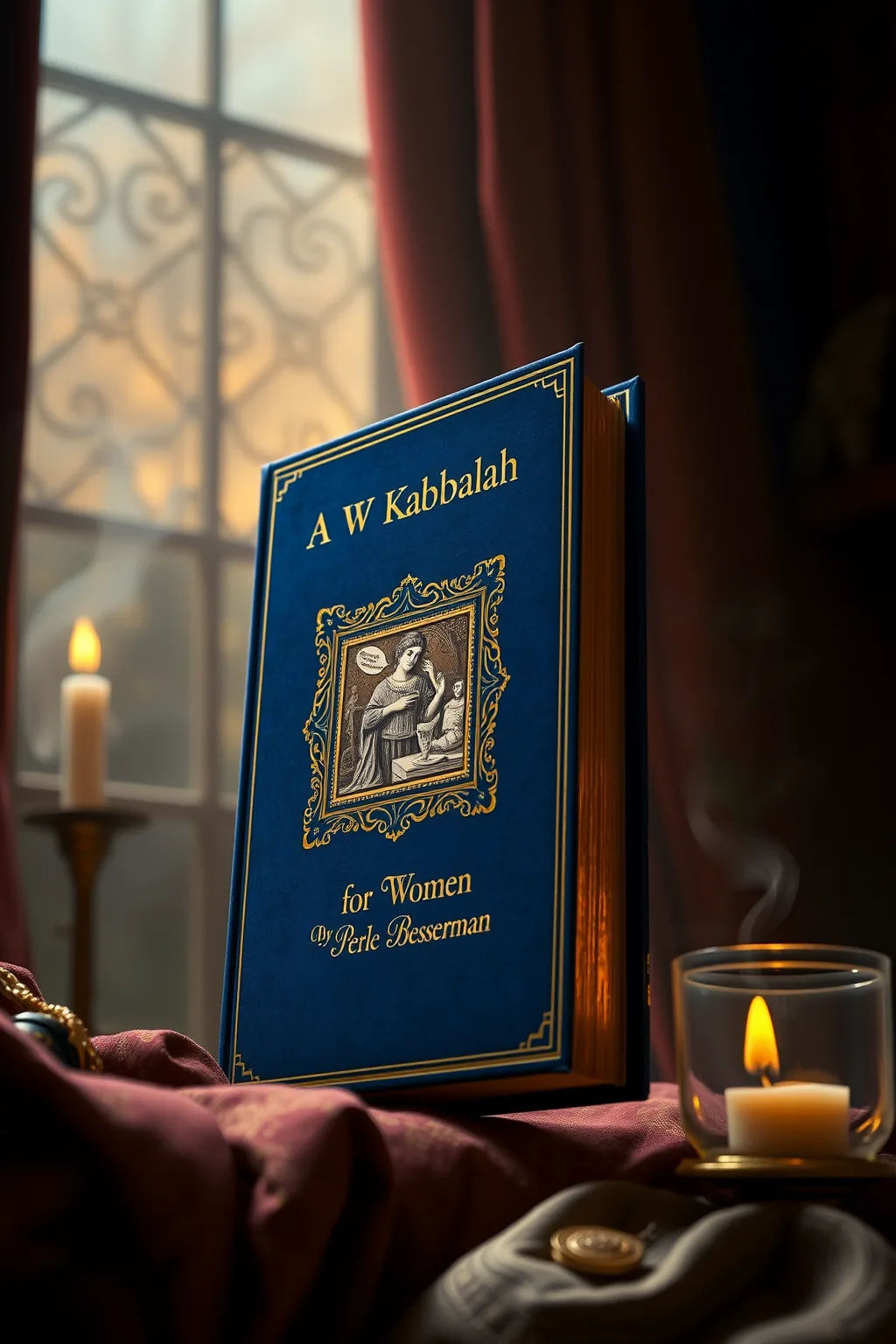
A New Kabbalah for Women
 82
82

A New Kabbalah for Women
Perle Besserman's A New Kabbalah for Women confronts a long-standing imbalance in esoteric literature by centering the female experience within Kabbalistic thought. The book's strength lies in its clear articulation of complex ideas, particularly the concept of Shekhinah, making mystical Judaism feel immediate and relevant. Besserman avoids overly academic jargon, offering instead an invitation to integrate Kabbalistic wisdom into lived reality. A notable limitation is the book's brevity; while accessible, some readers might desire a more extensive exploration of the Tree of Life's sefirot through this feminine lens. The discussion on the red bracelet, while a contemporary hook, feels slightly disconnected from the deeper mystical explorations that follow. Nevertheless, Besserman succeeds in providing a much-needed feminine interpretation of a profound tradition. This work offers a valuable counterpoint to exclusively masculine interpretations of Jewish mysticism.
📝 Description
82
Perle Besserman's 2015 book offers a feminine interpretation of Kabbalah.
A New Kabbalah for Women presents the complex ideas of Jewish mysticism from a distinct female viewpoint. Author Perle Besserman, a teacher of Jewish mysticism, frames Kabbalah not just as an academic field but as a practical path for spiritual life. This work is intended for women who wish to connect with the divine feminine and pursue spiritual avenues that acknowledge their personal experiences. It speaks to those curious about Kabbalah's hidden aspects but who found earlier writings difficult to access or overly focused on male perspectives. The book also appeals to readers interested in Jewish mysticism, meditation, and weaving spiritual practice into everyday existence.
Historically, Kabbalistic study was largely closed off to women, especially in some orthodox communities. Besserman's book addresses this historical exclusion, seeking to reframe and reinterpret Kabbalistic ideas through a female lens. The text centers on concepts like Shekhinah, the divine feminine aspect of God, which has often been downplayed in traditional Kabbalistic discussions. It also examines the Tree of Life, the central diagram in Kabbalah, and revisits its sefirot, or divine emanations, from a female perspective. Practical applications of Kabbalistic principles for personal development and spiritual connection are also key aspects.
Kabbalah, a Jewish mystical tradition, historically restricted access to its texts and teachings, primarily to men. This patriarchal structure often excluded women from deeper study of its esoteric dimensions. Besserman's work directly challenges this historical imbalance. It aims to reclaim and reinterpret core Kabbalistic concepts, such as the sefirot and the divine feminine (Shekhinah), through a lens that honors women's experiences and spiritual needs. Published in 2015, the book emerged during a period of renewed interest in esoteric traditions and feminist spirituality, seeking to make these ancient teachings more accessible to a contemporary female audience.
💡 Why Read This Book?
• Gain a unique perspective on Jewish mysticism by exploring the concept of Shekhinah, the feminine divine, as presented by Besserman, offering spiritual insights often overlooked in traditional texts. • Understand how the Tree of Life, a foundational Kabbalistic diagram, can be reinterpreted through a feminine lens, providing new frameworks for personal growth and spiritual understanding. • Discover practical applications of Kabbalistic principles for daily life, learning techniques for meditation and self-discovery as detailed in Besserman's approach, first published in 2015.
⭐ Reader Reviews
Honest opinions from readers who have explored this book.
❓ Frequently Asked Questions
What is the primary focus of Perle Besserman's "A New Kabbalah for Women"?
The book's main focus is to present a feminine approach to Kabbalah, a Jewish mystical tradition, making its teachings accessible and relevant to women by emphasizing the divine feminine and integrating spiritual practice into daily life.
Why was Kabbalah historically inaccessible to women?
Historically, Kabbalistic study was often restricted to men within certain Jewish communities, leading to an underrepresentation of feminine perspectives and the divine feminine, such as Shekhinah, in its discourse.
What does the book say about the red bracelet?
The book uses the popular association of the red bracelet with Kabbalah among celebrities as an entry point, acknowledging its modern visibility before delving into the deeper, historical, and spiritual aspects of Kabbalistic practice.
Does the book explain the Tree of Life?
Yes, "A New Kabbalah for Women" explores the Kabbalistic Tree of Life, reinterpreting its ten sefirot (divine emanations) from a feminine perspective to offer new insights into spiritual development.
Who is the author, Perle Besserman?
Perle Besserman is an author and teacher specializing in Jewish mysticism and meditation. Her work aims to bring esoteric traditions to a wider audience, particularly through a feminist lens.
When was "A New Kabbalah for Women" first published?
The book was first published on April 28, 2015, reflecting a contemporary interest in revitalizing and reinterpreting ancient spiritual traditions for modern audiences.
🔮 Key Themes & Symbolism
Divine Feminine
The book champions the concept of Shekhinah, the feminine aspect of God, which has been historically marginalized in Kabbalistic discourse. Besserman argues for its integral role in spiritual understanding and practice, offering women a direct connection to the divine that acknowledges their unique spiritual experiences and intuitive wisdom. This theme reclaims a sacred feminine presence within a tradition often perceived as patriarchal.
Feminine Interpretation of Kabbalah
Unlike traditional male-dominated interpretations, this work reframes Kabbalistic concepts, symbols, and practices through a specifically female perspective. Besserman revisits core tenets like the Tree of Life and the sefirot, imbuing them with meanings relevant to women's lives, emotional landscapes, and spiritual journeys, making the esoteric accessible without diluting its depth.
Practical Spirituality
Beyond theoretical exploration, the book emphasizes the integration of Kabbalistic wisdom into everyday life. It provides tools and guidance for meditation, self-reflection, and personal transformation, encouraging readers to apply ancient mystical principles to contemporary challenges and aspirations for holistic well-being.
Historical Reclamation
A New Kabbalah for Women addresses the historical exclusion of women from advanced Kabbalistic study. By offering this new interpretation, Besserman seeks to rectify past imbalances and empower women to engage directly with these profound mystical teachings, bridging historical gaps and fostering inclusivity.
💬 Memorable Quotes
Direct passages from the work, attributed to the author.
“The feminine side of God, Shekhinah, has been underrepresented.”
— This statement highlights a central argument of the book: that traditional Kabbalah has neglected or suppressed the divine feminine, and this work aims to restore its prominence and importance.
“The red bracelet is a modern symbol of Kabbalah's reach.”
— This points to Besserman's use of a contemporary cultural phenomenon as an accessible entry point, acknowledging the popular awareness of Kabbalah before exploring its deeper spiritual dimensions.
“Reinterpreting the Tree of Life through a feminine lens.”
— This signifies Besserman's innovative approach, demonstrating how a core Kabbalistic symbol can be understood anew, offering different insights and applications relevant to a female spiritual seeker.
💡 Key Ideas
Editorial paraphrase of the work's core concepts — not direct quotes.
Kabbalah can be applied to women's lives today.
This paraphrased concept emphasizes the book's practical orientation, suggesting that the ancient mystical system of Kabbalah offers relevant tools and insights for contemporary women navigating modern challenges.
Jewish mysticism offers a path to spiritual connection.
This paraphrased concept underscores the book's purpose: to present Jewish mysticism not just as a historical or academic subject, but as a living, viable path for spiritual fulfillment and connection.
🌙 Esoteric Significance
Tradition
This work is firmly rooted in the Kabbalistic tradition, specifically drawing from Lurianic Kabbalah and its subsequent developments. However, Besserman significantly departs from traditional interpretations by foregrounding the feminine divine, notably Shekhinah, and re-envisioning the Tree of Life's sefirot through a distinctly female experiential lens. It positions itself within the broader esoteric landscape by making these complex mystical teachings accessible to a wider audience, particularly women, who were historically excluded from deeper study.
Symbolism
Key symbols explored include the Tree of Life (Etz Chaim), the central diagram of Kabbalistic cosmology, which Besserman reinterprets to highlight feminine energies and pathways. Shekhinah, the divine feminine presence, is not merely a symbol but a core concept representing God's immanence and nurturing aspect, often sidelined in masculine-focused Kabbalistic discourse. The red bracelet, while a modern pop-culture reference, serves as a tangible, accessible entry point to the esoteric world being presented.
Modern Relevance
Besserman's work is highly relevant to contemporary spiritual seekers interested in ecofeminism, Goddess spirituality, and interfaith dialogue. Modern practitioners of embodied spirituality and those exploring Jungian archetypes will find resonance in the emphasis on the divine feminine. The book's approach also informs current discussions within progressive Jewish movements seeking more inclusive theological frameworks and spiritual practices that honor diverse gender experiences.
👥 Who Should Read This Book
• Women seeking to connect with the divine feminine and explore Jewish mysticism from a non-patriarchal perspective will find a welcoming and insightful guide. • Students of comparative religion and esoteric traditions interested in feminist interpretations of ancient spiritual systems will benefit from this unique re-framing. • Individuals curious about Kabbalah but intimidated by traditional texts or male-centric approaches can discover an accessible and empowering entry point.
📜 Historical Context
Published on April 28, 2015, A New Kabbalah for Women emerged during a period of renewed global interest in esoteric traditions and a growing demand for feminist theological perspectives. For centuries, access to the deeper teachings of Kabbalah, particularly within Orthodox Judaism, was largely confined to male scholars, often requiring mastery of Hebrew and specific religious qualifications. This created a patriarchal bottleneck, limiting feminine voices and interpretations. Besserman's work directly challenges this historical gatekeeping. It arrives in conversation with a broader late 20th and early 21st-century movement seeking to recover suppressed or marginalized spiritual lineages, including Gnostic Gospels and Goddess traditions. While not directly engaging with contemporaries in the same vein in its early reception, it participates in the intellectual currents fostered by feminist theologians and scholars of mysticism who began re-examining foundational texts from non-patriarchal viewpoints. The book's approach offers a counter-narrative to more traditional or male-centric interpretations prevalent until its publication.
📔 Journal Prompts
The concept of Shekhinah and its presence in your life.
Reinterpreting a sephirah from the Tree of Life through your own experience.
Exploring the integration of feminine divine principles into daily actions.
Reflecting on historical barriers to spiritual knowledge and personal empowerment.
Connecting the modern symbol of the red bracelet to deeper mystical meanings.
🗂️ Glossary
Kabbalah
A system of Jewish mysticism that seeks to understand the nature of God and the universe through esoteric interpretations of scripture and symbolic representations, most notably the Tree of Life.
Shekhinah
The feminine aspect of the Divine in Jewish mysticism, representing God's immanence, presence, and nurturing qualities in the world. Often associated with the 'dwelling' or 'presence' of God.
Tree of Life (Etz Chaim)
A central symbolic diagram in Kabbalah, depicting ten interconnected divine emanations (sefirot) that represent the path from the unknowable God to the manifest universe.
Sefirot
Plural of Sephirah, these are the ten divine attributes or emanations described in Kabbalah, forming the structure of the Tree of Life. They represent different facets of divine energy and consciousness.
Jewish Mysticism
The esoteric and contemplative branch of Judaism, focusing on direct experience of the divine, understanding the hidden nature of reality, and exploring mystical states of consciousness.
Meditation
A practice of focused attention and contemplation, used in various spiritual traditions, including Kabbalah, to achieve mental clarity, emotional calm, and spiritual insight.
Feminine Approach
An interpretive framework or practice that centers the experiences, perspectives, and spiritual energies traditionally associated with the feminine, often in contrast to or integration with masculine paradigms.