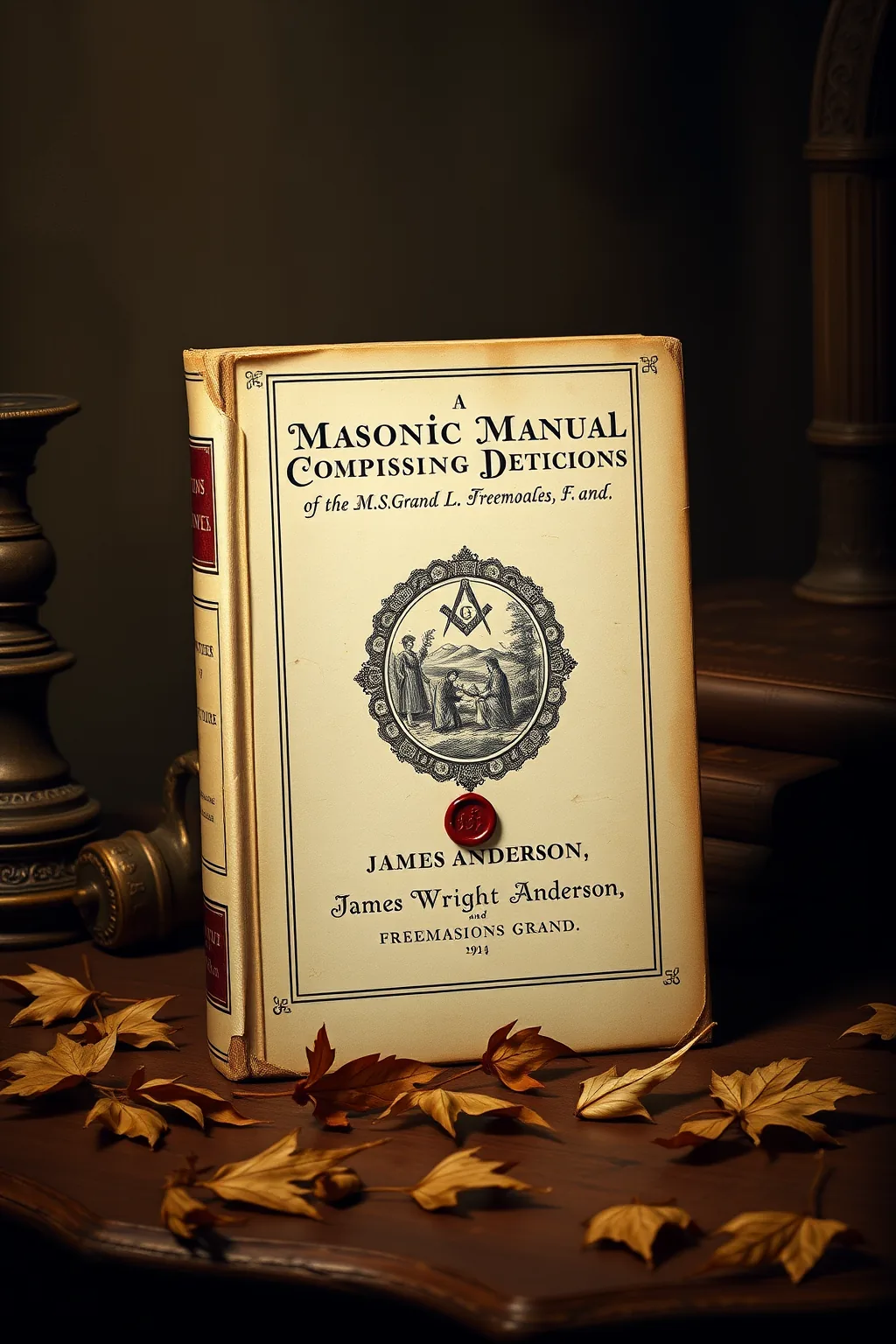
A Masonic Manual Comprising Decisions of the M.S. Grand Lodge, F. and A.M. of the State of ...
 83
83

A Masonic Manual Comprising Decisions of the M.S. Grand Lodge, F. and A.M. of the State of ...


James Wright Anderson’s "A Masonic Manual" is a cornerstone for serious students of Freemasonry. Far beyond its procedural directives, this volume is imbued with the very spirit of the Craft, revealing the philosophical bedrock upon which Masonic decisions are built. It offers profound insights into the application of ancient principles within a structured fraternal context, illuminating the esoteric journey of each Brother. For the initiated, it serves as a constant reminder of the higher aims of Masonry; for the scholar, a vital primary source. Its strength lies in its authoritative presentation of the Grand Lodge’s wisdom, making it an essential, albeit demanding, read for anyone seeking authentic understanding of Masonic governance and its underlying mystical currents. A truly illuminating work.
📝 Description
83
Published by the Freemasons Grand Lodge of California, this manual compiles key decisions from 1912.
This Masonic Manual presents decisions from the Grand Lodge of California, F. and A.M., offering insight into the fraternity's governance and philosophical tenets. It compiles rulings that clarify Masonic law and practice, acting as a reference for understanding the order's structure and principles. The text addresses the moral and ethical framework that guides its members, connecting lodge activities to broader concepts of brotherhood and personal betterment. James Wright Anderson's work collects these official pronouncements, providing a direct look at how Masonic jurisprudence has been interpreted and upheld. It is a resource for those wishing to study the practical application of Masonic principles within a structured fraternity. The decisions recorded here reflect the ongoing effort to maintain the integrity and consistency of Masonic practice across the state.
The manual illuminates the philosophical underpinnings of Freemasonry, detailing how its symbolic language informs the initiated Mason's path. It addresses the responsibilities and ideals associated with membership, such as charity and the pursuit of knowledge. This collection of decisions serves as a historical record of the Grand Lodge's authority and its role in shaping the Masonic experience. It offers clarity on the rules and interpretations that govern the craft, making it a valuable document for understanding the institution's internal workings. The text aims to educate members on the established precedents that define Masonic conduct and belief.
This manual sits within the esoteric tradition of Freemasonry, a fraternity that uses allegory and symbolism to convey moral and philosophical lessons. While not a direct treatise on occultism, its focus on Masonic law and ritual reflects the order's structured approach to imparting knowledge. The decisions documented here often touch upon the interpretation of Masonic symbols and their application in the lives of members. It represents an internal tradition of governance that aims to preserve the integrity of the fraternity's teachings and practices. The pursuit of 'light' mentioned in the description is a common metaphor in Masonic esotericism, signifying knowledge and spiritual understanding.
💡 Why Read This Book?
Uncover the foundational principles and philosophical underpinnings of Freemasonry. Gain insight into the decision-making processes that uphold Masonic tradition and its moral teachings. Ideal for Masons seeking deeper understanding and scholars of secret societies looking for authoritative guidance. Explore the esoteric logic behind Masonic governance and its enduring relevance. A crucial resource for dedicated study.
⭐ Reader Reviews
Honest opinions from readers who have explored this book.
❓ Frequently Asked Questions
What is the primary purpose of this Masonic Manual?
The manual serves to codify and explain the decisions of the Grand Lodge, F. and A.M. of the State of California, providing guidance on Masonic law, ritual, and practice for lodges and brethren within its jurisdiction.
Who is the intended audience for this book?
Primarily intended for Master Masons and those involved in the governance of Masonic lodges, it also appeals to scholars of fraternal organizations and individuals interested in esoteric traditions and their legal frameworks.
Does this book contain Masonic rituals?
While it focuses on decisions and jurisprudence, the underlying principles and interpretations within the manual are deeply intertwined with Masonic ritual and its symbolic meanings, offering context rather than verbatim ritual.
What is the historical significance of this manual?
It represents a crucial snapshot of Masonic governance and established practice from a specific period in a major jurisdiction, offering insights into the evolution of Masonic law and its philosophical underpinnings.
Can non-Masons benefit from reading this book?
Non-Masons interested in the structure, philosophy, and historical development of Freemasonry, particularly its legal and ethical frameworks, will find it an informative, albeit specialized, resource.
🔮 Key Themes & Symbolism
The Pillars of Masonic Law and Governance
This manual meticulously details the foundational decisions that govern Masonic lodges within a significant jurisdiction. It reveals how principles of justice, morality, and fraternal order are translated into actionable statutes. Beyond mere regulation, these decisions reflect a deep commitment to preserving the integrity of the Craft, ensuring that its ancient teachings are upheld through a robust and consistent legal framework. Understanding these pillars is crucial for appreciating the stability and enduring nature of Masonic institutions, providing a blueprint for ethical conduct and communal harmony.
Esoteric Symbolism in Jurisprudence
While appearing as legalistic text, the decisions within this manual are infused with the strong symbolism inherent in Masonic philosophy. Each ruling, each interpretation, often draws upon allegorical meanings and ancient wisdom traditions that underpin the Craft. This theme explores how abstract moral and spiritual concepts are embedded within the practical application of Masonic law. It invites readers to look beyond the surface of regulations and discover the deeper, esoteric currents that guide Masonic practice and its pursuit of enlightenment and self-perfection for its members.
The Path of the Master Mason: Duty and Enlightenment
This work underscores the responsibilities and privileges that accompany the station of a Master Mason. The decisions presented illuminate the path of duty – to the Lodge, to the brethren, and to society – while also highlighting the ongoing journey of enlightenment that is central to Masonic philosophy. It emphasizes the continuous process of moral and intellectual development, showing how Masonic governance facilitates this growth. The manual serves as a evidence of the ideal of the Master Mason as a builder of character and a contributor to the universal quest for truth and understanding.
💬 Memorable Quotes
Direct passages from the work, attributed to the author.
“The ancient charges are the bedrock upon which all Masonic law is built.”
— This highlights the historical continuity and foundational importance of the earliest Masonic regulations, emphasizing that contemporary decisions must align with timeless principles.
“A Lodge is a house of God, and its members are its devoted servants.”
— This emphasizes the sacred nature of the Masonic Lodge as a spiritual space and the profound commitment and reverence expected from its members.
“The Square guides our actions, the Compass our desires, and the Volume of Sacred Law our understanding.”
— This succinctly expresses the core tools of Masonic morality and wisdom, illustrating how they are integrated to shape a Mason's life and conduct.
“Charity is the strongest bond, uniting brethren in mutual support and love.”
— This underscores the paramount importance of fraternal love and practical benevolence as the essential glue that holds the Masonic fraternity together.
💡 Key Ideas
Editorial paraphrase of the work's core concepts — not direct quotes.
Light is found not only in knowledge, but in its righteous application.
This quote speaks to the active, ethical dimension of Masonic wisdom, suggesting that true enlightenment comes from living by the principles learned, not just acquiring them.
🌙 Esoteric Significance
Tradition
This manual sits at the intersection of operative and speculative Freemasonry, drawing heavily from the Western esoteric tradition that seeks to understand the universe and humanity's place within it through allegory, symbolism, and moral philosophy. It connects to Hermeticism, Neoplatonism, and Kabbalistic thought through its emphasis on divine geometry, the pursuit of 'Light' (knowledge), and the concept of building one's inner temple, mirroring the construction of Solomon's Temple.
Symbolism
The decisions within this text, while legal in nature, often implicitly reference core Masonic symbols such as the Square, Compass, Level, and Plumb Line. These symbols are not merely tools for physical construction but represent moral and ethical principles: rectitude, temperance, equality, and integrity. The manual, by enforcing rules based on these principles, acts as a guide to applying esoteric symbolism in the practical conduct of a Mason's life and within the Lodge's operations.
Modern Relevance
In an age often characterized by moral ambiguity and a search for authentic community, the principles of Masonic governance and ethics articulated in this manual retain profound relevance. It offers a model for structured ethical decision-making, emphasizing personal responsibility, fraternal obligation, and the pursuit of moral perfection. For contemporary seekers, it provides a window into a time-tested system designed to foster character development and provide a framework for living a virtuous and purposeful life, echoing the timeless quest for truth and self-knowledge.
👥 Who Should Read This Book
This manual is essential for Master Masons seeking to deepen their understanding of Masonic jurisprudence and the philosophical underpinnings of their fraternity. Scholars of comparative religion, secret societies, and fraternal organizations will find it an invaluable primary source for studying Masonic governance and its historical evolution. Aspiring Masons can gain insight into the core values and operational principles of the Craft. For any seeker of esoteric wisdom who appreciates the structured application of moral philosophy, this text offers a unique perspective on how ancient traditions inform modern ethical frameworks and community building.
📜 Historical Context
Published during an era of significant growth and consolidation for Freemasonry in the United States, this manual reflects the developing legal and philosophical structures of a major Grand Lodge. The late 19th and early 20th centuries saw Freemasonry solidify its organizational frameworks and articulate its doctrines with increasing clarity. This period was characterized by a strong emphasis on moral instruction, ritualistic precision, and the establishment of a structured system of governance that could guide a rapidly expanding fraternity. The decisions compiled here are not merely administrative; they are imbued with the prevailing intellectual currents of the time, blending Enlightenment ideals of reason and virtue with the enduring esoteric traditions of the Craft. This work stands as a evidence of the meticulous efforts to codify and preserve Masonic principles, ensuring their transmission to future generations amidst a changing world.
📔 Journal Prompts
How do the 'ancient charges' mentioned in the manual translate into contemporary ethical challenges for Masons?
Reflect on a specific Masonic symbol referenced or implied in a decision and its personal meaning to you.
Consider the concept of 'Light' as discussed within Masonic jurisprudence and how you actively seek it in your life.
Analyze the balance between individual rights and lodge responsibilities as presented in the Grand Lodge decisions.
How can the principles of fraternal support detailed in this manual be applied more broadly in secular communities?
🗂️ Glossary
Jurisdiction
The territory, authority, or sphere in which a Grand Lodge exercises its sovereign power and makes its laws binding upon subordinate lodges and their members.
M.S. Grand Lodge
Stands for Most Worshipful Grand Lodge, an honorific title indicating the supreme governing body of Freemasonry within a specific geographical area or state.
F. and A.M.
Abbreviation for 'Free and Accepted Masons,' referring to the standard designation for regular Masonic lodges and Grand Lodges.
Brethren
A term used to refer to fellow members of a Masonic lodge, emphasizing the bond of brotherhood and equality among Masons.
Lodges
The fundamental units of Freemasonry, where members meet to conduct business, perform rituals, and engage in fellowship and education.
This book appears in 2 collections
🔮 Readers Also Liked
Browse all →



From the “Secret Societies” Collection
View all →



More Free Freemasonry & Secret Societies Books
View all →