A Manual of Cartomancy, Fortune-Telling and Occult Divination
 77
77

A Manual of Cartomancy, Fortune-Telling and Occult Divination
The primary strength of this edition of *A Manual of Cartomancy, Fortune-Telling and Occult Divination* lies in its fidelity to the source material, diligently excising the superfluous elements that often clutter facsimile reprints. Grand Orient's text, unburdened by extraneous advertisements or excessive blank pages, allows the reader to focus on the intricate details of divinatory practice. The section on cartomancy, particularly its detailed examination of card combinations, is exceptionally well-handled. However, the attribution to 'Grand Orient' itself introduces a layer of ambiguity; while often associated with Arthur Edward Waite, definitive authorship remains a subject of scholarly discussion. A concrete limitation is the occasional density of the prose, which, while authentic to the period, may require patient study for modern readers unfamiliar with 19th-century esoteric discourse. The careful inclusion of pages 51-54, a point of contention in some reviews, is commendable and ensures textual completeness. This manual is a solid, if somewhat dense, resource for those serious about the mechanics of divination.
📝 Description
77
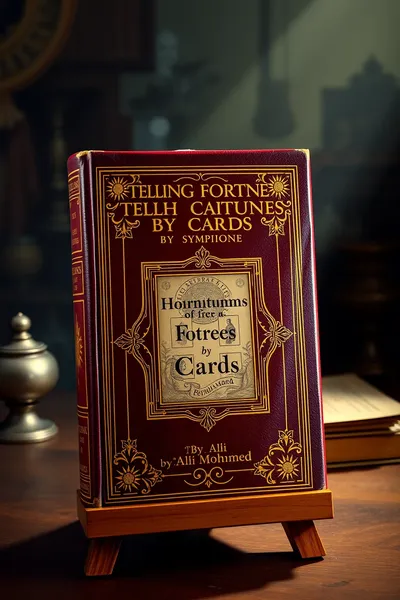
Grand Orient's 19th-century A Manual of Cartomancy details methods for interpreting symbols in occult divination.
This volume, attributed to Grand Orient, offers a thorough guide to various methods of divination. It meticulously details how to interpret symbols and patterns found in different esoteric systems. The book aims to give readers the basic knowledge and techniques needed for occult fortune-telling. It focuses on cartomancy, the reading of cards, alongside other divinatory practices. The structured approach within this text is designed for those seriously interested in the esoteric arts and the history of occultism. It speaks to individuals who want to use divination practically and understand the historical methods behind fortune-telling.
The historical dating of works by 'Grand Orient' can be complicated. This edition prioritizes the original text's integrity, presenting the divinatory techniques as the author intended. It omits modern additions like extra blank pages or advertisements. This allows readers to engage directly with the material without outside distractions. The manual covers core concepts such as the symbolic language of playing cards and tarot. It also addresses the interpretation of omens and the principles of various fortune-telling systems. A key emphasis is placed on intuition, symbolic comprehension, and the systematic use of these tools for insight.
Attributed to the late 19th century, this manual sits within the Western esoteric tradition that saw a surge in interest in divination and occult practices. It follows in a lineage of works that sought to systematize and teach methods for gaining knowledge through symbolic interpretation, often drawing from or adapting existing card systems and folk divinatory practices. The focus on cartomancy aligns with a broader resurgence of interest in oracles and prophecy during that period, connecting to movements like spiritualism and the Hermetic Order of the Golden Dawn, which also explored various forms of divination.
💡 Why Read This Book?
• Learn the specific techniques for interpreting card spreads in cartomancy, moving beyond superficial readings to understand the nuanced interplay of symbols as detailed in the text's cartomantic chapters. • Grasp the historical methodology of occult divination as practiced in the late 19th and early 20th centuries, understanding the framework Grand Orient used, which was influenced by figures like Arthur Edward Waite. • Acquire practical skills in various divinatory arts, including omen interpretation and fortune-telling with common tools, allowing for a hands-on engagement with esoteric practices outlined in the manual.
⭐ Reader Reviews
Honest opinions from readers who have explored this book.
❓ Frequently Asked Questions
What is the significance of the 'Grand Orient' attribution in this book?
The 'Grand Orient' attribution is often linked to Arthur Edward Waite, a significant figure in occultism and the co-creator of the Rider-Waite tarot deck. This connection suggests a lineage within the Western Esoteric Tradition, offering insights into divination practices prevalent during Waite's active period.
Does this edition of 'A Manual of Cartomancy' include all original content?
Yes, this specific edition has been compiled to ensure that no essential pages are missing, notably including pages 51-54, which have been absent in some other facsimile editions. Extraneous elements like blank pages and historical advertisements have been omitted for clarity.
What types of divination are covered in this manual?
The manual covers a range of divinatory methods, with a primary focus on cartomancy (fortune-telling with cards). It also delves into general occult divination techniques, providing readers with a broad overview of historical fortune-telling practices.
Is this book suitable for complete beginners in divination?
While the book provides foundational knowledge, its detailed and historical approach may be best suited for beginners who are dedicated to serious study. It offers a comprehensive resource for those willing to engage deeply with the subject matter.
What makes this edition different from other facsimile reprints?
This edition distinguishes itself by its careful compilation, specifically avoiding the greyish background found in some facsimiles and omitting numerous blank pages and historical advertisements. The focus is on presenting the core divinatory content clearly and without distraction.
What is the historical period associated with the content of this manual?
The content reflects the esoteric and divinatory interests prevalent in the late 19th and early 20th centuries, a period of significant activity for occult scholars and practitioners like Arthur Edward Waite, to whom the work is often attributed.
🔮 Key Themes & Symbolism
Symbolic Interpretation in Cartomancy
The manual meticulously breaks down the symbolic language inherent in cartomancy, focusing on how to interpret individual cards and their interplay within a spread. It moves beyond simple meanings, exploring the deeper esoteric resonances and narrative potential that emerge from card combinations, reflecting a late 19th-century approach to divinatory symbolism.
Methodology of Occult Divination
This work details the structured approach to occult divination, emphasizing a systematic process for fortune-telling. It covers the practical application of various divinatory tools and techniques, stressing the importance of methodical study and practice to achieve accurate and meaningful insights, aligning with the rigorous standards of esoteric scholarship of its time.
Historical Fortune-Telling Systems
The book serves as a window into historical fortune-telling systems, presenting methods that were popular or influential during the period of its likely origin. It provides readers with an understanding of how these practices were understood and utilized by practitioners and scholars, offering a glimpse into the occult milieu of figures like Arthur Edward Waite.
The Esoteric Significance of Omens
Beyond card reading, the manual addresses the broader concept of omens and their interpretation within an occult framework. It guides the reader on how to perceive and understand signs from the environment and events, viewing them as communications or indicators of underlying spiritual or destined currents.
💬 Memorable Quotes
Direct passages from the work, attributed to the author.
“The interpretation of cards depends not solely on the fixed meaning of each, but on the relations they bear to one another.”
— This highlights the combinatorial aspect of cartomancy, suggesting that true divination arises from understanding the dynamic interactions between symbols, rather than isolated definitions, a core tenet of advanced card reading.
“A proper diviner must cultivate a mind receptive to subtle impressions.”
— This emphasizes the role of intuition and psychic sensitivity in divination, positing that technical knowledge must be coupled with an open inner state for effective practice.
“Each card carries a host of associations, both mundane and spiritual.”
— This points to the layered nature of divinatory symbols, indicating that their meanings encompass both everyday occurrences and deeper, metaphysical implications relevant to occult study.
“The practice of fortune-telling requires patience and a disciplined approach to study.”
— This underscores the manual's stance that divination is not a frivolous art but a serious discipline demanding dedication, methodical learning, and consistent effort from the practitioner.
“Signs and symbols are the language through which the unseen influences communicate.”
— This fundamental statement frames divination as a form of communication with subtle realms, where observable phenomena serve as a coded message requiring interpretation by an initiated individual.
🌙 Esoteric Significance
Tradition
This work sits within the Western Esoteric Tradition, particularly influenced by the late Victorian and Edwardian occult revival. It draws heavily on the methodologies and symbolic frameworks associated with figures like Arthur Edward Waite, who himself was deeply involved in Hermeticism and Rosicrucianism. The manual's approach to cartomancy reflects a desire to systematize and teach divinatory arts in a manner accessible to a broader audience interested in occult philosophy.
Symbolism
Key symbols explored include the playing cards and, by extension, tarot archetypes, which are treated as carriers of profound symbolic meaning. The manual likely discusses the numerological and elemental correspondences inherent in the cards. Another motif is the concept of 'omens' – everyday occurrences interpreted as significant signs, reflecting a belief in a divinely ordered or interconnected universe where events carry messages.
Modern Relevance
Contemporary practitioners of tarot and cartomancy often reference foundational texts like this one for historical context and method. Modern occultists and students of esoteric history find value in understanding the roots of current divinatory practices. Schools focusing on Western Esotericism and comparative religion also utilize such works to analyze the evolution of spiritual and mystical thought in the modern era.
👥 Who Should Read This Book
• Aspiring cartomancers and tarot readers seeking to understand the historical underpinnings and detailed interpretative methods that informed early 20th-century divination practices. • Students of Western Esotericism interested in the occult revival of the late 19th and early 20th centuries, particularly the development of divinatory systems attributed to figures like Arthur Edward Waite. • Researchers and practitioners of comparative religion or cultural history looking to analyze the evolution and popularization of fortune-telling and occult practices during a key period of spiritual exploration.
📜 Historical Context
The late 19th and early 20th centuries were a fertile ground for occult revivalism, with figures like Arthur Edward Waite, Helena Blavatsky, and Aleister Crowley shaping esoteric thought. This period saw a surge in interest in ancient mysteries, spiritualism, and various forms of divination, often drawing from Hermeticism, Kabbalah, and Rosicrucianism. Works like *A Manual of Cartomancy* emerged within this milieu, attempting to systematize and popularize practices previously confined to more esoteric circles. The intellectual currents included a blend of Romanticism's emphasis on intuition and symbolism with a nascent scientific approach to cataloging and understanding phenomena, even occult ones. Competing schools of thought, such as the more ceremonial magic of Crowley or the vast syncretism of Theosophy, offered different paths. This manual likely engaged with or responded to the popularization of tarot and other divinatory methods, providing a structured alternative or supplement to existing literature.
📔 Journal Prompts
The interpretation of card relations: how do the positions and interactions of specific cards, such as the 'Seven of Cups' and 'The Hermit', alter their fundamental meanings?
Reflecting on the 'language of symbols': how can mundane observations be perceived as omens within an occult framework?
The disciplined approach to divination: what personal practices can foster the 'receptive mind' mentioned for effective divinatory work?
The fixed meaning versus contextual meaning: explore a divinatory symbol where its fixed meaning seems contradicted by its relation to other symbols.
The role of intuition in structured divination: how might subtle impressions guide the interpretation of a cartomantic spread?
🗂️ Glossary
Cartomancy
The practice of fortune-telling using a deck of playing cards. It involves interpreting the cards' positions, combinations, and individual meanings to gain insight into past, present, or future events.
Occult Divination
A broad term encompassing various methods used to seek knowledge of the future or the unknown through supernatural or mystical means, often rooted in esoteric traditions.
Grand Orient
An attribution for the author, often associated with Arthur Edward Waite, a prominent figure in occultism and co-creator of the Rider-Waite tarot deck, indicating a connection to specific esoteric lineages.
Omen
An event or phenomenon perceived as a sign or prediction of something to come, often interpreted through esoteric or symbolic frameworks.
Symbolic Language
The system of meanings and associations attached to images, figures, or objects, used in divination to convey information or insights beyond literal interpretation.
Facsimile Edition
A reproduction of an original text that aims to be as close as possible to the original in appearance and content, distinct from editions that are edited, abridged, or modernized.
Esoteric
Relating to or accessible only by a select group of people with a specialized knowledge or interest, often concerning mystical or spiritual matters.