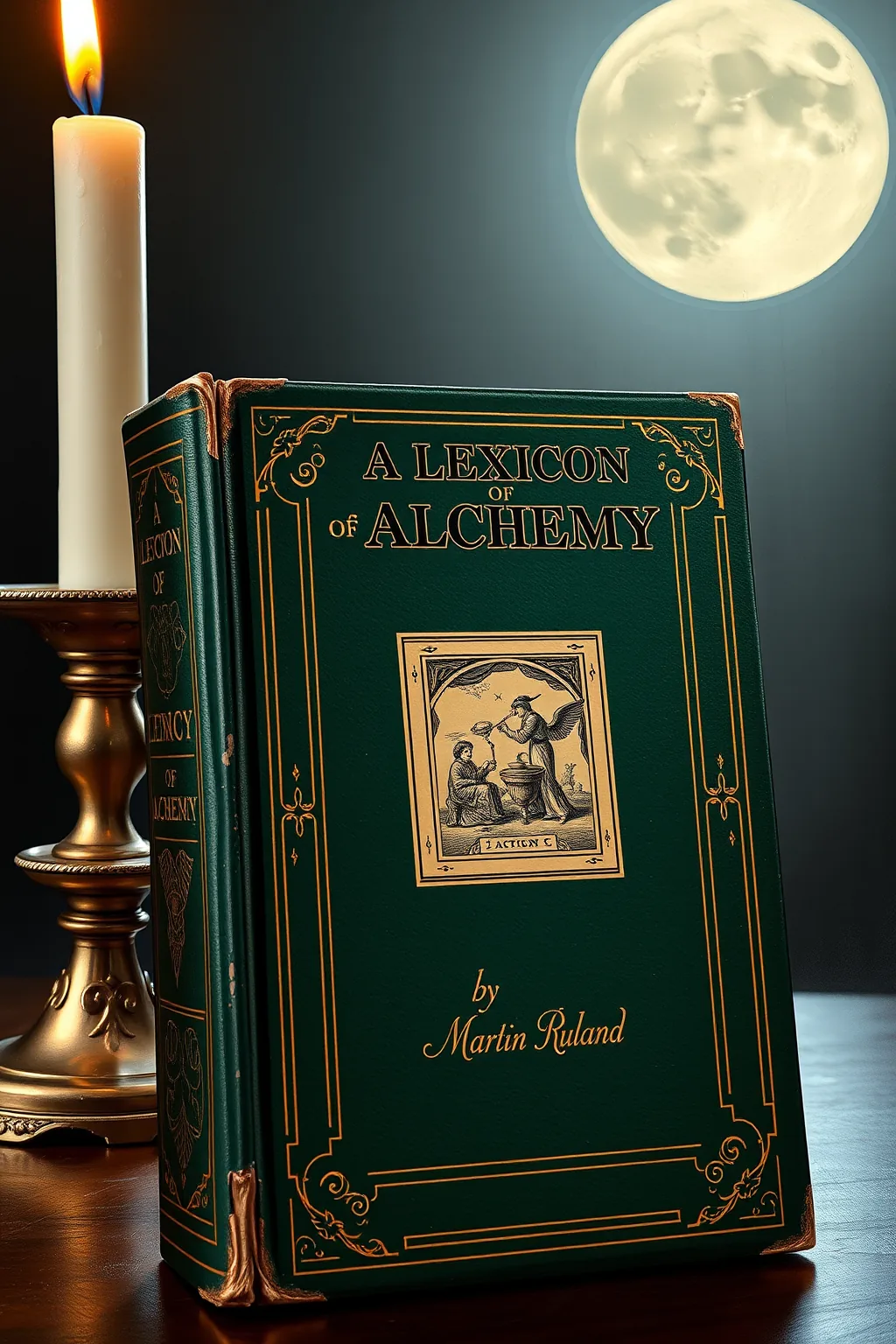
A lexicon of alchemy
 61
61

A lexicon of alchemy



Martin Ruland's A lexicon of alchemy is a masterpiece for those who delve into the esoteric. This work stands out for its meticulous compilation of alchemical terms, each one a portal to deeper mystical insights. Ruland's lexicon is not just a reference tool but a philosophical guide, illuminating the path to spiritual transformation. The book is particularly valuable for its exploration of alchemical symbolism, providing a wealth of esoteric knowledge that is both profound and accessible. Ideal for both scholars and practitioners, this lexicon is a cornerstone in the study of alchemy and hermeticism.
📝 Description
61
Martin Ruland's 1612 lexicon defines hundreds of alchemical terms.
First published in 1612, Martin Ruland's lexicon attempts to codify the language of alchemy. It is not a narrative or a guide to practice, but rather a dictionary. Ruland aimed to clarify the often obscure terminology used by alchemists across different traditions and texts. Each entry explains a term, drawing connections to related concepts or earlier definitions. The work serves as a reference for understanding the specific vocabulary associated with the Great Work, the elements, and the philosophical underpinnings of the art.
The lexicon covers a wide array of alchemical subjects, from basic substances and processes to more abstract spiritual interpretations. Ruland's intention was to create a stable point of reference in a field known for its secrecy and coded language. By compiling these definitions, he provided a tool for those studying alchemical texts, helping them to parse the symbolic and literal meanings embedded within the practice. Its value lies in its systematic approach to an otherwise disparate body of knowledge.
This lexicon sits within the Western esoteric tradition, specifically the Hermetic and alchemical streams active in the late Renaissance and early Baroque periods. Alchemy, in this context, was not merely a proto-chemistry but a complex system encompassing spiritual, philosophical, and cosmological ideas. Ruland's work reflects a desire to bring order and definition to this rich but often cryptic field. It acknowledges the symbolic language and hidden meanings that alchemists employed, seeking to illuminate them for a dedicated readership. The book is a product of an era where the boundaries between natural philosophy, mysticism, and religious thought were fluid.
💡 Why Read This Book?
A lexicon of alchemy is a must-read for seekers of hidden knowledge, scholars of esoteric traditions, and practitioners of alchemy. It offers a comprehensive guide to the mystical language of alchemy, unraveling the symbolism and philosophical significance behind each term. This book is ideal for those who wish to deepen their understanding of alchemical practices and their relevance in the modern world. It is a rich resource for contemplative study and spiritual growth.
⭐ Reader Reviews
Honest opinions from readers who have explored this book.
❓ Frequently Asked Questions
What is the primary focus of A lexicon of alchemy?
The primary focus is to provide a comprehensive glossary of alchemical terms, offering deep insights into the symbolism and philosophical underpinnings of alchemy.
Who is the intended audience for this book?
The book is intended for scholars, practitioners, and seekers of esoteric knowledge who are interested in the mystical and occult aspects of alchemy.
How does this lexicon contribute to the study of alchemy?
It contributes by offering a detailed and symbolic exploration of alchemical terms, making it an essential resource for both academic study and practical application.
What makes this lexicon unique?
Its uniqueness lies in the depth of its esoteric insights and the rich symbolism it provides, making it a valuable tool for spiritual and philosophical exploration.
Can beginners benefit from reading this book?
While it is accessible to beginners, it is particularly valuable for those with some prior knowledge of alchemy and esoteric traditions.
🔮 Key Themes & Symbolism
Symbolism in Alchemy
Alchemy is rich with symbolism, and this lexicon delves deep into the meanings behind these symbols. Each term is a gateway to understanding the transformative power of alchemy, revealing the hidden language of the ancient art. This theme is crucial for those who seek to unravel the mysteries of alchemy and apply its principles to spiritual growth.
Philosophical Underpinnings
The philosophical foundations of alchemy are explored in detail, providing insights into the spiritual and metaphysical aspects of the practice. This theme is essential for understanding the deeper meaning behind alchemical processes and their relevance to personal transformation.
Transformation and Enlightenment
Alchemy is ultimately about transformation and enlightenment, and this lexicon offers a comprehensive guide to these concepts. By exploring the terms and symbols associated with transformation, readers can gain a deeper understanding of the alchemical path to spiritual enlightenment.
💬 Memorable Quotes
Direct passages from the work, attributed to the author.
“Every symbol holds a secret.”
— This highlights the strong symbolism in alchemy, inviting readers to delve deeper into the hidden meanings behind alchemical terms.
“The path to enlightenment is through alchemy.”
— This emphasizes the spiritual significance of alchemy, guiding seekers on their journey to enlightenment.
“Alchemy reveals the hidden language of the universe.”
— This underscores the mystical and esoteric nature of alchemy, inviting readers to explore its profound secrets.
💡 Key Ideas
Editorial paraphrase of the work's core concepts — not direct quotes.
Alchemy is the art of transformation.
This quote underscores the core philosophy of alchemy, emphasizing its role in personal and spiritual transformation.
Transformation is the essence of alchemy.
This quote reinforces the idea that alchemy is about personal and spiritual growth, making it a powerful tool for self-discovery.
🌙 Esoteric Significance
Tradition
A lexicon of alchemy belongs to the Hermetic tradition, which emphasizes the mystical and spiritual aspects of alchemy. This tradition sees alchemy as a path to spiritual enlightenment and personal transformation, using symbols and rituals to unlock hidden knowledge.
Symbolism
Key symbols in this lexicon include the Philosopher's Stone, the Ouroboros, and the alchemical process of transmutation. These symbols represent the transformative power of alchemy and its role in spiritual growth. The Philosopher's Stone, for example, symbolizes the ultimate goal of alchemy: the achievement of spiritual enlightenment.
Modern Relevance
Today, this lexicon remains relevant for modern practitioners of alchemy and esoteric traditions. It is used by those who seek to understand the mystical and symbolic aspects of alchemy, applying its principles to personal and spiritual growth. The book is also a valuable resource for scholars studying the history and philosophy of alchemy.
👥 Who Should Read This Book
Beginners interested in alchemy will find this lexicon to be an excellent starting point, offering a comprehensive guide to the mystical language of alchemy. Scholars of esoteric traditions will appreciate the depth of its esoteric insights and the strong symbolism it provides. Spiritual seekers will benefit from its exploration of the philosophical underpinnings of alchemy, while practitioners will find it an invaluable resource for applying alchemical principles to their spiritual journey.
📜 Historical Context
A lexicon of alchemy was written during a time when alchemy was both a scientific and mystical pursuit. The Renaissance period saw a renewed interest in ancient knowledge, including alchemy, as scholars sought to reconcile the mystical with the empirical. Martin Ruland's work was instrumental in preserving and disseminating alchemical knowledge, making it accessible to a wider audience. The book's influence can be seen in the continued study and practice of alchemy, as well as in its impact on various esoteric traditions.
📔 Journal Prompts
Reflect on the symbolism of the Philosopher's Stone and its significance in your spiritual journey.
How does the concept of transformation in alchemy resonate with your personal growth?
Consider the role of hidden knowledge in alchemy and its relevance to your understanding of the mystical.
Explore the philosophical underpinnings of alchemy and how they relate to your spiritual beliefs.
What insights have you gained from studying the symbols and terms in this lexicon?
🗂️ Glossary
Philosopher's Stone
A legendary alchemical substance said to be capable of turning base metals into gold and achieving spiritual enlightenment.
Ouroboros
A symbol of a serpent or dragon swallowing its own tail, representing the cycle of life, death, and rebirth.
Transmutation
The alchemical process of transforming one substance into another, often symbolizing spiritual transformation.
Prima Materia
The initial substance from which all alchemical processes begin, representing the raw, unrefined state of the self.
Major work
The great work of alchemy, encompassing the entire process of transformation and enlightenment.
This book appears in 3 collections
🔮 Readers Also Liked
Browse all →








From the “Hermeticism” Collection
View all →








More Free Alchemy & Hermeticism Books
View all →