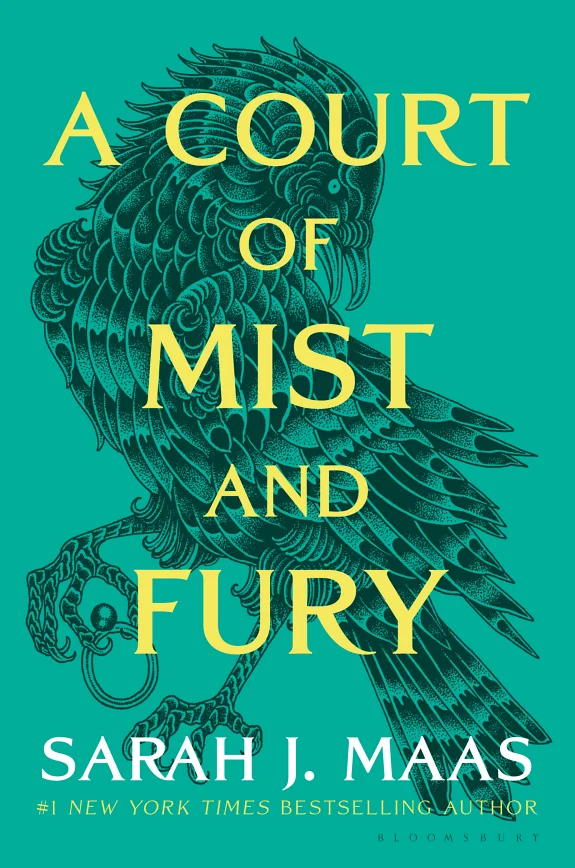
A Court of Mist and Fury
 74
74

A Court of Mist and Fury
Sarah J. Maas's "A Court of Mist and Fury" excels in its depiction of Feyre's evolving self-awareness and her navigation of the Night Court's intricate political landscape. The author's strength lies in crafting compelling emotional arcs, particularly Feyre's journey toward reclaiming her autonomy after immense trauma. The expansion of the fae world and the introduction of new characters, especially Rhysand, add significant depth. However, the pacing occasionally falters, particularly in the mid-section where exposition sometimes overshadows forward momentum. A particular moment where Feyre asserts her independence by making her own choices, rather than being dictated by others, highlights the novel's core thematic success. The work ultimately delivers a satisfying, character-focused continuation of Feyre's story.
📝 Description
74
A Court of Mist and Fury, published in 2020, continues Feyre's story after her human life.
This 2020 novel, the second in Sarah J. Maas's series, follows Feyre as she transitions into the Fae world and becomes part of the Night Court. The story expands on her initial experiences as a human among immortals, detailing the political intricacies and character development. Feyre's personal journey is central, as she confronts past trauma and builds strength in a dangerous new environment.
The book is for readers who enjoy detailed world-building, complex romantic relationships, and protagonists who undergo significant personal change. It blends fairy tale elements with mature themes, appealing to those who like epic fantasy focused on character growth and emotional arcs. The narrative examines themes of trauma, healing, and finding agency, alongside the nature of power and its use by different Fae factions. It also addresses consent and healthy relationships.
Published in 2020, 'A Court of Mist and Fury' arrived during a period of resurgence for adult fantasy, particularly the 'romantasy' subgenre. This trend saw authors like Leigh Bardugo and V.E. Schwab explore complex character relationships and mature themes within expansive fantasy settings. Maas's work fits this development by presenting a character-driven narrative that moves beyond simple fairy tale structures, focusing on psychological depth and intricate social dynamics within its magical world.
💡 Why Read This Book?
• Gain insight into reclaiming agency after trauma, as demonstrated by Feyre's arc following the events of "A Court of Thorns and Roses. • Experience the nuanced portrayal of consent and healthy partnership through the developing relationship between Feyre and Rhysand, a stark contrast to earlier power dynamics. • Understand the complexities of political maneuvering within the Fae courts, particularly the intricate social structures of the Night Court established by Tamlin and later explored with Rhysand.
⭐ Reader Reviews
Honest opinions from readers who have explored this book.
❓ Frequently Asked Questions
What is the primary focus of "A Court of Mist and Fury"?
The novel primarily focuses on Feyre's adjustment to life in the Night Court, her healing from past trauma, and her deepening involvement in fae politics and relationships, particularly with Rhysand.
How does Feyre's character evolve in this book?
Feyre's character evolves significantly; she moves from a state of trauma and dependence to one of self-discovery, empowerment, and agency, actively making choices about her future and her powers.
What are the main themes explored in "A Court of Mist and Fury"?
Key themes include healing from trauma, the nature of power and responsibility, the development of healthy relationships, and the struggle for personal freedom within oppressive systems.
Who is Rhysand and what is his role?
Rhysand is the High Lord of the Night Court. He plays a pivotal role in Feyre's life, serving as a complex ally, mentor, and romantic interest who challenges her perceptions and supports her growth.
Does this book require reading the previous one?
Yes, reading "A Court of Thorns and Roses" is highly recommended as "A Court of Mist and Fury" directly continues Feyre's story and builds upon established characters and plot points.
What is the overall tone of the book?
The tone is generally darker and more mature than its predecessor, exploring heavier themes of trauma and political intrigue, balanced with developing romantic relationships and moments of personal triumph.
🔮 Key Themes & Symbolism
Trauma and Healing
Feyre's journey is deeply rooted in processing the trauma inflicted during her time Under the Mountain. The book meticulously charts her path toward healing, emphasizing that recovery is not linear but involves confronting pain, seeking support, and rediscovering self-worth. This arc highlights the psychological impact of extreme experiences and the strength required to reclaim one's life, moving beyond mere survival to genuine thriving within the complex Fae society.
Power and Responsibility
The narrative scrutinizes the nature of power, both magical and political, through the actions of various Fae lords and Feyre herself as she develops her abilities. It questions how power corrupts or can be wielded for good, particularly examining the responsibilities that come with wielding significant influence. Rhysand's position as High Lord and his methods offer a complex case study in balancing personal desires with the welfare of his people and the broader Fae world.
Consent and Agency
A significant evolution from the first book, "A Court of Mist and Fury" places a strong emphasis on consent and Feyre's regained agency. Her choices regarding her relationships, her powers, and her involvement in political affairs are central. The depiction of her relationship with Rhysand is particularly notable for its foundation in mutual respect and clear communication, contrasting with earlier dynamics of coercion and control.
Found Family and Belonging
Beyond romantic entanglements, the concept of found family becomes crucial. Feyre discovers a supportive circle within the Night Court – Rhysand, Amren, Cassian, Azriel, and Mor – who accept her unconditionally and aid her recovery. This theme underscores the importance of community and chosen bonds in overcoming isolation and fostering personal growth, providing a counterpoint to the often harsh realities of Fae politics.
💬 Memorable Quotes
Direct passages from the work, attributed to the author.
“I was not a pet, or a prize, or anything that could be owned.”
— This statement expresses Feyre's fundamental shift in self-perception. It signifies her rejection of objectification and her assertion of autonomy, marking a central moment in her journey of healing and empowerment after experiencing profound subjugation.
“My mother used to say that the greatest battles are the ones fought within.”
— This reflects the internal struggles Feyre faces as she grapples with her trauma and the immense power she is acquiring. It emphasizes that personal growth and overcoming internal demons are as challenging, if not more so, than external conflicts.
“I was a High Lord. And I would not be a pawn.”
— This declaration signifies Feyre's full acceptance of her power and her refusal to be manipulated by others. It marks her transformation into a formidable figure who understands her own worth and influence within the Fae political landscape.
“It was a dangerous, thrilling, and terrifying thing to be alive.”
— This captures the complex emotional state Feyre experiences as she navigates her new reality. It acknowledges the inherent risks and uncertainties but also the exhilarating potential of her life, embracing the fullness of her existence.
💡 Key Ideas
Editorial paraphrase of the work's core concepts — not direct quotes.
If you were going to die, you were going to die trying to live.
This quote reflects Feyre's burgeoning courage and determination. It moves beyond mere survival to a proactive embrace of life, even in the face of danger, highlighting her willingness to fight for her own existence and future.
🌙 Esoteric Significance
Tradition
While not explicitly rooted in a single esoteric tradition, "A Court of Mist and Fury" echoes Gnostic themes of liberation from a false or oppressive demiurge (Tamlin's court and its societal norms) and the awakening of a divine spark within the protagonist (Feyre's developing powers and self-awareness). The journey involves shedding illusions and confronting a higher, albeit dangerous, truth, reminiscent of the Gnostic pursuit of gnosis (knowledge) for salvation. The emphasis on inner awakening and personal truth aligns with broader Neoplatonic and Hermetic ideas of the soul's journey.
Symbolism
The Night Court itself can be viewed as a symbolic representation of the shadow self or the unconscious, a field of hidden power and potent emotions that must be integrated rather than feared. Rhysand, as its High Lord, embodies aspects of the archetype of the powerful, complex male figure who initiates the protagonist into deeper truths. The transformation of Feyre's powers from raw, uncontrolled surges to a more integrated, potent force symbolizes the alchemical process of refining base elements into gold, representing spiritual or psychological maturation.
Modern Relevance
Contemporary readers and practitioners of modern witchcraft and spiritual self-help often draw parallels between Feyre's journey and personal growth narratives. The book's exploration of overcoming trauma, asserting boundaries, and cultivating inner strength appeals to therapeutic concepts and modern spiritual philosophies that emphasize self-empowerment and the integration of darker aspects of the psyche. Thinkers and writers focusing on archetypal psychology and the hero's journey find fertile ground in Feyre's arc as a model for confronting adversity and achieving self-realization in a complex world.
👥 Who Should Read This Book
• Readers interested in exploring themes of trauma recovery and psychological healing within a fantastical framework. • Enthusiasts of intricate political intrigue and world-building in epic fantasy settings. • Individuals drawn to character-driven narratives focusing on complex relationships and personal empowerment.
📜 Historical Context
Published in 2020, "A Court of Mist and Fury" arrived during a period of significant expansion and commercial success for adult fantasy literature. The genre saw a surge in popularity, with authors like Brandon Sanderson and N.K. Jemisin receiving critical acclaim for intricate world-building and complex characterizations. Maas’s work tapped into the growing "romantasy" subgenre, blending epic fantasy elements with strong romantic plotlines, a trend that gained considerable traction online, particularly through platforms like TikTok's #BookTok. This followed a period where YA fantasy had already seen massive success with series like "The Hunger Games" and "Divergent," and "A Court of Mist and Fury" represents a maturation of themes and an expansion of narrative scope for an adult audience. The book's reception was largely positive among its established fanbase, though critics sometimes debated its pacing and thematic depth compared to more literary fantasy offerings.
📔 Journal Prompts
Feyre's assertion of agency within the Night Court.
The symbolic weight of the Night Court's shadows.
Rhysand's role as a catalyst for Feyre's transformation.
The concept of 'found family' among the Inner Circle.
Reconciling past trauma with present strength.
🗂️ Glossary
High Fae
Immortal, powerful beings who rule the land of Prythian. They possess various magical abilities and are distinct from humans and other mythical creatures.
Night Court
One of the seven Fae territories, ruled by High Lord Rhysand. Known for its dark, often dangerous, and politically complex atmosphere.
Under the Mountain
A perilous region where humans were once sacrificed to appease Fae creatures. Feyre's traumatic experiences here form a significant part of her backstory.
Inner Circle
Rhysand's closest advisors and friends within the Night Court, including Amren, Cassian, Azriel, Mor, and Nesta and Elain (later).
High Lord
The ruler of one of the seven Fae courts, possessing immense power and responsibility over their territory and people.
Suriel
An ancient, disembodied Fae entity known for its cryptic pronouncements and vast knowledge, often acting as an informant.
The Bone Carver
A mysterious and powerful Fae being residing in the Prison, known for its ability to manipulate bone and reality.
This book appears in 1 collection
🔮 Readers Also Liked
Browse all →








From the “Fairies” Collection
View all →





More Free Occult Philosophy Books
View all →