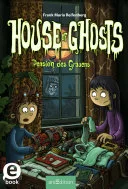
House of Ghosts – Pension des Grauens (House of Ghosts 3)
 77
77

House of Ghosts – Pension des Grauens (House of Ghosts 3)
Frank M. Reifenberg’s "House of Ghosts – Pension des Grauens" offers a brisk, amusing encounter with the spectral. The premise—a skeptical professor versus two young ghost investigators—is a solid foundation for a children’s mystery. Reifenberg effectively balances Melli and Hotte’s earnest ghost-hunting with Professor Schnöcks's predictable disbelief, leading to a few genuinely funny moments when reality intrudes upon his rational worldview. The pacing is generally good, with short chapters that propel the reader forward. However, the resolution feels somewhat rushed, and the 'secret of the ghost villa' could have benefited from deeper exploration beyond a simple reveal. Despite this, the book succeeds as a lighthearted, engaging read for its target audience, providing a good introduction to confronting one's own assumptions about the unseen. It’s a competent entry in the series, offering just enough spookiness and humor to entertain.
📝 Description
77
Published in 2018, House of Ghosts – Pension des Grauens pits young protagonists against a skeptical professor.
This children's novel, the third in Frank M. Reifenberg's series, features Melli and Hotte facing Professor Schnöcks, a visitor intent on disproving paranormal activity. The story unfolds at the 'Pension des Grauens' (House of Ghosts), a setting ripe for supernatural encounters. Reifenberg blends humor and suspense, drawing on the enduring appeal of ghost stories for a younger audience.
The narrative is designed for readers aged 10 and up who enjoy spooky adventures with relatable characters. Its accessible language and engaging plot aim to draw in both avid and hesitant readers. The book encourages an appreciation for imaginative tales by presenting unusual challenges for its young heroes. The central tension lies in the characters' struggle to reconcile scientific rationalism with unexplained phenomena.
While not directly linked to a specific historical esoteric movement, this 2018 publication taps into the long tradition of ghost stories and uncanny tales. It reflects a contemporary cultural dialogue concerning empirical belief versus paranormal experiences. The conflict between Professor Schnöcks' rationalism and the inherent nature of the 'Pension des Grauens' mirrors ongoing discussions about the limits of scientific explanation when faced with the unexplained.
⭐ Reader Reviews
Honest opinions from readers who have explored this book.
❓ Frequently Asked Questions
What is the main conflict in House of Ghosts – Pension des Grauens?
The primary conflict is between Professor Schnöcks, who aims to disprove paranormal activity, and Melli and Hotte, who are already familiar with the spectral inhabitants of the Pension des Grauens.
What age group is House of Ghosts – Pension des Grauens recommended for?
The book is recommended for children aged 10 years and older, due to its engaging mystery and lighthearted spooky elements.
What makes this book enjoyable for young readers?
Its enjoyment stems from short chapters, high suspense, and humorous situations that are both scary and funny, making reading a fun experience.
Who are the main child protagonists in the series?
The main child protagonists are Melli and Hotte, who act as ghost investigators and protagonists in the 'House of Ghosts' series.
What is the original publication year of House of Ghosts – Pension des Grauens?
House of Ghosts – Pension des Grauens was first published on April 23, 2018.
Does the book contain illustrations?
Yes, the book is described as being 'lustig illust' which translates to 'funnily illustrated', indicating the presence of illustrations.
🔮 Key Themes & Symbolism
Rationality vs. The Unseen
The core of the narrative pits scientific skepticism against the undeniable presence of ghosts. Professor Schnöcks embodies the former, seeking empirical evidence to debunk the paranormal. Melli and Hotte, however, operate from a position of acceptance, having already encountered spectral phenomena. This dynamic explores how belief systems are challenged when confronted with experiences that defy conventional explanation, suggesting that reality may be more expansive than rigid rationalism allows.
Childhood Courage and Investigation
Melli and Hotte are portrayed as capable young investigators who tackle the supernatural with a mix of bravery and curiosity. Their pursuit of the truth behind the ghostly occurrences at the Pension des Grauens highlights themes of resourcefulness and determination. The book suggests that age is no barrier to confronting mysteries, empowering young readers by showcasing characters who actively engage with the unknown rather than being paralyzed by fear.
The Nature of Secrets
The 'secret of the ghost villa' is a central plot device, hinting at hidden truths that characters are eager to uncover or conceal. This theme looks at how secrets shape environments and relationships, and the consequences of their revelation. The narrative implies that understanding these secrets is key to resolving the conflict and understanding the spectral inhabitants, adding layers to the otherwise straightforward ghost story.
Humor in the Haunting
Reifenberg masterfully injects humor into the spooky setting, preventing the narrative from becoming overly frightening for its target audience. The juxtaposition of spectral events with Professor Schnöcks's incredulity, and the general lighthearted tone of Melli and Hotte’s investigations, creates comedic moments. This approach makes the exploration of the paranormal accessible and entertaining, demonstrating that fear and laughter can coexist within the same narrative.
💬 Memorable Quotes
Direct passages from the work, attributed to the author.
“The secret of the ghost villa threatens to be revealed.”
— This hints at the underlying mystery driving the plot. It suggests that the ghosts and their history are not merely present but possess a narrative that is on the verge of discovery, promising a climax to the story.
“Short chapters, breathtaking suspense, and funny stories for chilling and laughing.”
— This description highlights the book's intended reading experience. It promises a fast-paced narrative structure combined with emotional variety, appealing to young readers seeking both thrills and amusement.
“Melli and Hotte face a new challenge: Professor Schnöcks!”
— This introduces the protagonists and the immediate obstacle they encounter. It sets up the dynamic of the story: two young ghost hunters dealing with an adult skeptic who directly challenges their world.
💡 Key Ideas
Editorial paraphrase of the work's core concepts — not direct quotes.
Professor Schnöcks wants to prove there are no paranormal activities.
This line expresses the central antagonistic force of the narrative. Professor Schnöcks represents empirical doubt, setting the stage for his inevitable, and likely humorous, confrontation with the spectral reality of the Pension des Grauens.
The professor realizes that paranormal activity exists.
This paraphrased concept suggests the turning point in the narrative. It implies the failure of pure rationalism to explain the phenomena, leading to a shift in understanding for the skeptical character.
🌙 Esoteric Significance
Tradition
While "House of Ghosts" is primarily a children's mystery novel, it engages with the esoteric theme of confronting the unseen, a concept present across various traditions. It doesn't adhere to a specific lineage like Hermeticism or Kabbalah but rather plays with the universal archetype of ghosts and hauntings. The narrative's conflict between empirical proof and spectral reality mirrors philosophical debates found within esoteric thought concerning the nature of consciousness and existence beyond the material plane.
Symbolism
The 'Pension des Grauens' itself serves as a primary symbol, representing a liminal space where the veil between the living and the dead is thin. Professor Schnöcks symbolizes rigid rationalism, a potential obstacle to spiritual or psychic understanding. The ghosts, though not detailed in the blurb, likely symbolize unresolved issues or lingering energies, whose 'secret' must be uncovered for peace or resolution, a common motif in spiritualist and ghost lore.
Modern Relevance
In contemporary culture, where paranormal investigations and ghost-hunting shows are popular, "House of Ghosts" offers a fictionalized, age-appropriate exploration of these themes. It speaks to a modern audience intrigued by the supernatural, providing a narrative framework for understanding skepticism versus belief. Thinkers and practitioners in fields like parapsychology or even comparative mythology might see traces of classic ghost narratives and the enduring human quest to understand what lies beyond death.
👥 Who Should Read This Book
['Young readers (10+) seeking engaging mysteries with a touch of the supernatural, who enjoy stories where protagonists actively investigate strange occurrences.', 'Parents and educators looking for age-appropriate books that introduce themes of skepticism, belief, and confronting the unknown in a humorous and exciting way.', 'Fans of detective stories for children who are ready for a slightly spookier adventure that blends puzzle-solving with encounters with the spectral.']
📜 Historical Context
Frank M. Reifenberg's "House of Ghosts – Pension des Grauens," published in 2018, entered a vibrant children's literature market where fantastical elements and mystery narratives are consistently popular. While not directly aligned with specific historical esoteric movements, it taps into a long-standing cultural fascination with ghosts and the uncanny, a tradition present in literature since at least the Gothic revival of the late 18th century. The book's premise, featuring a skeptic confronting supernatural evidence, reflects contemporary discussions about belief, science, and the unexplained that echo dialogues from figures like Carl Sagan, who popularized a skeptical yet open-minded approach to unusual claims in the late 20th century. The work engages with the genre of children's ghost stories, a lineage that includes authors like Eleanor Vance and Mary Norton, who explored spectral presences in accessible ways for young readers. The reception of such books generally favors positive engagement from parents and educators, provided the content is age-appropriate and avoids excessive fear.
📔 Journal Prompts
Professor Schnöcks's skepticism about paranormal activity.
The 'secret of the ghost villa' and its potential revelation.
Melli and Hotte's methods for investigating ghosts.
The blend of humor and suspense in confronting the unknown.
The moment Professor Schnöcks realizes the paranormal is real.
🗂️ Glossary
Pension des Grauens
The German title for the book, translating to 'House of Ghosts' or 'Guesthouse of Horror'. It refers to the primary setting where the paranormal events take place.
Professor Schnöcks
A character in the book who is a skeptic and aims to scientifically disprove the existence of ghosts and paranormal phenomena at the Pension des Grauens.
Melli and Hotte
The young protagonists of the 'House of Ghosts' series, who are involved in investigating and experiencing paranormal activities at the guesthouse.
Paranormal Activities
Events or phenomena that are considered beyond the scope of normal scientific understanding, such as ghosts, hauntings, and unexplained occurrences.
Ghost Villa Secret
A central mystery within the narrative concerning hidden truths or unresolved issues related to the spectral inhabitants and the history of the Pension des Grauens.
Age 10+
Indicates the target age range for the book, suggesting content suitable for pre-teens and young adolescents in terms of complexity and themes.
Short Chapters
A structural element of the book designed to maintain reader engagement by breaking the narrative into manageable, quickly digestible segments.