90 minutes in heaven

 81
81

90 minutes in heaven
Don Piper's "90 Minutes in Heaven" presents a striking narrative of an alleged journey beyond death. The strength of the book lies in Piper's unvarnished recounting of his physical suffering post-resuscitation, which lends a visceral authenticity to his spiritual claims. The description of the heavenly experience itself, while adhering to familiar tropes of light and peace, possesses a directness that bypasses theological abstraction. However, the work's limitation is its singular, unwavering perspective. The narrative offers little room for skepticism or alternative interpretations, presenting Piper's experience as absolute truth. The passage detailing his excruciating pain during recovery, juxtaposed with the memory of heavenly bliss, is particularly impactful, highlighting the stark contrast between the two states. Ultimately, "90 Minutes in Heaven" serves as a potent personal testimony for believers, though it offers little critical engagement with the phenomenon of NDEs.
📝 Description
81
Don Piper described his 90-minute experience in heaven after a car crash in his 2004 book.
Published in 2004, "90 Minutes in Heaven" recounts Don Piper's account of dying in a car accident and returning to life after spending time in what he perceived as heaven. The book details his journey through this afterlife, including encounters and a pervasive sense of peace. It then addresses the difficult aftermath of his resuscitation, marked by severe pain and an extended recovery. Piper's narrative connects these earthly struggles with the spiritual insights he gained during his brief transition.
The work appeals to those interested in near-death experiences and personal testimonies of the afterlife. Readers seeking spiritual reassurance, comfort concerning death, or alternative perspectives on metaphysical ideas may find the book engaging. It is written to be accessible to a wide audience, not requiring specialized knowledge of religious or spiritual traditions. The narrative aims to offer a direct report of an experience beyond physical life.
Piper's account fits within a tradition of spiritual literature that documents otherworldly encounters. While framed within a specific Christian understanding of heaven, it taps into a broader human curiosity about existence beyond the physical body, a theme present in various mystical and spiritual traditions across history. The book's reception in the early 2000s reflects a period of heightened public interest in such phenomena, often intersecting with discussions on consciousness and the spiritual implications of life events.
💡 Why Read This Book?
• Gain an intimate perspective on a specific near-death experience, understanding the personal impact of the reported 90 minutes in heaven, as detailed by Don Piper himself. • Explore the challenges of integrating profound spiritual encounters with the realities of physical pain and recovery, as Piper describes his lengthy rehabilitation post-resuscitation. • Examine a widely discussed account within the popular culture of the early 2000s concerning afterlife testimonies, offering insight into its reception and influence.
⭐ Reader Reviews
Honest opinions from readers who have explored this book.
❓ Frequently Asked Questions
What is the core message of Don Piper's "90 Minutes in Heaven"?
The core message is that heaven is a real, peaceful place, and that life on Earth, though difficult, has profound spiritual meaning even after experiencing the divine.
When was "90 Minutes in Heaven" first published?
"90 Minutes in Heaven" was first published in 2004 by Fleming H. Revell Company.
Who co-authored "90 Minutes in Heaven" with Don Piper?
Don Piper co-authored "90 Minutes in Heaven" with Cecil Murphey, a prolific author known for his work on inspirational and biographical narratives.
What is the significance of the title "90 Minutes in Heaven"?
The title refers to the approximately 90 minutes Don Piper claims to have spent in heaven after a fatal car accident before being miraculously revived.
What kind of afterlife does the book describe?
The book describes a Christian-oriented afterlife, characterized by overwhelming peace, light, love, and the presence of God and angels.
How did the book "90 Minutes in Heaven" receive public attention?
The book gained significant attention through its personal testimony format, media appearances by Don Piper, and its resonance with a public interested in near-death experiences.
🔮 Key Themes & Symbolism
The Reality of Heaven
The book strongly asserts the tangible reality of a heavenly realm, detailing its perceived characteristics: intense light, profound peace, and overwhelming love. Piper describes encountering celestial beings and a sense of homecoming, presenting this experience not as a metaphor but as a literal sojourn. This theme underpins the entire narrative, offering readers a vision of an afterlife that transcends ordinary human comprehension and provides solace regarding mortality.
Suffering and Divine Purpose
A significant theme is the stark contrast between the bliss experienced in heaven and the subsequent agony of Piper's earthly recovery. The work explores how physical suffering can be endured, even glorified, when viewed through the lens of divine purpose. This duality serves to highlight the spiritual significance of earthly life and the trials faced by believers, suggesting that pain can be a path to deeper spiritual understanding and a proof of faith.
Spiritual Transformation
The narrative posits that experiencing the divine has a transformative effect on an individual. Piper's journey suggests that death, and the glimpse of the afterlife he claims to have had, fundamentally alters one's perspective on life, values, and priorities. The book details his struggle to reconcile his heavenly vision with his earthly existence and the profound, lasting impact this interlude had on his faith and outlook.
Divine Encounter
Central to the book is the concept of a direct encounter with the divine. Piper's account focuses on the presence of God and Jesus, the reception by celestial hosts, and the overwhelming sense of divine love. This theme appeals to those seeking validation of religious experiences and a personal connection with the sacred, presenting the afterlife as a place of ultimate communion and spiritual fulfillment.
💬 Memorable Quotes
Direct passages from the work, attributed to the author.
“I have been to heaven, and I have seen it, and I have been given the privilege of returning.”
— This statement expresses the author's core assertion and the book's premise: a direct, verifiable trip to the afterlife and a subsequent return to share the experience.
“There was such a peace, such a love, that I didn't want to come back.”
— This expresses the profound allure of the heavenly experience, conveying the overwhelming positive sensations that made returning to earthly life a difficult prospect.
“My recovery was a miracle, but it was also incredibly painful.”
— This statement expresses the dual nature of Piper's post-accident experience – a divine intervention leading to survival, yet accompanied by immense physical suffering.
💡 Key Ideas
Editorial paraphrase of the work's core concepts — not direct quotes.
The pain was unbelievable. It was beyond anything I could have ever imagined.
This quote highlights the stark contrast between the heavenly peace described and the excruciating physical agony Piper endured upon his resuscitation, emphasizing the challenging reality of his return.
I saw Jesus, and He was glorious. He was more than I could have ever dreamed.
This paraphrased concept emphasizes the central figure of the author's heavenly vision, portraying Jesus in a manner that inspires awe and deep spiritual reverence.
🌙 Esoteric Significance
Tradition
While "90 Minutes in Heaven" is framed within a Christian evangelical context, its focus on a direct, personal experience of a transcendent realm aligns with broader esoteric interests in verifiable afterlife journeys. It echoes Gnostic themes of escape from a flawed material world to a higher spiritual plane, albeit with a distinctly Christian interpretation of that plane. Unlike more philosophical or symbolic traditions, Piper's work emphasizes a literal, sensory account, positioning it as a modern testimony within a long lineage of visionary experiences seeking to bridge the material and spiritual.
Symbolism
The most prominent symbol is 'light,' representing divine presence, purity, and ultimate reality, a common motif in many mystical traditions. 'Peace' functions symbolically as the absence of earthly turmoil and the presence of divine harmony. The 'journey' itself, from earthly accident to heavenly realm and back, symbolizes the soul's path, transformation, and the potential for spiritual insight gained through extreme experience.
Modern Relevance
This work continues to be relevant for contemporary discussions on consciousness studies, the philosophy of mind, and the intersection of spirituality and science. It's often cited in popular explorations of NDEs and near-death phenomena. Thinkers and practitioners interested in subjective spiritual experiences, the potential for consciousness independent of the body, and the comfort derived from narratives of an ordered, loving afterlife find resonance in Piper's account, even if they approach it from non-evangelical perspectives.
👥 Who Should Read This Book
• Individuals grappling with mortality or the loss of loved ones, seeking comfort and a hopeful perspective on what lies beyond death. • Students and enthusiasts of near-death experiences, interested in detailed personal testimonies and their cultural impact. • Those exploring Christian spirituality who wish to engage with a contemporary account of divine encounter and heavenly revelation.
📜 Historical Context
Published in 2004, "90 Minutes in Heaven" arrived during a period of heightened public fascination with near-death experiences (NDEs). Following the success of earlier NDE accounts and propelled by increased media coverage, books like Piper's tapped into a widespread cultural interest in the afterlife and consciousness beyond the physical body. This era saw a growing dialogue between spiritual or anecdotal evidence and nascent scientific inquiries into consciousness. While not directly engaging with theological debates in a scholarly manner, Piper's narrative implicitly supported certain evangelical interpretations of the afterlife, contrasting with more skeptical or philosophical discussions prevalent in comparative religious studies. The book's widespread popularity, despite its singular, personal testimony format, marked a significant moment in the popularization of NDE literature, influencing subsequent discussions on the topic.
📔 Journal Prompts
The contrast between heavenly peace and earthly suffering as described by Piper.
The perceived nature of celestial beings encountered during the 90-minute experience.
The author's process of integrating his heavenly vision with his physical reality.
The concept of divine love as presented in the book's afterlife description.
Piper's interpretation of pain and purpose following his resuscitation.
🗂️ Glossary
Near-Death Experience (NDE)
A profound personal experience associated with being close to death, often involving altered perceptions, spiritual encounters, and feelings of peace or transcendence.
Resuscitation
The action or process of reviving someone from unconsciousness or apparent death; bringing back to life.
Celestial Beings
Spiritual entities believed to inhabit heaven or the divine realm, often described as angels or spirits.
Divine Love
In a theological context, the unconditional, perfect love attributed to God, often described as overwhelming and transformative.
Spiritual Warfare
A concept, often found in Christian belief, describing the struggle between forces of good and evil, particularly concerning the human soul.
Heaven
In many religious traditions, a place or state of eternal bliss, peace, and communion with the divine, often considered the afterlife for the righteous.
Testimony
A formal statement or account of personal experience or belief, especially regarding religious conviction or a supernatural event.
🔮 Readers Also Liked
Browse all →









More by Don Piper, Cecil Murphey
All books →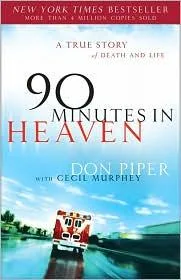


More Free Occult Philosophy Books
View all →