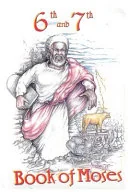
6th and 7th Book of Moses
 78
78

6th and 7th Book of Moses
The Lushena Books edition of the Sixth and Seventh Books of Moses offers a direct conduit to a curious stratum of Western esotericism. Its primary strength lies in its unvarnished presentation of the text, allowing readers to confront its peculiar blend of biblical allusion and practical conjuration. The diagrams of "Seals" are particularly striking, appearing as arcane blueprints for magical operations. However, the work’s historical provenance is murky, and its claims of Mosaic authorship are clearly allegorical, a common feature of grimoire traditions seeking ancient authority. A notable passage concerns the "Infernal Game of Pairs," which demonstrates the text's attempt to integrate seemingly disparate elements into a cohesive magical system. While valuable for historical study, its efficacy as a practical manual is debatable and depends heavily on the practitioner's framework.
📝 Description
78
The Sixth and Seventh Books of Moses is an 18th or 19th-century grimoire claiming Moses' authorship.
This text presents itself as a lost section of the Old Testament, purportedly written by Moses. It contains magical incantations and spells, presented as the means by which biblical miracles were achieved. The work functions as a grimoire, detailing esoteric knowledge for practical application in ritual magic.
It is intended for practitioners of ceremonial magic, occult scholars, and historians of Western esotericism. Those researching the development of magical traditions, the influence of biblical texts on occult practices, and the creation of grimoires in the early modern period will find it of particular interest. Adepts seeking to understand the historical roots of spellcraft will also find the text relevant.
The book's core consists of "Seals," which are diagrams and sigils believed to possess specific magical power. These seals are accompanied by incantations and divine names, supposedly drawn from Hebrew and Chaldaic sources. The text aims to provide a method for invoking celestial forces and spirits to achieve worldly outcomes.
Appearing in the late 18th or early 19th century, the Sixth and Seventh Books of Moses emerged during a period of strong interest in Kabbalah, Christian Cabala, and ancient mysticism. It was often published with other magical texts like the Key of Solomon. The work reflects a wider trend of searching for hidden knowledge within religious scriptures, attempting to codify and systematize magical practices.
💡 Why Read This Book?
• Understand the historical development of grimoires by examining the "Seals" and incantations presented, which were believed to replicate biblical miracles. • Gain insight into the early 19th-century fascination with biblical magic, as the text claims to contain spells allegedly written by Moses. • Explore the unique integration of biblical passages with Talmudic magic, offering a distinct approach to ceremonial magic not found in other texts.
⭐ Reader Reviews
Honest opinions from readers who have explored this book.
❓ Frequently Asked Questions
What is the origin of the Sixth and Seventh Books of Moses?
The Sixth and Seventh Books of Moses is not an ancient text but rather a compilation that emerged in the late 18th or early 19th century. It purports to be lost books of Moses, revealing spells for biblical miracles.
What are the "Seals" mentioned in the book?
The "Seals" are magical diagrams or sigils presented within the text. Each seal is accompanied by specific incantations and divine names intended to invoke spiritual forces for various magical purposes.
Does this book contain genuine biblical magic?
The book claims to reveal the spells used for biblical miracles, allegedly written by Moses. However, it's considered an 18th/19th-century grimoire that synthesizes various esoteric traditions, rather than a literal ancient scripture.
What is the connection between this book and the Talmud?
The text incorporates annexes of reputed Talmudic magic names, words, and incantations. This suggests an effort to draw upon Jewish mystical traditions to enhance the power and authority of the spells.
Is this book considered part of the Old Testament?
No, it is not part of the canonical Old Testament. It is a later esoteric work that claims to be a lost portion of Moses' writings, presented as a magical text.
What kind of spells are detailed in the Sixth and Seventh Books of Moses?
The book details spells for a range of purposes, often framed by biblical narratives. These include invoking angels, commanding spirits, and performing acts of power, all through specific incantations and the use of magical seals.
🔮 Key Themes & Symbolism
Biblical Magic Synthesis
The work is a fascinating attempt to synthesize the miraculous events of the Bible with practical magical operations. It claims to reveal the spells Moses used, drawing heavily on Christian biblical passages and Hebrew names of God. This approach aimed to legitimize magical practice by rooting it in sacred scripture, suggesting that the divine power displayed in the Old Testament could be accessed through specific ritualistic means detailed within the text.
The Power of Seals
Central to the text are the "Seals," intricate diagrams and sigils that function as magical keys. These are not mere decorations but are presented as potent symbols, each designed to invoke specific celestial intelligences or spiritual forces. The book instructs readers on how to create and utilize these seals in conjunction with incantations, positioning them as essential tools for channeling supernatural energies and achieving desired outcomes.
Talmudic and Kabbalistic Influences
Beyond biblical sources, the Sixth and Seventh Books of Moses incorporates elements derived from Talmudic magic and broader Kabbalistic traditions. This includes the use of divine names, angelic invocations, and specific magical words of power. The inclusion of these elements suggests a deliberate effort to amalgamate various esoteric streams, creating a comprehensive system that draws authority from both biblical narratives and Jewish mystical lore.
Ritual and Invocation
The book functions as a grimoire, providing detailed instructions for ritualistic practices. It emphasizes the importance of correct pronunciation of divine names, the precise drawing of seals, and the proper timing for magical operations. The underlying principle is that by adhering to these specific instructions, the practitioner can effectively invoke spiritual entities and harness cosmic forces, bridging the earthly and divine realms.
💬 Memorable Quotes
Direct passages from the work, attributed to the author.
“The work purports to instruct the reader in the spells used to create the miracles portrayed in the Bible.”
— This statement defines the book's core ambition: to clarify biblical wonders by presenting them as achievable through specific magical techniques, thereby linking divine acts to accessible occult practices.
“It shows diagrams of "Seals" magical drawings accompanied by incantations intended to...”
— This highlights the book's practical, instructional nature, focusing on the visual (seals) and verbal (incantations) components as the mechanism for magical efficacy.
“Reputed Talmudic magic names, words and incantation.”
— This points to the text's eclectic sourcing, blending biblical narratives with elements drawn from Jewish mystical traditions to bolster its magical authority.
“Allegedly written by Moses, and passed down as hidden (or lost) books of the Christian Old Testament.”
— This establishes the book's claim to ancient, authoritative origins, a common tactic in grimoire literature to lend credibility to its esoteric teachings.
“The work was printed with annexes of reputed Talmudic magic names, words and incantation.”
— This indicates that the book was not merely a theoretical treatise but was intended for practical use, likely disseminated alongside other magical texts and traditions.
🌙 Esoteric Significance
Tradition
This work occupies a unique space within Western esotericism, bridging biblical exegesis with practical ceremonial magic. While not strictly Kabbalistic or Hermetic, it draws heavily on these traditions, particularly in its use of divine names and angelic hierarchies. It represents a distinct branch of magical literature that sought to re-interpret biblical narratives through an occult lens, aiming to restore a perceived original magical understanding of scripture.
Symbolism
The primary symbols are the "Seals," intricate geometric diagrams often incorporating divine names and astrological symbols. These are understood as conduits of power, representing specific divine attributes or angelic hosts. Another key motif is the use of Hebrew and Chaldaic divine names, such as ' Tetragrammaton' (YHVH), believed to hold inherent magical potency and serve as direct keys to invoking celestial forces.
Modern Relevance
Contemporary practitioners of ceremonial magic, particularly those interested in the history of grimoires and biblical magic, still engage with the Sixth and Seventh Books of Moses. It influences modern occult orders and individual practitioners seeking to explore the intersection of scripture and spellcraft. Its appeal lies in its direct, albeit controversial, approach to harnessing divine power as described in ancient texts.
👥 Who Should Read This Book
• Students of Western Esotericism: Those investigating the evolution of magical texts and traditions from the 18th and 19th centuries will find its mix of biblical and Talmudic elements clear. • Practitioners of Ceremonial Magic: Individuals seeking to understand historical grimoires and explore diverse methods of ritual invocation, particularly those focused on biblical magic, will gain practical context. • Historians of Religion: Researchers interested in how religious texts were reinterpreted for magical purposes and the development of occult literature will find valuable primary source material.
📜 Historical Context
The Sixth and Seventh Books of Moses emerged during a fertile period for Western esotericism, likely in the late 18th or early 19th century. This era saw a resurgence of interest in Kabbalah, Hermeticism, and Christian Cabala, fueled by figures like Eliphas Lévi who, though writing later, built upon such traditions. The text fits within the broader genre of grimoires, magical manuals that sought to codify and transmit occult knowledge, often attributing their origins to biblical or ancient figures for authority. It appeared alongside other influential texts like the Key of Solomon, reflecting a widespread desire to unlock hidden spiritual powers. While not a direct product of the Enlightenment's rationalism, it represented a counter-current seeking arcane wisdom. Its reception was varied; while embraced by occultists, it was often viewed with suspicion by mainstream religious and academic circles.
📔 Journal Prompts
The "Seals" as conduits of power: How might their geometric structure and associated names correspond to specific spiritual functions?
Moses' alleged authorship: Reflect on the implications of attributing magical texts to biblical figures in historical esoteric traditions.
The integration of Talmudic magic: Consider how different esoteric traditions were combined to create a more potent magical system.
Incantations and divine names: Analyze the role of specific linguistic formulas in achieving magical results within this text.
Miracles as spells: Explore the concept of biblical miracles being understood as performable magical acts.
🗂️ Glossary
Seals
Magical diagrams or sigils, often complex geometric designs, presented in the text. Each seal is associated with specific divine names and incantations intended to invoke spiritual powers or achieve particular magical effects.
Incantation
A magical spell or charm, spoken or chanted. In this text, incantations are paired with seals and divine names, forming the core of the ritualistic practices described.
Divine Names
Specific names attributed to God or angelic beings, often derived from Hebrew or Chaldaic. The text emphasizes the power inherent in these names for invoking spiritual forces and commanding spirits.
Talmudic Magic
Refers to magical practices, names, and incantations purportedly derived from the Talmud or related Jewish mystical traditions. The book includes such elements to enhance its esoteric authority.
Grimoire
A textbook of magic or witchcraft, typically containing instructions on how to cast spells, perform rituals, and invoke spirits. The Sixth and Seventh Books of Moses is classified as a grimoire.
Chaldaic
Pertaining to Chaldea, an ancient region in Mesopotamia. In esoteric contexts, Chaldaic is often associated with ancient magical languages and traditions, particularly concerning divine names and incantations.
Annexes
Supplementary material added to the end of a book. In this context, it refers to additional sections containing magical names, words, and incantations, often of Talmudic origin.
This book appears in 1 collection
🔮 Readers Also Liked
Browse all →








From the “Incantations” Collection
View all →





More Free Occult Philosophy Books
View all →