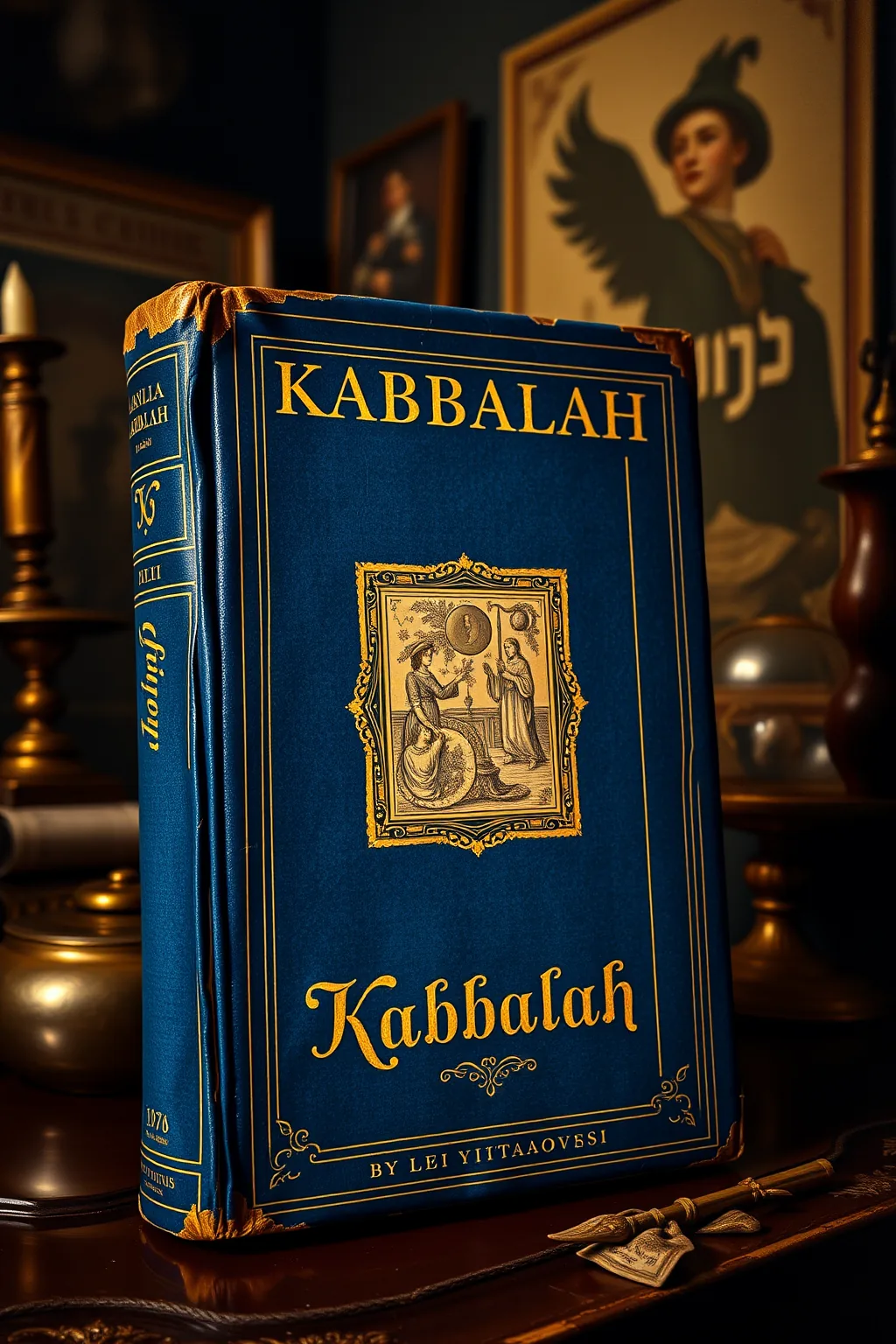
Kabbalah
 62
62

Kabbalah



Sophia Crane (Associate Editor) — Leṿi Yitsḥaḳ Ḳraḳovsḳi's 'Kabbalah' is a masterclass in esoteric exposition. This volume doesn't just explain Kabbalistic concepts; it breathes life into them, unveiling the profound interconnectedness of all things. The author's profound grasp of the subject matter is evident in the clarity and depth with which he illuminates complex ideas like the Ain Soph and the Sefirot. It’s an essential read for anyone serious about understanding Jewish mysticism beyond its surface-level interpretations, offering a rich tapestry of spiritual insights and practical applications for the dedicated student.
📝 Description
62
Leṿi Yitsḥaḳ Ḳraḳovsḳi's 1908 work illuminates the Kabbalistic understanding of divine emanations.
This book examines the core concepts of Kabbalah as understood in early 20th-century Jewish mystical thought. Ḳraḳovsḳi focuses on the symbolic language used to describe the divine, particularly the Sephirot and the Tree of Life. He aims to connect the reader with a tradition that bridges the material and spiritual worlds. The text is presented as a guide for those seriously interested in the philosophical structures of Jewish mysticism. It moves beyond simple academic discussion to encourage personal reflection and change. The author intends to shed light on fundamental questions of existence and the divine order.
Kabbalah, a tradition of Jewish mysticism, seeks to understand the hidden nature of God and the universe. It developed over centuries, with significant codifications in works like the Zohar. Ḳraḳovsḳi's writing engages with these established ideas, interpreting them through a particular philosophical and perhaps spiritual lens of his time. This book is part of a broader history of esoteric interpretation within Judaism, which often uses complex symbolism and meditative practices to approach divine knowledge.
💡 Why Read This Book?
Embark on a sacred journey into the heart of Jewish mysticism. This book offers a lucid exposition of Kabbalistic principles, revealing the hidden architecture of the cosmos and the divine spark within. Ideal for serious seekers, spiritual scholars, and practitioners aiming to deepen their understanding of esoteric wisdom and its profound implications for self-transformation and universal connection.
⭐ Reader Reviews
Honest opinions from readers who have explored this book.
❓ Frequently Asked Questions
What is the primary focus of this Kabbalah book?
This book meticulously explores the esoteric and mystical dimensions of Kabbalah, focusing on its symbolic language, divine emanations, and the path to spiritual illumination within Jewish mysticism.
Who is the intended audience for this work?
It is designed for earnest seekers of hidden knowledge, academic scholars of mysticism, and practitioners of esoteric traditions who wish to delve deeply into the foundational principles of Kabbalah.
Does this book require prior knowledge of Kabbalah?
While prior knowledge is beneficial, the author's clear exposition aims to guide both novices and experienced practitioners through the complex symbolism and philosophy of Kabbalah.
What is the 'Tree of Life' as discussed in Kabbalah?
The Tree of Life is a central symbolic diagram in Kabbalah, representing the ten Sephirot (divine emanations) and the pathways between them, illustrating the structure of the universe and the process of creation.
How does this book approach the esoteric nature of Kabbalah?
It emphasizes the hidden meanings, symbolic interpretations, and contemplative practices inherent in Kabbalah, presenting it as a profound system for understanding the Divine and one's place within the cosmos.
🔮 Key Themes & Symbolism
The Enigmatic Nature of the Divine
This theme explores the Kabbalistic conception of the Divine, particularly the concept of the Ein Sof (the Infinite) and its unknowable essence. It explores how Kabbalah seeks to bridge the gap between the transcendent, unmanifest God and the immanent, manifest universe through the emanatory process of the Sephirot. The text illuminates the paradoxical nature of the Divine – simultaneously utterly beyond human comprehension and intimately involved in the creation and sustenance of all existence. This exploration offers a profound philosophical framework for understanding ultimate reality and the divine presence within the mundane.
The Symbolic Language of Creation
Central to this theme is the intricate symbolic language employed in Kabbalah, most notably the Sephirot, often visualized as the Tree of Life. The book elucidates how these ten divine attributes or emanations are not mere abstract concepts but active forces that structure reality from the highest spiritual planes down to the material world. Readers will discover the profound meaning embedded within Hebrew letters, divine names, and cosmological diagrams, understanding them as keys to unlocking the hidden mechanisms of creation and the interconnectedness of all beings.
The Path of Spiritual Ascent and Illumination
This theme focuses on Kabbalah as a practical path for spiritual development and attainment. It explores the concept of Tikkun (rectification) and the individual's role in the cosmic repair of the universe. The text guides the reader through the potential for spiritual ascent, emphasizing contemplative practices, meditation, and the ethical application of Kabbalistic wisdom to achieve a deeper connection with the Divine. It presents Kabbalah not just as a theoretical system, but as a transformative journey towards Gnosis and personal enlightenment.
💬 Memorable Quotes
Direct passages from the work, attributed to the author.
“Each letter is a vessel for divine intention.”
— This emphasizes the sacredness of the Hebrew alphabet in Kabbalah, where letters are seen not just as linguistic symbols but as fundamental building blocks of reality, imbued with divine power and meaning.
“The Tree of Life mirrors the soul's journey.”
— This points to the deeply personal and psychological application of Kabbalistic cosmology, suggesting that the macrocosmic structure of the Sephirot is a reflection of the inner spiritual range of the human being.
“To know the Creator is to know the created.”
— This captures the Kabbalistic belief in the interconnectedness of all things. Understanding the Divine inherently leads to a deeper understanding of the universe and one's place within it.
“The boundless is revealed through the bounded.”
— This speaks to the paradox of divine manifestation. The Infinite (Ein Sof) becomes comprehensible and accessible through the structured, limited forms of the Sephirot and the created world.
💡 Key Ideas
Editorial paraphrase of the work's core concepts — not direct quotes.
The light within the darkness is the true revelation.
This quote highlights the Kabbalistic principle that profound spiritual truths are often found by understanding the interplay of opposites, particularly the divine light hidden within the apparent void or mystery.
🌙 Esoteric Significance
Tradition
This work is firmly rooted in the esoteric tradition of Kabbalah, a mystical interpretation of Judaism that seeks to understand the nature of God, the universe, and the human soul. It draws heavily on ancient Hebrew texts, mystical commentaries, and symbolic systems like the Sephirot and the Tree of Life, offering a profound path of spiritual development and divine communion.
Symbolism
Kabbalah's esoteric significance lies in its collection of symbolism. The Sephirot, the ten emanations of God, the Hebrew alphabet imbued with cosmic power, and the conceptual framework of the Tree of Life are not merely decorative but serve as profound keys to understanding the divine blueprint of reality, the stages of creation, and the human soul's journey towards spiritual perfection.
Modern Relevance
In contemporary times, Kabbalah continues to offer profound relevance. Its exploration of consciousness, the interconnectedness of all things, and the search for meaning resonates deeply with individuals seeking spiritual depth beyond conventional frameworks. The principles of self-awareness, ethical responsibility, and the pursuit of inner transformation remain potent tools for navigating modern challenges and fostering personal growth.
👥 Who Should Read This Book
This informative text is a treasure for a diverse audience. **Beginners** seeking an accessible yet profound introduction to Jewish mysticism will find its clear exposition invaluable. **Scholars** will appreciate its depth and nuanced understanding of historical Kabbalistic thought. **Spiritual seekers** yearning for a deeper connection to the Divine and a richer understanding of the cosmos will find it a guiding light. **Practitioners** of esoteric disciplines may discover new perspectives and tools for their own contemplative practices and spiritual development.
📜 Historical Context
Leṿi Yitsḥaḳ Ḳraḳovsḳi's work on Kabbalah emerges from a rich historical tradition deeply rooted in Jewish spiritual inquiry. Emerging in medieval Spain, Kabbalah blossomed as a response to both philosophical and existential challenges, offering a mystical lens through which to understand the Torah and the nature of God. Thinkers like Isaac Luria in the 16th century profoundly shaped its development, introducing concepts like Tzimtzum (Divine Contraction) and Tikkun Olam (Repair of the World). Ḳraḳovsḳi's contribution, likely a product of later scholarly or devotional traditions, builds upon this intricate legacy. It's a proof of Kabbalah's enduring power, showcasing its continued relevance in interpreting spiritual truths and offering a framework for understanding the divine in both personal and cosmic spheres, even as it grappled with historical upheavals and intellectual shifts within Judaism and the wider world.
📔 Journal Prompts
Reflect on a moment when you felt a profound sense of interconnectedness with the universe. How might Kabbalistic concepts explain this experience?
Consider the concept of the 'Divine Light' as described in Kabbalah. Where do you perceive this light in your own life, and how can you cultivate it?
Explore the symbolism of one of the Sephirot (e.g., Keter, Chokmah, Binah, Chesed, Gevurah, Tiferet, Netzach, Hod, Yesod, Malkuth). How does its essence manifest in your daily experiences?
What does the idea of 'Tikkun' (rectification) mean to you personally? How can you contribute to repairing or improving your immediate environment or relationships?
Meditate on the paradoxical nature of the Divine as discussed in this text. How does contemplating the unknowable Infinite influence your perception of the finite world?
🗂️ Glossary
Ein Sof
The Kabbalistic term for the infinite, unknowable essence of God before any manifestation or emanation occurred. It represents the absolute, transcendent Godhead beyond human comprehension.
Sephirot
The ten divine emanations or attributes of God, often depicted as the 'Tree of Life.' They represent the stages through which the Divine manifests into the created universe and are crucial for understanding Kabbalistic cosmology and theology.
Tree of Life
A central diagrammatic symbol in Kabbalah, illustrating the ten Sephirot and the pathways connecting them. It serves as a map of divine emanation, the structure of the cosmos, and the human soul's journey.
Tikkun
A key Kabbalistic concept meaning 'rectification' or 'repair.' It refers to the process of restoring cosmic harmony and spiritual wholeness, often involving human actions and spiritual striving to mend the brokenness of creation.
Gnosis
Spiritual knowledge, often understood as direct intuitive insight into divine mysteries. In Kabbalah, gnosis represents the ultimate goal of spiritual understanding and union with the Divine.
This book appears in 1 collection
🔮 Readers Also Liked
Browse all →






From the “Kabbalah” Collection
View all →








More Free Kabbalah & Jewish Mysticism Books
View all →