Inside Incest
 81
81

Inside Incest
Madeline A. Garner’s "Inside Incest" is an unflinching examination of childhood sexual abuse, presented with the dual lens of personal survival and professional insight. Garner, a psychotherapist and energy healer, avoids sensationalism, instead offering a structured approach to a deeply personal subject. The memoir segments provide raw, essential context, particularly the descriptions of navigating professional therapeutic spaces as a survivor. A notable strength is Garner's ability to articulate complex energetic concepts, like residual trauma imprints, in a way that feels grounded rather than abstract. However, the book occasionally struggles to fully bridge the memoiristic and the instructional; at times, the self-help sections could benefit from more explicit case examples beyond Garner's own narrative, to further illustrate the decision-making process she advocates. The passage discussing the "fix it or forget it" dichotomy serves as a powerful, albeit stark, framing device for the survivor's dilemma. Garner’s work offers a valuable, if challenging, resource for those ready to confront their past.
📝 Description
81
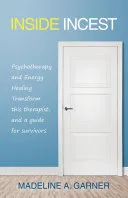
Madeline A. Garner's 2019 book, "Inside Incest," addresses the aftermath of childhood sexual abuse.
Madeline A. Garner's "Inside Incest," published in 2019, is a memoir and self-help text that examines the enduring effects of early childhood sexual abuse. Garner writes from her position as both a survivor and a psychotherapist, offering a distinct viewpoint on recovery. The book moves beyond simply recounting traumatic experiences. Instead, it aims to give practical direction and insight to individuals navigating the lasting consequences of abuse. It combines personal accounts with clear explanations of psychological and energetic healing approaches. This positions the book as a guide for making decisions about personal healing.
The intended audience is primarily adult survivors of childhood sexual abuse who seek to comprehend their experiences and explore future possibilities. It also holds interest for psychotherapists, energy healers, and counselors interested in a practitioner-survivor's perspective. Individuals investigating the connections between personal trauma, psychological recovery, and less conventional therapeutic methods will find value here. The book speaks to those who feel stalled in their healing, uncertain whether to confront or move beyond deeply embedded abuse.
Published in 2019, "Inside Incest" aligns with a growing societal willingness to discuss trauma's long-term impact. While not tied to a specific esoteric movement, its emphasis on survivor agency and integrated healing reflects contemporary therapeutic ideas that recognize the mind-body-spirit connection. The book's focus on energy healing situates it within a continuing interest in complementary therapies, a trend prominent since the late 20th century.
💡 Why Read This Book?
• Gain a framework for deciding how to process past trauma, inspired by Madeline A. Garner's "fix it or forget it" approach, understanding that agency is key. • Explore energy healing techniques as presented by Garner, recognizing their potential role in addressing residual trauma imprints beyond traditional psychotherapy. • Benefit from the unique perspective of a survivor-therapist, offering insights into the intersection of personal healing and professional understanding of early childhood sexual abuse.
⭐ Reader Reviews
Honest opinions from readers who have explored this book.
❓ Frequently Asked Questions
What is the primary goal of Madeline A. Garner's "Inside Incest"?
The primary goal is to help survivors of early childhood sexual abuse decide whether to actively "fix" (process and integrate) or "forget" (suppress or move past) their trauma, offering guidance from a survivor and psychotherapist's perspective.
Who authored "Inside Incest"?
The book was authored by Madeline A. Garner, who is both a survivor of childhood sexual abuse and an experienced psychotherapist and energy healer.
When was "Inside Incest" first published?
Madeline A. Garner's "Inside Incest" was first published on July 23, 2019.
What blend of content does "Inside Incest" offer?
It blends memoir, essential information about childhood sexual abuse, and self-help strategies, including insights from energy healing practices.
What makes Garner's perspective in "Inside Incest" unique?
Garner's perspective is unique due to her dual experience as a survivor of early childhood sexual abuse and her professional background as a psychotherapist and energy healer.
What kind of support does the book aim to provide for survivors?
The book aims to provide informative and inspiring support, guiding survivors through the crucial decision-making process of how to approach their trauma recovery.
🔮 Key Themes & Symbolism
Survivor Agency
The core of "Inside Incest" revolves around empowering the survivor to make active choices regarding their trauma. Garner emphasizes that the decision to confront and integrate ("fix") or to consciously move past ("forget") is a critical juncture. This theme challenges passive victimhood, positioning the survivor as the primary agent in their healing narrative. The book provides a framework for understanding the implications of each path, suggesting that true recovery lies in informed self-determination rather than external prescription.
Energetic Imprints of Trauma
Garner introduces the esoteric concept that traumatic experiences leave behind energetic residues or imprints within the individual's energy field. "Inside Incest" explores how these imprints can manifest physically, emotionally, and mentally, often unconsciously influencing behavior and well-being. The book posits that energy healing modalities can be instrumental in identifying, releasing, and transforming these residual energies, offering a complementary approach to traditional psychological therapies for deep-seated trauma.
Therapeutic Integration
This theme addresses the complex interplay between personal experience and professional knowledge. Garner, as both survivor and psychotherapist, details the process of integrating her own healing journey with her therapeutic practice. The book highlights the importance of a holistic approach that considers psychological, emotional, and energetic dimensions of recovery. It underscores the need for practitioners to possess both theoretical understanding and lived experience when working with profound trauma.
Decision Framework
The book presents a direct dichotomy: "Fix It or Forget It?" This serves as a central organizing principle, prompting readers to consider their readiness and chosen path for addressing trauma. It’s not about judgment but about clarity and intention. Garner guides readers to assess their internal landscape to determine which approach aligns best with their current capacity for healing, offering a practical tool for self-assessment in the face of overwhelming personal history.
💬 Memorable Quotes
Direct passages from the work, attributed to the author.
“The core question is: Fix it or forget it?”
— This provocative question frames the central dilemma for survivors of early childhood sexual abuse, highlighting the critical decision point between active processing and attempted suppression of trauma.
“Trauma leaves energetic imprints.”
— This concept suggests that traumatic experiences have a lasting energetic effect on an individual, influencing their well-being and requiring specific attention for full healing.
“Agency is the survivor's greatest tool.”
— Garner emphasizes that the power to choose one's path toward healing, whether through confrontation or acceptance, is fundamental to recovery.
“Healing requires acknowledging the whole self.”
— This highlights the book's holistic perspective, integrating mind, body, and energy in the process of addressing deeply rooted trauma.
“The memoir offers a map, the self-help provides the compass.”
— This metaphor illustrates how Garner's personal story serves as a guide, while her therapeutic advice offers direction for the reader's own journey.
🌙 Esoteric Significance
Tradition
While not strictly adhering to a single established esoteric lineage, "Inside Incest" draws implicitly from holistic and mind-body-spirit traditions. Its exploration of "energetic imprints" aligns with concepts found in various energy healing modalities, including some interpretations within Reiki, Therapeutic Touch, and vibrational healing practices that emerged in the late 20th century. The work departs from purely psychological frameworks by integrating these energetic perspectives, suggesting a path toward healing that transcends the purely material or cognitive.
Symbolism
The central symbolic dichotomy of "fix it or forget it" represents the archetypal struggle between integration and avoidance. "Fixing" symbolizes confronting and alchemically transforming the trauma, akin to the Hermetic principle of transmutation. "Forgetting," conversely, represents a form of energetic suppression or denial, akin to shadow aspects that remain unresolved. The concept of "energetic imprints" itself functions symbolically, representing the residual energetic signature of past events that can be perceived and cleared through focused intention and energetic work.
Modern Relevance
Contemporary somatic therapies and trauma-informed care practices resonate with Garner's approach, particularly regarding the body's role in holding and releasing trauma. Thinkers and practitioners in fields like Polyvagal Theory and sensorimotor psychotherapy, while using different terminology, explore similar concepts of the nervous system's response to trauma and the need for embodied healing. Garner's work is relevant to modern energy healers seeking to understand the application of their modalities to complex psychological wounds.
👥 Who Should Read This Book
• Adult survivors of early childhood sexual abuse seeking to understand and actively engage with their healing process. • Psychotherapists and counselors interested in integrating memoir, self-help, and energy healing perspectives into their practice. • Individuals exploring alternative or complementary healing modalities for deep-seated trauma and residual energetic blockages.
📜 Historical Context
Published in 2019, "Inside Incest" arrived during a period of heightened public awareness regarding sexual abuse, amplified by movements like #MeToo. While not directly tied to a specific esoteric intellectual current like Theosophy or Gnosticism, Garner's work taps into a broader late 20th and early 21st-century interest in holistic healing and the mind-body connection, often explored within New Age and alternative therapeutic circles. Its emphasis on energy healing as a means to address trauma echoes practices discussed by figures like Barbara Ann Brennan. The book's focus on survivor agency and internal decision-making offers a contemporary therapeutic angle, moving beyond purely victim-centric narratives. Its reception likely aligned with growing academic and popular interest in trauma-informed care and the efficacy of diverse healing modalities.
📔 Journal Prompts
The "fix it or forget it" dichotomy and your current readiness.
Residual energetic imprints and their physical manifestations.
Your personal definition of healing from early childhood sexual abuse.
The balance between memoir and self-help in your recovery journey.
Identifying moments of personal agency in your past experiences.
🗂️ Glossary
Fix It or Forget It
A framework presented by Garner for survivors to consider their approach to trauma recovery, involving either active processing and integration ('fix it') or conscious avoidance and moving on ('forget it').
Energetic Imprints
Residual energetic patterns or signatures left within a person's energy field as a result of traumatic experiences, influencing their present-day physical, emotional, and mental state.
Survivor Agency
The capacity of an individual who has experienced trauma to exercise control and make conscious choices regarding their healing and life path.
Psychotherapist/Survivor Dual Role
The unique perspective offered by an individual who has personally experienced trauma and also possesses professional training and experience in mental health therapy.
Energy Healing
Therapeutic practices that focus on manipulating or balancing the body's energy field to promote physical, emotional, and spiritual well-being, often used complementarily to conventional treatments.
Childhood Sexual Abuse
Sexual activity and exploitation perpetrated against a person under the age of 18 by an adult or older adolescent, often resulting in significant long-term psychological and emotional impact.
Residual Trauma
The lingering effects and unprocessed aspects of a traumatic experience that continue to influence an individual's functioning and well-being long after the event has occurred.