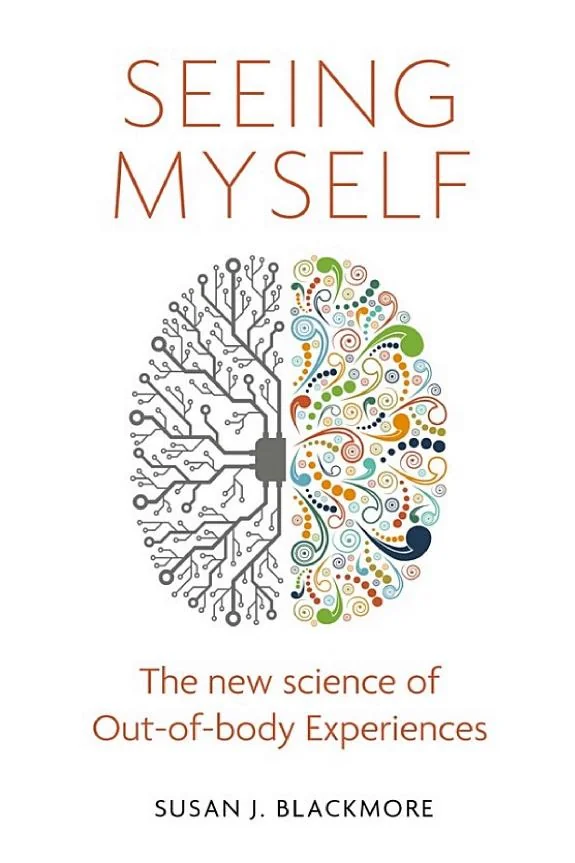
Seeing Myself
 79
79

Seeing Myself
Susan Blackmore’s "Seeing Myself" is less a detached academic treatise and more a candid intellectual autobiography. The narrative begins with a jarring, vivid account of an out-of-body experience that propelled Blackmore into decades of searching. Her early immersion in the world of parapsychology, including her engagement with figures like Arthur Koestler, is particularly illuminating. However, the book’s strength, its unflinching honesty about shifting beliefs, also presents a challenge. Blackmore’s eventual embrace of a purely materialistic, neuroscience-centric view can feel like a decisive closing of doors that the initial chapters seemed to open. The section detailing her work on memes, while intellectually stimulating, feels somewhat disconnected from the deeply personal quest that frames the book. The core tension between inexplicable personal experience and the constraints of scientific explanation remains the most compelling aspect. Ultimately, "Seeing Myself" offers a valuable, albeit sometimes stark, perspective on how one mind grappled with the mysteries of existence.
📝 Description
79
Susan Blackmore's 2017 book, "Seeing Myself," details her lifelong inquiry into consciousness and subjective experience.
Susan Blackmore's "Seeing Myself" chronicles her intellectual and spiritual path, beginning with a youthful out-of-body experience. Initially, she investigated parapsychology and paranormal explanations for such phenomena. However, her perspective shifted, leading her to explore scientific frameworks, particularly neuroscience and evolutionary psychology, as ways to understand consciousness. This work traces her journey from seeking paranormal answers to adopting a more scientifically informed, though still open, approach to subjective states.
The book is for readers interested in how personal experiences of consciousness can be understood through scientific study. It addresses questions about the nature of reality and offers alternative perspectives on unusual experiences, appealing to those who find traditional scientific explanations insufficient. Blackmore advocates for a rational yet receptive stance toward phenomena that challenge conventional understanding, particularly concerning the self and spiritual exploration.
Published in 2017, "Seeing Myself" reflects a modern engagement with questions previously addressed in spiritualist and esoteric traditions. Blackmore's personal quest for understanding consciousness, particularly anomalous experiences like OBEs, situates her work within a lineage that seeks to reconcile subjective phenomena with observable reality. While moving from parapsychology toward neuroscience, her inquiry echoes earlier attempts to map the inner world, from theosophy's explorations of consciousness to later movements focusing on altered states and the nature of the self.
💡 Why Read This Book?
• Gain a firsthand account of how a prominent thinker navigated from paranormal beliefs to a science-based understanding of consciousness, informed by her own 1960s out-of-body experience. • Understand the concept of memes as units of cultural evolution, as explored in Blackmore's work, and their potential role in shaping subjective realities. • Explore the limitations of traditional parapsychological explanations and the scientific frameworks, such as neuroscience, that emerged as alternatives in the late 20th century.
⭐ Reader Reviews
Honest opinions from readers who have explored this book.
❓ Frequently Asked Questions
What was Susan Blackmore's initial experience that led her to write 'Seeing Myself'?
The book begins with Susan Blackmore's intense out-of-body experience (OBE) in the 1960s as a young student, which seemed to detach her from her physical body and sparked her lifelong quest for understanding.
What are 'memes' according to Susan Blackmore in this book?
Blackmore discusses memes, a concept popularized by Richard Dawkins, as units of cultural information that replicate and evolve, influencing human behavior and beliefs, including those related to consciousness and spirituality.
Did Susan Blackmore find answers in parapsychology?
Initially, Blackmore explored parapsychology and the paranormal for answers to her OBE, but she eventually grew disillusioned, finding the explanations lacking empirical support and leading her toward scientific inquiry.
What scientific fields does Blackmore reference to explain consciousness?
Blackmore increasingly turns to neuroscience and evolutionary psychology to offer explanations for consciousness and subjective experiences, moving away from earlier spiritual or paranormal frameworks.
What is the main takeaway for readers interested in science and spirituality?
The book offers a model for reconciling profound subjective experiences with a scientific worldview, demonstrating how one can question and revise deeply held beliefs based on evidence and reason.
When was 'Seeing Myself' first published?
'Seeing Myself' was first published on July 6, 2017, reflecting decades of evolving thought and research by Susan Blackmore.
🔮 Key Themes & Symbolism
Consciousness and Subjectivity
The central theme is the exploration of consciousness and the nature of subjective experience. Blackmore details her own profound out-of-body experience (OBE) as a catalyst, questioning whether consciousness is purely a product of the brain or if it possesses other dimensions. She examines how scientific models, particularly neuroscience, attempt to explain the 'hard problem' of consciousness, contrasting this with the limitations of spiritual or paranormal interpretations she initially pursued.
The Evolution of Belief
This work meticulously chronicles Blackmore's intellectual and spiritual evolution. It highlights the process of questioning, investigating, and ultimately revising deeply held beliefs. Her journey from an interest in astral projection and the paranormal to a commitment to scientific empiricism serves as a case study in intellectual honesty and the courage to change one's mind, even when it leads away from cherished paradigms.
Science vs. Spirituality
Blackmore directly confronts the perceived dichotomy between scientific understanding and spiritual or mystical experiences. She argues for the possibility of finding rational explanations for phenomena often relegated to the spiritual realm. The book engages with the idea that scientific inquiry, while sometimes appearing reductive, can offer clear insights into the self and the universe without necessarily diminishing wonder.
Memetics and Cultural Transmission
A significant portion of the book studies memetics, the study of how ideas and cultural elements spread and evolve. Blackmore applies this framework to understand how beliefs, including those about the self, spirituality, and consciousness, are transmitted and perpetuated within societies. This concept provides a unique lens through which to analyze the origins and persistence of various worldviews.
💬 Memorable Quotes
Direct passages from the work, attributed to the author.
“An out-of-body experience seemed to leave her body and travel the world.”
— This concise summary captures the dramatic and world-altering nature of Blackmore's initial encounter with phenomena that defied rational explanation, setting the stage for her life's work.
“She despaired of finding answers in astral projection and the paranormal.”
— This highlights Blackmore's early attempts to rationalize her experience within existing esoteric frameworks and her subsequent frustration when these avenues proved unsatisfactory.
“A Swiss neurosurgeon accidentally discovered the 'tremor' in her brain.”
— This points to a central moment where scientific observation, albeit serendipitous, offered a potential biological correlate to her subjective experiences, nudging her towards neurological explanations.
“The mind is a product of the brain.”
— This reflects Blackmore's later, more scientifically grounded perspective, suggesting that complex mental states and consciousness arise from the physical processes within the brain.
“Ideas replicate like genes.”
— This expresses the core idea of memetics, likening the spread and evolution of cultural concepts to biological evolution, a key theoretical tool in Blackmore's later work.
🌙 Esoteric Significance
Tradition
While not adhering to a specific esoteric lineage, Blackmore's work engages with phenomena central to many traditions, particularly out-of-body experiences (OBEs) and altered states of consciousness. Her intellectual journey moves from the periphery of occult and New Age exploration, common in the latter half of the 20th century, towards a critical examination through the lens of Western science. She departs from traditional esoteric interpretations by seeking materialistic or neurological explanations, yet her exploration validates the lasting impact these experiences have had across spiritual history.
Symbolism
The primary symbolic motif is the 'out-of-body experience' itself, representing a perceived separation of consciousness from the physical form. This symbolizes the fundamental human question of mind-body dualism. Another implicit symbol is the 'meme,' which functions as a unit of cultural consciousness, representing the transmission and evolution of ideas and beliefs akin to biological replication. The 'brain' also emerges as a potent symbol, representing the material basis of mind and the ultimate explanatory frontier for Blackmore.
Modern Relevance
Blackmore's work is highly relevant to contemporary discussions in neurophilosophy, cognitive science, and the psychology of religion. Thinkers and practitioners interested in scientifically grounded explanations for spiritual or anomalous experiences, and those exploring the nature of selfhood through evolutionary or memetic lenses, draw on her insights. Her approach influences discussions on artificial intelligence, consciousness modeling, and the potential for a unified understanding of subjective and objective realities.
👥 Who Should Read This Book
• Individuals grappling with inexplicable personal experiences: Those who have had out-of-body phenomena or other anomalous subjective events and are seeking rational, scientific frameworks to understand them. • Students of consciousness studies: Researchers and academics interested in the intersection of neuroscience, psychology, and philosophy of mind, particularly those examining the origins and nature of subjective awareness. • Skeptics and open-minded seekers: Readers who approach claims of the paranormal with critical inquiry but remain open to exploring the frontiers of human experience and scientific understanding.
📜 Historical Context
Published in 2017, "Seeing Myself" arrived during a period of significant scientific engagement with consciousness, building on the groundwork laid by thinkers like Douglas Hofstadter and Daniel Dennett. Blackmore's personal narrative reflects the broader trajectory of consciousness studies, which shifted from the fringes of parapsychology—an area active in the mid-20th century with figures like J.B. Rhine and organizations like the Parapsychological Association—towards more empirically rigorous, albeit still debated, neuroscientific and cognitive science approaches. Her earlier work on memes, popularized in the 1990s, placed her within discussions alongside evolutionary biologists and cultural theorists. The book’s reception reflects a continued interest in reconciling subjective, anomalous experiences with materialist explanations, a debate that has seen contributions from philosophers of mind such as David Chalmers.
📔 Journal Prompts
The initial out-of-body experience: How did it challenge your assumptions about reality?
Memes as cultural replicators: Identify a meme influencing your beliefs.
The brain-mind problem: Contrast Blackmore's perspective with your own.
Seeking explanations: Chart your own journey of belief revision.
Science and spirituality: Where do you see the greatest potential for integration?
🗂️ Glossary
Out-of-Body Experience (OBE)
A subjective sensation of perceiving one's own body from an elevated or outside perspective, often associated with phenomena like astral projection, but explored here through scientific inquiry.
Meme
A unit of cultural information, idea, or practice that spreads from person to person within a culture, analogous to a gene in biological evolution, as conceptualized by Richard Dawkins and explored by Blackmore.
Neuroscience
The scientific study of the nervous system, particularly the brain, focusing on its structure, function, development, and relationship to behavior and consciousness.
Parapsychology
The study of alleged psychic phenomena and other paranormal claims, such as ESP (extrasensory perception) and psychokinesis, which Blackmore initially investigated.
Subjective Experience
An individual's personal perception, feelings, and thoughts; the inner world of consciousness that is unique to each person.
Materialism
The philosophical belief that all reality is fundamentally physical or material, and that mental states are reducible to physical states, a view Blackmore increasingly adopts.
Astral Projection
An esoteric or spiritual practice where an out-of-body experience is intentionally induced, allowing consciousness to travel outside the physical body, which Blackmore explored early in her career.
This book appears in 1 collection
🔮 Readers Also Liked
Browse all →









From the “Out-of-Body Experience” Collection
View all →






More Free Occult Philosophy Books
View all →