Yoga wisdom & practice

 74
74

Yoga wisdom & practice
B. K. S. Iyengar's "Yoga Wisdom & Practice" is an imposing text, first published in 2009, that offers an unvarnished look at his rigorous approach to yoga. Unlike many contemporary books that dilute the practice for broader appeal, Iyengar's work demands attention, particularly in its detailed explanations of asanas. The section on the preparatory stages, focusing on the physical and breath control, is exceptionally clear, demonstrating the precision that defines his teaching style. However, the book's strength in technical instruction occasionally overshadows its philosophical depth; the connection between the precise alignment of *Trikonasana* and the ultimate aim of *samadhi*, for instance, could be more explicitly articulated for the uninitiated. A notable passage is the meticulous breakdown of the Sun Salutation, revealing its kinetic and energetic sequences. While dense, the work remains a significant reference for serious students of Iyengar's method. It stands as a formidable, albeit challenging, guide to a specific, highly regarded lineage of yoga.
📝 Description
74
First published in 2009, B. K. S. Iyengar's "Yoga Wisdom & Practice" connects asana to yoga's philosophical depth.
"Yoga Wisdom & Practice" details B. K. S. Iyengar's systematic method of yoga instruction. Published in 2009, the book explains the connection between physical postures, known as asanas, and the philosophical concepts that form the basis of yoga. It is not just a guide to performing poses; it aims to show how yogic ideas can be woven into everyday life for overall well-being. Iyengar's approach, which prioritizes correct alignment and precise execution, is illustrated with clear instructions and photographs. The text is suited for both experienced yogis wanting to understand the deeper aspects of the practice and newcomers looking for a solid introduction. Those interested in the spiritual and philosophical side of yoga, beyond physical exercise, will find this book valuable. It also offers useful information for students of Eastern philosophy and meditation traditions, presenting yogic concepts and their history.
This book is rooted in the Hatha Yoga tradition, specifically Iyengar's influential interpretation. His method emphasizes the physical body as a means to access deeper states of awareness and self-understanding, aligning with a broader esoteric goal of spiritual development through embodied practice. Iyengar's focus on precise alignment and sustained postures can be seen as a form of meditative discipline, cultivating mental focus and internal stillness. The book connects these physical techniques to classical Indian philosophical schools, positioning yoga as a path toward holistic well-being and self-realization.
💡 Why Read This Book?
• Gain a structured understanding of yoga's eight limbs as presented by B. K. S. Iyengar, moving beyond mere physical postures to encompass ethical guidelines and meditative practices. • Learn precise alignment principles for over 100 asanas, illustrated with photographic guidance, ensuring a safe and effective practice rooted in Iyengar's systematic approach. • Explore the philosophical underpinnings of yoga, drawing connections between classical texts like Patanjali's Yoga Sutras and practical application, as detailed in the 2009 edition.
⭐ Reader Reviews
Honest opinions from readers who have explored this book.
❓ Frequently Asked Questions
What is the primary focus of B. K. S. Iyengar's "Yoga Wisdom & Practice"?
The book focuses on a holistic approach to yoga, integrating detailed instruction on physical postures (asanas) and breath control (pranayama) with the philosophical and ethical dimensions outlined in classical yogic texts, first published in 2009.
How does "Yoga Wisdom & Practice" differ from other yoga books?
It emphasizes Iyengar's signature precision in alignment and therapeutic application of asanas, offering meticulous instructions and photographic aids, differentiating it from more general or less detailed guides.
Is "Yoga Wisdom & Practice" suitable for beginners?
Yes, while comprehensive, it provides detailed foundational instruction suitable for beginners willing to engage with its systematic approach, offering a thorough grounding in Iyengar's method.
What role do Patanjali's Yoga Sutras play in this book?
The book interprets Patanjali's Yoga Sutras, particularly the eight limbs, as a framework for practice and self-realization, explaining how asana and pranayama serve as crucial preliminary steps.
What is the significance of the 2009 publication date?
The 2009 publication date situates the book within a mature phase of Iyengar's teaching career and the global popularization of yoga, reflecting decades of his pedagogical development and influence.
Does the book cover meditation practices?
Yes, while emphasizing asana and pranayama, the book discusses meditation (dhyana) and states of profound concentration (samadhi) as the advanced stages of the yogic path.
🔮 Key Themes & Symbolism
Asana Precision
The book meticulously details over 100 yoga postures, emphasizing B. K. S. Iyengar's signature focus on precise anatomical alignment and therapeutic benefits. This approach transforms the physical practice from mere exercise into a precise science, aiming to create a stable and healthy body as a foundation for deeper yogic exploration. Each pose is presented with clear instructions and visual aids, underscoring the importance of correct form in unlocking the posture's full potential for physical and mental integration.
Patanjali's Eight Limbs
Iyengar interprets the classical framework of Patanjali's Yoga Sutras, presenting the eight limbs as an integrated path. The work stresses that *asana* (posture) and *pranayama* (breath control) are not ends in themselves but vital preparatory stages. These physical disciplines are presented as essential for cultivating self-awareness, ethical conduct (*yama* and *niyama*), mental focus (*dharana*), and ultimately, meditative absorption (*dhyana*) and union (*samadhi*).
Breath and Energy Control
Central to Iyengar's teaching, as explored in this volume, is the profound connection between breath (*prana*) and life force. The book details various *pranayama* techniques, explaining how controlled breathing can regulate the nervous system, calm the mind, and cultivate inner energy. This mastery of breath is presented as crucial for purifying the body and mind, paving the way for advanced states of consciousness and spiritual development.
Holistic Well-being
Beyond physical fitness, "Yoga Wisdom & Practice" champions yoga as a means to achieve comprehensive well-being—encompassing physical health, mental clarity, emotional balance, and spiritual growth. Iyengar's methodology aims to harmonize the individual's entire being, promoting a life lived with greater awareness, discipline, and inner peace. The book illustrates how diligent practice can lead to profound personal transformation and a more meaningful existence.
💬 Memorable Quotes
Direct passages from the work, attributed to the author.
“A body, when strong and healthy, can be a fit instrument for the pursuit of higher knowledge.”
— This highlights Iyengar's pragmatic view that physical well-being is not an end goal but a necessary prerequisite for intellectual and spiritual development, grounding esoteric pursuits in tangible physical discipline.
“The practice of asana is not merely about stretching the body, but about stretching the mind.”
— This emphasizes the mental discipline and focus required in yoga. It suggests that the physical challenge of postures is a vehicle for developing concentration and self-awareness, extending the benefits beyond the physical realm.
“Breath is the bridge between the body and the mind.”
— This concise statement captures the essential role of pranayama in yogic practice, illustrating how conscious breathing serves as a direct link to influence mental states and cultivate inner harmony.
“True yoga is not about what you do, but how you do it.”
— This interpretation underscores the importance of intention, awareness, and precision in yogic practice. It suggests that the quality of attention applied to each movement and breath is more significant than the complexity of the action itself.
“The ultimate goal is not to achieve a perfect posture, but to achieve perfection within oneself.”
— This points to the transformative potential of yoga, where the physical discipline serves as a means to inner growth, self-discovery, and the cultivation of virtues like patience and equanimity.
🌙 Esoteric Significance
Tradition
Iyengar's work is firmly rooted in the classical Hatha Yoga tradition, which itself draws from the broader Vedic and Tantric lineages of India. While not strictly Hermetic or Kabbalistic, its emphasis on the microcosm (body) reflecting the macrocosm (universe) and its systematic path to self-realization aligns with universal esoteric principles. The detailed practice of *asana* and *pranayama* can be seen as a form of embodied alchemy, purifying the physical vessel to access subtler energies and higher consciousness, a common theme in many esoteric traditions.
Symbolism
The practice of *asana* itself can be viewed symbolically; for instance, *Vrksasana* (Tree Pose) symbolizes rootedness and upward aspiration, connecting the earth and sky. The *chakras*, though not always explicitly detailed in Iyengar's primary texts, are understood within his system as energetic centers influenced by precise posture and breath, representing stages of consciousness. The use of props, a hallmark of Iyengar's method, can symbolize the external aids and scaffolding necessary for spiritual growth, guiding practitioners through challenging internal landscapes.
Modern Relevance
Iyengar's precise and therapeutic approach continues to influence modern yoga practices and teacher training worldwide. His emphasis on alignment and anatomical understanding informs physiotherapy and rehabilitation. Contemporary somatic practices and mindfulness-based stress reduction techniques often echo the principles of focused attention and body awareness that Iyengar championed. Thinkers and practitioners exploring embodied cognition and the mind-body connection frequently reference the detailed physiological and psychological effects documented within the Iyengar lineage.
👥 Who Should Read This Book
• Serious practitioners of Hatha Yoga seeking to refine their understanding of alignment and the therapeutic applications of asanas, drawing from a definitive source. • Students of comparative religion and philosophy interested in the practical application of classical Indian texts like Patanjali's Yoga Sutras in a modern context. • Individuals seeking a structured, disciplined approach to physical and mental self-improvement, aiming to integrate yogic principles into daily life for enhanced well-being.
📜 Historical Context
Published in 2009, "Yoga Wisdom & Practice" emerged during a period of intense global interest in yoga, which had transitioned from a niche spiritual practice to a mainstream wellness phenomenon. B. K. S. Iyengar, already a globally recognized figure since the mid-20th century, had established a distinct and influential style of Hatha Yoga known for its emphasis on precise alignment and the use of props. This book arrived as yoga studios proliferated and academic research into its benefits expanded. Iyengar's methodical approach offered a rigorous counterpoint to more fluid or generalized yoga styles then prevalent. His work built upon the legacy of classical yogic texts and teachings, providing a comprehensive manual that solidified his pedagogical contributions. While some contemporary interpretations of yoga focused more on spiritual or therapeutic aspects, Iyengar’s approach remained deeply rooted in the physical discipline, drawing directly from the lineage of T. Krishnamacharya, his own teacher, and Patanjali's Yoga Sutras.
📔 Journal Prompts
The precise alignment of *Trikonasana* and its role in establishing balance.
The concept of *Sthira Sukham Asanam* and its application beyond the yoga mat.
How specific *pranayama* techniques can influence mental clarity.
The ethical guidelines of *yama* and *niyama* in contemporary life.
The relationship between consistent *asana* practice and inner stillness.
🗂️ Glossary
Asana
A physical posture or pose practiced in yoga, emphasizing stability and comfort.
Pranayama
The practice of breath control and regulation, considered a vital aspect of yoga for managing life force (prana).
Patanjali's Yoga Sutras
A foundational text of yoga philosophy, attributed to the sage Patanjali, outlining the principles and practices of yoga.
Yama
The ethical restraints or moral disciplines outlined in Patanjali's Yoga Sutras, forming the first limb of yoga.
Niyama
The observances or self-disciplines outlined in Patanjali's Yoga Sutras, forming the second limb of yoga.
Dhyana
Meditation; the sustained, unwavering focus of the mind on a single object or point.
Samadhi
A state of profound meditative absorption or union; the culmination of the yogic path.
🔮 Readers Also Liked
Browse all →








More by B. K. S. Iyengar
All books →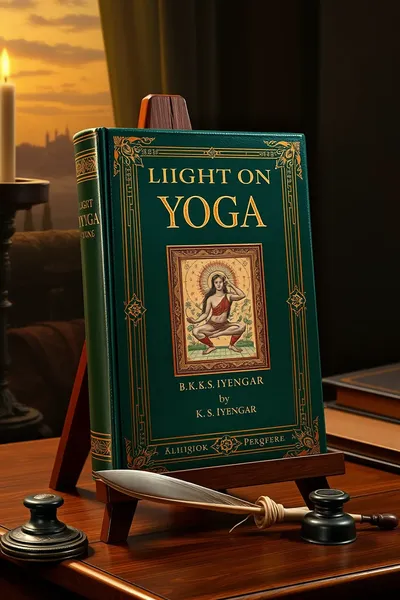





More Free Occult Philosophy Books
View all →