Poltergeist
 75
75

Poltergeist
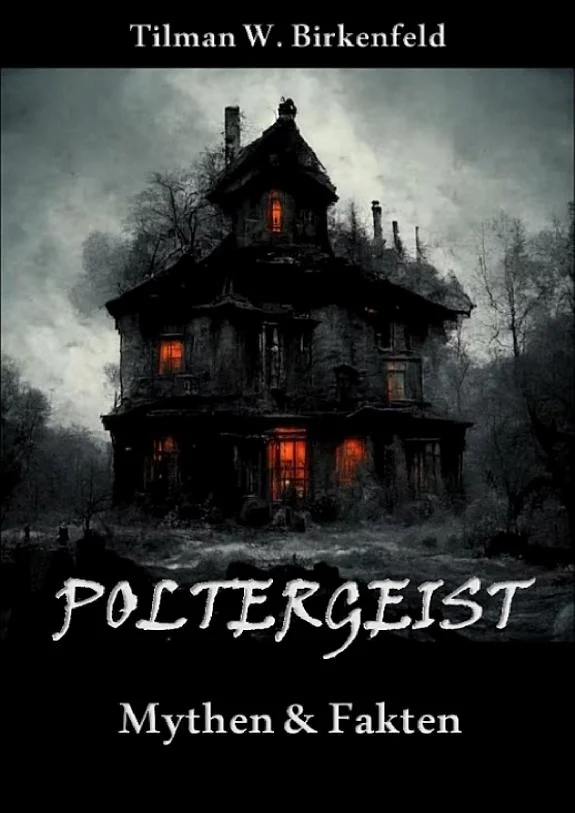
Tilman W. Birkenfeld's "Poltergeist" offers a structured overview of a particularly vexing category of paranormal activity. The strength of the work lies in its systematic approach, dissecting historical accounts and theoretical frameworks without succumbing to overly sensational language. Birkenfeld is careful to delineate between folklore, anecdotal evidence, and the more rigorous (though still controversial) studies in parapsychology. A notable passage details the early 20th-century investigations into cases that would later be classified under RSPK, highlighting the challenges researchers faced in establishing repeatable experimental conditions. However, the book occasionally feels like a catalog of theories rather than a deeply probing analysis. While it presents various hypotheses, it stops short of offering a definitive stance, which may leave readers seeking resolution unsatisfied. Despite this, for its clarity and academic tone, "Poltergeist" serves as a valuable primer on a complex subject.
📝 Description
75
Tilman W. Birkenfeld's "Poltergeist" analyzes the phenomenon of disruptive, noisy, and invisible entities responsible for physical disturbances.
This book examines the phenomenon of poltergeists, which are understood as disruptive entities or forces causing physical disturbances. Unlike passive hauntings, poltergeist activity often involves the movement of objects, unexplained noises, and direct physical interactions. The work traces the evolution of this concept from anecdotal accounts to more structured investigations.
"Poltergeist" is intended for individuals with a serious interest in paranormal phenomena, especially those drawn to active and unsettling manifestations. It suits researchers of the occult, students of parapsychology, and anyone wanting to grasp the historical and theoretical frameworks of these events. The book favors detailed case studies and critical analysis over sensationalism.
Birkenfeld situates poltergeist phenomena historically, noting that reports date back centuries. It observes how societal understanding and scientific inquiry have tried to categorize and explain these occurrences. Early investigations, tied to spiritualism and folklore, form a backdrop for discussing modern parapsychological approaches, showing shifts in methodology and interpretation.
This work engages with the esoteric tradition of spiritualism and parapsychology, which seeks to understand phenomena beyond conventional scientific explanation. It examines how reports of poltergeist activity, often intertwined with folklore and early spiritualist investigations, have been interpreted through various theoretical lenses. The book considers the role of individuals, particularly adolescents, as potential centers for such disturbances, touching on concepts like psychokinesis and the agent theory within the broader study of mediumship and unexplained physical phenomena.
💡 Why Read This Book?
• Gain a structured understanding of poltergeist phenomena, moving beyond sensationalized media portrayals, by examining the specific concept of Recurrent Spontaneous Psychokinesis (RSPK) as explored in Chapter 3. • Explore the historical lineage of these disturbances, recognizing patterns and explanations that have evolved since the 18th century, as detailed in the historical context sections. • Differentiate between various theoretical explanations, including psychological and parapsychological perspectives, enabling a more nuanced personal assessment of such events.
⭐ Reader Reviews
Honest opinions from readers who have explored this book.
❓ Frequently Asked Questions
What is the primary difference between a haunting and a poltergeist?
A haunting typically involves residual energies or spirits associated with a location, often manifesting as apparitions or subtle environmental changes. Poltergeist activity, conversely, is characterized by dynamic physical disturbances, such as moving objects and loud noises, often seemingly centered around a specific person.
Are poltergeists considered to be intelligent entities?
The nature of poltergeists is debated. Some theories suggest they are manifestations of unconscious psychic energy (often termed RSPK), particularly from an adolescent agent, rather than independent, intelligent beings. Other interpretations remain open to the possibility of external entities.
When did systematic study of poltergeists begin?
While reports are ancient, systematic study, particularly within parapsychology, gained momentum in the mid-20th century with researchers like J.B. Rhine and later Anton Szandor LaVey, who began categorizing phenomena like Recurrent Spontaneous Psychokinesis (RSPK).
Does the book offer proof of poltergeist existence?
No, the book "Poltergeist" by Tilman W. Birkenfeld does not claim to offer definitive proof. Instead, it presents historical accounts, theoretical frameworks, and case studies to explore the phenomenon and the ongoing scientific and parapsychological debate surrounding it.
What role does the 'agent' play in poltergeist cases?
In many theories, particularly RSPK, the 'agent' is an individual, often an adolescent experiencing significant emotional or psychological stress, around whom the poltergeist activity seems to manifest. The book explores the correlation between the agent and the disturbances.
Can a poltergeist be controlled?
Control is a complex issue discussed within the book. If linked to an 'agent' and psychological stress, addressing the agent's well-being might reduce activity. However, the unpredictable nature of these events means direct control is rarely achieved or demonstrated.
🔮 Key Themes & Symbolism
Recurrent Spontaneous Psychokinesis
This central concept, often abbreviated as RSPK, is explored as a leading parapsychological explanation for poltergeist activity. The work details how RSPK theory posits that the phenomena are not caused by external spirits but by the unconscious psychic energy of a living person, typically an adolescent. It examines the characteristics of RSPK, such as its spontaneous and recurrent nature, and the types of physical disturbances associated with it, distinguishing it from other paranormal explanations and highlighting the challenges in its scientific investigation.
Historical Manifestations
Birkenfeld traces the documented history of poltergeist-like events, showing that the phenomenon is not a modern invention but has roots stretching back centuries. The book likely references early accounts from folklore and historical records, illustrating how societal understanding and interpretation of these disruptive events have evolved. By examining historical cases, the work provides context for modern theories, showing how early beliefs in demonic possession or mischievous spirits have been re-evaluated through the lens of parapsychology and psychology.
Theories of Causation
A significant portion of the book is dedicated to dissecting the various theories attempting to explain the origin of poltergeist phenomena. This includes psychological perspectives, such as stress-induced psychic energy release, as well as parapsychological models like RSPK. The work likely contrasts these with more traditional explanations involving spirits or other supernatural entities, presenting the arguments and evidence (or lack thereof) for each. The exploration aims to provide readers with a comprehensive overview of the ongoing debate.
Case Study Analysis
The book analyzes specific documented cases of poltergeist activity, moving beyond general descriptions to examine the details of individual incidents. This involves scrutinizing the reported events, the individuals involved (potential agents), the environmental factors, and the conclusions drawn by investigators at the time. By dissecting these cases, Birkenfeld aims to illustrate the complexities and inconsistencies often found in poltergeist reports, highlighting common patterns and unique anomalies that challenge simple explanations.
💬 Memorable Quotes
Direct passages from the work, attributed to the author.
“The poltergeist is less an external entity and more an internal eruption.”
— This interpretation suggests that the book leans towards psychological or psychokinetic explanations for poltergeist phenomena, viewing them as manifestations of an individual's own energy or subconscious rather than the actions of an independent spirit.
“From spectral knockings in 18th-century parsonages to modern-day object levitation, the core mystery persists.”
— This highlights the book's intent to bridge historical accounts with contemporary reports, emphasizing the enduring enigma of poltergeist activity across different eras and its consistent, yet unexplained, physical manifestations.
“The adolescent 'agent' remains the most consistent, albeit controversial, focal point in RSPK studies.”
— This points to the significant role of adolescent individuals in many poltergeist cases investigated under the RSPK framework, acknowledging the ongoing debate and skepticism surrounding this specific correlation.
“The physical evidence, while striking, often lacks the repeatable consistency demanded by empirical science.”
— This interpretation acknowledges the dramatic nature of poltergeist events but also points to their inherent elusiveness and lack of standardization, which poses significant obstacles for scientific validation and acceptance.
💡 Key Ideas
Editorial paraphrase of the work's core concepts — not direct quotes.
Distinguishing between genuine phenomena and misinterpretation or fabrication is the primary challenge for researchers.
This quote underscores the methodological difficulties inherent in studying poltergeists, emphasizing the constant need for critical evaluation and the potential for error in observation, reporting, or explanation.
🌙 Esoteric Significance
Tradition
While not strictly aligned with a single esoteric lineage, "Poltergeist" engages with themes common in Western esotericism, particularly concerning the nature of unseen forces and their interaction with the material world. It touches upon concepts related to elemental spirits or psychic energy that echo Gnostic ideas of emanations or Hermetic principles of correspondence. The book's focus on the psychological underpinnings also aligns with modern esoteric psychology, which often views external phenomena as reflections of internal states.
Symbolism
The primary 'symbol' in poltergeist phenomena is the uncontrolled movement and disruption of ordinary objects, symbolizing chaos and the breakdown of perceived reality. Unexplained noises can represent unheard messages or primal fears breaking through. The recurring presence of an 'agent,' often an adolescent, can symbolize the turbulent transition from unconsciousness to consciousness, a potent metaphor within many esoteric systems for spiritual development or crisis.
Modern Relevance
Contemporary occult and metaphysical circles continue to find relevance in poltergeist studies. Thinkers exploring consciousness studies, quantum entanglement, and subjective reality often reference such phenomena as potential evidence for non-local consciousness or mind-matter interaction. Practitioners of certain forms of energy work or ritual magic might also draw parallels between poltergeist activity and the uncontrolled manifestation of psychic energy, seeking to understand or harness such forces.
👥 Who Should Read This Book
• Aspiring parapsychologists and paranormal investigators seeking a structured overview of a specific phenomenon, including historical case studies and theoretical frameworks. • Students of comparative religion and folklore interested in the evolution of beliefs surrounding unseen forces and disturbances across different cultures and eras. • Individuals experiencing or seeking to understand unexplained physical disturbances in their environment, looking for rational and parapsychological explanations beyond simple superstition.
📜 Historical Context
Published in 2023, "Poltergeist" emerges in an era where paranormal research occupies a complex space between fringe investigation and academic curiosity. The book’s subject matter connects to a long history of documented disturbances, with notable cases like the Enfield Poltergeist in the late 1970s continuing to capture public imagination. Birkenfeld's work implicitly engages with the legacy of parapsychologists such as J.B. Rhine, who pioneered empirical approaches to psychic phenomena in the mid-20th century, and contrasts with the more spiritualist interpretations prevalent in the 19th century. The book navigates the shift from folklore-based explanations to more psychologically-oriented theories, such as Anton Szandor LaVey's exploration of psychic energy, while also acknowledging ongoing skepticism from the scientific establishment. Reception in the contemporary milieu is varied, with many academic circles dismissing such topics, yet a persistent public interest fuels continued exploration.
📔 Journal Prompts
The concept of Recurrent Spontaneous Psychokinesis (RSPK) and its potential connection to personal stress.
Historical accounts of poltergeist activity and their parallels to modern interpretations.
The role of the 'agent' in poltergeist phenomena and its psychological implications.
Differentiating between folklore, spiritualist claims, and parapsychological theories of causation.
Personal reflections on the boundary between the known physical world and unexplained energetic disturbances.
🗂️ Glossary
Poltergeist
A German term referring to a ghost or spirit that causes physical disturbances, such as loud noises, moving objects, and physical attacks. Often associated with disruptive, rather than merely residual, paranormal activity.
RSPK
Recurrent Spontaneous Psychokinesis. A parapsychological theory suggesting that poltergeist phenomena are caused by the unconscious psychic energy of a living person, typically an adolescent, rather than an external entity.
Agent
In the context of RSPK, the individual, often an adolescent, who is believed to be the source or focal point of the poltergeist activity.
Psychokinesis (PK)
The alleged ability to influence a physical system by thought alone, without physical intervention. Poltergeist activity is often theorized as a manifestation of PK.
Haunting
The persistent presence of a ghost or spirit in a particular location, typically associated with residual energies or past events, often manifesting subtly.
Parapsychology
A field of study that investigates paranormal and psychic phenomena, including ESP (extrasensory perception) and PK (psychokinesis), using scientific methods.
Phenomenology
The study of structures of consciousness as experienced from the first-person point of view. In this context, it refers to the detailed description and analysis of the reported experiences of poltergeist events.
This book appears in 1 collection
🔮 Readers Also Liked
Browse all →









From the “Poltergeist” Collection
View all →







More Free Occult Philosophy Books
View all →