Irish Witchcraft and Demonology
 78
78

Irish Witchcraft and Demonology



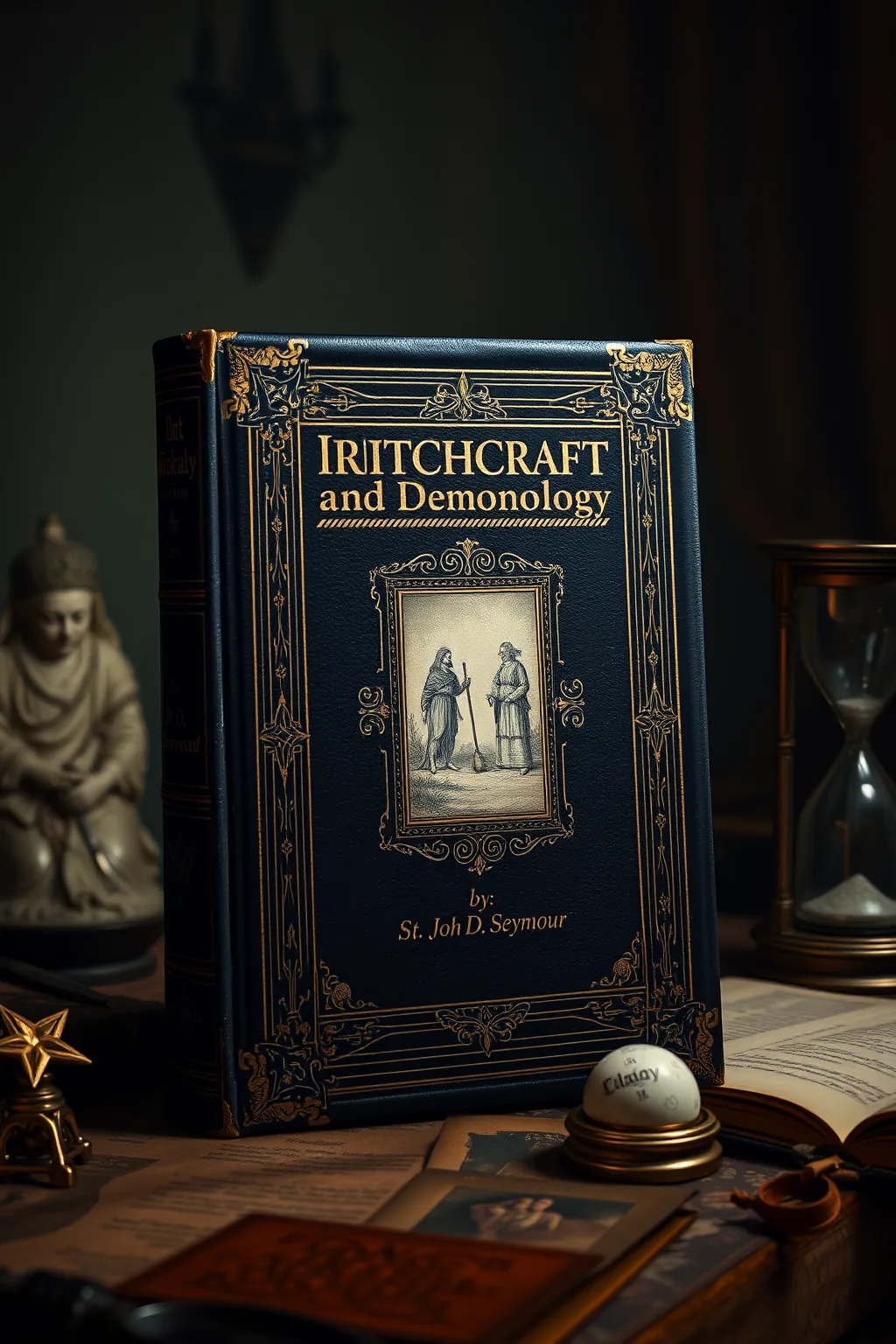
St. John D. Seymour's 'Irish Witchcraft and Demonology' stands as a monumental testament to the enduring power of folklore and the occult in Irish history. Seymour masterfully navigates the treacherous waters of historical persecution, presenting a compelling tapestry woven from documented trials and anecdotal accounts of spectral visitations and otherworldly encounters. His rigorous scholarship, combined with a captivating narrative style, makes this an indispensable resource for anyone interested in the darker, more mystical dimensions of human experience. This work is not merely a historical survey; it is an invitation to understand the archetypal fears and beliefs that have shaped the Irish psyche for centuries.
📝 Description
78
Published in 1913, St. John D. Seymour's 'Irish Witchcraft and Demonology' examines historical accounts of magic and the supernatural in Ireland.
St. John D. Seymour's 1913 study, 'Irish Witchcraft and Demonology,' examines the historical presence of witchcraft and demonic beliefs in Ireland. The book details accounts from Irish witch trials, describing spectral visions and paranormal events that were part of the island's history. Seymour presents these as reflections of a populace deeply aware of unseen influences on their lives. The text looks at the intersection of superstition and religious or spiritual beliefs, showing a culture shaped by ancient anxieties and magical practices. It covers specific folklore and traditions related to these darker aspects of belief.
The work aims to document the beliefs and experiences of people in Ireland concerning witchcraft and demonology. It draws on historical records and anecdotal evidence to reconstruct the atmosphere and the specific occurrences that fueled these beliefs. Seymour's approach is to present the material as a record of historical phenomena and popular consciousness rather than as an endorsement of the supernatural. The book considers the social and cultural context in which these beliefs took root and persisted.
This book sits within the broader study of Western occult traditions and folklore. It documents specific regional beliefs, in this case Irish, concerning witchcraft and demonology, which were subjects of significant interest in the late 19th and early 20th centuries. Such works often sought to catalog and understand folk practices, superstitions, and alleged supernatural events, placing them within a historical and anthropological framework. It reflects an era when scholars and enthusiasts were cataloging what they perceived as remnants of older belief systems before they disappeared.
💡 Why Read This Book?
Uncover the hidden spiritual landscape of Ireland, from the chilling reality of witch persecutions to the pervasive presence of ghosts and poltergeists. This book is essential for seekers of esoteric wisdom, scholars of folklore and occult history, and practitioners interested in the deep roots of Irish magical traditions. It offers a well-documented yet richly atmospheric journey into the heart of ancient beliefs and paranormal phenomena.
⭐ Reader Reviews
Honest opinions from readers who have explored this book.
❓ Frequently Asked Questions
What is the primary focus of 'Irish Witchcraft and Demonology'?
The book primarily surveys the history of witch persecution in Ireland, alongside a wide array of other paranormal events, including ghosts, poltergeists, and even early accounts of unexplained aerial phenomena.
Is this book suitable for beginners in occult studies?
Yes, while well-documented and scholarly, the book is highly readable and engaging, making it accessible to those new to the study of witchcraft and demonology.
Does the book contain primary source material?
Absolutely. Seymour includes extensive and fascinating quotes directly from historical source documents, offering authentic glimpses into past beliefs and experiences.
What makes this book unique in its field?
Its comprehensive scope, blending rigorous historical research with vivid descriptions of paranormal events, and its deep dive into the Irish cultural context of witchcraft and demonology sets it apart.
Can this book inform modern witchcraft practices?
Yes, by understanding the historical manifestations of belief and fear surrounding witchcraft, modern practitioners can gain deeper insights into the evolution of these traditions and their symbolic resonance.
🔮 Key Themes & Symbolism
The Spectral Set of Ireland
This theme explores the pervasive presence of the supernatural in Irish life as depicted in Seymour's work. It examines how folklore, belief in spirits, and encounters with the otherworldly were woven into the fabric of daily existence. The book explores the various manifestations of the spectral realm, from benevolent household spirits to malevolent entities, and how these beliefs shaped societal anxieties and spiritual practices across different eras. It highlights the deep connection between the Irish landscape and its perceived supernatural inhabitants, offering a collection of folklore and belief.
The Crucible of Witch Trials
This theme focuses on the historical persecution of individuals accused of witchcraft in Ireland. Seymour's research meticulously documents the legal proceedings, societal fears, and the often tragic outcomes for those caught in the fervor of witch hunts. It examines the societal pressures, religious influences, and psychological factors that fueled these persecutions. The theme also probes the nature of the accusations, the evidence presented, and the enduring questions surrounding the historical reality of witchcraft and its alleged practitioners within the Irish context, revealing a dark chapter of human history.
Traces of the Unseen World
This theme expands beyond traditional witchcraft to encompass a broader spectrum of paranormal phenomena recorded in Ireland. It includes accounts of poltergeists, apparitions, and even early, intriguing reports of unexplained aerial phenomena, suggesting a long-standing human fascination with the unknown. Seymour's work positions these diverse occurrences within a cohesive narrative of a land where the veil between the mundane and the mystical is demonstrably thin. The theme explores how these diverse manifestations of the inexplicable contributed to a unique cultural understanding of reality and the cosmos.
💬 Memorable Quotes
Direct passages from the work, attributed to the author.
“The air in Ireland was always thick with the unseen.”
— This evocative phrase suggests a pervasive spiritual atmosphere, hinting at the constant presence of supernatural forces and beliefs shaping everyday life and perception.
“The spectral dance was a constant companion to the living.”
— Illustrates the deep integration of ghosts and spirits into the cultural consciousness, implying that encounters with the deceased were a common and accepted, albeit often feared, part of existence.
“Fear and fascination walked hand in hand.”
— Captures the dual nature of human response to the unknown and the supernatural – a mixture of dread and an irresistible pull towards understanding or experiencing it.
“The earth itself held ancient secrets.”
— Emphasizes a connection between the land and its mystical power, suggesting that Ireland's geography is imbued with latent energies and hidden knowledge waiting to be uncovered.
💡 Key Ideas
Editorial paraphrase of the work's core concepts — not direct quotes.
Whispers of the old ways persisted in the shadows.
This quote points to the enduring nature of ancient magical practices and beliefs, suggesting they survived despite persecution or societal change, lurking just beneath the surface.
🌙 Esoteric Significance
Tradition
This work draws from the rich vein of Celtic and pre-Christian animistic traditions, interwoven with the later influences of Christian demonology. It explores how indigenous Irish beliefs regarding spirits, nature forces, and magical practices interacted with and were often demonized by the dominant religious narratives. The esoteric significance lies in understanding these syncretic beliefs and the survival of older, earth-centered spiritualities beneath layers of imposed dogma. It offers a window into a resilient folk magic that persisted through centuries.
Symbolism
The book is replete with potent symbolism, from the archetypal figures of the witch and the demon to the spectral manifestations that populate its pages. These symbols represent primal fears, societal anxieties, and the human struggle to comprehend the unknown. The land itself, the ancient stones, and the natural elements are imbued with symbolic power, acting as conduits or sources of magical energy. The symbolism also extends to the rituals and accusations, revealing deeper psychological and spiritual undercurrents within the historical accounts.
Modern Relevance
In an age increasingly seeking connection to nature, ancient wisdom, and authentic spiritual experience, 'Irish Witchcraft and Demonology' offers profound relevance. It provides a historical grounding for modern pagan and witchcraft practitioners, useful the roots of various practices and belief systems. Furthermore, its exploration of societal fear, persecution, and the power of collective belief offers timeless lessons for understanding contemporary issues of prejudice and the human tendency to scapegoat. The book encourages a critical yet open-minded examination of the unseen.
👥 Who Should Read This Book
This captivating work is ideal for a diverse audience. **Beginners** in occult studies will find a highly readable yet informative introduction to historical witchcraft and its cultural impact. **Scholars** of folklore, history, and religious studies will appreciate its meticulous research and primary source inclusions. **Seekers** drawn to the mystical traditions of Ireland and the broader spectrum of paranormal phenomena will find a rich and atmospheric exploration. **Practitioners** of witchcraft and paganism can gain invaluable historical context and insights into the evolution of their craft, understanding the deep roots of belief and practice.
📜 Historical Context
Written during a period of burgeoning interest in folklore, parapsychology, and occult studies in the early to mid-20th century, 'Irish Witchcraft and Demonology' emerged from a scholarly climate eager to document and understand the lingering superstitions and historical realities of magical beliefs. The era saw a reaction against purely rationalistic explanations, with many researchers seeking to preserve oral traditions and investigate anecdotal evidence of the paranormal. Seymour's work fits within this broader intellectual current, aiming to provide a comprehensive, albeit often chilling, account of how witchcraft and demonological beliefs manifested and were acted upon within Irish society. It reflects a growing awareness of how these narratives shaped legal systems, social anxieties, and the very cultural identity of the nation.
📔 Journal Prompts
Reflect on the societal fears that might have fueled the witch trials described. How do similar fears manifest in contemporary society?
Consider the concept of the 'unseen world' in Irish folklore. How does this differ from or align with your own beliefs about the spiritual realm?
Analyze the symbolic significance of the natural landscape in the accounts presented. What role does nature play in your own spiritual practice or understanding?
If you encountered a spectral apparition or a poltergeist event, how might you approach it based on the historical accounts in this book?
Explore the tension between documented historical events and anecdotal paranormal accounts. How do you reconcile factual evidence with subjective experience?
🗂️ Glossary
Poltergeist
From the German for 'noisy ghost,' a type of ghost or supernatural being purported to cause physical disturbances such as loud noises, objects being moved or destroyed, and physical assaults.
Apparition
The visual manifestation of a ghost or spirit, often appearing as a visible, sometimes fleeting, human-like figure or form.
Demonology
The study of demons or beliefs about demons. In historical contexts, it often refers to the theological and philosophical examination of the nature, hierarchy, and actions of malevolent supernatural beings.
Witchcraft
The practice of magic, often associated with a belief in supernatural powers and often linked to folklore and historical accusations of malevolent intent, particularly during periods of persecution.
Folklore
The traditional beliefs, customs, and stories of a community, passed through the generations by word of mouth. It encompasses myths, legends, fairy tales, proverbs, and superstitions.
This book appears in 2 collections
🔮 Readers Also Liked
Browse all →









From the “Witchcraft” Collection
View all →






More Free Witchcraft & Paganism Books
View all →