Michel de Nostredame
Michel de Nostredame was a 16th-century French seer, physician, and astrologer, best known for his book of prophecies.
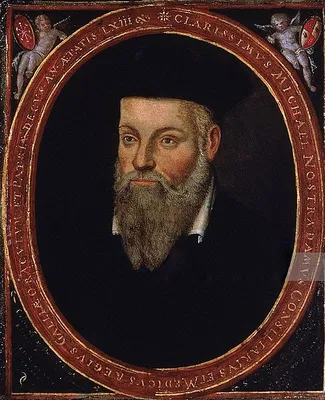
Michel de Nostredame, known as Nostradamus, was a French astrologer, physician, and reputed seer living in the 16th century. Born into a family that had converted from Judaism to Catholicism, he pursued studies at universities in Avignon and Montpellier, though his medical career was interrupted by plague outbreaks and expulsion from university for practicing as an apothecary. After losing his first wife and children to the plague, he remarried and had a larger family. He gained recognition for his almanacs, which led him to work for wealthy patrons, including Catherine de' Medici. His most famous work, "Les Prophéties," published in 1555, is a collection of poetic quatrains. Despite attracting many followers who believe he predicted future events, academic consensus attributes the perceived accuracy to vague language, misinterpretations, and mistranslations, rejecting claims of genuine supernatural prophetic abilities.
Early Life and Medical Career
Born in 1503, Michel de Nostredame's family had previously converted from Judaism to Catholicism. He began his higher education at the University of Avignon but was forced to leave due to a plague epidemic. After working as an apothecary, he attempted to earn a doctorate at the University of Montpellier but was expelled because his manual trade was forbidden by university statutes. He later worked as a physician, notably combating plague outbreaks in Marseille and other Provençal towns. He married twice, experiencing the loss of his first wife and two children to plague before remarrying and fathering six more children.
Development as an Astrologer and Seer
Nostradamus began shifting his focus from medicine towards what he termed the "occult" around 1550, the year he first Latinized his name and published an almanac. The success of this and subsequent annual almanacs led him to offer horoscopes and astrological advice to nobility and other prominent individuals. It was during this period that he began compiling his famous "Les Prophéties," a collection of 942 quatrains intended to predict future events. He employed a deliberately obscure style, blending languages and using wordplay to shield his work from religious opposition.
Les Prophéties and Reception
Published in 1555, "Les Prophéties" was met with a mixed reception. While some viewed Nostradamus with suspicion, others, including Catherine de' Medici, wife of King Henry II of France, became significant patrons. She appointed him Counselor and Physician-in-Ordinary to her son, King Charles IX. Despite his growing reputation, Nostradamus faced minor legal issues, including a brief imprisonment for publishing an almanac without prior episcopal permission. Academics today largely dismiss claims of his supernatural foresight, attributing the perceived prophecies to vague language, intentional ambiguity, and later misinterpretations or mistranslations.
Later Years and Death
In his final years, Nostradamus suffered from severe gout, which progressed to edema. He died in July 1566 in Salon-de-Provence. His will left his property to his wife and children. While popular legends surround his life and death, historical accounts detail his final illness and burial. The enduring legacy of Nostradamus lies in "Les Prophéties," which continues to be interpreted and debated centuries after its publication.
Key Ideas
- Collection of poetic quatrains allegedly predicting future events
- Use of obscure language, wordplay, and mixed languages in prophecies
- Belief in astrological influence and foresight
Books by Michel de Nostredame
14 free public domain books · Read online or download