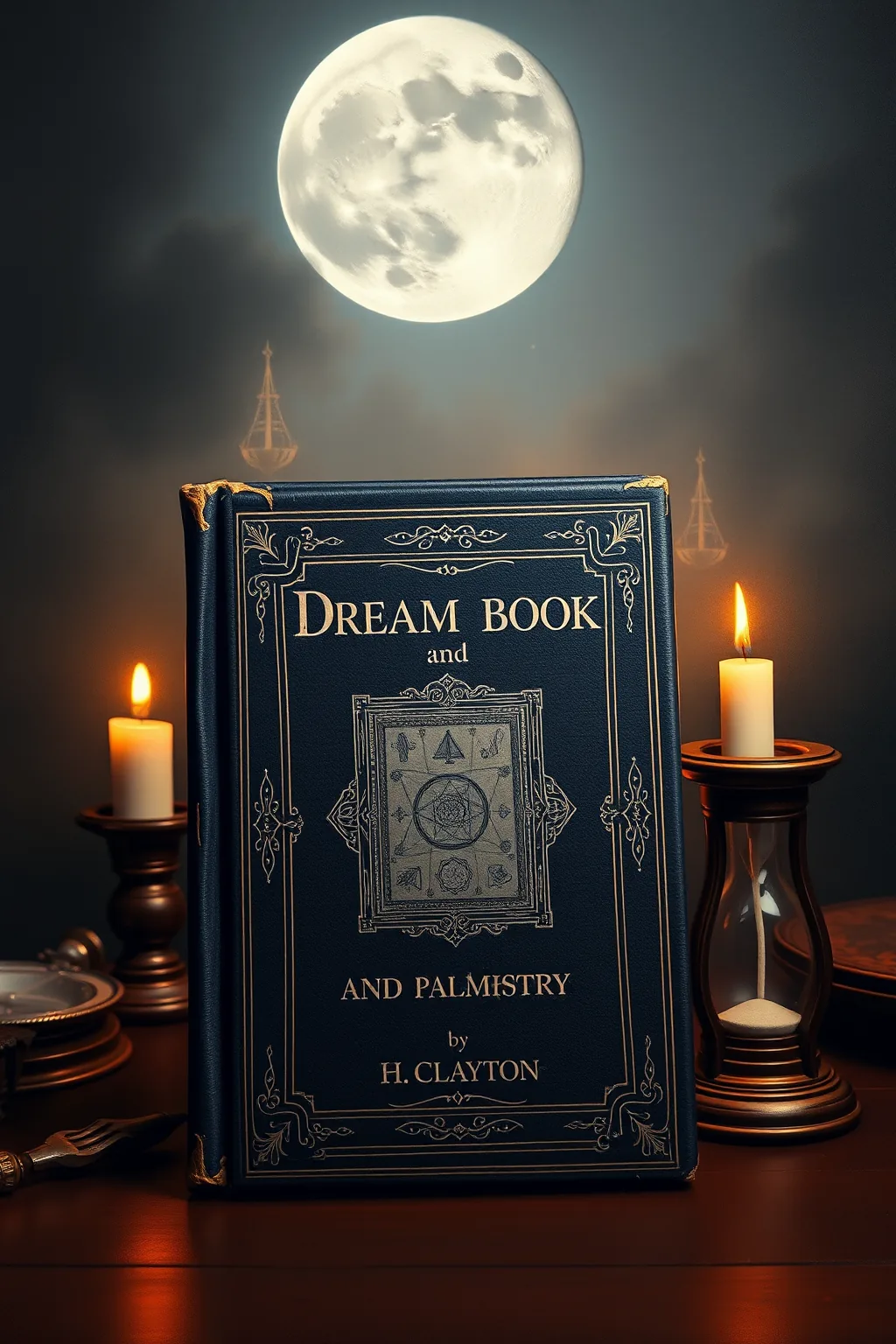
Dream book and palmistry
 61
61

Dream book and palmistry



Cassian Rothmann (Senior Critic, Ancient Wisdom) — H. Clayton's "Dream Book and Palmistry" is a remarkable synthesis of two potent divinatory arts, presented with clarity and esoteric depth. Clayton masterfully bridges the ephemeral nature of dream symbolism with the tangible lines of the palm, offering readers a holistic approach to self-understanding. The work eschews superficial prediction, instead focusing on the philosophical and spiritual underpinnings of these ancient practices. Its strength lies in its ability to empower the practitioner, fostering intuition and critical self-reflection. This is an essential compendium for serious students of esoteric knowledge, occult practitioners, and anyone seeking to unlock the profound wisdom held within their own being.
📝 Description
61
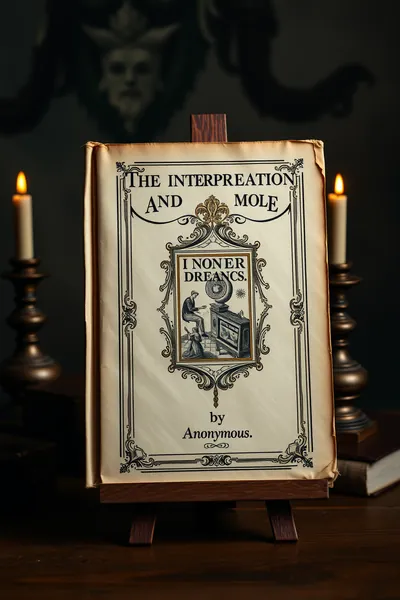
H. Clayton's 1919 "Dream Book and Palmistry" deciphers the language of dreams and the lines of the hand.
Published in 1919, H. Clayton's "Dream Book and Palmistry" examines two distinct methods of self-understanding: dream interpretation and palmistry. The book details how dreams can function as messages, offering insight into one's personal path and spiritual development. Clayton addresses the symbolism found in nocturnal visions, suggesting they hold guidance for the individual.
Beyond simple prediction, the text presents palmistry as a tool for introspection and a map of personal experience. It aims to help readers recognize their innate capacities, understand patterns in their lives, and become aware of subtle influences on their future. The work is directed toward those seeking greater depth in their lives and a connection between cosmic principles and their lived reality. It encourages an examination of the inner self and the perceived forces that shape one's destiny.
This book sits within the late 19th and early 20th-century surge of interest in occult and spiritualist practices. It connects to traditions that view the human body and mind as conduits for cosmic or spiritual knowledge. Dream analysis was a common practice in spiritualist circles, seen as a direct line to subconscious or even external spiritual influences. Palmistry, often viewed as a form of physiognomy, was also popular, interpreted not just for prognostication but as a symbolic reading of character and life path. Clayton's work combines these, suggesting a unified system for understanding the self and its place in a larger, unseen order.
💡 Why Read This Book?
Unravel the enigmatic language of your subconscious through dream interpretation and discover the hidden narratives etched upon your palms. This book offers practical guidance for seekers eager to understand their inner landscape and life's trajectory. It is an indispensable tool for practitioners of divination, spiritual scholars, and those on a quest for self-mastery and profound personal insight.
⭐ Reader Reviews
Honest opinions from readers who have explored this book.
❓ Frequently Asked Questions
What is the primary esoteric goal of this book?
The primary esoteric goal is to equip readers with the knowledge to interpret the symbolic language of dreams and the lines on their palms, fostering self-awareness, spiritual growth, and an understanding of life's deeper patterns and potentials.
Is this book suitable for beginners in divination?
Yes, while rich in esoteric depth, Clayton's explanations are structured to guide newcomers through the foundational principles of both dream analysis and palmistry, making it accessible for those new to these arts.
How does this book differ from modern dream dictionaries?
This book transcends simple symbol-to-meaning lists by exploring the archetypal and psychological dimensions of dreams, connecting them to broader spiritual principles and personal destiny, rather than offering superficial interpretations.
Can palmistry readings from this book predict the future?
While offering insights into potential paths and inherent tendencies, the book emphasizes that palmistry reveals one's innate blueprint and the consequences of one's choices, rather than a fixed, unalterable future.
What is the philosophical underpinning of dream interpretation presented here?
The philosophical underpinning draws from Jungian archetypes and broader metaphysical concepts, viewing dreams as a dialogue between the conscious and unconscious mind, guided by universal wisdom and personal soul-journey.
🔮 Key Themes & Symbolism
The Unconscious as a Sacred Archive
This theme explores the profound belief that the subconscious mind acts as a repository of ancient wisdom, personal history, and spiritual guidance. Dreams are presented as sacred transmissions from this inner realm, offering symbolic keys to unlock suppressed knowledge, hidden talents, and the soul's deepest desires. Clayton illuminates how understanding these nocturnal narratives can lead to profound self-awareness and integration, bridging the gap between our waking reality and the vast, mystical field of our inner selves. It's an invitation to treat dreams not as random occurrences, but as divinely orchestrated messages.
Chirognomy: The Hand as a Celestial Map
The art of palmistry is elevated beyond mere fortune-telling, presented as a profound system of understanding the human condition. The lines, mounts, and shape of the hand are interpreted as a unique cosmic blueprint, reflecting innate potentials, karmic lessons, and the energetic pathways of the individual. Clayton reveals how studying the hand offers a tangible connection to the subtle energies that influence our lives, providing insights into character, destiny, and the intricate interplay of mind, body, and spirit. It's a study of the self, inscribed by the very forces of existence.
Synchronicity and Symbolic Resonance
This theme underscores the interconnectedness of all things through the lens of synchronicity and symbolic resonance. Clayton demonstrates how patterns emerge in both dreams and the lines of the palm, mirroring external events and inner states, suggesting a divinely ordered universe. The book encourages readers to perceive these recurring symbols and coincidences not as random chance, but as meaningful signposts guiding them along their spiritual path. It fosters an appreciation for the subtle yet powerful ways the cosmos communicates, urging a conscious attunement to these profound interconnections.
💬 Memorable Quotes
Direct passages from the work, attributed to the author.
“The hand is a map of the soul's journey.”
— This poignant statement expresses the book's view of palmistry as a divinatory art that reveals not just potential future events, but the inherent spiritual and psychological field of an individual.
“To know the hand is to know the self, to know the dream is to know the soul.”
— This profound statement links the physical manifestation (hand) with the spiritual essence (soul), suggesting a holistic approach to self-discovery through both divinatory practices.
💡 Key Ideas
Editorial paraphrase of the work's core concepts — not direct quotes.
Dreams are the whispers of the universe within.
This quote highlights the esoteric perspective that dreams are not mere random firings of the brain, but profound messages carrying cosmic wisdom and insights into our personal destiny.
The lines of fate are not written in stone, but in choice.
Emphasizing free will, this quote suggests that while our palms may indicate tendencies or potentials, our choices and actions ultimately shape the unfolding of our lives.
The subconscious mind is a vast ocean of hidden knowledge.
This quote underscores the importance of exploring the depths of the subconscious, particularly through dreams, as a source of profound wisdom and untapped potential waiting to be discovered.
🌙 Esoteric Significance
Tradition
This work draws from a body of esoteric traditions, most notably Hermeticism, which posits the principle of 'As Above, So Below,' linking the microcosm of the human being to the macrocosm of the universe. It also aligns with Neoplatonic philosophies that view the soul's journey through various spiritual planes. The psycho-spiritual interpretations of dreams echo Jungian archetypal psychology, while palmistry connects to ancient Chaldean and Indian traditions, all interpreted through a lens of personal spiritual evolution and divine guidance.
Symbolism
The core symbolism lies in the interpretation of dreams as coded messages from the subconscious and the divine, employing archetypes like the Shadow, the Anima/Animus, and the Wise Old Man. Palmistry's symbolism is found in the lines (Life, Head, Heart, Fate) representing vital forces, mental faculties, emotional states, and life's trajectory, respectively. The mounts on the hand symbolize planetary influences and inherent personality traits. Together, these elements form a symbolic language to understand the soul's blueprint and its interaction with universal energies.
Modern Relevance
In an age often characterized by materialism and disconnection, "Dream Book and Palmistry" offers a vital antidote by reconnecting individuals with their inner landscapes and the subtle energetic currents of existence. Its insights into dream analysis provide tools for emotional processing and self-discovery, highly relevant for contemporary mental wellness practices. Palmistry, viewed through Clayton's lens, remains a powerful means of self-reflection and understanding personal strengths and challenges, fostering resilience and conscious choice-making in navigating modern life's complexities.
👥 Who Should Read This Book
This comprehensive guide is useful for aspiring practitioners of divination, offering foundational knowledge in two key esoteric arts. Spiritual seekers and introspective individuals will find it an clear resource for understanding their inner world and life's purpose. Scholars of occult history and comparative religion will appreciate its historical context and synthesis of various traditions. Furthermore, anyone curious about the deeper meanings embedded within their dreams and the lines of their hands, seeking a path toward greater self-awareness and personal empowerment, will find this book a profoundly rewarding companion on their journey.
📜 Historical Context
Published during an era of burgeoning interest in spiritualism and the occult, H. Clayton's "Dream Book and Palmistry" emerged at a time when Western societies were re-examining traditional religious frameworks and seeking alternative avenues for spiritual exploration. The late 19th and early 20th centuries witnessed a surge in societies dedicated to psychical research, esoteric studies, and the revival of ancient divinatory practices. This book reflects that intellectual and spiritual climate, offering a synthesis of popular esoteric traditions—dream interpretation, influenced by figures like Freud and Jung, and palmistry, with its long historical roots. It provided accessible guidance for individuals seeking personal enlightenment and a deeper understanding of the unseen forces believed to govern human existence, contributing to the growing body of occult literature that aimed to clarify and democratize spiritual knowledge.
📔 Journal Prompts
Reflect on a recurring dream symbol. What personal resonance does it hold for you today?
Examine the lines on your dominant hand. Which line do you feel most strongly connected to, and why?
How can the insights from your dream analysis be applied to a current waking life challenge?
Consider a significant life decision you face. What potential outcomes or guiding principles might your palm lines suggest?
Write about a recent synchronicity you experienced. How might it connect to your inner state or subconscious messages?
🗂️ Glossary
Archetype
In Jungian psychology, universal, archaic patterns and images that derive from the collective unconscious and are the psychic counterpart of instinct. They influence human behavior and experience.
Chirognomy
The study of the hand, encompassing the shape, size, and general characteristics of the fingers and palm, often considered a preliminary aspect of palmistry.
Collective Unconscious
A concept developed by Carl Jung, referring to a deeper layer of the unconscious mind shared by all humans, containing inherited universal archetypes and instincts.
Synchronicity
A concept introduced by Carl Jung, referring to the occurrence of meaningful coincidences that appear to be causally unrelated but are connected by meaning or purpose.
Hermeticism
A philosophical and religious tradition based on writings attributed to Hermes Trismegistus, emphasizing the interconnectedness of all things and the pursuit of spiritual knowledge through understanding cosmic principles.
This book appears in 2 collections
🔮 Readers Also Liked
Browse all →









From the “Dream Interpretation” Collection
View all →

![The secrets of black arts!: A key note to witchcraft, devination [sic], omens, forwarnings, apparitions, sorcery, dæmonology, dreams, predictions, visions, and the Devil's legacy to earth mortals, compacts with the Devil! With the most authentic history of Salem witchcraft](/img/thumb/the-secrets-of-black-arts-b-a-key-note-to-witchcraft-devination-sic-omens-forwarnings-apparitions-sorcery-d-monology-dreams-predictions-visions-and-the-devil-s-legacy-to-earth-mortals-compacts-with-th.webp)



More Free Divination & Tarot Books
View all →