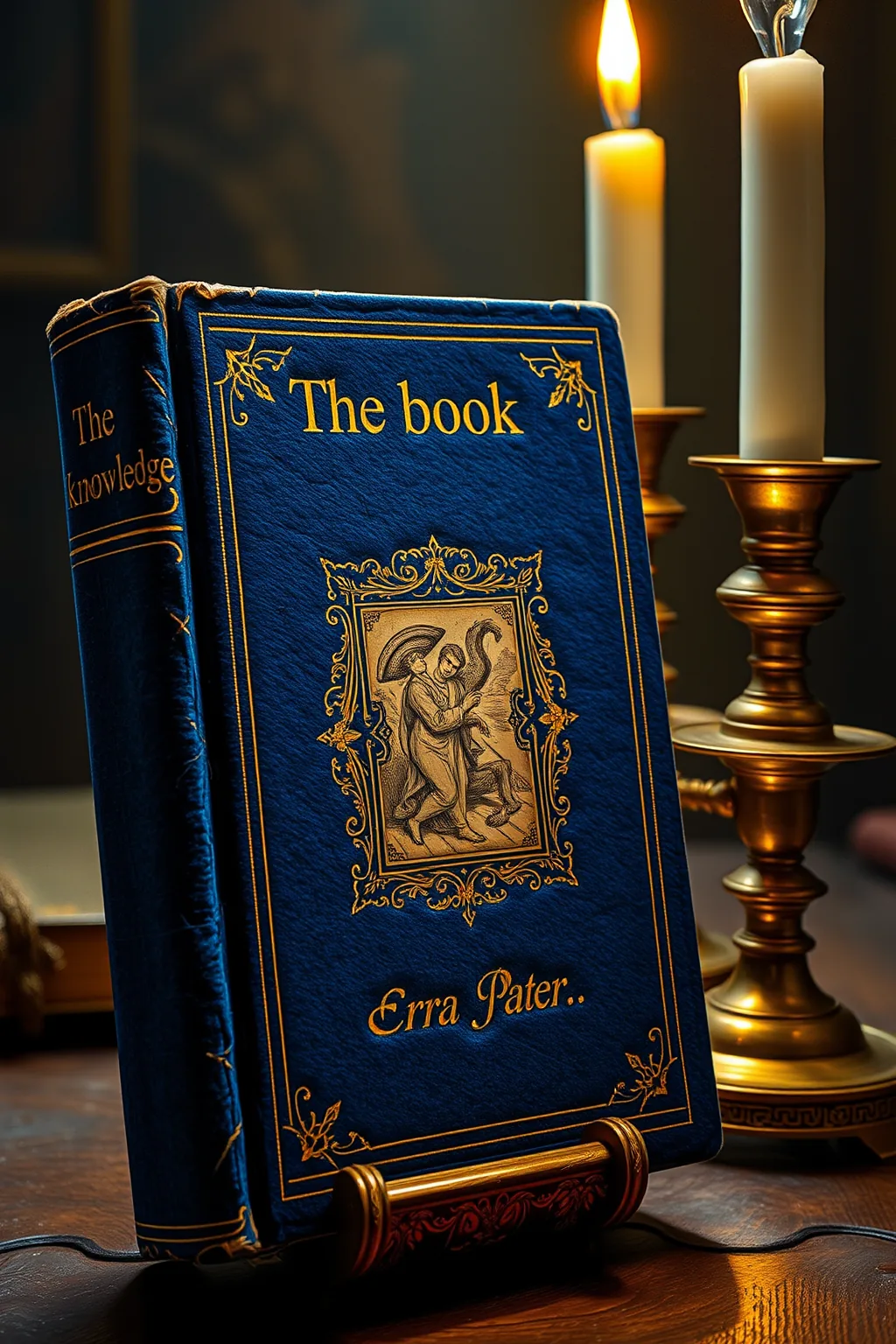
The book of knowledge
 64
64

The book of knowledge



Isolde Whitaker, Sacred Texts Editor: 'The Book of Knowledge' by Erra Pater stands as a testament to the enduring power of early occult literature. Pater masterfully bridges the perceived chasm between the celestial and the terrestrial, offering insights into astrological influences on health, particularly concerning horses, and interpreting the symbolic language of dreams. This work is an invaluable resource for practitioners of ancient divination and scholars of pre-modern medical and astrological thought. Its strength lies in its holistic approach, demonstrating an era where the study of nature was intrinsically linked to the study of the divine. A must-read for anyone delving into the roots of Western esotericism.
📝 Description
64
Erra Pater's 'The Book of Knowledge' details astrological portents and equine health.
Published around the start of esoteric studies, 'The Book of Knowledge' by Erra Pater contains a blend of astrological predictions, dream interpretation, and advice on the health of horses. The text attempts to show how the universe and the earth are connected. Pater explains symbols and old ways to divine the future. This book is for those interested in learning more about destiny, luck, and how nature works. It encourages readers to think about life's hidden aspects.
Its pages contain information for those sensitive to the unseen forces that influence reality. The author presents a view of the world that links celestial events with earthly matters, including the well-being of animals. The writing style, though old, aims to be direct for the serious student of hidden knowledge. The book is a record of early attempts to codify such wisdom for practical and philosophical use.
This text comes from the early period of Western esotericism, a time when scholars and practitioners sought to synthesize classical philosophy, astrology, and early natural sciences. Works from this era often attempted to create a unified worldview, linking celestial movements, human psychology (as seen in dreams), and even animal husbandry. 'The Book of Knowledge' fits this pattern by connecting seemingly disparate subjects like astrology and horse care, suggesting a belief in underlying universal principles that govern all existence.
💡 Why Read This Book?
Discover ancient divination techniques and the lost art of understanding animal health through celestial patterns. 'The Book of Knowledge' offers a unique perspective on the interconnectedness of all life, revealing profound symbolic meanings in everyday phenomena and dreams. Ideal for spiritual seekers, historical occultists, and anyone fascinated by the wisdom of the past.
⭐ Reader Reviews
Honest opinions from readers who have explored this book.
❓ Frequently Asked Questions
What is the primary focus of 'The Book of Knowledge'?
This ancient text primarily focuses on divination, astrology, and the understanding of diseases, particularly within the context of horses, viewed through an esoteric and symbolic lens.
Who was Erra Pater and when did he live?
Erra Pater was an author of early works, likely active in the late 17th or early 18th century, whose writings delve into astrological and medical prognostication with a mystical undertone.
What makes this book relevant to divination and Tarot?
Its comprehensive exploration of astrological influences, dream interpretation, and symbolic correspondences lays foundational principles for many divination systems, including aspects found in Tarot.
Does the book offer practical advice for modern readers?
While rooted in historical practices, the symbolic insights and philosophical underpinnings of 'The Book of Knowledge' can offer profound metaphorical and spiritual guidance for contemporary seekers and practitioners.
What is the significance of the early works classification?
This classification indicates the book's historical importance as a foundational text within esoteric and scientific traditions, offering a glimpse into early methods of inquiry and belief systems.
🔮 Key Themes & Symbolism
Astrological Symbiosis
This theme explores the profound belief that celestial bodies exert discernible influences not only on human fate but also on the health, temperament, and very essence of animals, particularly horses. It explores the intricate correspondences between planetary positions, zodiacal signs, and the manifestation of ailments or fortunes, positing a universe where the macrocosm directly mirrors and impacts the microcosm. Understanding these connections was seen as key to prognostication and healing, revealing a holistic worldview where all creation was interconnected through divine or cosmic law.
The Oracle of Dreams
Pater illuminates dreams not as random nocturnal firings but as potent channels of divine communication and foresight. This theme dissects the symbolic language of the subconscious, interpreting dream imagery as portents, warnings, or revelations concerning future events, hidden truths, and even the state of one's physical or spiritual well-being. It champions the practice of meticulously recording and analyzing dreams to unlock their prophetic potential, aligning with ancient traditions that viewed sleep as a sacred portal to hidden knowledge and cosmic understanding.
Veterinary Esotericism
This section examines the unique intersection of early veterinary science and occult philosophy. It presents a framework where the health and ailments of horses were not solely understood through empirical observation but were also interpreted through astrological charts, humoral theory, and symbolic diagnoses. The text reveals an era when the well-being of these noble creatures was intrinsically linked to the balance of cosmic energies, offering a fascinating historical perspective on animal care grounded in mystical principles and ancient wisdom.
💬 Memorable Quotes
Direct passages from the work, attributed to the author.
“Dreams are the whispers of the soul.”
— This evocative phrase suggests that dreams are not mere fantasy but carry deep, personal meaning and spiritual insights, acting as a conduit for inner truth and foresight.
“Form is the vessel of spirit.”
— This philosophical statement underscores the idea that the physical body or structure (form) is a manifestation and container for a higher, energetic, or spiritual essence.
“When the Moon doth wane, so too shall the fever.”
— A direct example of astrological prognostication applied to a specific physical ailment, demonstrating the book's practical application of celestial observation for health prediction.
“Know the horse, know the heavens.”
— This aphorism expresses the book's central thesis: that understanding the intricacies of nature, particularly animals, is intrinsically linked to comprehending the broader cosmic order.
💡 Key Ideas
Editorial paraphrase of the work's core concepts — not direct quotes.
The stars do speak of health and sickness.
This quote highlights the core belief that celestial alignments directly correlate with physical well-being, extending the influence of astrology beyond human destiny to the animal kingdom.
🌙 Esoteric Significance
Tradition
This work is deeply embedded in the Western esoteric tradition, drawing heavily from Hermeticism, Neoplatonism, and Renaissance magical philosophy. It reflects a holistic cosmology where the universe is viewed as a living, interconnected organism, governed by divine principles and celestial influences. The emphasis on correspondences, symbolism, and the divinatory arts places it firmly within a lineage of texts that sought to uncover hidden knowledge and understand the underlying order of creation through mystical means.
Symbolism
The book is rich with symbolism, particularly concerning the celestial bodies (planets, stars) as agents of influence, and dreams as allegorical narratives. Animals, especially horses, are often imbued with symbolic meaning, representing strength, spirit, or even specific astrological energies. The concept of 'forms' can also be interpreted symbolically, representing not just physical structure but the archetypal blueprint or essence of a being. Understanding these symbols is crucial to unlocking the text's deeper layers of meaning and its divinatory applications.
Modern Relevance
Despite its historical origins, 'The Book of Knowledge' offers profound relevance for modern seekers. Its exploration of interconnectedness speaks to contemporary ecological and systems thinking. The emphasis on dream interpretation and symbolic understanding can provide valuable tools for personal introspection and psychological growth. Furthermore, its historical perspective on animal well-being through a lens of holistic health offers a unique, albeit archaic, approach that can inspire new considerations in animal welfare and human-animal bonds, reminding us of ancient wisdom in a modern world.
👥 Who Should Read This Book
This text is a treasure for the dedicated bibliophile and the earnest seeker. Scholars of occult history, ancient medicine, and divination will find invaluable primary source material. Practitioners of astrology, dream analysis, and symbolic interpretation will discover foundational concepts and historical context. Beginners curious about the roots of esoteric thought will be introduced to a rich, albeit challenging, intellectual landscape. Those interested in the historical relationship between humans, animals, and the cosmos will find a unique and informative perspective.
📜 Historical Context
Emerging from the late 17th or early 18th century, 'The Book of Knowledge' is a product of an era steeped in both burgeoning scientific inquiry and deeply ingrained esoteric traditions. This period saw a fascinating cohabitation of rational observation and mystical interpretation, particularly in fields like medicine and natural philosophy. Authors like Erra Pater often synthesized ancient astrological lore, humoral theory, and folk wisdom with nascent understandings of biology and disease. The classification of 'Early works to 1800' signifies its position as a bridge between medieval scholasticism and the Enlightenment, reflecting a worldview where the divine, the celestial, and the earthly were considered inextricably linked, and where understanding the natural world was a path to divine knowledge.
📔 Journal Prompts
Reflect on a recent dream and identify potential symbolic meanings related to health or fortune.
Consider the astrological influences present during a significant event in your life and how they might have played a role.
Explore the symbolic significance of a horse in your personal mythology or in cultural depictions.
How might the concept of 'forms' (law or structure) influence your understanding of spiritual or physical well-being?
Research a specific astrological aspect mentioned in the book and its traditional interpretation for health or destiny.
🗂️ Glossary
Humors
In ancient and medieval medicine, the four cardinal bodily fluids (blood, phlegm, yellow bile, and black bile) believed to determine health and temperament; their balance was crucial.
Prognostication
The action of foretelling or prophesying future events, especially through divination or astrological interpretation.
Celestial Bodies
Natural astronomical objects visible in the sky, such as planets, stars, moons, and constellations, believed to influence earthly events.
Correspondences
In esoteric traditions, the symbolic relationships and affinities between different elements, concepts, or phenomena across various planes of existence (e.g., planets to herbs, colors to emotions).
Divination
The practice of seeking knowledge of the future or the unknown by supernatural means, often through symbolic interpretation of signs or omens.
This book appears in 3 collections
🔮 Readers Also Liked
Browse all →









From the “Dream Interpretation” Collection
View all →


![The mystic oracle, or, The complete fortune-teller and dream book / [F.M. Lupton].](/img/thumb/the-mystic-oracle-or-the-complete-fortune-teller-and-dream-book-f-m-lupton.webp)
More Free Divination & Tarot Books
View all →