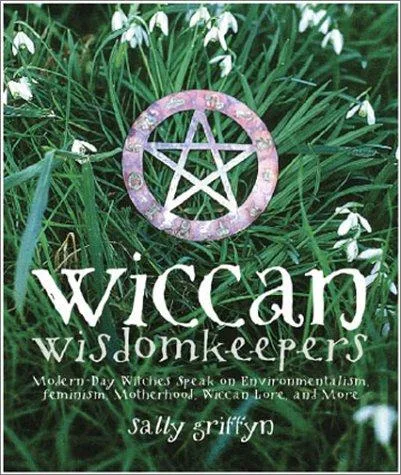
Wiccan Wisdomkeepers
 72
72

Wiccan Wisdomkeepers
Sally Griffyn’s Wiccan Wisdomkeepers attempts to provide a clear, accessible entry point into Wiccan practice and philosophy. Its strength lies in its systematic approach, breaking down complex ideas into digestible sections. The author’s explanation of the Wiccan Rede, for example, is commendably direct. However, the work occasionally feels constrained by its own structure, sometimes lacking the spontaneous, intuitive feel that many associate with witchcraft. A passage discussing the ethics of spellcasting is particularly well-articulated, highlighting the responsibility inherent in such work. While informative, it doesn't quite capture the full spectrum of lived Wiccan experience. It serves as a solid primer, but perhaps not the definitive statement on the subject.
📝 Description
72
Sally Griffyn's 2002 book examines the core tenets and practices of modern Wicca.
Wiccan Wisdomkeepers, published in 2002, looks at the central beliefs and practices of contemporary Wicca. The book aims to help readers grasp the philosophical foundations and practical applications of Wiccan faith, going past simple explanations to discuss the tradition's more complex elements. It is written for anyone interested in Wicca, whether they are new to the subject or experienced practitioners wanting a deeper grasp of the tradition. The work suits readers who want a thorough overview of esoteric subjects, approaching them with a discerning and analytical perspective instead of solely a devotional one.
Griffyn's work was released during a time of considerable expansion and variation within Neopaganism. After Wicca gained recognition as a formal religion late in the 20th century, there was a growing desire to define its theological and practical structures. This book adds to that discussion by organizing and explaining Wiccan principles.
This book situates itself within the modern Wiccan movement, which saw substantial growth in the late 20th and early 21st centuries. It addresses the need for clear explanations of Wiccan theology and practice that emerged as the religion gained wider recognition. Griffyn's approach focuses on the philosophical underpinnings and practical application of these beliefs, distinguishing it from purely historical or devotional texts.
💡 Why Read This Book?
• Gain a structured understanding of the Wiccan Rede, a core ethical principle guiding practitioners since its popularization. • Explore the significance of the Wheel of the Year and its associated festivals, offering insight into nature-based spiritual cycles. • Grasp the foundational concepts of deity reverence within Wicca, specifically the archetypes of the God and Goddess as presented in the text.
⭐ Reader Reviews
Honest opinions from readers who have explored this book.
❓ Frequently Asked Questions
When was Wiccan Wisdomkeepers first published?
Wiccan Wisdomkeepers by Sally Griffyn was first published in 2002, positioning it within the early wave of accessible Wiccan literature in the new millennium.
What is the primary focus of Wiccan Wisdomkeepers?
The book primarily focuses on explaining the fundamental principles, practices, and ethical considerations of modern Wicca for a general audience.
Does the book discuss Wiccan deities?
Yes, Wiccan Wisdomkeepers explores the concept of deity within Wicca, often detailing the reverence for a divine masculine and feminine principle, typically referred to as the God and Goddess.
Is Wiccan Wisdomkeepers suitable for absolute beginners?
Absolutely. The book is designed to be introductory, offering clear explanations of core Wiccan concepts for those new to the tradition.
What historical period does the book cover in relation to Wicca?
While focusing on modern Wicca, the book implicitly references its roots and development in the 20th century, contextualizing its practices within contemporary Neopaganism.
Does the book mention specific Wiccan rituals?
Yes, Wiccan Wisdomkeepers discusses the role and general nature of Wiccan rituals, including those associated with the Wheel of the Year and other significant observances.
🔮 Key Themes & Symbolism
The Wiccan Rede
This theme centers on the ethical framework central to Wicca, particularly the maxim 'An it harm none, do what ye will.' Griffyn's work examines this directive not merely as a rule, but as a guiding principle for responsible spiritual practice and magical work. It explores the personal accountability inherent in aligning one's actions with this tenet, emphasizing its role in fostering a harmonious relationship with oneself, others, and the environment.
The Wheel of the Year
The book details the cyclical nature of Wiccan spirituality as embodied by the Wheel of the Year. This theme covers the eight major festivals (Sabbats) that mark the turning of the seasons, from Samhain to Beltane. Griffyn illustrates how these celebrations connect practitioners to the rhythms of nature, offering opportunities for reflection, renewal, and the honoring of life's transitions and agricultural cycles.
Deity and Divine Polarity
A significant focus is placed on the Wiccan understanding of divinity, often expressed through the concept of a dualistic divine, comprising a Goddess and a God. This section explores how these archetypes are perceived and honored in ritual and personal devotion. It examines the complementary energies they represent and their significance in Wiccan cosmology and practice.
Ritual and Magic
Wiccan Wisdomkeepers addresses the role of ritual and magic as integral components of the Wiccan path. It explains how structured ceremonies and intentional magical acts serve as tools for personal growth, spiritual connection, and manifestation. The work clarifies that magic within this context is often viewed as a natural force, ethically wielded.
💬 Memorable Quotes
Direct passages from the work, attributed to the author.
“The Wiccan Rede is not simply a set of rules, but a guide to living consciously.”
— This interpretation highlights the proactive and mindful approach to ethics within Wicca, suggesting that the Rede encourages self-awareness and thoughtful action rather than passive adherence.
“Reverence for the Divine often takes the form of honoring both masculine and feminine principles.”
— This captures the essence of Wiccan polytheism or duotheism, pointing to the balanced acknowledgment of complementary divine energies in their spiritual practice.
“Magic is understood as the art of directing energy for a desired outcome.”
— This interpretation defines magic within the Wiccan context as an active, intentional process focused on channeling and shaping energy, rather than something supernatural or arbitrary.
“Personal responsibility is paramount in Wiccan practice.”
— This concise statement underscores the ethical core of the tradition, stressing that individual accountability for actions and their consequences is a fundamental aspect of the Wiccan path.
💡 Key Ideas
Editorial paraphrase of the work's core concepts — not direct quotes.
The Wheel of the Year offers a framework for understanding life's cycles through nature.
This paraphrase emphasizes the connection between seasonal changes and personal development, positioning the Wheel of the Year as a tool for spiritual insight into life's natural rhythms.
🌙 Esoteric Significance
Tradition
Wicca, as presented in this work, draws heavily from 20th-century Western esoteric traditions, particularly the ceremonial magic lineage of the Hermetic Order of the Golden Dawn and the earth-centered spirituality influenced by figures like Margaret Murray. It synthesizes elements of neo-paganism, witchcraft, and nature-based spirituality, forming a distinct path that, while influenced by earlier esoteric currents, emphasizes immanence and personal experience.
Symbolism
Key symbols explored include the Pentacle, representing the five elements and spirit, often worn as a protective amulet or used in ritual. The Horned God and the Triple Goddess are also central, embodying masculine and feminine divine principles, respectively, and connecting practitioners to primal energies of nature and fertility. The Wiccan Wheel of the Year itself is a powerful cyclical symbol of life, death, and rebirth.
Modern Relevance
Contemporary practitioners of eclectic witchcraft, nature-based spirituality, and even some modern Pagan Reconstructionists find value in Griffyn's foundational explanations. The work's clear articulation of ethical principles and seasonal cycles continues to inform individuals exploring earth-centered spirituality and alternative religious paths in the 21st century.
👥 Who Should Read This Book
• Individuals new to Wicca seeking a clear, introductory text that explains core beliefs and practices without overwhelming jargon. • Students of comparative religion interested in understanding a prominent modern Pagan path and its ethical framework. • Aspiring practitioners looking for a guide to the foundational concepts of the Wheel of the Year and deity reverence within Wicca.
📜 Historical Context
Wiccan Wisdomkeepers emerged in 2002, a period when Wicca, having gained significant public visibility through authors like Gerald Gardner and Doreen Valiente in the mid-20th century, was solidifying its presence as a recognized religion. The early 2000s saw a proliferation of books aimed at clarifying Neopaganism for a broader audience, moving beyond earlier, more insular or sensationalized portrayals. Griffyn's work arrived amidst this wave, seeking to provide a structured and accessible overview. It engaged with the ongoing discourse on Wiccan theology and practice, which had seen contributions from figures like Raymond Buckland and Janet and Stewart Farrar. While Wicca itself was a relatively young, albeit historically rooted, tradition, its contemporary forms were being actively debated and defined, differentiating themselves from earlier esoteric movements like Theosophy or Golden Dawn ceremonialism.
📔 Journal Prompts
The ethical implications of the Wiccan Rede: 'An it harm none, do what ye will.'
Reflect on the symbolism of the Horned God and the Triple Goddess in your own spiritual understanding.
Consider how the Sabbats of the Wheel of the Year might align with personal life transitions.
The role of ritual in directing energy and fostering personal growth.
Personal interpretation of the Pentacle and its elemental associations.
🗂️ Glossary
Wiccan Rede
The Wiccan ethical code, famously summarized as 'An it harm none, do what ye will.' It serves as a primary moral and spiritual guideline for practitioners.
Wheel of the Year
The annual cycle of eight major Wiccan festivals (Sabbats), marking seasonal changes and significant points in the agricultural and natural year.
Sabbat
One of the eight seasonal festivals observed in Wicca and other Neopagan traditions, celebrating natural cycles and often honoring deities.
Goddess
In Wicca, a primary divine feminine principle or deity, often associated with the moon, nature, fertility, and the cycles of life and death.
God
In Wicca, a divine masculine principle or deity, often associated with the sun, the hunt, virility, and the cycles of life and death, frequently seen as complementary to the Goddess.
Pentacle
A five-pointed star, typically enclosed within a circle. It is a significant symbol in Wicca, often representing the five elements (Earth, Air, Fire, Water, and Spirit) and used in ritual.
Esbat
A ritual or celebration held during the full moon, often observed in addition to the Sabbats in Wiccan practice.
🔮 Readers Also Liked
Browse all →





More by Sally Griffyn
All books →
More Free Witchcraft & Paganism Books
View all →