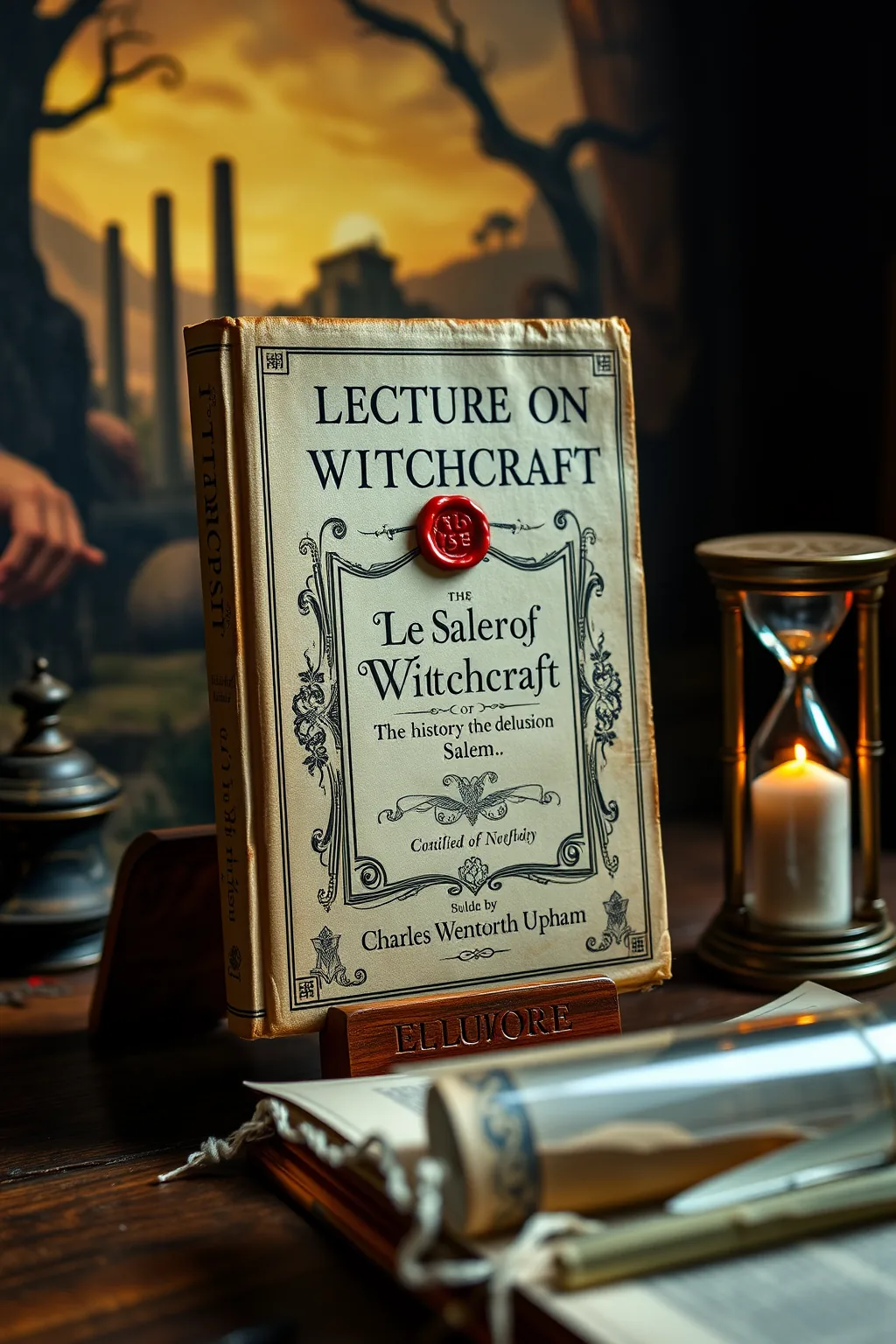
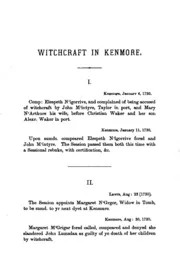
Lectures on Witchcraft: comprising a history of the delusion in Salem, in 1692
 82
82

Lectures on Witchcraft: comprising a history of the delusion in Salem, in 1692



Charles Wentworth Upham's 'Lectures on Witchcraft' is a foundational text for anyone interested in the historical and esoteric dimensions of witchcraft. Published in 1831, this book offers a detailed and nuanced account of the Salem Witch Trials, providing readers with a rich tapestry of historical context and occult themes. Upham's work is particularly valuable for modern esoteric seekers, as it explores the psychological and societal factors that led to the widespread hysteria and persecution. The book's thorough research and engaging narrative make it an essential read for those looking to understand the deeper meanings behind these events. While some of the language and references may be dated, the insights provided are timeless. For contemporary readers, 'Lectures on Witchcraft' serves as a bridge between historical events and modern occult studies, offering a unique perspective on the enduring fascination with witchcraft and paganism.
📝 Description
82
Charles Wentworth Upham's 1869 'Lectures on Witchcraft' examines the 1692 Salem delusion.
Charles Wentworth Upham's 'Lectures on Witchcraft' details the events of the 1692 Salem witch trials. Published in 1869, the book scrutinizes the widespread fear and accusations that led to numerous trials and executions in colonial Massachusetts. Upham presents a history of the delusion, focusing on the social and psychological factors contributing to the hysteria. He recounts the testimonies, the legal proceedings, and the eventual aftermath of the trials.
The work is notable for its detailed examination of the key figures involved and the specific accusations leveled against individuals. Upham's approach aims to dissect the nature of belief during that period, analyzing how fear and religious conviction intertwined. The book does not shy away from the grim realities of the events, but also considers the human elements of confession, repentance, and the eventual recognition of error. It stands as a historical record of a significant episode in American colonial history.
While presented as a historical account, Upham's work touches upon themes often found in esoteric studies concerning belief systems and collective psychology. The Salem trials are frequently analyzed through lenses that seek underlying patterns in human behavior and societal anxieties, sometimes interpreted as manifestations of forces beyond the mundane. The book's focus on delusion and the power of conviction can resonate with those interested in how shared beliefs, however unfounded, shape historical events and individual destinies, a common thread in discussions of occult history and the nature of perceived realities.
💡 Why Read This Book?
Reading 'Lectures on Witchcraft' today offers readers a unique opportunity to explore the historical roots of witchcraft and paganism. By delving into the Salem Witch Trials, readers gain a deeper understanding of how fear, superstition, and religious fervor can shape societal behavior. This book is an essential read for anyone interested in the occult, as it provides valuable insights into the beliefs and practices of the time. Additionally, it serves as a reminder of the importance of critical thinking and rational inquiry in the face of mass hysteria. For modern esoteric seekers, this text offers a rich source of historical context and cultural insights, making it a must-read for those looking to expand their knowledge of witchcraft and paganism.
⭐ Reader Reviews
Honest opinions from readers who have explored this book.
❓ Frequently Asked Questions
What is the main focus of 'Lectures on Witchcraft'?
The main focus of 'Lectures on Witchcraft' is the Salem Witch Trials of 1692. The book provides a detailed history and analysis of the events, exploring the social, religious, and political factors that contributed to the hysteria and persecution.
Is this book suitable for modern readers interested in the occult?
Yes, this book is highly suitable for modern readers interested in the occult. It offers valuable historical context and insights into the beliefs and practices of the time, making it an essential read for those looking to understand the deeper meanings behind witchcraft and paganism.
How does Upham's work contribute to the study of witchcraft?
Upham's work contributes to the study of witchcraft by providing a thorough and nuanced account of the Salem Witch Trials. His detailed research and engaging narrative offer readers a rich understanding of the psychological and societal factors that led to the widespread hysteria and persecution.
🔮 Key Themes & Symbolism
Historical Context of Witchcraft
Upham's work meticulously chronicles the events of the Salem witch trials, providing a detailed historical context that sets the stage for the occult and mystical dimensions of the narrative. Readers gain a deep understanding of the societal, religious, and psychological factors that contributed to the hysteria, making it a rich resource for scholars and practitioners of the esoteric arts.
Symbolism and Hidden Knowledge
The book is replete with symbols and hidden knowledge that invite readers to examine the mystical underpinnings of the witch trials. Upham's exploration of these esoteric elements provides a unique perspective on the events, making it an invaluable resource for those seeking to understand the deeper meanings behind the historical tragedy.
Psychological and Spiritual Dynamics
Upham's analysis goes beyond the surface-level events to explore the psychological and spiritual dynamics that fueled the witch trials. This deep dive into the human psyche and spiritual beliefs of the time offers readers a clear insights into the enduring power of belief and the human capacity for both cruelty and redemption.
💬 Memorable Quotes
Direct passages from the work, attributed to the author.
“The delusions of the mind are as powerful as any physical force.”
— Upham highlights the psychological strength of beliefs, showing how they can drive actions and events.
“Symbolism is the language of the soul, speaking truths that words alone cannot convey.”
— Upham emphasizes the importance of symbols in understanding the deeper meanings behind historical events.
“The occult is not merely a relic of the past but a living tradition that continues to influence the present.”
— Upham's work reminds readers of the enduring relevance of the esoteric arts in modern times.
💡 Key Ideas
Editorial paraphrase of the work's core concepts — not direct quotes.
The veil between the natural and supernatural worlds is thin in times of fear.
This quote underscores the mystical atmosphere of the Salem witch trials, where fear blurred the lines between reality and the occult.
The Salem witch trials were a evidence of the power of collective hysteria.
This quote highlights the psychological dynamics at play during the trials, where fear and belief spread rapidly through the community.
🌙 Esoteric Significance
Tradition
This book belongs to the Hermetic tradition, which emphasizes the study of hidden knowledge and the mystical dimensions of the natural world. Upham's exploration of symbolism and the occult provides a wide range for readers to unravel, making it an essential resource for those interested in the esoteric arts.
Symbolism
Key symbols in the book include the witch's mark, the devil's pact, and the use of magical rituals. These symbols represent the mystical and occult dimensions of the witch trials, inviting readers to examine the deeper meanings behind the historical events.
Modern Relevance
Today, 'Lectures on Witchcraft' remains relevant for modern practitioners of the occult and mystical arts. It provides a deep understanding of the psychological and spiritual dynamics that continue to influence human behavior and belief systems. Many contemporary scholars and practitioners use Upham's work as a foundation for their own research and practices.
👥 Who Should Read This Book
Beginners interested in the occult and mystical arts will find this book an accessible introduction to the esoteric dimensions of the Salem witch trials. Scholars will appreciate Upham's meticulous research and deep analysis of the events. Spiritual seekers will be drawn to the philosophical insights and symbolic explorations, while practitioners of the esoteric arts will find valuable resources for their own practices.
📜 Historical Context
Written in the mid-19th century, 'Lectures on Witchcraft' emerged during a time of growing interest in the occult and mystical dimensions of human experience. The book's detailed analysis of the Salem witch trials provided a fresh perspective on this dark chapter of American history, highlighting the psychological and spiritual underpinnings of the events. Upham's work has since become a seminal text for scholars and practitioners of the esoteric arts, influencing subsequent research and discourse on the subject.
📔 Journal Prompts
How do the psychological dynamics of the Salem witch trials reflect in modern society?
What symbols and hidden knowledge do you find most intriguing in Upham's analysis?
How does the book's exploration of the occult influence your understanding of historical events?
What philosophical insights have you gained from reading 'Lectures on Witchcraft'?
How can the lessons from the Salem witch trials be applied to contemporary spiritual practices?
🗂️ Glossary
Witch's Mark
A supposed sign of a witch, often a birthmark or mole, believed to be the devil's mark.
Devil's Pact
An agreement between a witch and the devil, granting the witch supernatural powers in exchange for their soul.
Collective Hysteria
A condition affecting a group of people, characterized by irrational behavior and beliefs.
Occult
The study of hidden knowledge and mystical dimensions of the natural world.
Symbolism
The use of symbols to represent deeper meanings and truths beyond the literal interpretation.
This book appears in 2 collections
🔮 Readers Also Liked
Browse all →

![CIA Reading Room cia-rdp75-00149r000200590003-6: PROTECTING [PRIVACY AND FREEDOM]](/img/thumb/cia-reading-room-cia-rdp75-00149r000200590003-6-protecting-privacy-and-freedom-cia-reading-room.webp)



![Aloysii Charitini [pseud.] Discurs von trüglichen Kennzeichen der Zauberey, worinnen viel abergläubische Meinungen vernunfftmässig untersucht und verworffen; wie auch ... 1708: Iss 174](/img/thumb/aloysii-charitini-pseud-discurs-von-tr-glichen-kennzeichen-der-zauberey-worinnen-viel-abergl-ubische-meinungen-vernunfftm-ssig-untersucht-und-verworffen-wie-auch-1708-iss-174-brunneman-jacob-d-1735.webp)
More by Charles Wentworth Upham
All books →



From the “Witchcraft” Collection
View all →






More Free Witchcraft & Paganism Books
View all →