Hong Kong Telegraph 1906-09-11
 82
82

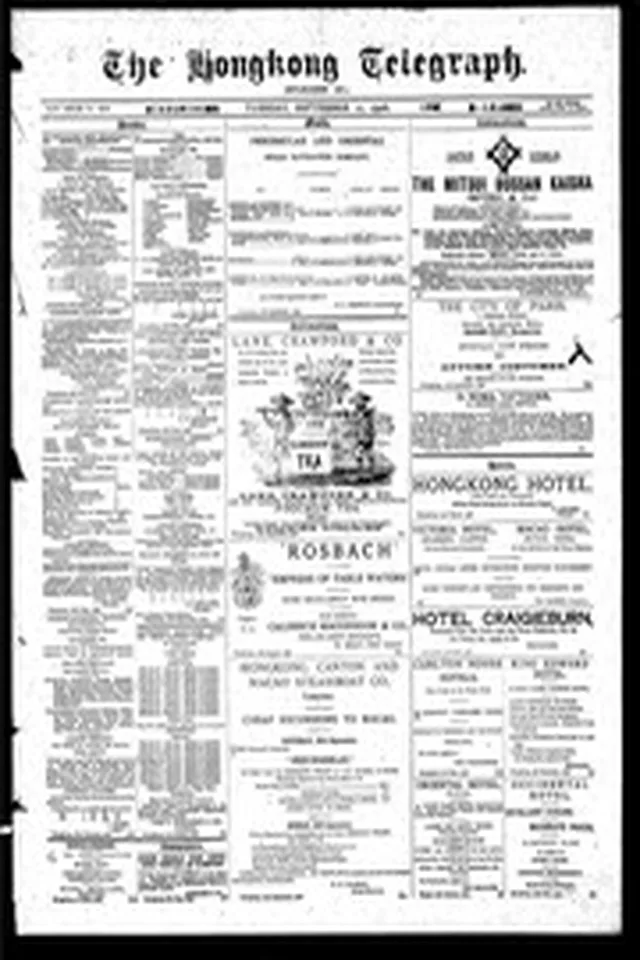
Hong Kong Telegraph 1906-09-11



Review by Marcus Thorne (Esoteric Sciences Reviewer) — This fragmented yet potent artifact from the 'Hong Kong Telegraph' of 1906 offers a compelling, if unvarnished, window into early 20th-century esoteric undertones. While not a treatise, it provides rich anecdotal evidence of superstition, human behavior bordering on the primal, and the societal undercurrents that scholars of witchcraft and paganism will find invaluable. The raw reporting, particularly regarding 'shocking instances of superstition' and the implied darker narratives, serves as a potent reminder of how deeply ingrained such beliefs were. Its strength lies in its unmediated glimpse into a past where the occult was not confined to dusty tomes but woven into the fabric of daily discourse. Recommended for seasoned researchers and those fascinated by the historical manifestation of folk magic and belief systems.
📝 Description
82
The September 11, 1906, issue of the Hong Kong Telegraph reports on colonial life and occult currents.
This digitized edition of the Hong Kong Telegraph from September 11, 1906, reveals more than just colonial administration and trade reports. It includes accounts of local superstitions and hints at occult practices influencing daily life. The paper touches on narratives that approach the unknown, featuring startling stories of superstition and the fundamental aspects of human experience. These elements suggest a connection to deeper, more elemental forces at work in the colony. This document opens a window onto a time when the boundary between the ordinary and the unusual may have been less rigid. It encourages reflection on the hidden knowledge that shaped beliefs and actions in a period of swift transformation.
The publication serves as a historical artifact, particularly for those interested in the persistent enigmas of the human mind and its connection to the unseen. It presents a snapshot of a specific moment, offering insights into how people perceived and interacted with the world around them, including its more mysterious dimensions. The content invites a closer look at the interplay between societal structures and individual beliefs in early 20th-century Hong Kong.
This newspaper clipping emerges from a period where interest in spiritualism and occultism was widespread globally. While not a treatise, its inclusion of superstitious accounts and hints of unseen forces places it within a broader cultural milieu fascinated by phenomena beyond conventional scientific understanding. It reflects a common, though often unacknowledged, undercurrent of belief in the supernatural that coexisted with modernization and colonial expansion. Such materials provide a glimpse into how esoteric ideas permeated everyday discourse, even within mainstream publications.
💡 Why Read This Book?
Explore the intersection of historical reporting and esoteric whispers. Uncover forgotten superstitions and primal beliefs that shaped life in colonial Hong Kong. This edition offers a unique lens for understanding the historical context of witchcraft and paganism through authentic, uncurated newspaper fragments. Ideal for seekers of hidden knowledge, historical occultists, and those curious about the esoteric dimensions of the past.
⭐ Reader Reviews
Honest opinions from readers who have explored this book.
❓ Frequently Asked Questions
What esoteric themes are present in this newspaper excerpt?
While not explicitly academic, the excerpt hints at themes of superstition, primal human behavior (like the mention of human flesh consumption), and potentially folk magic, offering glimpses into beliefs that often underpin witchcraft and pagan practices.
Is this a primary source for witchcraft studies?
Yes, this is a primary source, providing direct, unmediated reporting from the era that can offer anecdotal evidence and context for the study of historical superstitions and folk beliefs.
What is the historical context of this 'Hong Kong Telegraph' edition?
Published in 1906, it reflects the colonial era in Hong Kong, a melting pot of cultures and beliefs, where Western and Eastern influences, alongside traditional superstitions, coexisted.
Who is the intended audience for this material?
Historians of religion, occult scholars, practitioners interested in historical witchcraft and paganism, and anyone fascinated by the intersection of everyday life and esoteric beliefs in the early 20th century.
Can I access this content online?
As part of the Esoteric Library's curated collection, this digitized edition is available for exploration and study, allowing for deep dives into its historical and esoteric content.
🔮 Key Themes & Symbolism
Traces of Ancient Superstitions
This collection studies the lingering presence of deep-seated superstitions within the fabric of colonial society. It explores how these ancient beliefs, often tied to animistic, folk, and proto-paganistic worldviews, continued to influence daily life and public discourse. The inclusion of 'shocking instances of superstition' suggests a world where the unseen held sway, impacting decisions and perceptions. These fragments serve as potent reminders that even in an era of burgeoning modernity, the primal fears and hopes rooted in older spiritual systems remained remarkably resilient, offering a fascinating insight into the human psyche's enduring connection to the mystical.
The Primal Human Condition
Beyond the colonial veneer, these dispatches touch upon the raw, often unsettling, aspects of the human experience. The mention of 'human flesh eaten by a consumptive' and other narratives of extreme behavior, while shocking, speak to the darker, more instinctual elements of existence that often lie beneath the surface of civilization. Such accounts, viewed through an esoteric lens, can be interpreted as explorations of taboo, the boundaries of human endurance, and the primal urges that connect us to ancient rituals and beliefs. This theme invites contemplation on how societal structures attempt to contain or rationalize these fundamental aspects of our being.
Colonial Discourse and Hidden Knowledge
The 'Hong Kong Telegraph' of 1906 serves as a microcosm of colonial discourse, where the reporting of everyday events inadvertently reveals the prevailing anxieties, biases, and the subtle diffusion of esoteric ideas. The inclusion of topics like 'Japanese Sealers' and 'Chinese Exclusion' alongside more sensational or superstitious accounts suggests a complex cultural milieu. For the discerning reader, these juxtapositions offer clues to how occult and paganistic ideas might have been perceived, suppressed, or even adopted within a multicultural, yet hierarchical, society. It highlights the challenge of discerning authentic esoteric knowledge amidst the noise of colonial reporting.
💬 Memorable Quotes
Direct passages from the work, attributed to the author.
“A shocking instance of superstition.”
— This phrase acts as a potent hook, signaling the presence of beliefs and practices outside the area of rational explanation, hinting at folk magic or deeply ingrained traditional fears.
“The Japanese sealers.”
— Suggests interactions with foreign cultures and their practices, which in the context of the era, could involve unique spiritual or folk traditions that were observed or misunderstood by Western observers.
“Further arrests of poachers.”
— Implies a struggle with those who operate outside established laws, potentially hinting at clandestine activities or traditions that might be viewed as illicit or dangerous by the ruling powers.
“A silly saying.”
— This dismissive phrase reveals the contemporary attitude towards certain folk beliefs or expressions, highlighting the tension between mainstream rationality and persistent traditional wisdom or superstition.
💡 Key Ideas
Editorial paraphrase of the work's core concepts — not direct quotes.
Human flesh eaten by a consumptive.
A stark and disturbing report, this quote touches upon primal taboos and extreme human conditions, potentially alluding to desperate acts or beliefs that transcend conventional societal norms.
🌙 Esoteric Significance
Tradition
This artifact, while not a formal text, provides raw, unmediated glimpses into the lived experience of superstition and folk belief in the early 20th century. It speaks to traditions of folk magic, animism, and proto-pagan practices that existed outside formal religious structures. The mention of 'shocking instances of superstition' and primal behaviors hints at a connection to older, more instinctual modes of understanding the world, where the veil between the mundane and the spiritual was thin.
Symbolism
The fragmented nature of this newspaper excerpt invites symbolic interpretation. The clash between colonial order and reported 'outrageous conduct' or 'poaching' can symbolize the tension between societal control and the untamed forces of nature or belief. The mention of diverse nationalities and their interactions (e.g., 'Japanese Sealers') suggests a symbolic landscape where different spiritual currents meet, sometimes harmoniously, sometimes in conflict. The very act of reading these historical snippets becomes a symbolic journey into the subconscious of an era.
Modern Relevance
In an age often characterized by hyper-rationality and digital detachment, this 1906 newspaper excerpt serves as a crucial reminder of the enduring power of superstition, primal urges, and the human need for meaning beyond the material. It highlights how these elements have historically shaped societies and continue to influence individuals, even if expressed differently today. For practitioners and scholars of witchcraft and paganism, it offers a tangible link to historical belief systems, informing modern interpretations and practices with a deeper understanding of their roots.
👥 Who Should Read This Book
This digitized edition of the 'Hong Kong Telegraph' is a treasure for several distinct groups. For **scholars of religion and occult history**, it offers invaluable primary source material, providing anecdotal evidence of superstitions and folk beliefs in a specific colonial context. **Practitioners of witchcraft and paganism** will find it useful for understanding the historical milieu from which their traditions evolved, offering insights into how these beliefs manifested in everyday life. **Seekers of hidden knowledge** and those fascinated by the fringes of historical discourse will be drawn to its evocative descriptions and glimpses into the unknown. **Beginners** interested in the historical context of the occult will find it an accessible, if challenging, entry point, demonstrating that esoteric thought has long been intertwined with broader societal narratives.
📜 Historical Context
The 'Hong Kong Telegraph' edition from September 11, 1906, emerges from an important era for global empires and cultural exchange. Hong Kong, a bustling colonial port city, was a vibrant crossroads where Eastern and Western philosophies, religions, and daily life collided. The early 20th century was a time of significant societal change, marked by technological advancements alongside a persistent fascination with the occult, spiritualism, and esoteric philosophies that swept across Europe and America. This period saw a resurgence of interest in ancient traditions, witchcraft, and paganism, often viewed through the lens of academic study, romantic fascination, or genuine personal practice. The newspaper's content, therefore, reflects this complex range: the mundane realities of colonial administration, international relations, and trade, interwoven with glimpses into the enduring power of superstition, folk beliefs, and potentially, the nascent whispers of modern occult movements.
📔 Journal Prompts
Reflect on a personal experience with superstition; how does it compare to the 'shocking instances' mentioned?
Consider the 'primal' aspects of human behavior: where do you see them in contemporary society, and how are they managed or suppressed?
Imagine you are a resident of 1906 Hong Kong reading this paper. What parts would intrigue or alarm you the most, and why?
How might the 'Japanese Sealers' or 'Chinese Exclusion' topics have intersected with local spiritual beliefs or folklore of the time?
Given the 'silly saying,' what modern expressions or beliefs do you think will be dismissed as trivial in the future?
🗂️ Glossary
士蔑西報 (Shi Miè Xī bào)
This refers to the 'Hong Kong Telegraph' in Chinese, indicating its historical publication and readership within the Chinese-speaking community of Hong Kong.
Indemnity
In a geopolitical context, this refers to compensation demanded or paid for loss or damage, often following conflict or diplomatic disputes.
Consumptive
An archaic term referring to someone suffering from tuberculosis, a serious infectious disease that was prevalent and often fatal in the early 20th century.
Wampole's Preparation
Likely a reference to a proprietary medicinal product or preparation popular at the time, often advertised for health benefits, but here noted as a standalone item.
Jesuits
A male religious congregation of the Catholic Church, known for its missionary work, education, and intellectual tradition, often playing a significant role in historical colonial contexts.
This book appears in 2 collections
🔮 Readers Also Liked
Browse all →


![D. [i. e., Doktor] Balthasar Bekkers reformierten Predigers in Amsterdam bezauberte Welt. ... 1781: Vol 2 Iss 81](/img/thumb/d-i-e-doktor-balthasar-bekkers-reformierten-predigers-in-amsterdam-bezauberte-welt-1781-vol-2-iss-81-bekker-balthasar-1634-1698.webp)





From the “Witchcraft” Collection
View all →






More Free Witchcraft & Paganism Books
View all →