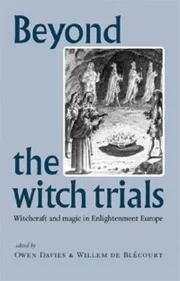
Beyond the witch trials: Witchcraft and magic in Enlightenment Europe
 71
71

Beyond the witch trials: Witchcraft and magic in Enlightenment Europe



Beyond the Witch Trials: Witchcraft and Magic in Enlightenment Europe is a must-read for modern esoteric seekers. The collection of essays offers a fresh perspective on the study of witchcraft, moving beyond the traditional focus on witch trials to explore the magical practices and beliefs that persisted into the Enlightenment. The book's strength lies in its multidisciplinary approach, drawing from history, anthropology, and cultural studies to provide a comprehensive understanding of the occult in European society. For those interested in the intersection of magic and Enlightenment thought, this book is an invaluable resource. It challenges conventional narratives and offers new insights into how magical practices evolved and adapted in the face of scientific and rational thought. The essays are well-researched and thoughtfully presented, making this book a standout contribution to the field of esoteric studies.
📝 Description
71
Published in 2017, 'Beyond the Witch Trials' examines witchcraft and magic in Enlightenment Europe.
This collection challenges the assumption that belief in magic vanished with the end of formal witch trials. Instead, it reveals how witchcraft and magical thinking persisted and transformed within Enlightenment society. The essays consider the continuation of magical practices and beliefs in various European countries including England, the Netherlands, Spain, Italy, Germany, Scotland, Finland, and Sweden.
It moves past simple historical accounts to consider the psychological and symbolic dimensions of magic. The book suggests that the Enlightenment's emphasis on reason did not erase the human need for meaning beyond the purely rational. Instead, magic and the supernatural continued to influence perceptions of power and understanding the world, even in intellectual circles.
This work fits within the broader study of Western esotericism by examining how occult beliefs and practices adapt to changing intellectual climates. It moves beyond the common focus on earlier periods of intense persecution to show the subtle integration of magical ideas into Enlightenment thought. The book demonstrates that even in an age of reason, the desire for hidden knowledge and alternative frameworks for understanding reality continued to exist, albeit in new forms.
💡 Why Read This Book?
Reading Beyond the Witch Trials today provides readers with a deeper understanding of the enduring influence of witchcraft and magic in European culture. It offers valuable insights into how occult practices persisted and evolved during a time of significant intellectual and social change. For modern esoteric seekers, this book serves as a bridge between historical practices and contemporary interests, highlighting the resilience and adaptability of magical traditions. It is an essential read for anyone looking to expand their knowledge of European witchcraft and magic.
⭐ Reader Reviews
Honest opinions from readers who have explored this book.
❓ Frequently Asked Questions
What regions does the book cover?
The book covers a wide range of European regions, including England, the Netherlands, Spain, Italy, Germany, Scotland, Finland, and Sweden.
Is this book suitable for academic research?
Yes, this book is an excellent resource for academic research, providing a multidisciplinary approach to the study of witchcraft and magic.
What makes this book unique?
Beyond the Witch Trials is unique because it extends the study of witchcraft into the eighteenth century and offers a variety of different approaches and sources of information.
🔮 Key Themes & Symbolism
The Shifting Range of Belief
This theme examines how the intellectual ferment of the Enlightenment, with its emphasis on reason and science, paradoxically did not eradicate but reshaped beliefs in magic and the supernatural. It explores how witchcraft and occult practices were reinterpreted, debated, and sometimes driven underground, becoming subjects of philosophical inquiry rather than solely of persecution. The essays reveal a Europe where ancient superstitions coexisted with nascent rationalism, creating a complex and often contradictory cultural milieu.
The Persistence of the Arcane
This theme explores the enduring presence of magical thinking and practices throughout the Enlightenment across various European societies. It highlights how, even as formal witch hunts waned, the fascination with unseen forces, folk magic, divination, and esoteric knowledge persisted in different forms. The collection investigates how these traditions adapted to new intellectual currents, influencing art, literature, and popular culture, demonstrating the deep-rooted human desire to understand and interact with the mysterious.
Comparative European Esotericism
By surveying witchcraft and magic across multiple nations—England, the Netherlands, Spain, Italy, Germany, Scotland, Finland, and Sweden—this theme offers a vital comparative lens. It illustrates how the interpretation and manifestation of magical beliefs varied significantly due to distinct cultural, religious, and legal contexts. This broad perspective allows readers to appreciate the complex nature of European occult traditions and their localized expressions, revealing a richer, more interconnected history of hidden knowledge.
💬 Memorable Quotes
Direct passages from the work, attributed to the author.
“The shadows of the pyre still danced in the salons.”
— This evocative phrase implies that the legacy and anxieties surrounding past witch trials continued to influence discussions and perceptions of magic, even in more enlightened intellectual circles.
“Folklore's roots ran deeper than rational discourse.”
— This highlights the persistent power of traditional beliefs and stories, suggesting that deeply ingrained cultural narratives held sway even against the tide of Enlightenment logic and scientific inquiry.
“Magic found new language in the philosophical debate.”
— This points to how the concepts of magic and the occult were not simply abandoned but were reframed and discussed within the intellectual frameworks and philosophical discourse of the Enlightenment era.
“The unseen world retained its potent allure.”
💡 Key Ideas
Editorial paraphrase of the work's core concepts — not direct quotes.
Reason's dawn did not extinguish the ancient stars.
This quote suggests that the Age of Reason, despite its intellectual advancements, did not entirely dispel belief in the mystical or supernatural, implying a continued, albeit perhaps altered, presence of esoteric thought.
🌙 Esoteric Significance
Tradition
This work intersects with various esoteric traditions by examining the historical manifestations of beliefs that often underpin them, such as folk magic, divination, and the perception of hidden forces. While not a manual for a specific tradition, it illuminates the cultural soil from which many Western esoteric practices grew, offering context for the enduring appeal of the occult and the symbolic language used to describe the unseen.
Symbolism
Key symbolism explored includes the transformation of the 'witch' archetype from a feared pariah to a subject of intellectual curiosity, the persistence of nature-based magic in folklore, and the subtle ways in which hidden knowledge was encoded in art and literature. The book reveals how symbols of power, protection, and transformation continued to resonate, even as their interpretations shifted within the Enlightenment milieu.
Modern Relevance
The book's exploration of how rational societies grapple with persistent beliefs in the supernatural and the esoteric holds significant modern relevance. It offers insights into the enduring human need for meaning, mystery, and connection to forces beyond the purely material, themes that continue to drive interest in occultism, spirituality, and alternative belief systems today. Understanding this historical transition helps us contextualize contemporary searches for hidden knowledge.
👥 Who Should Read This Book
This collection is a treasure for the discerning reader. **Scholars** of European history, folklore, and the history of magic will find invaluable primary source material and innovative interpretations. **Seekers** of esoteric knowledge will gain a profound understanding of how magical traditions survived and transformed during a central era. **Practitioners** of witchcraft and occult arts can glean historical context for their craft and appreciate the resilience of ancient beliefs. Even **beginners** interested in the less-explored facets of the Enlightenment will find this book an engaging and informative journey into a Europe still steeped in mystery.
📜 Historical Context
The Enlightenment, a period of profound intellectual and cultural transformation in 18th-century Europe, championed reason, individualism, and scientific inquiry. This era witnessed a dramatic decline in the large-scale witch hunts that had plagued earlier centuries, leading many to assume a complete triumph of rationalism over superstition. However, "Beyond the Witch Trials" argues for a more complex reality. While overt persecution diminished, the underlying beliefs, folklore, and practices associated with witchcraft and magic did not vanish. Instead, they evolved, were reinterpreted through new philosophical lenses, and persisted in various forms, influencing art, literature, and popular consciousness. This book situates the study of witchcraft and magic within this central historical context, revealing how the 'Age of Reason' was not entirely devoid of the arcane, but rather engaged with it in novel and often subtle ways across the continent.
📔 Journal Prompts
How did the philosophical currents of the Enlightenment paradoxically contribute to the continued, albeit transformed, study of magic?
Choose one European region covered in the book and explore the unique ways witchcraft beliefs manifested there during the 18th century.
Reflect on a piece of folklore or superstition you encountered. How might its origins be traced back to the ideas discussed in this book?
Consider a modern phenomenon or belief that seems irrational. How does the historical context presented in this book help you understand its potential persistence?
If the 'shadows of the pyre still danced in the salons,' what does this suggest about the human psyche's relationship with fear and the unknown?
🗂️ Glossary
Enlightenment
An 18th-century intellectual and cultural movement emphasizing reason, individualism, and secularism, which significantly reshaped European thought and society.
Folklore
The traditional beliefs, customs, and stories of a community, passed through the generations by word of mouth, often containing elements of magic or the supernatural.
Superstition
Excessively credulous belief in and reverence for the supernatural, often involving practices or rituals believed to ward off evil or bring good luck.
Witch-hunt
The systematic persecution and execution of individuals, often women, accused of practicing witchcraft, particularly prevalent in Europe from the 15th to 18th centuries.
Arcane
Understood by few; mysterious or secret, often referring to knowledge or practices related to the occult or supernatural.
This book appears in 2 collections
🔮 Readers Also Liked
Browse all →







From the “Witchcraft” Collection
View all →





More Free Witchcraft & Paganism Books
View all →
![Cruels effets de la vengeance du Cardinal de Richelieu, ou Histoire des diables de Loudun, de la possession des religieuses ursulines, et de la condamnation et du suplice [sic] d'Urbain Grandier, curé de la même ville. 1716: Iss 53](/img/thumb/cruels-effets-de-la-vengeance-du-cardinal-de-richelieu-ou-histoire-des-diables-de-loudun-de-la-possession-des-religieuses-ursulines-et-de-la-condamnation-et-du-suplice-sic-d-urbain-grandier-cur-de-la-.webp)