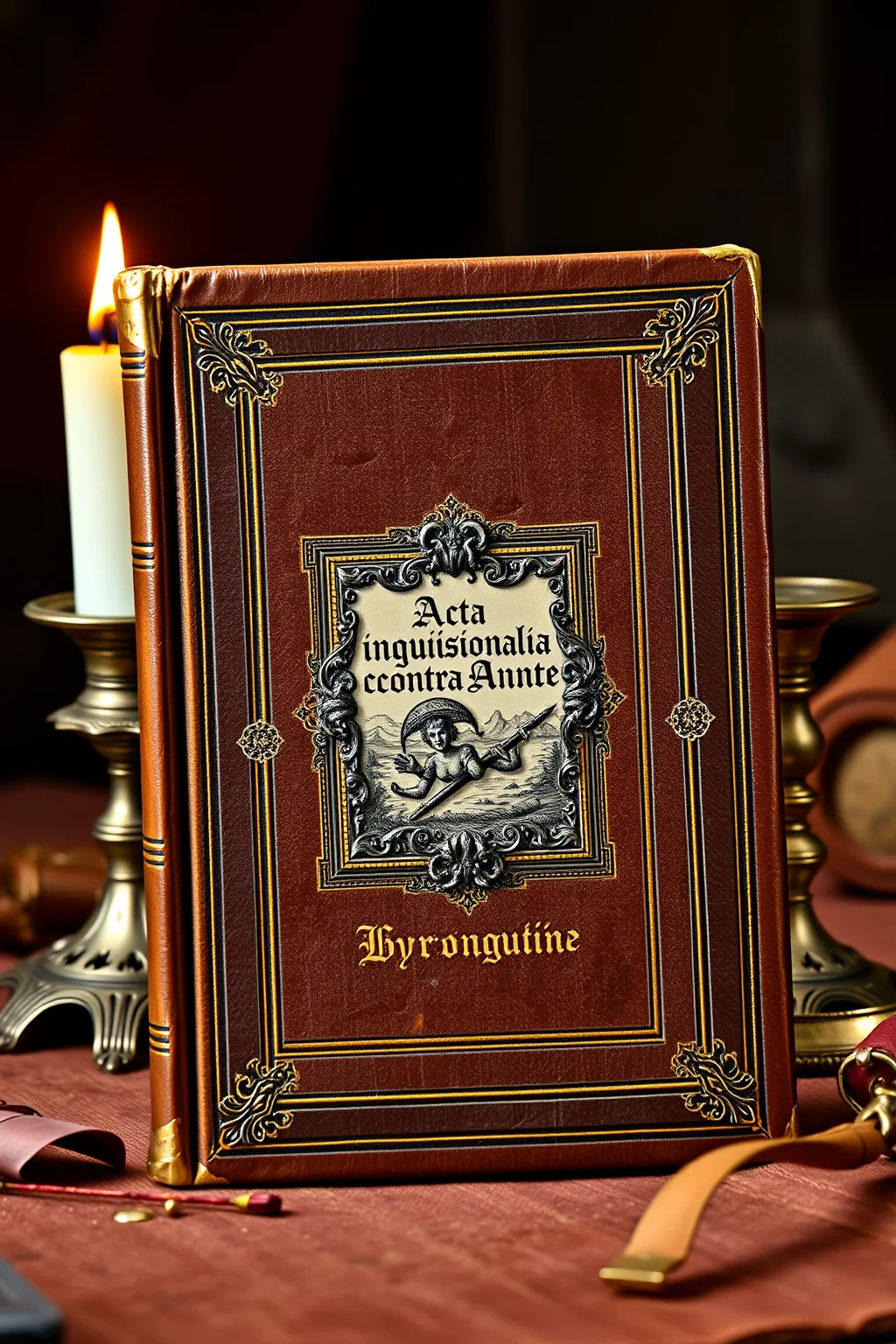
Acta inquisitionalia contra Annen Marien Braunin in puncto Verdächtiger Hexerey, Ambt Ostrau, 1689. 1689: Iss 161
 83
83

Acta inquisitionalia contra Annen Marien Braunin in puncto Verdächtiger Hexerey, Ambt Ostrau, 1689. 1689: Iss 161



Cassian Rothmann (Senior Critic, Ancient Wisdom) — This meticulously preserved inquisitorial record, 'Acta inquisitionalia contra Annen Marien Braunin', is an invaluable primary source for understanding the practical application of demonological law in late 17th-century Europe. The raw transcripts offer an unfiltered glimpse into the interrogative process, revealing the societal anxieties and theological underpinnings that fueled witch trials. Its strength lies in its unvarnished presentation of evidence and testimony, allowing scholars and practitioners alike to analyze the intricate dance of accusation and defense. A crucial read for anyone seeking to grasp the historical realities of witchcraft accusations and the esoteric frameworks that informed them.
📝 Description
83
In 1689, Anna Maria Braunin faced witchcraft accusations in Amt Ostrau, as detailed in this trial record.
The 'Acta inquisitionalia contra Annen Marien Braunin' records the formal proceedings against Anna Maria Braunin, accused of witchcraft in the Amt Ostrau in 1689. This text transcribes the testimonies and legal arguments used during her trial. It reveals not only the legal framework of the time but also the prevailing superstitions and the anxieties surrounding religious beliefs and perceived demonic forces in early modern Europe. The document captures the atmosphere of suspicion that characterized such trials, where spiritual authority and the fear of damnation played significant roles.
For those interested in early modern justice systems and popular beliefs, this record offers direct insight. It allows for reflection on how accusations were constructed, the role of belief in shaping communal life, and the mechanisms of social control. The text touches upon the tension between established religious doctrine and the perception of occult influences, which were common concerns of the era. It serves as a primary source for understanding historical anxieties about witchcraft and the darker aspects of early modern society.
While not a grimoire or a treatise on magical theory, this document falls into the esoteric category due to its subject matter: the investigation and prosecution of alleged witchcraft. Such trials were deeply intertwined with popular and learned beliefs about the occult, demonic pacts, and supernatural agency. The 'Acta' provides a raw look at how these beliefs manifested in legal and social contexts, illustrating the practical application of demonological ideas prevalent in the period. It reflects a historical worldview where the boundaries between the natural and supernatural were porous and actively policed.
💡 Why Read This Book?
Uncover the raw, unfiltered testimonies of a 17th-century witchcraft trial. Explore the historical roots of fear and superstition, and gain insight into the societal mechanisms of accusation. This document is essential for scholars of occult history, practitioners interested in historical demonology, and seekers of hidden knowledge about past belief systems.
⭐ Reader Reviews
Honest opinions from readers who have explored this book.
❓ Frequently Asked Questions
What is the historical context of this document?
This document originates from the Amt Ostrau in 1689, a period in Europe marked by widespread fear and persecution of individuals accused of witchcraft, often fueled by religious anxieties and societal upheaval.
Who was Anna Maria Braunin?
Anna Maria Braunin was an individual accused of witchcraft in the Amt Ostrau in 1689. This record details the inquisitorial proceedings against her.
What kind of information can be found in these 'Acta inquisitionalia'?
These records typically contain testimonies, accusations, interrogations, and the legal proceedings related to witchcraft trials. They offer a direct glimpse into the justice system of the era.
Is this a primary source document?
Yes, 'Acta inquisitionalia contra Annen Marien Braunin' is a primary source document, representing the official records of the inquisitorial process against Anna Maria Braunin.
What makes this document relevant to esoteric studies?
It provides direct insight into the belief systems, fears, and legal frameworks surrounding witchcraft in the 17th century, which are foundational to understanding historical occult practices and societal perceptions of magic.
🔮 Key Themes & Symbolism
The Anatomy of Accusation
This theme explores the intricate societal and psychological mechanisms that led to accusations of witchcraft in the late 17th century. It examines the role of gossip, fear, religious fervor, and individual grievances in singling out individuals like Anna Maria Braunin. The proceedings reveal how suspicion could rapidly escalate into formal charges, often with limited concrete evidence, highlighting the power of collective belief and the fragility of reputation in a superstitious age. The document provides a raw look at how societal anxieties were projected onto marginalized individuals, solidifying the role of the accused as a scapegoat for perceived misfortunes.
Demonic Influence and Religious Orthodoxy
Central to the inquisitorial process is the pervasive belief in demonic influence and the devil's active role in human affairs. The charges against Anna Maria Braunin are framed within a strict theological worldview, where perceived transgressions were interpreted as pacts with dark forces. This theme examines how religious doctrine shaped legal proceedings, dictating the types of evidence considered admissible and the punishments deemed appropriate for those who strayed from God's path. It underscores the lasting impact of religious authority on the lives of ordinary people and the fear of eternal damnation that permeated the era.
The Weight of Evidence and Legal Procedure
Examining the 'Acta inquisitionalia' allows for an analysis of the legal procedures and standards of evidence employed during witch trials. This theme investigates the methods of interrogation, the reliance on confessions (often obtained under duress), and the role of witnesses and accusers. It highlights the often-arbitrary nature of justice in such cases, where the presumption of guilt could easily override the principles of fair trial. Understanding these historical legal frameworks is crucial for appreciating the challenges faced by the accused and the evolution of legal systems over centuries.
💬 Memorable Quotes
Direct passages from the work, attributed to the author.
“In puncto Verdächtiger Hexerey”
— Literally 'on the point of suspected witchcraft,' this phrase expresses the core accusation and the initial stage of the judicial process, highlighting the pervasive suspicion.
“Ambt Ostrau, 1689”
— This specifies the geographical location and the year, grounding the abstract accusations in a concrete historical and territorial context.
“Acta inquisitionalia”
— Meaning 'inquisitorial records,' this denotes the official, formal nature of the document, emphasizing its role as a legal and historical artifact.
“Contra Annen Marien Braunin”
— Directly naming the accused, 'against Anna Maria Braunin,' this personalizes the proceedings and focuses the historical narrative on her plight.
“Digitized from IA40330315-21”
— This technical reference indicates the origin of the digital copy, assuring provenance and facilitating further research into archival sources.
🌙 Esoteric Significance
Tradition
This document falls within the broader tradition of historical demonology and folk magic studies. While not a grimoire or a treatise on ritual, it provides empirical evidence of how beliefs in the supernatural, demonic pacts, and magical causality were interpreted and acted upon within a legal and religious framework. Its significance lies in its raw portrayal of the fears and accusations that shaped the perceived 'occult' range of the era, informing our understanding of how such beliefs manifested in daily life and judicial practice.
Symbolism
The symbolism in these proceedings is deeply rooted in Christian eschatology and the perceived dichotomy between good and evil. The accused witch, Anna Maria Braunin, would have been seen as a symbol of demonic corruption, a perversion of divine order, and a threat to the community's spiritual well-being. Conversely, the inquisitors and the court represented divine justice and the forces of light striving to eradicate darkness. The accusations themselves, such as maleficium (harmful magic), often carried symbolic weight related to natural disasters, illness, or personal misfortune, which were attributed to supernatural intervention.
Modern Relevance
In the modern era, this document offers critical insights into the psychology of mass hysteria, the dangers of unchecked authority, and the historical roots of prejudice. It prompts reflection on how societal fears can be manipulated and how vulnerable individuals can become targets of persecution. For practitioners of modern esoteric arts, it provides a historical counterpoint, highlighting the stark differences between historical witch hunts and contemporary spiritual explorations, while also underscoring the enduring human fascination with the unseen and the power of belief.
👥 Who Should Read This Book
This document is essential for academic historians specializing in early modern Europe, religious history, and the history of law. Esoteric scholars and practitioners interested in the historical development of witchcraft beliefs, demonology, and the societal impact of occult accusations will find it profoundly clear. Seekers of hidden knowledge and those fascinated by the darker aspects of human history and belief systems will also find value. Beginners in occult studies may find it challenging but rewarding, offering a grounded, historical perspective on the fears that shaped the perception of magic.
📜 Historical Context
The year 1689 places these inquisitorial proceedings within the twilight of the major European witch hunts, yet still firmly within an era where belief in witchcraft was deeply ingrained in the fabric of society. The late 17th century was a period of significant societal change, marked by religious conflicts, scientific advancements that began to challenge older worldviews, and lingering anxieties about social order. In regions like Amt Ostrau, the legal and theological frameworks for prosecuting witchcraft were well-established, often drawing from demonological texts and legal precedents. The fear of the devil and his agents remained a potent force, influencing popular beliefs and the actions of authorities. These 'Acta inquisitionalia' serve as a stark reminder of the human cost of such widespread paranoia and the rigid adherence to religious dogma in matters of justice.
📔 Journal Prompts
Reflect on the societal conditions that might have contributed to the accusation of Anna Maria Braunin.
How did the prevailing religious beliefs of 1689 influence the interpretation of events and the legal proceedings?
Consider the power dynamics at play between the accusers, the accused, and the inquisitorial court.
What parallels, if any, can be drawn between historical witch hunts and modern forms of social ostracization or scapegoating?
Analyze the linguistic and rhetorical strategies used in the inquisitorial records to establish guilt.
🗂️ Glossary
Acta inquisitionalia
Latin for 'inquisitorial records'; official documents detailing the proceedings and findings of an inquisition or similar judicial investigation, particularly concerning heresy or witchcraft.
Hexerey
An archaic German term for witchcraft, encompassing the practice of magic, often viewed as malevolent and in league with demonic forces.
Ambt Ostrau
Refers to the administrative district or jurisdiction of Ostrau, indicating the geographical location where the events took place.
Maleficium
Latin for 'harmful magic' or 'witchcraft'; the concept of using supernatural means to cause harm, often a central charge in witchcraft accusations.
Inquisition
A historical institution within the Catholic Church (and sometimes secular courts) tasked with combating heresy, often involving investigation, interrogation, and judgment of individuals accused of deviating from religious doctrine.
This book appears in 2 collections
🔮 Readers Also Liked
Browse all →




From the “Witchcraft” Collection
View all →







More Free Witchcraft & Paganism Books
View all →