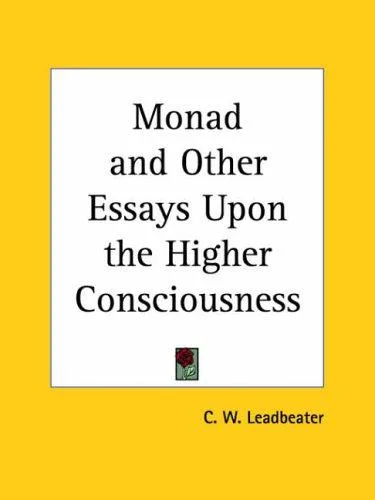
Monad and Other Essays Upon the Higher Consciousness
 81
81

Monad and Other Essays Upon the Higher Consciousness
Leadbeater’s exploration of the ‘Monad’ in his 1920 collection offers a dense, systematic unpacking of Theosophical cosmology. He meticulously outlines the hierarchical structure of consciousness and the soul’s evolutionary path, a strength for dedicated students. The prose, however, can become exceedingly technical, particularly when discussing the mechanics of astral projection or the subtle energies of the planes. For instance, the detailed descriptions of the septenary nature of man, while consistent with Theosophical doctrine, demand considerable prior familiarity. A significant limitation is the lack of accessible entry points for newcomers to Leadbeater’s specific interpretations. The work’s value lies in its comprehensive exposition of a particular esoteric system rather than broad philosophical appeal. It remains a significant, albeit challenging, document for understanding early 20th-century Theosophical thought.
📝 Description
81
Charles Leadbeater published 'Monad and Other Essays Upon the Higher Consciousness' in 1920, detailing esoteric spiritual concepts.
This collection of essays by Charles Webster Leadbeater, a significant figure in early 20th-century Theosophy, examines advanced spiritual and metaphysical ideas. Leadbeater addresses the nature of consciousness, the progression of the soul, and the fundamental principles governing the universe. The book functions as a systematic explanation of esoteric doctrines, rather than a narrative. It draws deeply from Theosophical teachings as Leadbeater and his associates understood them.
This work is suitable for readers with some background in spiritual philosophy, especially those interested in Theosophy, occultism, and comparative religion. It offers detailed discussions on spiritual hierarchies, the processes of psychic development, and the concept of the divine monad. The essays are intended for the serious student of esoteric subjects, not for those with a casual interest.
Published in 1920, this book appeared during a time of heightened Western interest in spiritualism and Eastern thought, largely propelled by the Theosophical Society. Leadbeater was a prominent, if controversial, author within this movement. The period saw many individuals seeking non-traditional answers to life's questions, turning to concepts like reincarnation, karma, and hidden spiritual laws. This book directly engages with those intellectual currents.
✍️ Author
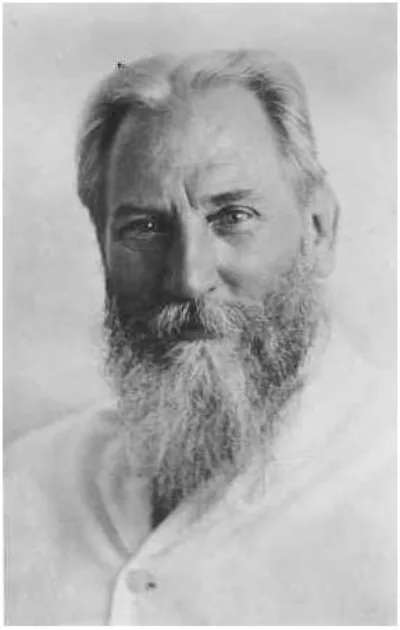
Charles Webster Leadbeater
Charles Webster Leadbeater was a British occultist and prominent member of the Theosophical Society.
Theosophist
💡 Why Read This Book?
• Gain a detailed understanding of the Theosophical concept of the Monad, as outlined in Leadbeater's specific interpretations, to grasp the divine spark's evolutionary journey. • Explore the intricate mechanics of the subtle bodies and thought-forms, as described in sections like those concerning mental imagery, offering practical esoteric visualization techniques. • Understand the historical context of early 20th-century esoteric movements by examining Leadbeater’s engagement with concepts like karma and reincarnation, prevalent in the post-1900 spiritual landscape.
⭐ Reader Reviews
Honest opinions from readers who have explored this book.
❓ Frequently Asked Questions
What is the 'Monad' as described by Charles Webster Leadbeater?
Leadbeater describes the Monad as the divine spark or ultimate spiritual principle within each individual, an undying fragment of the Absolute. It is the eternal consciousness that journeys through countless incarnations, evolving and manifesting across various planes of existence.
Is 'Monad and Other Essays' suitable for beginners in esotericism?
The book is best suited for those with some prior knowledge of Theosophy or esoteric philosophy. Leadbeater uses technical terminology and assumes familiarity with concepts like planes of existence and subtle bodies, making it challenging for absolute beginners.
What is the historical significance of this book's publication date (1920)?
Published in 1920, the book reflects the peak of interest in Theosophy and occult studies in the Western world. It engages with intellectual currents seeking spiritual explanations beyond traditional religions, influenced by figures like Helena Blavatsky.
Does the book discuss practical spiritual exercises?
While primarily theoretical, the essays implicitly guide the reader toward understanding the principles behind spiritual development. Concepts like thought-forms and the nature of consciousness suggest frameworks for meditation and inner work, though explicit step-by-step guides are minimal.
What is Leadbeater's connection to the Theosophical Society?
Charles Webster Leadbeater was a highly influential, though often controversial, member and author within the Theosophical Society. His writings, including 'Monad,' were central to the dissemination and development of Theosophical teachings in the early 20th century.
Are the concepts in this book still relevant today?
Yes, the concepts of the Monad, subtle bodies, and the evolutionary journey of consciousness explored in this 1920 work continue to influence contemporary esoteric traditions, New Age thought, and spiritual psychology.
🔮 Key Themes & Symbolism
The Divine Monad
The core concept of the Monad represents the individual divine spark, an eternal aspect of the Absolute residing within each being. Leadbeater elaborates on its descent into manifestation, its journey through various evolutionary stages across different planes of existence, and its ultimate reunion with the divine source. This essay explores the Monad's journey as the fundamental principle of consciousness, underpinning all life and evolution within the cosmos as understood by Theosophical cosmology.
Evolution of Consciousness
Leadbeater meticulously details the process of spiritual evolution as a grand cosmic unfolding. He describes how consciousness, embodied in the Monad, progresses through mineral, plant, animal, and human kingdoms, and beyond into higher spiritual states. This theme is central to understanding the purpose of incarnation, the role of karma, and the eventual attainment of liberation or Buddhahood.
Subtle Bodies and Planes
The work delves into the esoteric anatomy of the human being, describing the various subtle bodies (etheric, astral, mental) that interpenetrate the physical form. Leadbeater explains how these bodies function on different planes of existence, acting as vehicles for consciousness. Understanding these vehicles is crucial for navigating the inner worlds and for the process of spiritual development.
Thought-Forms and Mental Creation
A significant portion of the essays addresses the nature and power of thought-forms. Leadbeater explains how thoughts, particularly those imbued with strong emotion or intention, can create distinct energetic constructs that persist in the mental and astral realms. This concept highlights the responsibility inherent in mental discipline and the creative capacity of the mind.
💬 Memorable Quotes
“The Monad is the divine spark within.”
— This concise statement encapsulates the fundamental Theosophical idea of the Monad as the essential, eternal spiritual core of every individual consciousness, originating directly from the Divine.
“Evolution is the unfolding of consciousness.”
— This paraphrase emphasizes Leadbeater's view that the entire process of cosmic and individual development is driven by the inherent potential for consciousness to expand and express itself more fully.
“Thought-forms have a life and influence of their own.”
— This highlights the active, independent existence that consciously or unconsciously generated mental constructs can possess within the subtle realms, impacting both the creator and others.
“Man is a spiritual being passing through a physical experience.”
— This interpretation underscores the primary identity of the individual as a soul or spirit, for whom the physical life and form are temporary vehicles for learning and growth.
“The goal is the reunion of the individual spark with the Divine.”
— This paraphrase points to the ultimate aim of the evolutionary journey described by Leadbeater: the soul's return to its source and its ultimate merger with the universal consciousness.
🌙 Esoteric Significance
Tradition
This work is firmly rooted in the Theosophical tradition, which synthesizes elements of Hinduism, Buddhism, Hermeticism, and Neoplatonism. Leadbeater elaborates on core Theosophical tenets such as the Monad, reincarnation, karma, and the existence of spiritual hierarchies (Masters). It departs from simpler presentations by offering highly detailed, systematic explanations of these concepts, often presented as direct esoteric knowledge.
Symbolism
The 'Monad' itself is a potent symbol of divine unity and origin. Leadbeater also frequently employs symbolism related to light, often representing consciousness or spiritual illumination. Concepts like the 'seven planes' or 'subtle bodies' function symbolically, representing different states or dimensions of being accessible to the evolving consciousness, mapping out the spiritual journey.
Modern Relevance
Leadbeater's detailed expositions on consciousness, subtle anatomy, and spiritual evolution continue to resonate within various New Age movements, modern occultism, and certain branches of comparative spirituality. Thinkers and practitioners exploring energy healing, consciousness studies, and advanced meditation techniques often draw upon the conceptual frameworks he helped popularize.
👥 Who Should Read This Book
• Students of Theosophy: Those seeking a deeper, systematic understanding of core Theosophical doctrines as interpreted by one of its most prolific writers. • Researchers of Esoteric History: Individuals interested in the intellectual currents of the early 20th century and the development of occult and metaphysical thought in the West. • Dedicated Spiritual Seekers: Readers prepared for dense philosophical and metaphysical exploration, aiming to grasp advanced concepts of consciousness and spiritual evolution.
📜 Historical Context
Published in 1920, 'Monad and Other Essays' emerged during a fertile period for esoteric thought in the West, deeply influenced by the Theosophical Society. Helena Blavatsky’s foundational works had already established a framework for understanding Eastern philosophies within a Western occult context. Charles Webster Leadbeater, a prominent and prolific writer within the Society, built upon this, offering his own detailed interpretations of spiritual evolution, karma, and the nature of consciousness. This era saw a significant public appetite for spiritualism, psychic phenomena, and alternative paths to enlightenment, often as a reaction against the perceived materialism of the age. Competing schools of thought included various spiritualist movements and emerging psychological theories. Leadbeater's work, while influential, also generated controversy within and outside the Theosophical movement, contributing to its complex reception.
📔 Journal Prompts
The Monad's journey through various manifestations.
The function and interaction of the subtle bodies.
The creation and influence of thought-forms.
The process of spiritual evolution across kingdoms.
The nature of higher consciousness and its attainment.
🗂️ Glossary
Monad
The divine, eternal spark or principle within each individual, considered an aspect of the Absolute, which undergoes evolution through successive incarnations.
Subtle Bodies
Non-physical vehicles of consciousness, such as the etheric, astral, and mental bodies, which interpenetrate the physical body and function on different planes of existence.
Planes of Existence
Different levels or dimensions of reality, ranging from the physical to increasingly refined spiritual realms, upon which consciousness operates and evolves.
Thought-Form
An energetic construct created by conscious thought, particularly those imbued with emotion or intention, which can persist and exert influence in the mental and astral realms.
Karma
The universal law of cause and effect, where actions in past lives and the present influence future experiences and circumstances, guiding the process of evolution.
Septenary Nature
The concept that man, and indeed the universe, is composed of seven principles or planes, reflecting a fundamental divine order that governs manifestation.
Theosophy
A esoteric philosophical system aiming to synthesize religion, philosophy, and science, originating with Helena Blavatsky and widely disseminated by figures like Leadbeater.