How the New Art of Eurythmy Began
 79
79

How the New Art of Eurythmy Began
Siegloch presents a clear, almost documentary account of eurythmy's inception, centering on Lory Maier-Smits. The book excels in its detailed reconstruction of Maier-Smits's early life, her connection to Rudolf Steiner from 1912, and the initial public manifestations of eurythmy in 1913. The meticulous tracing of Steiner's lectures and Marie Steiner's direction offers a valuable historical perspective. However, the narrative's strength in factual recounting sometimes overshadows a deeper exploration of the subjective artistic experience or the broader cultural impact beyond its immediate anthroposophical circle. A particular strength lies in the precise year-by-year, even event-by-event, documentation of Maier-Smits's development. A limitation is the somewhat dry presentation, which, while accurate, might not fully convey the dynamism of the art form itself. The detailed account of the staging under Marie Steiner, for example, is factually rich but could benefit from more evocative language. Ultimately, Siegloch’s work serves as an indispensable, if understated, historical record for understanding eurythmy’s origins.
📝 Description
79
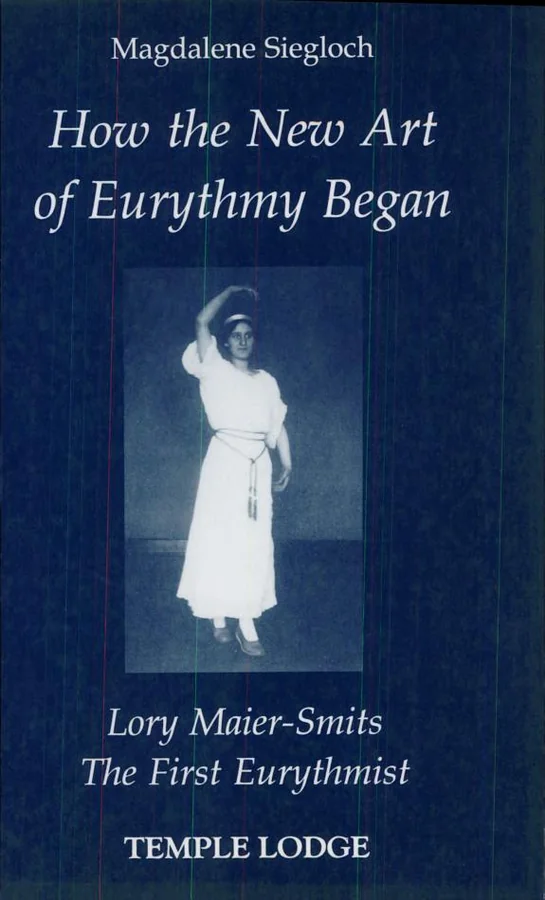
Magdalene Siegloch's 2021 book chronicles the 1912 beginnings of eurythmy through Lory Maier-Smits' training with Rudolf Steiner.
Magdalene Siegloch's "How the New Art of Eurythmy Began" details the creation of eurythmy, with a focus on Lory Maier-Smits. The book begins with Maier-Smits' introduction to anthroposophy and her direct instruction from Rudolf Steiner starting in 1912. It covers the art's first public appearance at a Theosophical Society event in 1913 and Steiner's subsequent lectures that expanded on this new movement practice.
This work is for those interested in the practical aspects of esoteric philosophies, especially Rudolf Steiner's ideas. Students of dance, movement therapy, and spiritual education will find value in its examination of eurythmy's core principles and history. Researchers of early 20th-century spiritual movements and the biographies of their central figures will also find it useful. Siegloch places eurythmy within the spiritual and artistic environment of the early 1900s, a time when anthroposophy, founded by Steiner, sought to connect the material and spiritual through arts and sciences. Eurythmy emerged as a distinct artistic and educational discipline during this period of renewed spiritual and artistic expression.
This book examines eurythmy's origins within the anthroposophical movement, founded by Rudolf Steiner. Anthroposophy itself is a spiritual philosophy that aims to connect the material and spiritual worlds through various disciplines, including art, science, and education. Eurythmy, as described in the book, is a direct outgrowth of this movement, intended to make speech and music manifest through movement. The work situates this development within the broader context of early 20th-century spiritual and artistic experimentation.
💡 Why Read This Book?
• Understand the specific training Lory Maier-Smits received directly from Rudolf Steiner starting in 1912, offering insight into pedagogical methods of the era. • Grasp the historical context of eurythmy's first public performance during the 1913 Theosophical Society festival, revealing its initial reception. • Learn about the role of Marie Steiner in directing early eurythmy performances, providing concrete examples of artistic collaboration.
⭐ Reader Reviews
Honest opinions from readers who have explored this book.
❓ Frequently Asked Questions
When did Lory Maier-Smits begin her training in eurythmy?
Lory Maier-Smits began her training in eurythmy under Rudolf Steiner in 1912, a foundational year detailed in this book.
What was the significance of the 1913 Theosophical Society festival for eurythmy?
The 1913 festival marked the first public performance of eurythmy, a key event in the art's early development that Siegloch thoroughly examines.
Who was Rudolf Steiner in relation to eurythmy?
Rudolf Steiner was the originator of eurythmy, developing its principles and guiding its initial artistic expression, as documented in this biography.
What is anthroposophy and how does it relate to eurythmy?
Anthroposophy is a spiritual philosophy founded by Rudolf Steiner. Eurythmy is considered one of its artistic manifestations, aiming to express spiritual realities through movement.
What role did Marie Steiner play in the early development of eurythmy?
Marie Steiner played a significant role in directing the staging and development of eurythmy performances following its inception.
What is the primary focus of Magdalene Siegloch's book?
The book primarily focuses on the origins of eurythmy, with a detailed account of the life and work of its first eurythmist, Lory Maier-Smits.
🔮 Key Themes & Symbolism
Lory Maier-Smits's Pioneering Role
This book illuminates Lory Maier-Smits as the inaugural eurythmist, detailing her direct engagement with Rudolf Steiner from 1912. Siegloch traces Maier-Smits's journey from initial exposure to anthroposophy through her intensive training and subsequent role as a trainer of future eurythmists. The narrative emphasizes her dedication and artistic care in embodying Steiner's vision, making her the central figure in eurythmy's formative years and its practical realization.
Rudolf Steiner and the Art of Movement
Central to the text is Rudolf Steiner's conceptualization and development of eurythmy as a new art form. The book references his lectures that elucidated the principles behind this 'visible speech' and 'visible song.' It explores how Steiner guided the initial artistic expressions and pedagogical applications of eurythmy, positioning it within his broader spiritual-scientific worldview and its potential for human development.
Anthroposophy and Artistic Expression
The work looks at the connection between anthroposophy and the emergence of eurythmy. It illustrates how Maier-Smits's personal path was shaped by her immersion in anthroposophical ideas, which provided the philosophical and spiritual underpinnings for eurythmy. The book shows eurythmy not as an isolated art form, but as a manifestation of a specific esoteric worldview seeking to engage the human being holistically.
Early Performances and Direction
A significant aspect covered is the historical staging of eurythmy, particularly under the direction of Marie Steiner. The book recounts the first performance in 1913 and subsequent efforts to bring the art to life on stage. This section highlights the practical challenges and artistic considerations involved in translating spiritual concepts into embodied movement for public presentation.
💬 Memorable Quotes
Direct passages from the work, attributed to the author.
“Maier-Smits's training under Rudolf Steiner from 1912.”
— This phrase signifies the direct transmission of eurythmy's core principles from its founder to its first practitioner, highlighting a crucial period of learning and artistic formation.
“The first performance of eurythmy during the Theosophical Society festival in 1913.”
— This marks eurythmy's public debut, a key moment where the art moved from theoretical conception and private practice to a visible expression for a wider audience.
“Rudolf Steiner's lectures on the new art of movement.”
— These lectures represent the theoretical exposition of eurythmy, where Steiner articulated its spiritual and artistic foundations, providing the intellectual framework for its practice.
“The staging of eurythmy under the direction of Marie Steiner.”
— This points to the practical realization and artistic shaping of eurythmy performances, emphasizing Marie Steiner's role in guiding its presentation after its initial development.
“Maier-Smits's later work as a trainer of eurythmists.”
— This highlights the continuation and dissemination of eurythmy, showing how its initial pioneer became instrumental in educating future generations of practitioners.
🌙 Esoteric Significance
Tradition
Eurythmy is a direct outgrowth of the anthroposophical tradition, founded by Rudolf Steiner in the early 20th century. This tradition seeks to provide a spiritual scientific approach to understanding the world and human beings. Eurythmy fits within this lineage as a practice designed to make the spiritual dynamics of speech and music perceptible through visible movement, aiming for a holistic development of the individual.
Symbolism
While eurythmy itself is a symbolic art, specific symbols are less explicit in its foundational texts than in some other esoteric traditions. However, the very act of making sound visible embodies a core anthroposophical principle: the connection between the material and spiritual realms. The geometric forms and pathways traced by the eurythmist can be seen as representing cosmic or spiritual forces, and the quality of movement itself signifies inner states or intentions.
Modern Relevance
Today, eurythmy continues to be practiced and taught globally, primarily through anthroposophical institutions like Waldorf schools and eurythmy training colleges. Contemporary practitioners and educators in fields such as movement therapy, therapeutic eurythmy, and pedagogical eurythmy draw directly from the foundational work described in this book. Thinkers exploring embodied spirituality and the relationship between art and consciousness also find resonance with its principles.
👥 Who Should Read This Book
• Students of Rudolf Steiner's work and anthroposophy: Gain a focused historical and biographical account of a key artistic manifestation of his philosophy. • Aspiring or practicing eurythmists: Understand the origins of your art form and the contributions of its pioneers like Lory Maier-Smits. • Researchers of 20th-century esoteric movements: Acquire specific details on the development and early reception of eurythmy within its unique spiritual context.
📜 Historical Context
Published in 1997, Magdalene Siegloch's "How the New Art of Eurythmy Began" emerged in a period of renewed interest in anthroposophy and its practical applications. The early 20th century, when eurythmy was born, was a time of significant spiritual and artistic ferment in Europe. Figures like Rudolf Steiner were developing comprehensive worldviews that sought to integrate science, art, and spirituality. Eurythmy arose alongside other artistic innovations and esoteric movements of the era, such as expressionist dance and the burgeoning field of spiritual psychology. While Steiner's work was often viewed with skepticism by mainstream academia, it found fertile ground within certain circles. This book situates eurythmy within the anthroposophical movement, differentiating it from contemporary artistic trends and highlighting its unique spiritual-pedagogical aims. It specifically addresses the foundational work of Lory Maier-Smits, a key contemporary figure whose biography is central to understanding eurythmy's genesis.
📔 Journal Prompts
Lory Maier-Smits's early exposure to anthroposophy.
The significance of the 1913 Theosophical Society festival performance.
Rudolf Steiner's lectures on the new art of movement.
Marie Steiner's role in directing eurythmy stagings.
Maier-Smits's later work as a trainer of eurythmists.
🗂️ Glossary
Eurythmy
An art of movement developed by Rudolf Steiner that makes speech (vocal eurythmy) and music (musical eurythmy) visible through specific gestures and forms.
Anthroposophy
A spiritual philosophy founded by Rudolf Steiner, seeking to develop a spiritual understanding of the world and human existence through 'spiritual science'.
Rudolf Steiner
Austrian philosopher, social reformer, and esotericist who founded anthroposophy and developed eurythmy, biodynamic agriculture, and Waldorf education.
Lory Maier-Smits
Considered the first eurythmist, she trained directly with Rudolf Steiner and was instrumental in developing and teaching the art form.
Theosophical Society
An international organization founded in the late 19th century to explore comparative religion, philosophy, and science, which Rudolf Steiner was initially involved with.
Marie Steiner
Wife of Rudolf Steiner, she was a prominent figure in the early development and artistic direction of eurythmy after her husband's death.
Movement Therapy
A broad field utilizing movement to promote emotional, cognitive, physical, and social integration of the individual. Eurythmy can be applied therapeutically.
This book appears in 1 collection
🔮 Readers Also Liked
Browse all →







From the “Anthroposophy” Collection
View all →



More Free Theosophy & Anthroposophy Books
View all →