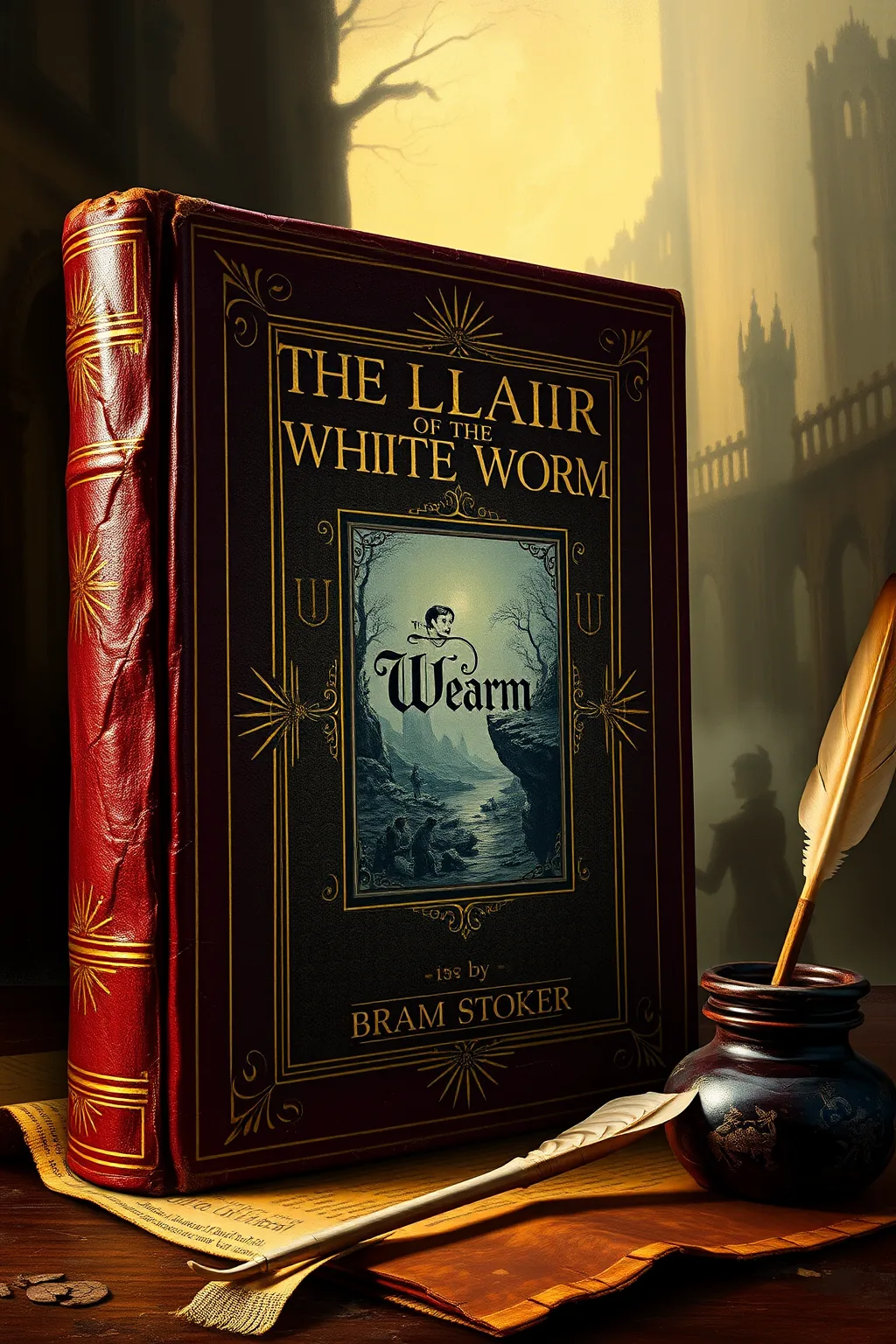
The Lair of the White Worm
 77
77

The Lair of the White Worm



Evander Ashcroft (Alchemy & Hermeticism Editor) — Bram Stoker's 'The Lair of the White Worm' transcends typical Gothic fare, offering a potent exploration of chthonic forces and primal energies. The narrative, while ostensibly a mystery, is deeply imbued with alchemical symbolism, particularly the transformation and dissolution inherent in confronting ancient, serpentine power. Stoker's depiction of the titular worm resonates with ancient serpent deities and the regenerative, yet destructive, aspects of the earth's hidden currents. This novel is a compelling read for those interested in the intersection of folklore, esotericism, and the raw, untamed forces that lie beneath the veneer of civilization. It speaks to the seeker of hidden wisdom and the practitioner of earth-based mysteries.
📝 Description
77
Bram Stoker's 1911 novel, The Lair of the White Worm, features a serpent deity and ancient rituals.
Adam Salton inherits an estate in a remote English region, only to become entangled in its strange history. The area is rumored to hold forgotten lore and unsettling secrets. His new neighbors and the palpable sense of an ancient evil beneath the quiet landscape draw him in. Stoker builds an atmosphere heavy with suspense and the allure of forbidden subjects. The story touches on recurring patterns of existence and the fundamental powers that influence our world. It examines hidden forces, the appeal of the unknown, and the deep, often frightening, links between people and the old beings that rest in unseen places.
This book goes beyond simple horror. It looks at the subtle flows of power and the way the unknown draws us in. It also considers the lasting and often frightening connections between humanity and the ancient, sleeping entities that exist beyond our normal perception. The narrative invites readers interested in myth, symbolism, and the persistent mysteries of the old world.
Published in 1911, 'The Lair of the White Worm' reflects late Victorian and Edwardian occult interests. Stoker weaves in elements reminiscent of Gnostic serpent symbolism, where the serpent can represent hidden wisdom or a primal creative force. The novel's focus on ancient, earthbound entities and rituals connects to contemporary fascination with earth religions and pre-Christian mythologies. It taps into a vein of esoteric thought that viewed pagan deities and ancient powers as still active forces beneath the surface of modern civilization, often linked to specific geographical locations and inherited bloodlines.
✍️ Author

Bram Stoker
Bram Stoker was an Irish author, best known for his 1897 Gothic horror novel Dracula.
💡 Why Read This Book?
Uncover the serpentine secrets of ancient earth magic and primal energies. 'The Lair of the White Worm' offers a rare glimpse into Stoker's fascination with folklore and the occult, blending thrilling mystery with profound symbolic depth. Ideal for seekers of hidden knowledge, scholars of esoteric literature, and practitioners drawn to the power of myth and the earth's ancient mysteries.
⭐ Reader Reviews
Honest opinions from readers who have explored this book.
❓ Frequently Asked Questions
What is the central mystery of 'The Lair of the White Worm'?
The novel revolves around the discovery of an ancient, serpentine entity, often referred to as the 'White Worm,' which lies dormant beneath the English countryside, threatening to resurface and unleash its primal power upon the unsuspecting world.
What are the primary esoteric themes explored in the book?
Key themes include the power of ancient earth deities, serpentine symbolism representing creation and destruction, the cyclical nature of life and death, and the hidden forces that govern human existence.
Who is Adam Salton, and what is his role in the story?
Adam Salton is a young Englishman who inherits an estate in Derbyshire. He becomes the central figure investigating the local legends and the mysterious occurrences, inadvertently stumbling upon the terrifying secret of the White Worm.
Is 'The Lair of the White Worm' a typical vampire novel like Dracula?
While by the same author, it deviates significantly from the vampire trope. It focuses on a more ancient, chthonic entity and delves into themes of earth magic and forgotten gods rather than traditional vampirism.
What kind of atmosphere does Bram Stoker create in this novel?
Stoker crafts a deeply unsettling and atmospheric narrative, blending the eerie beauty of the English countryside with a pervasive sense of ancient dread and the claustrophobic feeling of being watched by something primordial and immense.
🔮 Key Themes & Symbolism
The Primordial Serpent and Chthonic Power
The novel explores the profound symbolism of the serpent, not merely as a creature, but as an embodiment of ancient, chthonic forces – the deep, untamed energies of the earth itself. This entity represents both creation and destruction, a primal power that predates human civilization and lies dormant, waiting for its moment of resurgence. Stoker taps into a deep well of mythological archetypes, suggesting that beneath the civilized world lies a vast, potent, and often terrifying connection to the raw essence of existence.
Hidden Knowledge and Forbidden Lore
Adam Salton's journey is one of uncovering hidden knowledge, a descent into local legends and forgotten histories that hold the key to the prevailing darkness. The narrative emphasizes that true understanding often lies beyond the mundane, in the whispers of the past and the symbols that permeate the landscape. This theme speaks to the esoteric pursuit of gnosis, the idea that profound truths are often veiled and require dedicated seeking and often, a willingness to confront uncomfortable realities to be revealed.
Cycles of Existence and Ancient Cycles
Stoker's work hints at the cyclical nature of time and existence, where ancient entities and their powers are not truly gone, but merely dormant, awaiting the opportune moment to reassert themselves. The 'White Worm' embodies this idea of an enduring, recurring threat or force that operates on scales far beyond human comprehension. This speaks to esoteric philosophies that view history not as a linear progression, but as a series of recurring patterns and cosmic cycles, where the past is never truly past.
💬 Memorable Quotes
Direct passages from the work, attributed to the author.
“The earth is full of secrets, and it is not for us to know them all.”
— This sentiment highlights the theme of forbidden knowledge and the ancient, slumbering powers that are best left undisturbed, suggesting a boundary between the human and the divine or primordial.
“The old ways are the best ways.”
— This phrase hints at the power and efficacy of ancient traditions and beliefs, suggesting that the wisdom of the past holds a potent, enduring relevance.
“We are but children playing on the shore of a great ocean of truth.”
— This metaphor underscores humanity's limited understanding and the vast, unfathomable depths of cosmic and esoteric knowledge that lie unexplored.
💡 Key Ideas
Editorial paraphrase of the work's core concepts — not direct quotes.
The world is a great, dark, mysterious place.
This quote captures the novel's pervasive atmosphere of the unknown and the vast, often terrifying, forces that lie beyond human perception and control.
There are more things in heaven and earth, Horatio, than are dreamt of in your philosophy.
A direct allusion to Hamlet, this quote emphasizes the novel's exploration of the supernatural and the limitations of rational human understanding when confronting ancient mysteries.
🌙 Esoteric Significance
Tradition
This work draws heavily on chthonic mythology, earth-based magic, and serpentine symbolism found in various ancient traditions, including those of Mesopotamia, Egypt, and indigenous cultures. It echoes Gnostic ideas of hidden, primal powers and the cyclical nature of creation and destruction, aligning with a broader esoteric interest in the earth's deep, often terrifying, generative forces.
Symbolism
The White Worm itself is a potent symbol of the primordial, the generative and destructive power of the earth, and ancient, slumbering entities. Its serpentine form connects to themes of transformation, rebirth, and the underworld. The subterranean setting symbolizes the subconscious, hidden knowledge, and the ancient layers of reality that lie beneath the surface of everyday life.
Modern Relevance
In an age often characterized by disconnection from nature and the dismissal of ancient wisdom, 'The Lair of the White Worm' serves as a powerful reminder of the enduring influence of primal forces and the importance of understanding our relationship with the earth. Its themes of hidden knowledge and the cyclical nature of power remain relevant for those seeking deeper meaning and connection in a complex world.
👥 Who Should Read This Book
This novel is recommended for seekers of the arcane and practitioners of earth-based spirituality who are drawn to primal mythologies and ancient symbolism. Scholars of comparative mythology and Gothic literature will find rich material for analysis. For those new to esoteric themes, it offers an accessible yet profound entry point into the world of hidden lore and the power of ancient narratives. Even casual readers intrigued by atmospheric horror and mysteries rooted in folklore will find themselves captivated by its combination of terror and ancient wisdom.
📜 Historical Context
Published in 1911, 'The Lair of the White Worm' emerged during a period of intense fascination with the occult, spiritualism, and ancient cultures in late Victorian and Edwardian England. This era saw a surge in archaeological discoveries that unearthed forgotten civilizations and their mythologies, fueling a public imagination captivated by the exotic and the ancient. Bram Stoker, already renowned for 'Dracula,' was deeply interested in folklore, mythology, and the darker aspects of human psychology. The novel reflects this societal undercurrent, where the seemingly ordered world of English aristocracy was juxtaposed with a growing awareness of primal forces and a desire to plumb the depths of forgotten lore, blending scientific curiosity with a romantic embrace of the mysterious and the arcane.
📔 Journal Prompts
Reflect on the symbolic meaning of the serpent in various cultures and its connection to creation and destruction. How does this manifest in 'The Lair of the White Worm'?
Consider the theme of hidden knowledge in the novel. What does Adam Salton uncover, and what are the implications of such discoveries?
Explore the concept of 'chthonic power' and its representation in literature and mythology. How does Stoker portray this primal force?
Write about a personal experience or a dream that felt connected to ancient or primal energies. How did it make you feel?
Imagine you are Adam Salton, facing the revelation of the White Worm. What would be your immediate thoughts, fears, and actions?
🗂️ Glossary
Chthonic
Relating to the underworld or the earth, especially as a deity or primal force. It signifies a deep, ancient, and often terrifying power originating from the depths of the planet.
Primordial
Existing at or from the very beginning of time; ancient and fundamental. It refers to the initial, raw state of existence before complex structures or civilizations emerged.
Gnosticism
A complex set of religious ideas and systems that emerged in the early centuries CE, emphasizing esoteric knowledge (gnosis) for salvation and often viewing the material world as created by a lesser, flawed deity.
Esotericism
Beliefs and practices that are not publicly known or understood, typically reserved for a select group of initiates; often relating to mysticism, occultism, and hidden spiritual teachings.
Archetype
A recurring symbol, character, or pattern of narrative imagery that holds a common meaning across cultures, often representing fundamental human experiences or concepts.
This book appears in 1 collection
🔮 Readers Also Liked
Browse all →





More by Bram Stoker
All books →





From the “Transcendental Meditation” Collection
View all →




More Free Supernatural & Occult Fiction Books
View all →