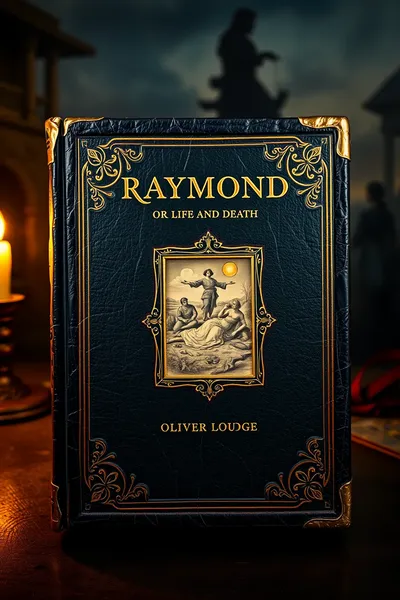
The Power of Darkness

 72
72

The Power of Darkness
Edith Nesbit's "The Power of Darkness" offers a curious, albeit uneven, exploration of its titular theme. The strength of the work lies in Nesbit's characteristic narrative skill, which, even when dealing with darker subject matter, maintains a certain clarity and descriptive power. She manages to evoke a palpable atmosphere of unease, particularly in passages describing the subtle infiltration of negative influences. However, the narrative structure can feel somewhat opaque at times, requiring a degree of interpretive effort from the reader to fully grasp the intended metaphysical connections. The book's exploration of the unseen, while compelling, occasionally verges on the abstract, leaving some concepts feeling underdeveloped. The concept of 'shadow-selves' influencing outward actions is presented, but the mechanism of this influence remains largely implicit. Ultimately, "The Power of Darkness" provides a shadowy, literary window into esoteric thought, best suited for those patient with ambiguity.
📝 Description
72
Edith Nesbit's 2016 publication, The Power of Darkness, examines occult philosophies through fiction.
Published posthumously in 2016, The Power of Darkness by Edith Nesbit uses fiction to explore occult philosophies and unseen forces. The book is not a manual but a narrative lens on metaphysical ideas, presenting them through Nesbit's distinct prose.
This work suits readers interested in literature's connection to esoteric thought. Those who enjoy allegorical stories and darker psychological or spiritual themes will find it engaging. It offers a perspective from Nesbit, known for children's stories but also adult speculative fiction, particularly for those researching authors active in spiritualism and occultism during the late 19th and early 20th centuries.
Nesbit (1858-1924) wrote during a period of significant interest in spiritualism and the occult in Britain. Her association with the Fabian Society and figures like George Bernard Shaw placed her within intellectual circles. While The Power of Darkness appeared in 2016, her writing career coincided with movements like Theosophy, founded in 1875. These influences informed her adult fiction, which often featured supernatural or mystical elements separate from her children's books.
Edith Nesbit's work engages with the late 19th and early 20th century British fascination with spiritualism and occultism. Her writing, particularly her adult fiction, touched upon themes that resonated with movements like Theosophy, established in 1875. The Power of Darkness reflects this milieu, using fictional narratives to explore concepts of hidden energies and metaphysical ideas that were prevalent in esoteric circles of the time.
💡 Why Read This Book?
• Gain insight into the literary exploration of occult themes by a notable author, understanding Edith Nesbit's engagement with subjects beyond her famous children's literature, as presented in "The Power of Darkness". • Experience how Nesbit uses narrative to depict the subtle encroachment of 'darkness', offering a fictional perspective on the psychological impact of unseen forces, distinct from theoretical texts. • Discover a less common facet of late Victorian/Edwardian speculative fiction, examining themes of hidden influence that predate or run parallel to movements like Theosophy in the early 20th century.
⭐ Reader Reviews
Honest opinions from readers who have explored this book.
❓ Frequently Asked Questions
What esoteric themes are explored in Edith Nesbit's "The Power of Darkness"?
The book delves into themes of hidden influences, the nature of unseen realms, and the psychological effects of confronting primal fears. It examines how metaphorical or literal 'darkness' can exert power over individuals and events, questioning the boundaries between the material and spiritual.
When was "The Power of Darkness" by Edith Nesbit first published?
"The Power of Darkness" by Edith Nesbit was first published in 2016, although the author's active writing period was much earlier.
Is "The Power of Darkness" suitable for beginners in esoteric studies?
While accessible to general readers interested in literary explorations of the esoteric, it is not a didactic text. Beginners might find its allegorical nature and implicit themes require further study or contemplation.
What is the genre of "The Power of Darkness"?
The book is categorized as Esoteric literature, featuring elements of speculative fiction and psychological exploration with metaphysical undertones.
Does "The Power of Darkness" offer practical occult advice?
No, "The Power of Darkness" is a literary work that explores esoteric themes through narrative and allegory. It does not provide practical instructions or 'how-to' guidance on occult practices.
What makes Edith Nesbit's approach to 'darkness' unique in this book?
Nesbit's approach is unique in its literary subtlety, focusing on the atmospheric and psychological impact of unseen forces rather than overt supernatural events, reflecting a nuanced engagement with esoteric concepts of her era.
🔮 Key Themes & Symbolism
Hidden Influences
The work frequently touches upon the idea that unseen forces, often characterized as 'darkness,' can subtly manipulate events and individuals. This isn't presented as overt demonic possession but as a more pervasive, atmospheric influence that erodes rationality or exacerbates negative tendencies. Nesbit's prose attempts to capture the insidious nature of these forces, suggesting they operate on a psychological and spiritual level, impacting decisions and perceptions without explicit awareness from the affected parties. The narrative explores how characters navigate or succumb to these less tangible pressures.
The Shadow Self
Central to "The Power of Darkness" is the concept of the 'shadow self'—the repressed or unacknowledged aspects of an individual's psyche. The book suggests that these darker, often primal, elements can gain prominence and influence outward behavior when not properly understood or integrated. Nesbit's literary approach allows for an examination of how internal struggles manifest externally, blurring the lines between personal psychology and external metaphysical conditions. This theme speaks to psychological theories that emerged later but were perhaps foreshadowed in esoteric thought of her time.
Boundaries of Reality
Nesbit uses the narrative to question the perceived boundaries between the material world and other, less tangible, planes of existence. "The Power of Darkness" probes the idea that reality is more fluid than commonly assumed, and that 'darkness' can represent not just evil but also the unknown, the subconscious, or dimensions beyond ordinary perception. The text invites readers to consider how conventional understanding might fail to account for these other realities and the forces that inhabit them, prompting a re-evaluation of what constitutes 'real'.
Psychological Manifestation
The book explores the notion that psychological states can manifest tangible effects or attract specific energies. Instead of positing direct magical causation, Nesbit often presents scenarios where intense fear, desire, or despair seems to create an environment conducive to negative occurrences. This suggests a form of sympathetic resonance, where internal conditions align with external 'darkness.' The interpretation offered is that the power of darkness is often amplified or invited by the internal range of the individual, a concept that links esoteric ideas with psychological understanding.
💬 Memorable Quotes
Direct passages from the work, attributed to the author.
“The darkness seemed to press in, not from the outside, but from within.”
— This highlights the internal nature of the 'darkness' explored in the book, suggesting it is a manifestation of psychological states or inherent aspects of the self rather than solely an external malevolent force.
“What we refuse to see in ourselves often takes root elsewhere.”
— This reflects the theme of the shadow self, interpreting the idea that unacknowledged aspects of one's personality can manifest externally or influence one's surroundings when repressed.
“The veil between worlds grew thin where fear held sway.”
— This interpretation suggests that intense emotional states, particularly fear, can weaken the perceived barriers between different planes of existence, allowing for the intrusion of 'darkness'.
💡 Key Ideas
Editorial paraphrase of the work's core concepts — not direct quotes.
Subtle shifts in the air foretold a change, a whisper of influence.
This paraphrase captures the book's focus on subtle, atmospheric changes that precede significant events, emphasizing the unseen forces at play and their gradual, often imperceptible, impact.
It was not a sudden storm, but a slow, creeping blight.
This paraphrase illustrates the book's portrayal of negative influences as gradual and insidious, rather than sudden or dramatic, emphasizing a pervasive decay over immediate destruction.
🌙 Esoteric Significance
Tradition
This work can be situated within the broader context of Western Esotericism, particularly its engagement with psychological and spiritual 'darkness.' It doesn't strictly adhere to a single lineage like Hermeticism or Kabbalah but rather explores archetypal themes of shadow and hidden influence that appear across various traditions. Its narrative form suggests a departure from direct instruction, instead using fiction to explore concepts that might be found in occult philosophy, such as the power of the subconscious and the nature of unseen forces.
Symbolism
The primary symbol is 'darkness' itself, representing not merely evil but also the unknown, the subconscious, and potentially repressed aspects of the psyche. Another motif is the 'veil,' symbolizing the perceived barrier between the mundane world and hidden realities or spiritual dimensions. The 'blight' or 'creeping influence' serves as a symbol of insidious corruption, suggesting that negative forces operate subtly and progressively rather than through overt destruction.
Modern Relevance
Contemporary thinkers and practitioners in fields like depth psychology and Jungian analysis, who explore the 'shadow,' find resonance with Nesbit's literary explorations. Modern occultists and esoteric writers interested in the psychological underpinnings of spiritual practice may also draw inspiration from her nuanced portrayal of how inner states interact with perceived external forces. The work's focus on atmosphere and subtle influence remains relevant for contemporary explorations of liminality and the uncanny in literature and personal development.
👥 Who Should Read This Book
• Students of comparative literature and occultism: to understand how a prominent author of the era, known for children's fiction, engaged with darker, esoteric themes in her adult work. • Readers interested in psychological symbolism: to explore literary representations of the 'shadow self' and the manifestation of internal states in narrative form. • Enthusiasts of late Victorian/early 20th-century speculative fiction: to discover a less-discussed facet of Nesbit's bibliography that touches upon metaphysical and atmospheric horror.
📜 Historical Context
Edith Nesbit's literary output, including "The Power of Darkness," emerged from an era brimming with fascination for the occult and spiritualism. The late 19th and early 20th centuries saw the rise of movements like Theosophy, founded in 1875, which sought to synthesize ancient wisdom traditions. Nesbit herself was associated with the Fabian Society, a socialist organization, and her social circle included figures like George Bernard Shaw. While "The Power of Darkness" was published posthumously in 2016, its thematic concerns align with the broader intellectual currents of her active writing years. Contemporary authors like Arthur Conan Doyle were deeply involved in spiritualism, and Bram Stoker's "Dracula" (1897) explored darker, supernatural themes. The reception of esoteric ideas varied; while some embraced them openly, others viewed them with skepticism or outright condemnation, often associating them with fringe beliefs.
📔 Journal Prompts
The creeping blight's manifestation in the narrative.
The internal source of the pressing darkness.
Moments where the veil between worlds thinned.
The influence of unacknowledged self-aspects.
Interpreting the subtle shifts in atmosphere.
🗂️ Glossary
Esoteric
Relating to or intended for a select group of people possessing a specialized knowledge or interest, often concerning mystical or spiritual matters beyond ordinary understanding.
Shadow Self
In psychology and esoteric thought, the unconscious or repressed aspects of the personality that the conscious ego does not identify in itself but may exhibit in behavior.
Metaphysical
Concerned with the fundamental nature of reality, including the relationship between mind and matter, substance and attribute, and potential and actuality, often extending beyond the scope of empirical science.
Allegory
A story, poem, or picture that can be interpreted to reveal a hidden meaning, typically a moral or political one, often used in esoteric literature to convey complex ideas indirectly.
Atmosphere
In literature, the mood or feeling that pervades a work, often created through setting, description, and tone; in an esoteric context, it can suggest the presence of unseen forces or energies.
Unseen Realms
Conceptual spaces or dimensions that are not perceptible to the physical senses, often discussed in spiritual, mystical, or occult traditions as existing parallel to or influencing the material world.
Hidden Influence
The concept that subtle, often imperceptible, forces or agents can exert power or effect changes on individuals, events, or circumstances without direct or obvious causality.
🔮 Readers Also Liked
Browse all →







More by Edith Nesbit
All books →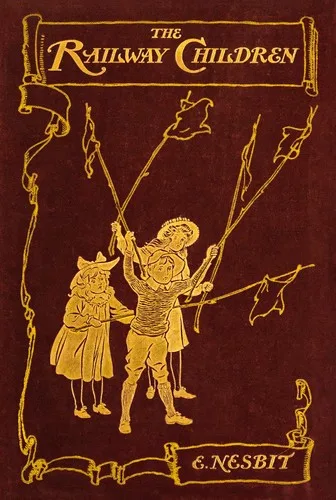





More Free Spiritualism & Afterlife Books
View all →