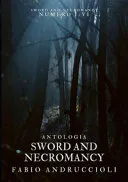
Sword and necromancy
 74
74

Sword and necromancy
Fabio Andruccioli’s "Sword and Necromancy" presents a compelling, if stark, perspective on the fusion of martial discipline and the darker arts. The author’s direct approach, eschewing flowery prose for a more clinical examination of power dynamics, is refreshing. A particularly strong section details the symbolic parallel between the swordsman's precision and the necromancer's careful manipulation of energies, drawing a clear line from the physical act of striking to the metaphysical act of commanding. However, the work sometimes feels overly reductive, presenting necromancy as purely a tool of power without fully exploring its potential for understanding loss or transition beyond mere manipulation. The text's strength lies in its unflinching gaze at power, but its limitation is in its occasionally narrow view of necromancy's broader implications. It is a focused, potent, and unapologetic exploration of arcane authority.
📝 Description
74
Fabio Andruccioli's 2022 book connects martial skill with the manipulation of life and death forces.
Published in 2022, Fabio Andruccioli's "Sword and Necromancy" examines the philosophical links between martial ability and the command of life and death energies. This work goes beyond common fantasy ideas to discuss the deeper principles of power drawn from both physical combat and arcane practices. It serves as both a practical guide and a scholarly discussion, analyzing the symbolic significance of the sword as an expression of intent and necromantic techniques as a way to shape existence. The book is for individuals seriously interested in esoteric philosophy, especially those who study the more aggressive or darker elements of magical theory. It will appeal to practitioners and academics unfazed by themes of death and power, who want to grasp the symbolic language of necromancy and its connection to personal control and authority. This text is for the committed pursuer of hidden understanding.
Andruccioli's approach engages with a historical current that includes figures like Eliphas Lévi, who studied magic's dual nature in the 19th century, and contemporary occultists who merge varied traditions. The book implicitly touches upon the renewed interest in occultism and comparative mythology after World War II. Its themes resonate with centuries of occult thought, where the concept of a warrior magician appears in varied forms, from warrior saints in early Christian writings to warrior monks in Eastern cultures.
Andruccioli's work situates itself within a long tradition of occult thought that explores the warrior-mage archetype. From early Christian warrior saints to Eastern warrior monks, the figure of the empowered combatant is recurrent. The book engages with 19th-century occultists like Eliphas Lévi, who analyzed magic's dualistic nature, and modern practitioners who synthesize diverse magical systems. It also reflects the post-World War II resurgence of interest in occultism and comparative mythology, placing contemporary esoteric exploration within a broader historical framework.
💡 Why Read This Book?
• Gain a nuanced understanding of necromancy as more than just conjuring spirits, focusing on its principles of vital force manipulation as explored in the book's examination of the 'Necromantic Arts'. • Grasp the symbolic connection between the physical sword and the projection of will, a concept central to the work's analysis of the 'Sword' as an instrument of intent. • Explore the ethical framework for wielding combined physical and esoteric power, a critical takeaway from the book's dedicated sections on the practical and philosophical implications.
⭐ Reader Reviews
Honest opinions from readers who have explored this book.
❓ Frequently Asked Questions
What is the core philosophy behind 'Sword and Necromancy'?
The core philosophy examines the synergistic relationship between martial discipline (the 'Sword') and the command of vital energies (Necromancy), suggesting true power arises from integrating these domains.
Is 'Sword and Necromancy' a historical account or a practical guide?
It functions as both a philosophical treatise and a conceptual guide, analyzing the symbolic and practical applications of sword-based power and necromantic principles.
Who is Fabio Andruccioli and what is his background?
Fabio Andruccioli is the author of 'Sword and Necromancy,' first published in 2022. Information on his specific background is limited, but the work positions him as an explorer of esoteric philosophy and occult theory.
What makes this book different from typical fantasy novels about necromancy?
Unlike fantasy narratives, 'Sword and Necromancy' focuses on the esoteric and philosophical underpinnings of necromancy and martial power, treating them as subjects of serious study rather than plot devices.
Does the book discuss specific rituals or spells?
The book primarily focuses on the conceptual and symbolic aspects of sword and necromantic power, rather than providing explicit ritualistic instructions or spell formulations.
When was 'Sword and Necromancy' first published?
The book 'Sword and Necromancy' by Fabio Andruccioli was first published in 2022.
🔮 Key Themes & Symbolism
The Sword as Will
This theme explores the sword not just as a weapon, but as a potent symbol of focused intent, discipline, and the projection of personal will into the material world. Andruccioli examines how the physical act of wielding a sword mirrors the mental and energetic commitment required for esoteric practice. It explores the concept of the sword as an extension of the practitioner's psyche, capable of cutting through illusion and asserting authority, a potent metaphor within many martial and magical traditions since antiquity.
Necromancy and Vital Force
Beyond the common perception of raising the dead, this theme re-frames necromancy as the art of understanding and commanding the vital force (prana, chi, life-energy). It investigates the relationship between life, death, decay, and regeneration as fundamental energies that can be harnessed. The work positions necromancy as a study of energetic principles and the liminal spaces between existence and non-existence, offering a perspective that is both philosophical and potentially applicable to esoteric work.
Integration of Opposites
A central tenet of 'Sword and Necromancy' is the synthesis of seemingly opposing forces: the kinetic, external power of the sword and the subtle, internal power of necromancy. The book argues that true mastery lies not in choosing one over the other, but in their harmonious integration. This reflects a broader esoteric principle of reconciling duality, suggesting that the practitioner who can wield both the sharp edge of physical action and the profound knowledge of energetic flows achieves a more complete form of power and understanding.
The Ethics of Power
Andruccioli confronts the moral implications inherent in wielding formidable power derived from both martial skill and necromantic arts. The text probes the responsibility that accompanies such capabilities, questioning the potential for corruption and the necessary internal fortitude to maintain balance and integrity. It posits that understanding the 'why' behind the use of power is as crucial as the 'how,' particularly when dealing with energies often associated with destruction or control.
💬 Memorable Quotes
Direct passages from the work, attributed to the author.
“The sword's edge is the manifestation of focused will.”
— This statement highlights the symbolic power of the sword, suggesting it is not merely a tool of physical force but a tangible representation of the practitioner's intent and mental discipline.
“Necromancy is the art of understanding the currents of vitality.”
— This redefines necromancy, moving beyond sensationalism to describe it as a discipline focused on the fundamental energies of life and death, and the ability to perceive and interact with them.
“The integration of sword and shadow defines true mastery.”
— This interpretation suggests that achieving complete esoteric proficiency requires harmonizing the external, active force (sword) with the internal, subtle energies (shadow, representing necromancy).
“To command the vital, one must first comprehend the void.”
— This concept implies that a deep understanding of absence, death, or the unmanifested is a prerequisite for effectively manipulating the forces of life and energy, a common theme in advanced esoteric studies.
💡 Key Ideas
Editorial paraphrase of the work's core concepts — not direct quotes.
Power demands a disciplined hand and an informed mind.
This paraphrased concept emphasizes the dual requirement for effective power: the physical control embodied by the 'disciplined hand' and the esoteric knowledge represented by the 'informed mind'.
🌙 Esoteric Significance
Tradition
The work draws from a broad spectrum of esoteric thought, touching upon principles found in Hermeticism (the axiom of 'as above, so below' in manipulating energies), Western Ceremonial Magic (the emphasis on will and symbolic action), and even Gnostic ideas regarding the manipulation of divine sparks or life force. It departs from purely theoretical traditions by grounding its concepts in the concrete imagery of the sword, suggesting a practical, almost kinetic application of arcane principles that speaks to traditions valuing direct experience over purely intellectual pursuit.
Symbolism
The 'Sword' functions as a primary symbol, representing focused will, the power of assertion, and the ability to discriminate and cut through illusion. It embodies the active, masculine principle. 'Necromancy,' in this context, symbolizes the mastery of liminal states, the understanding of decay and regeneration, and the command of the vital force (prana/chi). It represents the passive, feminine principle of reception and transformation, often associated with the underworld or shadow aspects of existence. The integration of these two symbols is key to the book's thesis.
Modern Relevance
Contemporary practitioners of Western Esotericism, particularly those interested in the intersection of martial arts and magic, or those exploring the 'darker' or more confrontational aspects of occultism, find relevance in Andruccioli's work. Thinkers and groups focused on personal power, esoteric psychology, and the practical application of symbolic systems in modern life may draw inspiration from its direct approach to the concepts of will and energetic command, bridging ancient symbolism with contemporary challenges.
👥 Who Should Read This Book
• Seekers of esoteric philosophy interested in the symbolic interplay between physical prowess and arcane arts, who want to understand the conceptual basis of power. • Practitioners of various magical disciplines looking to deepen their understanding of will-formation and energy manipulation, particularly those drawn to more confrontational or assertive magical methodologies. • Students of comparative mythology and occult history who are exploring archetypal representations of power and the warrior-mage figure across different cultures and eras.
📜 Historical Context
Published in 2022, Fabio Andruccioli's "Sword and Necromancy" emerges in an era where occultism enjoys renewed academic and popular interest, following the groundwork laid by scholars like Mircea Eliade and the resurgence of interest in Western Esotericism championed by figures like Antoine Faivre. The work implicitly engages with a lineage of thought that views martial discipline and arcane arts not as separate, but as complementary paths to power, a concept explored in various forms throughout history, from ancient warrior-priests to modern interpretations of the magician archetype. It can be seen as a contemporary response to the ongoing discourse on power structures and their esoteric justifications, a discourse that has seen significant contributions from thinkers like Julius Evola, whose ideas on traditionalism and warrior castes offer a point of comparison, though Andruccioli's focus is more on the mechanics of esoteric power itself.
📔 Journal Prompts
The Sword as an instrument of focused will: How does its form dictate its function?
Reflect on the concept of 'vital force' as presented in Necromancy.
Analyze the ethical considerations of wielding integrated Sword and Necromantic power.
Explore personal discipline as the bridge between martial action and arcane command.
Consider the void: What does it represent in relation to the vital force?
🗂️ Glossary
Sword
In this context, the sword is a primary symbol representing focused intent, assertion of will, physical discipline, and the power to discriminate and act decisively in the material world.
Necromancy
Reconceptualized as the art of understanding and commanding vital energies, life force, and the principles of decay and regeneration, rather than solely the evocation of the dead.
Vital Force
The fundamental energetic principle animating all living beings, akin to prana or chi, which the book posits necromancy seeks to understand and manipulate.
Integration of Opposites
The esoteric principle of harmonizing seemingly conflicting forces (e.g., Sword/Necromancy, active/passive, material/ethereal) to achieve a state of complete mastery and balanced power.
Liminal States
Transitional or in-between states of existence, such as dawn/dusk, life/death, or conscious/unconscious, which are often considered potent sources of esoteric power and knowledge.
Assertion of Will
The conscious and directed application of one's mental and energetic power to influence external circumstances or internal states, symbolized by the sword's action.
Discrimination
The faculty of discerning truth from falsehood, or reality from illusion, often associated with the sharp, cutting nature of the sword in an esoteric context.