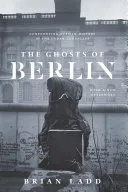
The Ghosts of Berlin
 81
81

The Ghosts of Berlin
Brian Ladd’s "The Ghosts of Berlin" offers a compelling, if sometimes elusive, exploration of how a city's history saturates its present. Ladd masterfully details the specific architectural and spatial manifestations of Berlin's turbulent past, moving beyond mere historical recounting to investigate the psychic resonance of its sites. He compellingly argues that places like the Reichstag or the former Tempelhof Airport are not just structures but active repositories of memory and conflict. One limitation, however, is the occasional opaqueness of the "ghosts" themselves; the spectral presence can feel more theoretical than palpable at times, leaving the reader yearning for more direct experiential accounts. Ladd's discussion of "urban self-definition" in the face of this inherited trauma is particularly strong, showcasing how Berliners actively engage with their city’s spectral inheritance. This work succeeds in demonstrating how the built environment serves as a profound, often unsettling, archive of human experience.
📝 Description
81
Brian Ladd’s 2003 book examines how Berlin’s physical spaces absorb its past traumas and triumphs.
The Ghosts of Berlin analyzes how a city's physical structure absorbs and reflects its history. Brian Ladd moves past a simple historical account to investigate the spectral imprints left by major events and ideologies on the urban environment. These 'ghosts' represent memory, conflict, and identity, and they continue to influence urban life, often without conscious awareness.
This work is valuable for those studying urban environments, memory, and the psychological geography of historical locations. Readers interested in how places retain the psychic residue of intense historical moments will find the book particularly insightful. It appeals to those who see cities as living archives of human experience, bearing the indelible marks of past actions and beliefs.
The book uses Berlin's layered history as a case study, from its time as a Prussian capital through its Nazi era, division during the Cold War, and reunification. Ladd scrutinizes how these distinct periods, especially the ideological conflicts of the 20th century, have left visible and invisible scars. The text traces the ongoing engagement with this heritage, seen in architectural discussions and memorialization projects.
This book engages with the esoteric concept of places retaining energetic imprints from significant human events. It frames 'haunting' not as literal ghosts but as the persistent, often unconscious, influence of historical forces and collective memory on a city's atmosphere and its inhabitants' experiences. By focusing on Berlin, a city marked by extreme historical ruptures and ideological battles, Ladd illustrates how the physical environment becomes a repository for psychic residue, shaping identity and spatial awareness in ways that resonate with traditions concerned with the subtle energies and spiritual dimensions of location.
💡 Why Read This Book?
• Gain an understanding of "urban self-definition" as a process shaped by historical trauma, particularly evident in Berlin's post-reunification architectural landscape. • Explore the concept of "haunting" not as supernatural phenomena, but as the persistent psychic residue of significant historical events embedded within specific locations like the former Gestapo headquarters. • Learn how the built environment functions as a living archive, revealing the indelible traces of past actions and ideologies that continue to influence contemporary urban consciousness.
⭐ Reader Reviews
Honest opinions from readers who have explored this book.
❓ Frequently Asked Questions
What is the core argument of Brian Ladd's "The Ghosts of Berlin"?
The book argues that cities, especially historically charged ones like Berlin, absorb and radiate the psychic and historical "ghosts" of past events, which continue to influence their present urban experience and self-definition.
When was "The Ghosts of Berlin" first published?
The original publication date for "The Ghosts of Berlin" by Brian Ladd was May 1, 2018.
How does the book define "ghosts" in an urban context?
Ladd uses "ghosts" metaphorically to represent the lingering presence of memory, trauma, ideology, and conflict that is imprinted upon the city's physical spaces and shapes its contemporary identity.
What specific historical periods does the book focus on regarding Berlin?
The work primarily focuses on Berlin's 20th-century history, including its time as the Prussian capital, the Nazi era, the division during the Cold War, and the subsequent reunification.
Who is the intended audience for "The Ghosts of Berlin"?
The book is for readers interested in urban studies, memory studies, psycho-geography, and the intricate relationship between history, place, and identity in contested urban environments.
Does the book offer solutions for dealing with a city's "ghosts"?
While not offering prescriptive solutions, the book provides a framework for understanding how cities and their inhabitants engage with and negotiate their historical inheritance, contributing to urban self-definition.
🔮 Key Themes & Symbolism
Spectral Urbanism
This theme explores how the physical and psychological remnants of Berlin's tumultuous past continue to inhabit its present. Ladd investigates how sites of intense historical significance, such as former sites of conflict or division, act as focal points for these "ghosts." The work posits that these spectral presences are not supernatural but are rather the deep imprints of memory, ideology, and collective trauma embedded within the urban fabric, influencing contemporary consciousness and urban development.
Urban Self-Definition
The book examines the ongoing process by which Berlin defines and redefines itself in relation to its layered and often painful history. This "urban self-definition" is shown to be a dynamic negotiation with the past, visible in architectural choices, memorialization practices, and the public discourse surrounding historical sites. Ladd analyzes how the city grapples with its "ghosts" to forge a contemporary identity, often marked by the very contestations that shaped it.
The City as Archive
"The Ghosts of Berlin" presents the city as a palimpsest, a living archive where different historical epochs are superimposed and can be read through its built environment. The work emphasizes how specific locations—from grand structures to erased street lines—function as repositories of memory. The "ghosts" are the palpable echoes within this archive, revealing how historical narratives are physically inscribed and continue to exert influence.
Memory and Trauma in Space
This theme studies the psycho-geographical implications of collective memory and trauma. Ladd illustrates how Berlin's history, particularly the atrocities of the Nazi regime and the divisions of the Cold War, has left indelible marks on the urban landscape. The book explores how these spatialized traumas can affect the lived experience of inhabitants and visitors, shaping perceptions and interactions within the city.
💬 Memorable Quotes
Direct passages from the work, attributed to the author.
“The presence of history in our built environment.”
— This concept highlights how physical structures and urban layouts are not neutral but are imbued with the weight of past events, acting as constant reminders of historical narratives.
“Berlin as a space historically contested and emotionally fraught.”
— This phrase captures the essence of Berlin's unique urban condition, marked by intense ideological struggles and profound human suffering that continue to shape its identity.
“The process of urban self-definition, both past and present.”
— This refers to how a city's inhabitants and planners actively shape its identity by engaging with, interpreting, and sometimes confronting its historical legacy.
“Ongoing conflicts radiating from historical events.”
— This suggests that past traumas and divisions do not simply disappear but continue to manifest and influence contemporary dynamics within the city.
“The work explores the spectral imprints left on the urban landscape.”
— This interpretation frames the book's central idea: that significant historical occurrences leave a discernible, though often subtle, mark on the physical environment of a city.
🌙 Esoteric Significance
Tradition
While "The Ghosts of Berlin" is not explicitly aligned with a singular esoteric tradition like Hermeticism or Kabbalah, its approach to the "haunting" of urban spaces can be seen as resonating with certain animistic or nature-spirit traditions that attribute agency and memory to places. The work's focus on the psychic residue of human experience in the built environment echoes concepts found in psychogeography, which itself draws from surrealist and situationist ideas that explore the deeper psychological and often hidden influences of geography and environment.
Symbolism
The book employs the concept of "ghosts" as a central symbol, representing the persistent, often unseen, influence of history, memory, and trauma on the urban landscape. Specific locations in Berlin, such as the former Gestapo headquarters or the remnants of the Berlin Wall, function as potent symbols of division, oppression, and resilience. The architecture itself—from grand imperial structures to scarred facades—becomes symbolic, acting as a physical manifestation of Berlin's layered and conflicting past.
Modern Relevance
Contemporary urban planners, architects, and cultural historians draw on the methodologies and insights presented in "The Ghosts of Berlin." The work's exploration of how cities actively negotiate their past is highly relevant to current discussions on memorialization, urban regeneration in historically sensitive areas, and the psychological impact of place. Thinkers and practitioners interested in the psycho-geographical effects of historical trauma in urban settings find Ladd's analysis a valuable framework for understanding contemporary urban challenges.
👥 Who Should Read This Book
• Urban historians and geographers seeking to understand the intersection of physical space, collective memory, and historical trauma in a major European capital. • Students and scholars of memory studies interested in how sites become imbued with significance and continue to "haunt" the present. • Readers fascinated by Berlin's unique historical trajectory and looking for an analytical approach to its layered urban identity beyond conventional historical narratives.
📜 Historical Context
Brian Ladd's "The Ghosts of Berlin," originally published in 2018, emerged during a period of intense scholarly and public engagement with the complex legacies of 20th-century European history. The work situates itself within fields like urban studies, memory studies, and psycho-geography, contributing to a broader conversation about how cities grapple with traumatic pasts. Berlin, with its particularly dense and contested history—from Prussian grandeur to Nazi atrocities, Cold War division, and reunification—provides a potent case study. The book engages with the intellectual currents that view urban spaces not merely as inert backdrops but as active participants in the construction and contestation of memory. It followed in the wake of significant architectural and memorial projects in Berlin during the late 20th and early 21st centuries, such as the Reichstag renovation and the construction of the Memorial to the Murdered Jews of Europe. While not directly engaging with spectral phenomena in a supernatural sense, the work's metaphorical use of "ghosts" aligns with critical theories exploring the persistence of historical trauma, echoing discussions found in thinkers like Svetlana Alexievich, who documented the lived experiences of Soviet citizens through devastating historical events.
📔 Journal Prompts
The spectral imprints of the Reichstag building.
Berlin's process of urban self-definition.
The city as an archive of the 20th century.
How historical conflicts radiate in contemporary Berlin.
The emotional charge of historically contested sites.
🗂️ Glossary
Spectral Imprints
Metaphorical traces or lingering influences of past events, ideologies, or human experiences that are perceived to be embedded within a physical location or urban environment.
Urban Self-Definition
The ongoing process by which a city's inhabitants, planners, and cultural narratives construct and negotiate its identity, particularly in relation to its historical past and present conditions.
Built Environment
The human-made surroundings that provide the setting for human activity, encompassing buildings, infrastructure, and urban landscapes.
Psycho-geography
The study of the specific psychological effects of the geographical environment on individuals or society, often exploring the subjective experience of place.
Contested Space
An area or location whose ownership, meaning, or use is disputed or subject to conflict, often due to historical, political, or social factors.
Palimpsest City
A city whose landscape bears visible evidence of its history, where layers of past structures, events, and eras are superimposed upon one another.
Haunting (Urban)
The persistent presence or influence of past traumas, memories, or unresolved historical issues within a contemporary urban setting, shaping its atmosphere and identity.