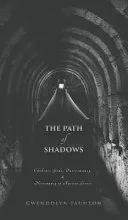
The Path of Shadows
 77
77

The Path of Shadows
Gwendolyn Taunton's "The Path of Shadows" offers a rigorous, albeit dense, exploration of archaic Greek chthonic cults. The book's strength lies in its unblinking focus on the darker, less accessible aspects of these ancient practices, moving beyond the Olympian pantheon to the subterranean gods and the realm of Hades. Taunton avoids romanticizing these potent forces, instead presenting them with academic precision. A notable section details the ritualistic use of funerary objects and inscriptions, illustrating the tangible connection between the living and the dead in ancient Greek belief. However, the work's sheer density and specialized vocabulary might present a barrier for those not already well-versed in classical studies or esoteric terminology. The lack of extensive modern comparative analysis, while preserving its historical focus, can leave the reader wishing for more explicit connections to contemporary practice. "The Path of Shadows" serves as a valuable, if demanding, source for the serious student of Hellenic occultism.
📝 Description
77
Gwendolyn Taunton's 2018 book examines ancient Greek occultism and subterranean deities.
The Path of Shadows delves into the chthonic aspects of ancient Greek spiritual practices, focusing on the deities and realms associated with the underworld and the departed. Taunton meticulously details forgotten rituals and the cosmologies that shaped pre-Hellenistic and archaic Greek beliefs. This work is suited for serious students of esoteric traditions, especially those interested in Hellenic mysteries and the foundations of Western occultism.
It will also interest scholars of ancient religion, those who study comparative mythology, and practitioners aiming to grasp the origins of modern magical systems. The book engages with ancient Greek religion not just historically, but as a tradition with continuing relevance, distinct from earlier, less academic explorations. Taunton's research highlights concepts such as ancient understandings of theurgy and necromancy, alongside the symbolic geography of the underworld.
This book situates itself within the study of Western esotericism, specifically focusing on the occult dimensions of ancient Greek religion. It moves beyond purely historical or anthropological analyses, engaging with these practices as potentially living traditions. Taunton's work connects to a lineage of thinkers who have looked to antiquity for magical and spiritual systems, though with a specific emphasis on the pre-classical Greek world. It addresses the practical and symbolic aspects of ancient beliefs, linking them to the development of later magical thought.
💡 Why Read This Book?
• Gain a nuanced understanding of chthonic deities and the ancient Greek concept of the underworld, as detailed in the book's exploration of subterranean gods and the realm of the dead. • Discover the practical applications of ancient Greek occult rituals, moving beyond theoretical study to examine specific practices discussed in the work. • Connect with the foundational elements of Western esotericism by studying the pre-Hellenistic practices Taunton meticulously researches, offering a deeper historical perspective than many contemporary occult texts.
⭐ Reader Reviews
Honest opinions from readers who have explored this book.
❓ Frequently Asked Questions
What specific ancient Greek practices does 'The Path of Shadows' examine?
The book focuses on chthonic cults, exploring rituals related to subterranean gods, the underworld, and the deceased. It delves into practices such as necromancy and theurgy as understood in archaic and pre-Hellenistic Greece.
Is 'The Path of Shadows' suitable for beginners in esoteric literature?
While comprehensive, the book is quite specialized. It is best suited for readers with a foundational knowledge of classical studies or existing familiarity with esoteric concepts, rather than absolute beginners.
What is the publication date of Gwendolyn Taunton's 'The Path of Shadows'?
The book was first published on September 29, 2018, making it a relatively recent addition to the field of esoteric literature concerning ancient Greek practices.
Does the book discuss the Olympian gods?
Primarily, 'The Path of Shadows' concentrates on the less-examined chthonic deities and the realm of Hades, rather than the Olympian pantheon, offering a deeper look into the underworld and forgotten cults.
What makes the 'sunless realm' significant in this book?
The 'sunless realm' refers to the ancient Greek conception of the underworld, a central focus of the book. It represents the domain of the dead and the hidden, subterranean gods, which the author explores through ritual and cosmology.
Can 'The Path of Shadows' be used for practical magical work?
The book is primarily academic and descriptive, focusing on historical understanding rather than providing direct instructions for modern magical practice. However, practitioners may find its insights valuable for contextualizing their own work.
🔮 Key Themes & Symbolism
Chthonic Deities and the Underworld
The work extensively investigates the pantheon of gods associated with the earth's depths and the field of the dead, often referred to as the 'sunless realm.' Taunton examines their roles, cultic practices, and their significance within the broader cosmology of archaic and pre-Hellenistic Greece, moving beyond the more commonly studied Olympian figures.
Ancient Greek Necromancy and Theurgy
Taunton analyzes ancient Greek conceptions and practices of communicating with the dead (necromancy) and divine invocation for spiritual attainment (theurgy). The book clarifies how these were not merely superstitious beliefs but integral parts of a complex spiritual system aimed at understanding mortality and the divine.
Ritual and Symbolic Geography
The book explores the ritualistic use of sacred spaces, objects, and symbols connected to the underworld and chthonic cults. It details how the physical landscape and specific locations were understood as conduits to the spiritual realms, influencing ritual performance and belief systems.
The Daimonic and Spirit Worlds
Taunton examines the ancient Greek concept of the daimonic, exploring the nature of intermediary spirits and their relationship to both the gods and humans. This theme is crucial for understanding the perceived spiritual ecology that underpins the occult practices discussed.
💬 Memorable Quotes
Direct passages from the work, attributed to the author.
“The subterranean gods govern the unseen currents of existence.”
— This interpretation highlights the central thesis regarding deities associated with the underworld and their fundamental role in shaping the hidden aspects of reality, as explored in the book.
“Hellenic occultism centered on potent, often fearsome, primal forces.”
— This interpretation captures the essence of the book's focus on the raw, powerful, and sometimes intimidating nature of the ancient Greek spiritual forces that the work investigates.
💡 Key Ideas
Editorial paraphrase of the work's core concepts — not direct quotes.
Rituals concerning the departed sought communion, not mere appeasement.
This paraphrased concept emphasizes the active, relational aspect of ancient Greek funerary rites, suggesting a desire for connection and understanding with the dead rather than simple placation.
The geography of the underworld is a map of the soul's journey.
This paraphrased idea connects the symbolic field of Hades with the internal spiritual path of individuals, suggesting the underworld's depiction reflects psychological and spiritual transformations.
Knowledge of the sunless realm offered power over fate.
This paraphrased concept suggests that understanding the hidden world of the dead and subterranean gods was believed to grant a measure of control or influence over one's destiny.
🌙 Esoteric Significance
Tradition
This work fits within the Western Esoteric tradition, specifically drawing from and contributing to the study of Hellenic occultism and ancient mystery religions. It bridges classical scholarship with esoteric practice, focusing on pre-Hellenistic and archaic Greek cults that predate much of the Gnostic and Hermetic synthesis often explored in Western esotericism.
Symbolism
Key symbols include the 'sunless realm' itself, representing the underworld, the collective unconscious, and the domain of the dead. Subterranean deities symbolize primal, chthonic forces and hidden knowledge. The concept of the daimonic represents intermediary spiritual entities crucial for understanding the bridge between the human and divine realms.
Modern Relevance
Contemporary practitioners of Hellenistic reconstructionism and certain branches of modern witchcraft find value in Taunton's detailed examination of archaic Greek rituals and beliefs. Thinkers exploring the psychological underpinnings of ancient religion and the roots of Western occultism also draw on this meticulously researched material.
👥 Who Should Read This Book
• Students of comparative religion and ancient Mediterranean cults seeking to understand the chthonic aspects of Greek spirituality beyond standard Olympian narratives. • Practitioners of Western Esotericism interested in the historical roots of occult practices, particularly those focused on Hellenic or underworld-related traditions. • Academics and independent researchers exploring the intersection of classical studies, mythology, and the history of magical and religious beliefs.
📜 Historical Context
Gwendolyn Taunton's "The Path of Shadows," published in 2018, emerged within a resurgence of interest in ancient Mediterranean mystery cults and esoteric traditions. The early 21st century has seen a growing academic and popular engagement with what is sometimes termed 'esoteric' or 'magical' approaches to antiquity, moving beyond purely historical or anthropological frameworks. This contrasts with earlier 20th-century scholarship, which often viewed such practices as primitive superstition. While classical scholars like Walter Burkert had already paved the way for serious study of Greek religion's ritualistic and sometimes darker aspects, Taunton's work specifically targets the occult dimensions. The book engages with a lineage of occult exploration that includes figures like Kenneth Grant, but anchors itself firmly in the pre-Hellenistic and archaic Greek milieu, making its contribution distinct from broader Theosophical or Hermetic reinterpretations.
📔 Journal Prompts
The nature of subterranean gods and their influence on the soul.
Rituals for communion with the departed in archaic Greek practice.
Symbolic interpretations of the underworld's geography.
The role of daimonic entities in ancient Hellenic occultism.
Connecting the 'sunless realm' to personal spiritual journeys.
🗂️ Glossary
Chthonic
Pertaining to the underworld, the earth's depths, and deities associated with these realms, as distinct from Olympian or celestial deities.
Daimon
In ancient Greek belief, a spirit or divine power, often acting as an intermediary between gods and humans, or representing an individual's guiding spirit.
Necromancy
A form of divination involving communication with the dead, or the practice of magic associated with death and the underworld in ancient contexts.
Theurgy
A system of ritual magic intended to invoke divine beings or achieve spiritual union, often associated with Neoplatonic and Hellenistic traditions.
Sunless Realm
A metaphorical and literal description of the ancient Greek underworld (Hades), characterized by darkness and separation from the living world.
Archaic Greece
The period of Greek history from approximately 800 BCE to 480 BCE, preceding the Classical era, characterized by significant developments in art, politics, and religion.
Pre-Hellenistic
Referring to the period in Greek history before the influence of Hellenistic culture, which began after the conquests of Alexander the Great in the 4th century BCE.