The Book of Dreams and Ghosts
 81
81

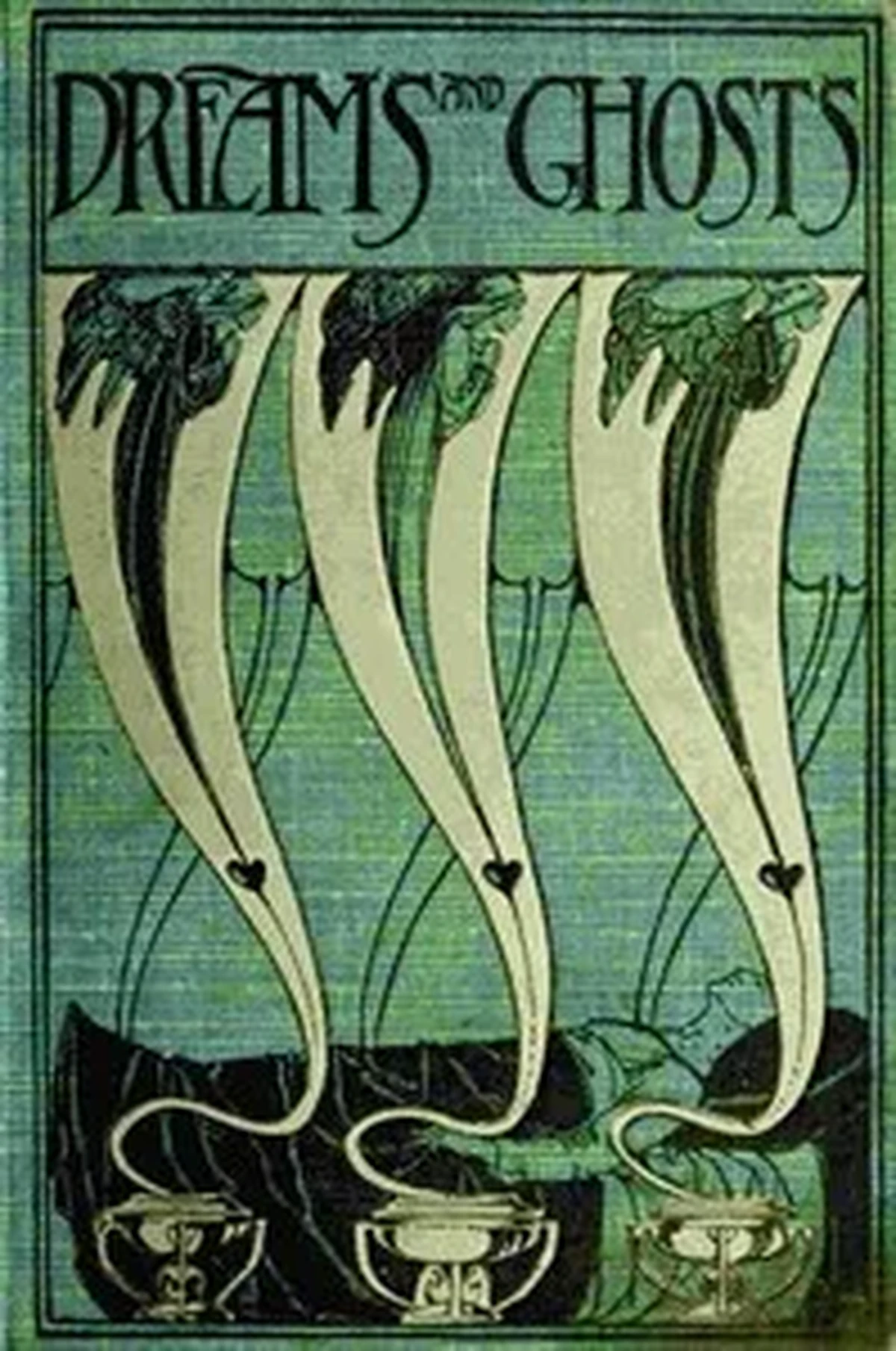
The Book of Dreams and Ghosts
Andrew Lang's *The Book of Dreams and Ghosts* offers a fascinating, if dated, compendium of spectral lore and psychic phenomena. Lang, a scholar of considerable repute in folklore, approaches his subject with a methodical, almost anthropological, gaze, presenting a vast array of anecdotes gathered from diverse sources. The strength lies in this sheer breadth of collected material, showcasing the universality of ghost stories and premonitions across cultures and centuries. However, the work's limitation is its 1970 publication date, which, while not the original publication, still places its framing within an era preceding modern psychological and scientific advancements in understanding perception and memory. A particularly striking section details alleged premonitions of death, which Lang presents with careful, if sometimes credulous, consideration. Ultimately, this collection serves as a valuable historical document of belief in the paranormal, more for its anthropological value than for any definitive exposition of spectral reality.
📝 Description
81
Andrew Lang collected ghost stories and spectral accounts from diverse historical sources for his 1901 book.
Andrew Lang's The Book of Dreams and Ghosts, published in 1901, is a scholarly compilation of folklore and spectral accounts. Lang, a noted folklorist, gathered narratives of apparitions, premonitions, and coincidences from a wide range of historical sources. The book does not present a single storyline but rather categorizes diverse phenomena, offering readers a panorama of human experiences with the seemingly supernatural across different cultures and time periods. Lang's method emphasizes empirical observation, treating these accounts as data for studying human belief and perception.
This volume is designed for students of folklore, comparative mythology, and the history of psychical research. It will interest those who study ghost stories and supernatural phenomena academically, not those seeking magical instruction. Readers who value rigorous collection of anecdotal evidence and cross-cultural comparisons of belief systems will find substantial material here. The book is also suitable for researchers of late Victorian and Edwardian occultism and the intellectual climate that fueled interest in spiritualism and the paranormal.
Published in 1901, The Book of Dreams and Ghosts appeared during a period of significant public and academic interest in spiritualism and psychical research. This era saw figures like Helena Blavatsky and Arthur Conan Doyle exploring the unseen, while organizations like the Society for Psychical Research (founded 1882) attempted to investigate phenomena beyond conventional scientific understanding. Lang himself participated in this intellectual current, contributing his extensive folklore research to the broader study of belief systems and alleged supernatural occurrences.
💡 Why Read This Book?
• Understand the historical methodology of psychical research through Lang's meticulous cataloging of spectral accounts, as seen in his categorization of 'Apparitions' in the early sections. • Gain insight into cross-cultural beliefs about dreams and ghosts by examining the diverse sources Lang draws upon, such as accounts from ancient Greece and medieval Europe. • Appreciate the intellectual climate of the late Victorian/early Edwardian era's fascination with the paranormal, contextualized by Lang's membership in the Society for Psychical Research (SPR).
⭐ Reader Reviews
Honest opinions from readers who have explored this book.
❓ Frequently Asked Questions
What is the original publication year of Andrew Lang's The Book of Dreams and Ghosts?
While this edition was first published in 1970, Andrew Lang's original works on this subject, such as *The Book of Dreams and Ghosts*, were compiled and released earlier, reflecting his prolific output in the late 19th and early 20th centuries.
Is Andrew Lang's The Book of Dreams and Ghosts a fictional work?
No, The Book of Dreams and Ghosts is a non-fiction compilation of folklore, anecdotal accounts, and historical reports of supernatural phenomena, presented from a folklorist's perspective.
What kind of phenomena does The Book of Dreams and Ghosts cover?
The book covers a wide range of phenomena, including ghost sightings (apparitions), premonitions, prophetic dreams, and other uncanny experiences documented through historical accounts and folklore.
Was Andrew Lang a believer in ghosts?
Lang approached the subject with scholarly curiosity, collecting and analyzing accounts rather than asserting personal belief. He was interested in the psychological and cultural aspects of these experiences, as evidenced by his work with the Society for Psychical Research.
Where can I find more works by Andrew Lang on folklore?
Andrew Lang was a prolific writer. His other notable collections include the 'Fairy Books' series, which are extensive compilations of fairy tales from around the world, and works on mythology and comparative religion.
Does this book offer practical advice for contacting spirits?
The Book of Dreams and Ghosts is primarily a scholarly and historical collection. It documents and analyzes accounts of the supernatural rather than providing practical instructions for spirit communication or mediumship.
🔮 Key Themes & Symbolism
Apparitions and Spectral Encounters
This theme focuses on Lang's extensive documentation of ghost sightings and spectral visitations. He meticulously compiles eyewitness accounts from various historical periods and geographical locations, analyzing patterns in descriptions of apparitions. The work examines the commonalities in how ghosts are perceived and reported, touching upon their alleged forms, behaviors, and interactions with the living. Lang presents these as phenomena worthy of serious, if cautious, study, exploring their potential origins in folklore, psychology, or as genuine encounters with the non-corporeal.
The Nature of Dreams and Premonitions
Lang explores the significance of dreams, particularly those that appear prophetic or convey messages from beyond the veil. He collects narratives of individuals experiencing premonitions of future events, often of a tragic nature, which later come to pass. The work questions the mechanisms behind such foresight, exploring whether these are mere coincidences, subconscious insights, or evidence of a connection to a broader psychic field. The interplay between dream states and perceived reality is a central point of inquiry.
Folklore as a Window to Belief
A fundamental theme is the use of folklore and anecdotal evidence as a means to understand human belief systems concerning the supernatural. Lang treats folk tales and personal testimonies not just as stories, but as cultural artifacts that reveal underlying anxieties, hopes, and worldviews. He demonstrates how recurring motifs in ghost stories and dream narratives across different cultures point to shared psychological structures or archetypes, suggesting a universal human engagement with the mysterious aspects of existence.
The Challenge of Verifying the Paranormal
Throughout the book, Lang grapples with the inherent difficulty in verifying supernatural claims. He acknowledges the unreliability of testimony, the potential for misinterpretation, and the influence of suggestion and cultural biases. Yet, he maintains that the sheer volume and consistency of certain types of reports warrant continued investigation. This theme highlights the tension between empirical observation and the elusive nature of paranormal phenomena, a debate central to psychical research.
💬 Memorable Quotes
Direct passages from the work, attributed to the author.
“Dreams sometimes appear to foretell future events with striking accuracy.”
— This highlights Lang's interest in precognitive dreams, presenting them not as mere fantasy but as potential evidence of a connection between the dreaming mind and the unfolding of reality.
“Many ghost stories originate from specific locations with histories of tragedy.”
— This points to the concept of 'hauntings' being tied to place and past events, a common trope in folklore that Lang meticulously documented across his collected narratives.
“Distinguishing between delusion and genuine paranormal experience presents a significant challenge.”
— Lang acknowledges the epistemological difficulty in validating supernatural claims, recognizing that subjective perception and psychological factors often complicate objective assessment of alleged phenomena.
“The study of folklore reveals consistent themes in human encounters with the unknown.”
— This reflects Lang's view that folk tales and anecdotal evidence are valuable sources for understanding universal human responses to mystery and the supernatural across diverse cultures.
💡 Key Ideas
Editorial paraphrase of the work's core concepts — not direct quotes.
The collected accounts of spectral appearances often share common characteristics.
This paraphrased concept suggests Lang observed recurring patterns in how ghosts are described and behave, indicating a shared human imagination or perhaps a consistent manifestation of the phenomenon itself.
🌙 Esoteric Significance
Tradition
While not strictly adhering to a single esoteric lineage, Lang's work draws heavily from the broader tradition of Western occultism and psychical research prevalent in the late 19th and early 20th centuries. It aligns with the Theosophical interest in subtle planes and psychic phenomena, and the Hermetic tradition's exploration of hidden knowledge and consciousness. Lang's empirical, cataloging approach, however, distinguishes him from more dogmatic or ritualistic occultists, positioning him as a bridge between folklore studies and the nascent field of parapsychology.
Symbolism
Key symbols include the apparition, often depicted as a pale, spectral figure or a familiar person, representing a lingering consciousness or a message from beyond. Dreams serve as potent symbols of the subconscious mind and its connection to the collective psyche, often acting as vehicles for premonition or spiritual guidance. The motif of the haunted place—a house or landscape imbued with past energies—symbolizes the persistence of memory and emotion, suggesting that physical locations can retain psychic imprints.
Modern Relevance
Contemporary parapsychology and consciousness studies continue to explore the phenomena Lang documented, albeit with more advanced methodologies. Thinkers in Jungian psychology recognize the archetypal nature of dream imagery and apparitions he describes. Modern folklore studies also utilize his collections as primary source material for understanding historical beliefs. Furthermore, the enduring popular fascination with ghosts and the paranormal ensures that Lang's work remains relevant for ghost hunters, paranormal investigators, and anyone interested in the enduring human quest to understand life, death, and consciousness.
👥 Who Should Read This Book
• Students of folklore and comparative mythology seeking extensive collections of ghost stories and dream narratives from historical and cross-cultural perspectives. • Researchers of late Victorian and Edwardian occultism and psychical research interested in the intellectual climate and methodologies of early paranormal investigation. • Skeptics and believers alike interested in the historical documentation of alleged supernatural phenomena and the challenges of verification, as presented by Andrew Lang's scholarly approach.
📜 Historical Context
Andrew Lang's *The Book of Dreams and Ghosts* emerged from the fertile intellectual soil of the late Victorian and Edwardian eras, a period marked by profound societal change and a burgeoning interest in the unseen. While the scientific establishment focused on material progress, a significant segment of society, including prominent intellectuals, was captivated by spiritualism, telepathy, and other phenomena that defied conventional explanation. Lang, a respected folklorist and anthropologist, was deeply engaged with this milieu, serving as a member of the influential Society for Psychical Research (SPR), founded in 1882. This society aimed to apply scientific methods to the study of psychic phenomena, often clashing with skeptical scientific circles. Lang's work contributed to this discourse by systematically collecting and categorizing vast amounts of anecdotal evidence, drawing from historical texts, folklore, and contemporary reports. His approach paralleled that of other contemporary scholars like Sir James Frazer, who sought to map the range of human belief systems through extensive comparative studies. The reception of such works was often polarized, with some hailing them as pioneering explorations and others dismissing them as unscientific.
📔 Journal Prompts
The recurring motifs in spectral apparitions documented by Lang.
The nature of precognitive dreams as described in the text.
The relationship between folklore and belief in ghosts.
Lang's methodology for cataloging uncanny experiences.
The distinction between folklore and historical fact in spectral accounts.
🗂️ Glossary
Apparition
A ghostly or spectral figure, often perceived as a manifestation of a deceased person or entity. Lang meticulously categorizes various forms of apparitions reported throughout history.
Premonition
A forewarning or foreboding of a future event, particularly an unpleasant one. The book includes numerous accounts of individuals experiencing premonitions through dreams or sudden intuitions.
Poltergeist
A type of ghost or spirit believed to be responsible for physical disturbances, such as loud noises, moving objects, and other mysterious phenomena. Lang addresses these accounts within his broader collection.
Folklore
The traditions, customs, and beliefs of a community or nation, often passed down through generations. Lang uses folklore as a primary source for understanding human engagement with the supernatural.
Psychical Research
The interdisciplinary field that studies paranormal and psychic phenomena, such as telepathy, clairvoyance, and hauntings, often employing scientific methods. Lang was a notable figure in this field.
Anecdotal Evidence
Evidence based on personal accounts or stories rather than empirical data or scientific experimentation. Lang's work relies heavily on the collection and analysis of anecdotal evidence.
Collective Unconscious
A concept in Jungian psychology referring to a layer of the unconscious mind shared by all humanity, containing archetypes and universal symbols. Lang's work touches upon shared dream imagery and belief patterns.
🔮 Readers Also Liked
Browse all →








More by Andrew Lang
All books →


More Free Spiritualism & Afterlife Books
View all →