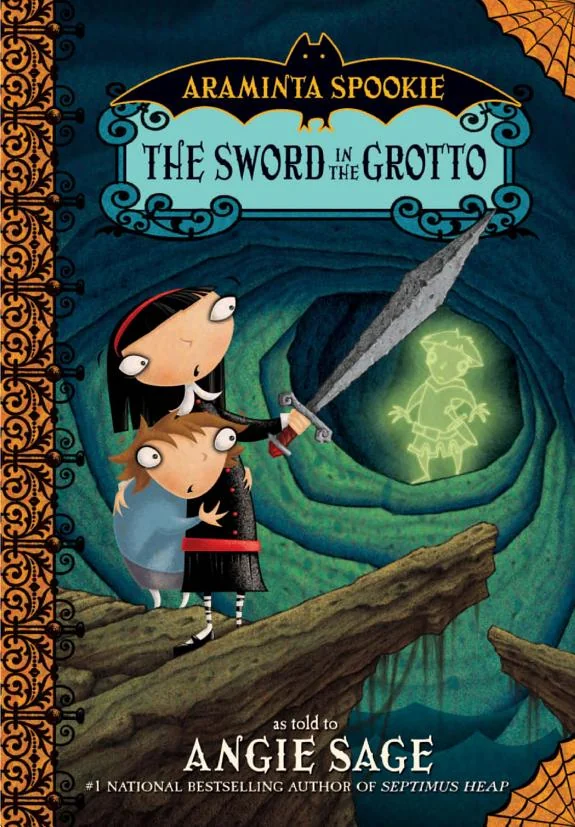
Araminta Spookie 2: The Sword in the Grotto
 71
71

Araminta Spookie 2: The Sword in the Grotto
Sage’s sophomore outing for Araminta Spookie, *The Sword in the Grotto*, trades the initial novelty for a more focused adventure. The spectral companion, Edmund, remains a highlight, his spectral presence offering both comic relief and crucial aid. The central conceit—retrieving a birthday gift via a secret tunnel—is simple but effective, driving the plot forward with a sense of urgency appropriate for the target audience. A slight limitation lies in the predictability of some plot turns, particularly for readers familiar with genre conventions. However, the description of the grotto and its contents, though brief, hints at a deeper, more ancient lore that is tantalizingly underdeveloped here. The book succeeds in its primary aim: providing a charming, accessible fantasy escapade. It’s a competent continuation, if not a dramatic leap.
📝 Description
71
In 2006, Angie Sage sent Araminta Spookie underground for a spectral quest in "The Sword in the Grotto."
Araminta Spookie 2: The Sword in the Grotto follows young Araminta as she embarks on a quest beneath the earth. This installment sees her navigate subterranean passages and face challenges that require courage and quick thinking. The story emphasizes the bonds formed between Araminta and her spectral companions, showing how unexpected allies can appear when needed most.
Sage's narrative weaves a tale of loyalty and bravery, where the line between the living and the unseen world blurs. Readers will find Araminta facing a specific challenge that tests her resolve and her ability to trust those not immediately visible. It is a story designed for younger audiences who appreciate fantasy with a supernatural edge.
Angie Sage's "Araminta Spookie" series, including "The Sword in the Grotto," touches upon themes common in children's literature that engage with the supernatural. While not a treatise on occult philosophy, the books incorporate elements like spectral companions and unseen forces as narrative devices. This approach aligns with a broader tradition of stories that introduce young readers to concepts of a hidden world coexisting with our own, often as a means to explore bravery and friendship.
💡 Why Read This Book?
• Discover the unique dynamic between Araminta and the ghost Edmund, learning how their spectral-living partnership overcomes obstacles, particularly in the context of the secret tunnel expedition. • Experience the atmosphere of the grotto, a specific subterranean location, and understand its role in the quest to find Sir Horace's birthday present. • Explore the narrative's exploration of bravery and resourcefulness, as Araminta faces challenges that test her courage, inspired by her spectral ally.
⭐ Reader Reviews
Honest opinions from readers who have explored this book.
❓ Frequently Asked Questions
When was Araminta Spookie 2: The Sword in the Grotto first published?
Araminta Spookie 2: The Sword in the Grotto was first published in August 2006, continuing the series initiated by Angie Sage.
Who are the main characters in The Sword in the Grotto?
The main characters are Araminta Spookie, the young protagonist, and her ghostly companion, Edmund. Sir Horace also plays a role as the recipient of a birthday present.
What is the central plot of Araminta Spookie 2?
The central plot involves Araminta and Edmund undertaking a journey through a secret tunnel to retrieve a present for Sir Horace's birthday.
What genre does Araminta Spookie 2 belong to?
Araminta Spookie 2: The Sword in the Grotto belongs to the children's fantasy and mystery genre, featuring supernatural elements.
Is The Sword in the Grotto part of a series?
Yes, 'The Sword in the Grotto' is the second book in the Araminta Spookie series, following the initial installment.
What is the relationship between Araminta and Edmund?
Edmund is a ghost who acts as Araminta's helper and companion. Their relationship is a key element, showcasing cooperation between the living and the spectral.
🔮 Key Themes & Symbolism
Spectral Companionship
The presence of Edmund, a ghost, is central to Araminta's success in 'The Sword in the Grotto.' This theme explores the idea that assistance can manifest from unexpected, even ethereal, sources. Edmund's spectral nature allows him access to certain places or information unavailable to the living, highlighting a unique form of partnership. The narrative suggests that the boundary between life and the afterlife is permeable, and that alliances across this divide can be instrumental in overcoming earthly challenges, particularly in the quest for Sir Horace's birthday gift.
The Secret Journey
The plot hinges on a journey through a secret tunnel, a classic motif signifying transition and discovery. This subterranean passage serves not merely as a plot device but as a liminal space where Araminta confronts the unknown. Its secrecy implies hidden knowledge or pathways that deviate from the ordinary world. The act of traversing this tunnel to retrieve a present for Sir Horace underscores themes of bravery and determination, as the protagonist ventures into the dark to achieve her objective.
Loyalty and Gifts
The underlying motivation for Araminta's perilous journey is to secure a birthday present for Sir Horace. This act is driven by loyalty and affection, framing the adventure within a context of personal connection. The 'gift' itself, though the object of the quest, symbolizes the effort and care invested in maintaining relationships. The narrative implies that true value lies not just in the object but in the intention and courage displayed in obtaining it, especially when aided by a spectral friend like Edmund.
Courage in the Face of the Unseen
Araminta's willingness to navigate a secret tunnel, likely an eerie and unknown environment, with a ghost as her guide, showcases significant bravery. The book normalizes interaction with the spectral, presenting it as a challenge to be met rather than a source of terror. This theme encourages young readers to confront their own fears, particularly those associated with the unknown or the supernatural, demonstrating that courage is often found in stepping into dark or mysterious places.
💬 Memorable Quotes
Direct passages from the work, attributed to the author.
“Edmund, the ghost, helps Araminta.”
— This expresses the core dynamic of the book: a living girl relying on spectral assistance. It highlights the theme of unlikely alliances and how the departed can still influence and aid the living.
“A secret tunnel leads to the grotto.”
— This phrase points to the narrative's central plot device and setting. The 'secret tunnel' suggests hidden paths and clandestine journeys, while the 'grotto' implies a mysterious, perhaps ancient, subterranean location.
“Retrieving a present for Sir Horace.”
— This states the primary objective of Araminta's adventure. It grounds the fantastical elements in a relatable goal, emphasizing themes of loyalty and the importance of thoughtful gestures.
“Araminta and Wanda face a challenge.”
— This highlights the presence of characters like Wanda and the inherent obstacles they must overcome. It suggests a narrative driven by conflict and the characters' efforts to resolve it.
“The sword is found in the grotto.”
— This refers to the titular 'Sword in the Grotto,' suggesting it is a key element or artifact discovered during the subterranean quest. It implies a potential significance or purpose for the sword within the story's unfolding mystery.
🌙 Esoteric Significance
Tradition
While not explicitly aligning with a single esoteric lineage like Hermeticism or Gnosticism, *Araminta Spookie 2* touches upon themes common in Western esotericism, particularly concerning the permeability of the veil between the living and the spectral. It echoes folkloric traditions and ghost stories that explore communication and interaction with spirits, often portraying them as guides or guardians. The narrative subtly suggests a world where unseen forces and entities coexist with the mundane, a concept explored across various spiritualist and occult movements.
Symbolism
The 'secret tunnel' serves as a potent symbol of transition and access to hidden realms or knowledge, reminiscent of initiatory journeys in mystery schools. The 'grotto' itself can represent the subconscious or an archetypal underworld, a place of both potential danger and profound discovery. The 'sword,' if present as implied by the title, often symbolizes power, truth, or decisive action, suggesting that the quest within the grotto might unlock a form of inner strength or reveal a crucial insight.
Modern Relevance
Contemporary interest in paranormal investigation, ghost storytelling, and the exploration of liminal spaces continues to resonate with the themes found in *Araminta Spookie 2*. Modern spiritualist and occult practitioners often engage with the concept of communicating with spirits for guidance or understanding, mirroring Araminta's relationship with Edmund. The book's accessible portrayal of the supernatural provides a gentle introduction to these concepts for a younger generation, keeping alive an interest in the unseen world.
👥 Who Should Read This Book
• Young fantasy readers (ages 8-12) who enjoy stories featuring ghosts, secret passages, and lighthearted mysteries, offering a gentle introduction to supernatural themes. • Fans of Angie Sage's previous works or similar authors who blend magical realism with adventure, providing a familiar yet distinct narrative voice. • Parents and educators seeking engaging chapter books that subtly explore themes of bravery, loyalty, and cooperation across different realms.
📜 Historical Context
Published in 2006, Angie Sage's *Araminta Spookie 2: The Sword in the Grotto* emerged during a period of immense popularity for children's fantasy. This era saw publishers actively seeking the next big series, following the runaway success of J.K. Rowling's Harry Potter books. While Rowling explored themes of good versus evil in a magical boarding school, Sage offered a more contained, character-driven supernatural mystery. The early 2000s also saw a growing interest in gothic and slightly spooky elements within children's literature, moving beyond purely whimsical tales. Sage's work fits within this trend, blending a young protagonist with spectral encounters and secret passages. There were no major reported controversies or specific academic receptions immediately tied to this particular installment, but it contributed to the broader field of magical realism for younger readers.
📔 Journal Prompts
Araminta's spectral partnership with Edmund.
The significance of the secret tunnel's discovery.
The nature of the gift intended for Sir Horace.
Reflecting on the grotto's atmosphere and contents.
Wanda's role in the secret expedition.
🗂️ Glossary
Araminta Spookie
The young protagonist of the series, known for her adventures involving supernatural elements and mysterious circumstances.
Edmund
A ghost who serves as Araminta's companion and helper, offering assistance from the spectral realm.
Grotto
A natural cave or subterranean chamber, often associated with mystery and hidden elements in literature.
Secret Tunnel
An underground passage, typically concealed, used for clandestine travel or access to hidden locations within the narrative.
Sir Horace
A character who is the recipient of a birthday present, implying a position of respect or affection within Araminta's circle.
Wanda
Another character who accompanies Araminta on her adventures, contributing to the group's efforts.
The Sword
A titular element mentioned in the book's title, suggesting it is a significant object or artifact central to the plot's resolution.
This book appears in 1 collection
🔮 Readers Also Liked
Browse all →









From the “Ghosts” Collection
View all →






More Free Spiritualism & Afterlife Books
View all →