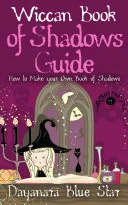
Wiccan Book of Shadows Guide
 80
80

Wiccan Book of Shadows Guide
Dayanara Blue Star's Wiccan Book of Shadows Guide presents a clear, accessible entry into a complex tradition. Its strength lies in its directness, avoiding overly ornate language and focusing on the practical application of Wiccan principles. For instance, the section detailing the construction of a ritual circle offers precise steps that a novice can readily follow. However, the work occasionally feels less like a historical document and more like a generalized guide to modern Wicca, sometimes losing the distinct flavor of its alleged origins. The original Book of Shadows, penned by Gardner for his coven, had a more specific, almost conspiratorial, feel; this iteration, while useful, lacks that unique historical weight. The emphasis on personal adaptation, while a core Wiccan tenet, can sometimes dilute the impact of specific ritual structures presented. Overall, it functions well as an introductory manual but may leave those seeking the deeper historical currents of early Wicca wanting more.
📝 Description
80
### What It Is The Wiccan Book of Shadows Guide serves as a foundational text, offering practical instruction and theoretical grounding for individuals engaging with Wiccan practices. It compiles essential elements of the tradition, functioning as a personal grimoire for its users. The book is designed to be a living document, adaptable to the specific needs and evolving understanding of the practitioner.
### Who It's For This guide is intended for those new to the Wiccan path, providing a structured entry point into its beliefs, rituals, and magical workings. It also offers value to experienced practitioners seeking to deepen their understanding or to reference core components of traditional Wiccan practice. Its aim is to equip readers with the knowledge necessary to establish and maintain their own spiritual practice.
### Historical Context While the blurb mentions Gerald Gardner's original Book of Shadows from the late 1940s/early 1950s, this specific guide by Dayanara Blue Star, first published in 2015, represents a modern interpretation and expansion. It draws upon the legacy of Gardner and Doreen Valiente's work but is presented for a contemporary audience, reflecting current understandings and accessibility of Wiccan lore.
### Key Concepts The book covers essential Wiccan concepts, including the Wheel of the Year, the principles of spellcasting, the use of ritual tools, and the importance of ethics within magical practice. It emphasizes the creation of sacred space and the invocation of deities, providing a framework for understanding the interconnectedness of nature, magic, and personal spirituality.
💡 Why Read This Book?
• Learn the fundamental structure of a Wiccan Book of Shadows, understanding its role as a personal magical record, as detailed in the foundational concepts section. • Gain practical guidance on constructing ritual spaces and performing basic rites, drawing directly from the step-by-step instructions for creating sacred space. • Explore the core principles of Wiccan ethics and spellcraft, as presented in the key concepts, to inform your personal magical philosophy and practice.
⭐ Reader Reviews
Honest opinions from readers who have explored this book.
❓ Frequently Asked Questions
What is the primary purpose of a Wiccan Book of Shadows?
A Wiccan Book of Shadows primarily serves as a personal grimoire, documenting rituals, spells, beliefs, and traditions. It acts as a guide for practitioners, evolving with their spiritual journey and magical development.
Who originally created the concept of a Book of Shadows in Wicca?
The concept of a Book of Shadows in modern Wicca is most closely associated with Gerald Gardner, who wrote an early version in the late 1940s to early 1950s for his own coven.
How does Dayanara Blue Star's guide relate to older Books of Shadows?
Blue Star's guide builds upon the tradition established by early Wiccan texts, such as Gardner's, offering a modern interpretation and practical framework for contemporary practitioners while acknowledging the adaptable nature of such personal magical records.
What kind of information can be found in a Wiccan Book of Shadows?
Typically, a Book of Shadows contains information on rituals, spell workings, correspondences (herbs, crystals, colors), deities, ethical guidelines, and personal magical experiences or observations.
Is the Wiccan Book of Shadows Guide meant to be copied verbatim?
No, the tradition encourages adaptation. While the guide provides a structure, practitioners are meant to personalize their Book of Shadows, adding or modifying content to suit their individual path and understanding.
When was Dayanara Blue Star's Wiccan Book of Shadows Guide first published?
Dayanara Blue Star's Wiccan Book of Shadows Guide was first published on January 25, 2015, making it a contemporary resource rooted in older traditions.
🔮 Key Themes & Symbolism
The Personal Grimoire
This guide emphasizes the Book of Shadows as a deeply personal, evolving document. Unlike rigid dogma, it encourages practitioners to record their unique magical experiences, spells that work for them, and personal insights. This concept aligns with the Hermetic principle of "As Above, So Below," where the microcosm (the individual's inner world and practice) reflects the macrocosm. The act of writing and adapting the book is itself a magical act, imbuing the text with personal power and intention.
Ritual Structure and Sacred Space
A significant theme is the construction and purpose of ritual. The book details how to create sacred space, often through the casting of a circle, and how to invoke energies or deities. This practice draws from ancient shamanic traditions and ceremonial magic, focusing on altering consciousness and aligning oneself with spiritual forces. The precise steps provided aim to facilitate focus and intention, essential for effective magical work.
Wiccan Ethics and Law
Underlying the spellwork and rituals is a strong emphasis on ethical conduct, often encapsulated in principles like the Wiccan Rede ('An it harm none, do what ye will'). This theme highlights the responsibility inherent in magical practice, ensuring that spells are cast with beneficial intent and without causing harm. It reflects a philosophical approach to magic that is not about power over others, but about personal growth and harmony with the universe.
The Wheel of the Year
The cyclical nature of time and its connection to the divine is a central concept. The guide likely explores the eight Sabbats (seasonal festivals) and their associated themes, rituals, and correspondences. This cyclical view is fundamental to many nature-based spiritualities, grounding the practitioner in the rhythms of the earth and the cosmos, and acknowledging the constant interplay of life, death, and rebirth.
💬 Memorable Quotes
“The Book of Shadows is a living document, a personal guide that grows with the practitioner.”
— This highlights the adaptive and personal nature of the grimoire, emphasizing that it is not a static text but one that should be continually updated and personalized by the individual witch.
“Casting a circle creates sacred space, separating the mundane from the divine.”
— This succinctly explains the fundamental purpose of ritual circle casting in Wicca: to establish a protected and consecrated area for magical work, facilitating a connection to higher energies.
“Spellcraft requires clear intention, focused energy, and ethical considerations.”
— This interpretation underscores the key components of effective spellcasting according to Wiccan principles, stressing the importance of mental clarity, directed energy, and adherence to a moral framework.
“The Wiccan Rede guides action: 'An it harm none, do what ye will.'”
— This famous Wiccan ethical guideline is presented as a core principle, framing magical actions within a context of non-harm and personal freedom, balanced by responsibility.
“Understanding the Wheel of the Year connects us to natural cycles and divine rhythms.”
— This reflects the importance of seasonal celebrations in Wicca, linking them to broader cosmic and natural patterns and the experience of the divine within those cycles.
🌙 Esoteric Significance
Tradition
This work is rooted in the Gardnerian tradition of Wicca, a significant branch of modern Western esotericism that emerged in the mid-20th century. It draws from earlier occult practices, folklore, and ceremonial magic but synthesizes them into a distinct neopagan path focused on nature, duality, and initiation. Unlike purely Kabbalistic or Hermetic systems that rely on complex symbolic languages, Gardnerian Wicca emphasizes direct experience, ritual action, and the veneration of a dual God and Goddess.
Symbolism
Key symbols likely include the Pentacle, representing the elements and the human body, used for invoking and banishing; the Athame, a ritual knife symbolizing Will and the element of Fire or Air, used for directing energy rather than cutting; and the Chalice, representing the element of Water and the Divine Feminine, used for scrying or drinking ritual libations. These tools are not merely symbolic but are imbued with energetic significance during ritual consecration.
Modern Relevance
Contemporary Wiccan practitioners, particularly those within the traditionalist or hereditary lines stemming from Gardnerian and Alexandrian Wicca, continue to use and adapt concepts derived from these early Books of Shadows. The emphasis on personal grimoires, ritual structure, and the ethical framework of the Rede remain influential. Thinkers and authors in the broader neopagan and witchcraft movements frequently reference the historical significance and practical applications of these foundational texts.
👥 Who Should Read This Book
• Aspiring Witches seeking a structured introduction to core Wiccan beliefs, rituals, and magical practices, particularly those interested in the lineage of modern witchcraft. • Experienced practitioners looking to revisit or compare traditional ritual frameworks and spell components against their own established practices. • Students of Western Esotericism and comparative religion interested in the development and foundational texts of 20th-century neopagan movements.
📜 Historical Context
The origins of the Wiccan Book of Shadows trace back to the post-WWII era, specifically to Gerald Gardner's coven in the late 1940s and early 1950s. Gardner, a key figure in the revival of witchcraft, compiled elements from various sources, including historical texts and his own interpretations, into a working grimoire for his initiates. This period saw a burgeoning interest in occultism and neopaganism, partly fueled by figures like Aleister Crowley and the Theosophical Society, though Gardner's work carved a distinct path. Doreen Valiente, a high priestess in Gardner's coven, played a crucial role in refining and editing the Book of Shadows, lending it structure and poetic language. The reception was initially limited to initiates, with wider public awareness growing slowly through subsequent decades as witchcraft began to emerge from secrecy. Unlike more academic or philosophical occult traditions, Gardner's Book of Shadows was a practical, operational text intended for active magical practice.
📔 Journal Prompts
The structure of a personal Book of Shadows: What elements are essential for your practice?
Reflecting on the casting of a ritual circle: How does defining sacred space enhance your focus?
The principle of 'An it harm none': How do you integrate this ethical consideration into your spell intentions?
Connecting with the Wheel of the Year: Which Sabbat resonates most with your current life phase?
Personalizing your grimoire: What unique spells or observations will you record first?
🗂️ Glossary
Book of Shadows
A personal grimoire or spellbook kept by a Wiccan or witch, containing rituals, spells, magical correspondences, and notes on spiritual practice. It is intended to be adapted and personalized by the owner.
Wiccan Rede
A core ethical guideline in Wicca, famously stating: 'An it harm none, do what ye will.' It emphasizes freedom of action balanced with the principle of causing no harm.
Sabbat
One of the eight major festivals celebrated in Wicca and other neopagan traditions, marking significant points in the solar and agricultural year (e.g., Samhain, Yule, Beltane).
Casting a Circle
A ritual practice to create a sacred and protected space for magical workings, often by visualizing or defining a boundary and invoking elemental or divine energies.
Athame
A ritual dagger, typically with a black handle and no sharp edge, used for directing magical energy and invoking forces, but not for physical cutting. It symbolizes Will and the element of Air or Fire.
Pentacle
A five-pointed star, typically enclosed within a circle. It symbolizes the five elements (Spirit, Air, Fire, Water, Earth) and is often used in Wiccan rituals for grounding, protection, and invocation.
Grimoire
A textbook of magic, typically containing instructions on how to create magical tools, perform rituals, cast spells, and invoke spirits or deities. The Book of Shadows is a specific type of Wiccan grimoire.