The Gnostic Bible

 79
79

The Gnostic Bible
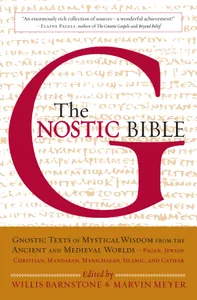
Barnstone and Meyer’s 2009 compilation, *The Gnostic Bible*, offers a valuable, if sometimes daunting, assembly of texts that challenge conventional narratives of early Christianity. Its strength lies in the breadth of material gathered, presenting a panorama of Gnostic thought from the Gospel of Thomas to the Apocryphon of John. The translations aim for clarity, making these complex ideas accessible to a wider audience. A notable passage that exemplifies the collection's focus is the Gospel of Mary, which presents a distinctly different understanding of discipleship and revelation than that found in the New Testament. However, the sheer volume and the often-abstract nature of Gnostic cosmology can be overwhelming for the uninitiated. While the scholarly apparatus provides context, the reader must still actively grapple with esoteric concepts that are far removed from everyday experience. This collection serves as an essential, albeit challenging, resource for understanding a crucial, often-suppressed, stream of ancient spirituality.
📝 Description
79
### What It Is The Gnostic Bible, first published in its current form in 2009 by Willis Barnstone and Marvin W. Meyer, presents a comprehensive collection of early Christian and Gnostic texts. It aims to provide an accessible English rendering of scriptures that were often excluded from the canonical Bible. The compilation includes a variety of gospels, apocalypses, and other writings, offering a window into diverse theological viewpoints that flourished in the first few centuries CE.
### Who It's For This volume is intended for scholars of religion, students of early Christianity, and individuals interested in Gnosticism, esoteric traditions, and alternative spiritualities. It serves as a primary source for understanding a significant, yet often marginalized, branch of ancient religious thought. Those seeking to explore the theological landscape beyond orthodox Christianity will find substantial material here.
### Historical Context These texts emerged during a period of intense religious and philosophical ferment in the Greco-Roman world, roughly from the 1st to the 4th centuries CE. Gnosticism itself was not a monolithic movement but a diverse set of beliefs and practices that often emphasized personal spiritual knowledge (gnosis) and a dualistic worldview. Many of these writings circulated in Coptic and Greek, and their suppression by emerging orthodox Christian authorities contributed to their obscurity for centuries until archaeological discoveries, such as the Nag Hammadi library in 1945, brought them to light.
### Key Concepts The compilation explores concepts central to Gnostic thought, including the nature of the divine, the creation of the material world by a lesser deity (the Demiurge), the concept of a divine spark within humanity, and the path to salvation through esoteric knowledge. It contrasts these ideas with prevailing Jewish and early Christian doctrines, highlighting the theological diversity of the ancient world. The texts often feature unique interpretations of Jesus's teachings and the cosmos.
💡 Why Read This Book?
• You will learn about the concept of the Demiurge, a key Gnostic figure responsible for creating the flawed material world, as detailed in texts like the *Apocryphon of John*, offering a stark contrast to orthodox creation narratives. • You will encounter the teachings attributed to Mary Magdalene, particularly in the *Gospel of Mary*, revealing alternative leadership roles and spiritual insights attributed to her, challenging traditional patriarchal interpretations. • You will gain an understanding of *gnosis*, the salvific 'knowledge' central to Gnostic traditions, exploring how this personal, experiential insight was believed to liberate the divine spark within individuals, a concept distinct from faith-based salvation.
⭐ Reader Reviews
Honest opinions from readers who have explored this book.
❓ Frequently Asked Questions
What is the significance of the Nag Hammadi library to The Gnostic Bible?
The discovery of the Nag Hammadi library in 1945 in Egypt was crucial. It provided many of the Coptic texts translated in this collection, bringing previously lost Gnostic scriptures to light and enabling scholarly study from the mid-20th century onwards.
Are these texts considered part of the Christian Bible?
No, these texts are considered apocryphal or heretical by mainstream Christian denominations and were excluded from the canonical Bible. They represent alternative theological viewpoints and spiritual paths that developed in early Christianity.
Who were the Gnostics and what did they believe?
Gnostics were adherents of various religious movements in the first few centuries CE. They generally believed the material world was created by a lesser deity and that salvation came through secret knowledge (gnosis) to awaken the divine spark within.
What is the 'Demiurge' in Gnostic cosmology?
The Demiurge is a figure, often identified with the Old Testament God, who is seen in Gnosticism as the imperfect creator of the material universe. This contrasts with the concept of a transcendent, perfect supreme God.
How does The Gnostic Bible differ from standard biblical translations?
It includes texts not found in the standard Bible, such as gospels attributed to Thomas or Mary, and presents interpretations of Jesus's teachings and the cosmos that diverge significantly from orthodox Christian theology.
When was The Gnostic Bible first published in this compilation?
The compilation by Willis Barnstone and Marvin W. Meyer, presenting these texts in English, was first published in 2009, making these ancient scriptures more accessible to contemporary readers.
🔮 Key Themes & Symbolism
The Divine Spark
A central theme is the presence of a divine spark or fragment of the supreme God trapped within the human soul. Gnostic texts explore how this spark becomes ensnared in the material world, created by a lesser, often ignorant or malevolent, deity known as the Demiurge. The path to liberation involves recognizing this inner divinity and awakening to true spiritual reality, often through direct, personal knowledge or gnosis.
Dualism and the Material World
Many Gnostic systems exhibit a strong dualism, positing a radical separation between a transcendent, spiritual realm of perfection and the flawed, material universe. This world is seen as a prison, a mistake, or an illusion, designed by the Demiurge rather than the ultimate God. Texts within The Gnostic Bible often depict the material creation with contempt, emphasizing the need to transcend its limitations to return to the spiritual source.
Gnosis as Salvation
Unlike salvation through faith or good works emphasized in some orthodox traditions, Gnosticism typically posits salvation through gnosis – a direct, intuitive, and experiential knowledge of the divine and one's true self. This 'knowing' is not merely intellectual but transformative, enabling the individual to break free from the cycles of reincarnation and the illusions of the material world.
Alternative Christologies
The figure of Jesus Christ is central but often interpreted differently. Gnostic texts present Jesus as a revealer of secret knowledge, an emissary from the true God, or one who teaches how to achieve gnosis. His crucifixion and resurrection may be understood symbolically rather than as historical events, focusing on his spiritual message and the liberation he offers through understanding.
💬 Memorable Quotes
“He who seeks shall find, and to him who knocks it shall be opened.”
— This saying, prominent in the Gospel of Thomas, highlights the Gnostic emphasis on personal seeking and active engagement with spiritual truths. It suggests that the path to understanding and divine connection is accessible through individual effort and inquiry.
“The world is a corpse, and it is you who are the man who eats it.”
— This stark statement, found in some Gnostic texts, encapsulates the radical negative view of the material existence. It frames the world as dead or illusory, and the individual as complicit in their own entrapment through engagement with this false reality.
“Jesus said, 'Let her who seeks continue to seek until she finds. When she finds, she will be astonished. When she is astonished, she will rule over all things, and will then have rest.'”
— This interpretation from the Gospel of Mary emphasizes the journey of seeking and the transformative power of discovery. Astonishment and eventual dominion represent the attainment of gnosis and spiritual liberation from the mundane.
“If you bring forth what is within you, what you bring forth will save you. If you do not bring forth what is within you, what you do not bring forth will destroy you.”
— This concept, echoing in various Gnostic writings, underscores the critical importance of accessing and manifesting one's inner divine potential. True salvation lies in realizing and expressing the hidden spiritual truth within the self.
“The kingdom of God is inside you and it is outside you.”
— This paradoxical statement suggests that the divine is both immanent (within) and transcendent (outside). It implies that spiritual realization involves an inward journey to discover the divine presence, while also acknowledging a reality beyond the material self.
🌙 Esoteric Significance
Tradition
This work is central to understanding Gnosticism, a complex spiritual and philosophical movement within the broader landscape of Western Esotericism. While distinct from Hermeticism or Kabbalah, Gnosticism shares with them an emphasis on hidden knowledge, dualistic cosmology, and the divine spark within humanity. It offers a counter-narrative to mainstream Abrahamic traditions, focusing on a radical immanence of the divine and the liberation of the spirit from material bondage.
Symbolism
Key symbols include the serpent, often representing wisdom or the divine feminine principle (Sophia), and light, signifying the divine spark or true spiritual knowledge obscured by the darkness of the material world. Water frequently symbolizes purification and the primordial state of spiritual potential. The concept of the Pleroma, the divine fullness or totality, contrasts sharply with the deficient material realm created by the Demiurge.
Modern Relevance
Contemporary esoteric practitioners, Jungian psychologists exploring archetypes, and scholars of comparative religion continue to draw from Gnostic texts. Movements focused on personal spiritual liberation, critiques of hierarchical religious structures, and the exploration of consciousness often find resonance in Gnostic ideas. Thinkers and artists exploring themes of alienation, hidden knowledge, and the critique of societal illusions engage with Gnostic thought.
👥 Who Should Read This Book
• Students of comparative religion and early Christianity: To understand the diverse theological landscape of the 1st-4th centuries CE and the perspectives excluded from the biblical canon. • Seekers interested in esoteric traditions: To explore the foundational concepts of Gnosticism, including dualism, gnosis, and the Demiurge, offering a distinct spiritual path. • Scholars of ancient philosophy and mysticism: To engage with primary source material that challenges conventional understandings of divinity, creation, and human potential in the Greco-Roman world.
📜 Historical Context
The texts compiled in *The Gnostic Bible* emerged from a period of profound spiritual and intellectual exploration in the Roman Empire, roughly spanning the 1st to 4th centuries CE. This era witnessed a dynamic exchange of ideas between Hellenistic philosophy, Judaism, and nascent Christianity. Gnosticism itself represented a diverse constellation of beliefs, not a single unified church, emphasizing personal spiritual knowledge (*gnosis*) as the means of salvation. Many of these writings were composed in Coptic and Greek, and their circulation predates or runs parallel to the formation of the New Testament canon. By the 4th century, as orthodox Christianity consolidated its power, many Gnostic teachings were actively suppressed. The rediscovery of texts like the Nag Hammadi library in 1945 fundamentally altered the scholarly understanding of this period, revealing the extent of Gnostic thought and its intellectual currents, which often stood in opposition to developing orthodox doctrines and figures like Irenaeus, who wrote extensively against Gnostic heresies.
📔 Journal Prompts
The concept of the Demiurge and its implications for the material world.
Reflections on the nature of 'gnosis' as presented in the Gospel of Thomas.
The role of Sophia in Gnostic cosmology and her relationship to the divine.
Contrasting the salvific path in the Gospel of Mary with traditional Christian doctrines.
Personal understanding of the 'divine spark' and its entrapment in material existence.
🗂️ Glossary
Gnosis
Greek for 'knowledge'. In Gnosticism, it refers to intuitive, experiential, and salvific knowledge of the divine and one's true spiritual nature, essential for liberation from the material world.
Demiurge
A figure, often identified with the God of the Old Testament, who imperfectly created the material universe. Gnostics viewed the Demiurge as ignorant or malevolent, distinct from the supreme, transcendent God.
Pleroma
The totality of divine powers and emanations surrounding the supreme God in Gnostic cosmology. It represents the spiritual, perfect realm from which the material world is a fallen or deficient offshoot.
Aeon
Emanations or divine beings within the Pleroma. They often function as pairs and are involved in the unfolding of the divine realm, with the fall of one (like Sophia) leading to the creation of the material world.
Sophia
Greek for 'Wisdom'. In many Gnostic myths, Sophia is an Aeon whose desire or fall from the Pleroma precipitates the creation of the flawed material universe and the Demiurge.
Apocryphal
Texts, often religious, that are not accepted as part of the official canon of scripture by a particular religious tradition. Many Gnostic texts are considered apocryphal by mainstream Christianity.
Barbelo
A Gnostic term for the first emanation of the supreme God, often considered a supreme spiritual being or consort, associated with divine thought or foreknowledge.