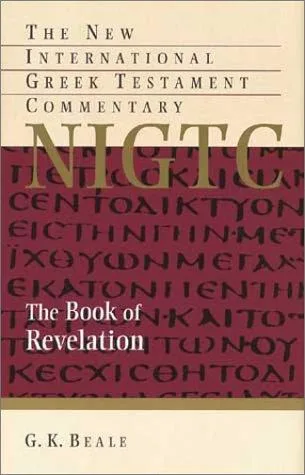
The Book of Revelation
 83
83

The Book of Revelation
Beale's "The Book of Revelation" offers a formidable scholarly apparatus, a welcome addition to the NIGTC series. His insistence on integrating theological concerns with meticulous linguistic and historical analysis yields substantial rewards, particularly in his treatment of the celestial imagery and its theological import. The commentary's strength lies in its comprehensive engagement with secondary literature and its detailed dissection of complex passages, such as the interpretation of the "beast" in Revelation 13. However, the sheer density of the exegesis, while commendable for specialists, can prove overwhelming for those less accustomed to advanced critical methods. The book's primary limitation is its accessibility; it demands a significant investment of time and prior knowledge. Despite this, Beale provides a robust, conservative evangelical interpretation that respects the text's literary and theological dimensions. It is an essential, if demanding, resource for serious students of Revelation.
📝 Description
83
G. K. Beale's 2013 commentary approaches the New Testament apocalypse with attention to theological themes and historical context.
Published in 2013, G. K. Beale's work provides a detailed exegesis of the Book of Revelation. The commentary's premise is that understanding this text requires attention to both its theological content and its specific historical, linguistic, and textual background. Beale offers a systematic, verse-by-verse analysis, following introductory discussions of each section. This rigorous, academically grounded interpretation is primarily intended for biblical scholars, theologians, and advanced students of scripture.
Readers engaging with this commentary should possess a working knowledge of Koine Greek and historical-critical methods. Beale analyzes Revelation as a cohesive theological document, considering its literary structure and its place within the wider biblical canon. He employs historical-grammatical, literary, and theological methods to examine concepts like divine sovereignty, the experience of persecution, and Christ's ultimate victory. The work prioritizes understanding the text's original meaning for its first-century audience while also considering its lasting theological significance.
This commentary operates within a long tradition of interpreting the Book of Revelation, a text that has attracted diverse readings since early Christian times. While Beale's work is scholarly and historically focused, it engages with a text that has also been a source for more mystical and visionary interpretations throughout history. His method, rooted in historical criticism, provides a framework for understanding the text's original context, which is often a starting point for later, more esoteric readings, offering a scholarly counterpoint to purely devotional or speculative approaches.
💡 Why Read This Book?
• Gain a nuanced understanding of the New Testament apocalypse by engaging with Beale's detailed verse-by-verse exegesis of Revelation 13, which meticulously unpacks the theological and historical context of the "beast" figure. • Appreciate the theological unity of Revelation through Beale's focus on the "celestial imagery" and its function in conveying God's sovereignty and Christ's victory, as explored in his sectional introductions. • Develop critical interpretive skills by examining Beale's interaction with diverse scholarly viewpoints, particularly his counterarguments to dispensationalist readings prevalent in the late 20th century.
⭐ Reader Reviews
Honest opinions from readers who have explored this book.
❓ Frequently Asked Questions
What is the primary interpretive approach of G. K. Beale in "The Book of Revelation"?
Beale employs a scholarly, verse-by-verse exegesis that prioritizes theological themes alongside historical, linguistic, and textual context. He aims for an interpretation sensitive to the original meaning for its first-century audience while acknowledging its broader theological significance.
Is "The Book of Revelation" by G. K. Beale suitable for beginners?
No, this commentary is best suited for advanced students, theologians, and scholars. It requires a strong foundation in Koine Greek and historical-critical methods due to its in-depth linguistic analysis and engagement with complex scholarly debates.
What specific aspect of Revelation does Beale's commentary focus on regarding theological interpretation?
Beale emphasizes the theological character of the New Testament documents, focusing on concepts like God's sovereignty, the nature of persecution, and Christ's ultimate triumph, as illuminated through detailed textual analysis.
When was G. K. Beale's "The Book of Revelation" first published?
G. K. Beale's "The Book of Revelation" was first published on September 7, 2013, as part of the New International Greek Testament Commentary series.
How does Beale's commentary address the historical context of Revelation?
The commentary integrates historical context by examining linguistic nuances, textual details, and the socio-political environment of the late first century, aiming to understand the text's meaning for its original readers.
What is the "NIGTC" series, and how does Beale's work fit into it?
NIGTC stands for the New International Greek Testament Commentary series. Beale's "The Book of Revelation" is part of this series, which is known for its rigorous, detailed, and theologically informed exegesis of New Testament texts.
🔮 Key Themes & Symbolism
Theological Character of Scripture
Beale's work is founded on the premise that biblical texts, particularly Revelation, possess a distinct theological character demanding exegesis sensitive to profound thematic currents. This approach moves beyond mere historical or linguistic analysis to uncover the divine message embedded within the text. The commentary seeks to illuminate how Revelation functions as a unified theological document, revealing God's overarching plan and Christ's supreme authority, as demonstrated in his detailed examination of eschatological prophecies.
Christocentric Interpretation
A central pillar of Beale's commentary is its Christocentric focus. The work consistently interprets the events and visions described in Revelation through the lens of Jesus Christ's person and work. From the Lamb who is worthy to open the scroll to the triumphant warrior king returning to judge, Christ is presented as the central figure around whom all redemptive history revolves. This perspective shapes the understanding of cosmic conflict and ultimate victory.
Sovereignty and Judgment
The commentary deeply explores themes of divine sovereignty and eschatological judgment. Beale argues that Revelation vividly portrays God's absolute control over history, even amidst apparent chaos and persecution. The visions of divine judgment are presented not as random acts but as righteous pronouncements against evil, culminating in the establishment of God's eternal kingdom. This aspect underscores the book's function as a message of hope and assurance to believers facing adversity.
Literary and Structural Unity
Beale emphasizes the literary and structural coherence of the Book of Revelation. He moves away from fragmented or purely chronological readings to present the apocalypse as a carefully constructed theological argument. By analyzing the interconnections between different sections and motifs, the commentary aims to reveal the author's deliberate arrangement of material to convey a consistent message about God's purposes and the destiny of His people.
💬 Memorable Quotes
“Theological character of the New Testament documents calls for exegesis that is sensitive to theological themes as well as to the details of the historical, linguistic, and textual context.”
— This foundational statement articulates Beale's exegetical philosophy, asserting that a complete understanding of Revelation requires integrating deep theological reflection with rigorous scholarly analysis of the original text's context and language.
“General comments on each section and subsection of the text.”
— This describes the structural approach of the commentary, indicating that before diving into verse-by-verse analysis, Beale provides broader contextual and thematic overviews for larger portions of the book.
“The Lamb who is worthy to open the scroll (Revelation 5).”
— This refers to a pivotal moment in Revelation where Christ, depicted as a slain Lamb, is the only one capable of fulfilling God's plan, highlighting his unique authority and redemptive work.
“Interpretation of the 'beast' in Revelation 13.”
“Ultimate triumph of Christ.”
— This encapsulates a core theological message of Revelation as interpreted by Beale: the certainty of Christ's final victory over all opposing forces, bringing about God's eternal kingdom.
🌙 Esoteric Significance
Tradition
While G. K. Beale's work is firmly rooted in conservative evangelical biblical scholarship, its detailed exegesis of Revelation can resonate with esoteric traditions that draw heavily on apocalyptic literature. Esotericists often seek hidden meanings and symbolic layers within biblical texts, viewing Revelation as a profound spiritual roadmap. Beale's emphasis on theological themes and symbolic language, though framed within orthodoxy, provides material that esoteric interpreters can engage with, reinterpreting its symbols within Neoplatonic, Gnostic, or Hermetic frameworks.
Symbolism
The Book of Revelation is rich with symbolism that holds particular interest for esoteric study. Symbols like the "four living creatures" (Revelation 4), often associated with the four fixed signs of the zodiac or the four elements in Western esotericism, and the "New Jerusalem" (Revelation 21), representing a perfected spiritual state or cosmic consciousness, are focal points. Beale's meticulous analysis of these symbols, even when interpreted within a traditional theological context, offers a scholarly foundation for deeper esoteric contemplation.
Modern Relevance
Contemporary esoteric practitioners and scholars of mysticism often engage with Beale's commentary as a source for understanding the foundational symbolism of Revelation. While his theological conclusions may differ, the deep dive into the text's structure, language, and theological underpinnings provides a valuable resource. Thinkers exploring themes of cosmic cycles, spiritual warfare, or the manifestation of divine order may find Beale's detailed examination of concepts like the "seals," "trumpets," and "bowls" illuminating for their own comparative or practical mystical studies.
👥 Who Should Read This Book
• Serious students of biblical prophecy and eschatology seeking a comprehensive, academically rigorous commentary that prioritizes the theological dimensions of Revelation. • Theologians and pastors engaged in detailed sermon preparation or advanced biblical studies who require in-depth linguistic and historical analysis of the Greek text. • Scholars of comparative religion or ancient literature interested in understanding a prominent conservative evangelical interpretation of apocalyptic literature, providing a point of reference for broader studies.
📜 Historical Context
Published in 2013, G. K. Beale's "The Book of Revelation" emerged within the scholarly landscape of late 20th and early 21st-century biblical studies. It belongs to the New International Greek Testament Commentary (NIGTC) series, which champions a rigorous historical-critical and linguistic approach. This methodology stands in contrast to more devotional or futurist-only interpretive schemes that gained traction in some evangelical circles, particularly following the popularity of works like Hal Lindsey's "The Late Great Planet Earth" in the 1970s. Beale's work engages extensively with the scholarly discourse surrounding Revelation, referencing a wide array of exegetes and theologians. His detailed analysis of the text's linguistic features and historical setting aims to provide a robust, conservative evangelical interpretation grounded in careful scholarship, offering a counterpoint to less textually focused readings.
📔 Journal Prompts
The "celestial imagery" in Revelation and its theological implications for understanding divine power.
The symbolic meaning of the "Lamb" as depicted in Revelation 5 and its significance for Christology.
Analyze the theological character of Revelation, considering Beale's emphasis on integrated exegesis.
Reflect on the concept of "divine sovereignty" as presented through the judgments in Revelation.
Examine the "literary and structural unity" of Revelation based on Beale's sectional analyses.
🗂️ Glossary
Exegesis
The critical explanation or interpretation of a text, especially of the Bible. It involves drawing out the meaning from the text itself.
Theological Themes
The central ideas, doctrines, or concepts related to the nature of God, Christ, salvation, and divine action that are explored within a religious text.
Historical-Linguistic Context
The circumstances related to the time, place, and culture in which a text was written, along with the specific meanings and usage of its words and grammar.
Apocalypse
A genre of revelatory literature, common in late antiquity, that typically features symbolic visions, divine messengers, and accounts of the end times or a hidden reality.
Koine Greek
The common form of Greek spoken and written in the Hellenistic and Roman periods, used as the language of the New Testament.
Dispensationalism
A theological system that interprets biblical history as divided into distinct periods or "dispensations," often with a strong emphasis on future eschatological events and a distinction between Israel and the Church.
Christocentric
Centered on or focused on Jesus Christ as the primary subject or interpretive key.