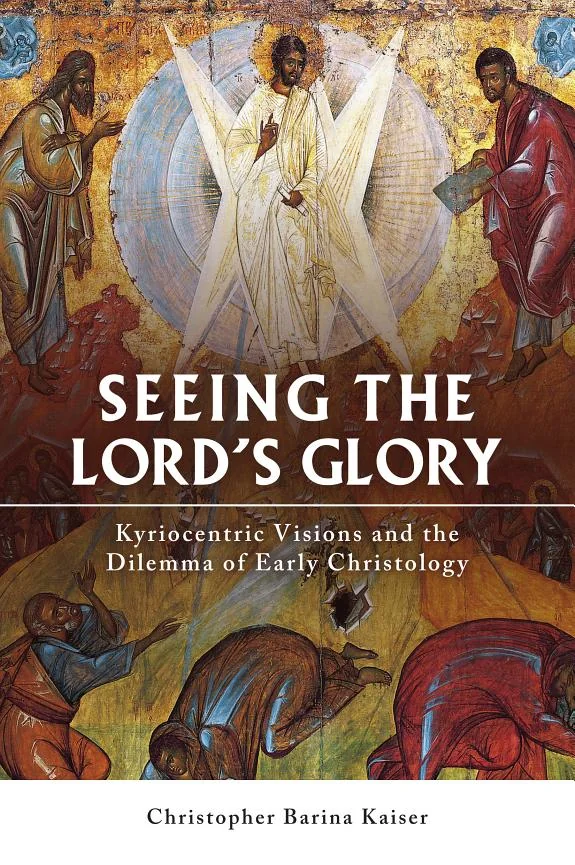
Seeing the Lord's Glory
 83
83

Seeing the Lord's Glory
Christopher B. Kaiser's "Seeing the Lord's Glory" is a scholarly intervention that directly challenges prevailing narratives on early Christology. The author’s strength lies in his rigorous engagement with Second Temple Jewish literature, moving beyond simplistic explanations for the ascription of divine glory to Jesus. Kaiser compellingly demonstrates that the phenomenon of "kyriocentric visions" had precedents within Judaism itself, particularly in texts that describe encounters with Yahweh's glory. A particularly insightful section examines how certain Jewish mystical traditions already possessed the conceptual and linguistic tools to describe direct apprehension of the divine. However, the book's dense academic prose may present a barrier for readers not already steeped in the scholarly debates surrounding early Christian origins. While the core argument is powerful, its full impact requires careful reading and a solid grounding in the primary source material. Ultimately, Kaiser provides a vital corrective, urging a deeper understanding of Jesus's deification through the lens of his Jewish inheritance.
📝 Description
83
<p>### The Problem of Early Christology</p><p>Christopher B. Kaiser's "Seeing the Lord's Glory" confronts a central puzzle in early Christian thought: how did the language of divine vision, previously reserved for Yahweh in Second Temple Judaism, become applied to Jesus?</p><p></p><p>### Kyriocentric Visions in Judaism</p><p>Kaiser argues against common explanations like a direct response to the resurrection event or pagan syncretism. Instead, he meticulously traces the roots of "seeing the Lord" back into the intricate landscape of Jewish mystical and visionary experiences during the Second Temple period. This contextualization is crucial for understanding the theological leap.</p><p></p><p>### Examining the Phenomenon</p><p>The book dissects instances and expressions of kyriocentric visions, where the divine presence or glory of God was directly perceived. Kaiser's analysis reveals a rich spectrum of these experiences within Judaism itself, providing a fertile ground for the later application of such language to Jesus.</p><p></p><p>### Implications for Christology</p><p>By foregrounding these Jewish precedents, Kaiser offers a compelling reinterpretation of early Christology. The work suggests that the "glory" attributed to Jesus was not necessarily a novel invention but a re-contextualization of existing, potent religious language within a specific historical and theological milieu.</p>
⭐ Reader Reviews
Honest opinions from readers who have explored this book.
❓ Frequently Asked Questions
What is the main argument of "Seeing the Lord's Glory" regarding early Christology?
The book argues that early Christian claims to have seen the "Lord's glory" in Jesus were rooted in existing Jewish traditions of divine vision during the Second Temple period, rather than solely arising from the resurrection or pagan polytheism.
What does Christopher B. Kaiser mean by 'kyriocentric visions'?
Kaiser uses 'kyriocentric visions' to describe experiences within Second Temple Judaism where individuals claimed to see or directly apprehend the glory or presence of Yahweh, Israel's God.
When was "Seeing the Lord's Glory" first published?
The book by Christopher B. Kaiser was first published in 2014.
Does Kaiser believe the resurrection is irrelevant to Christology?
No, Kaiser acknowledges the resurrection as a factor but argues it is not the sole or primary explanation for the shift of divine glory language onto Jesus, proposing Jewish visionary traditions as a more fundamental precursor.
What kind of evidence does Kaiser use to support his claims?
Kaiser draws heavily on textual analysis of Second Temple Jewish literature, including apocalyptic texts and mystical writings, to demonstrate the prevalence of divine vision experiences within Judaism.
Who would benefit most from reading this book?
Scholars and students of early Christianity, Second Temple Judaism, comparative religion, and theological history would find this book particularly valuable for its in-depth analysis.
🔮 Key Themes & Symbolism
The Shift of Divine Glory
The central enigma explored is how language previously reserved for Yahweh's direct manifestation in ancient Israel was re-appropriated for Jesus. Kaiser meticulously examines the textual and conceptual bridges that facilitated this profound theological shift, moving beyond superficial explanations and grounding the phenomenon within the rich tapestry of Jewish religious experience.
Kyriocentric Visions in Second Temple Judaism
This theme focuses on the prevalence and nature of visions of God's glory within Judaism during the Second Temple period. Kaiser analyzes various texts that describe direct encounters with the divine presence, arguing that these experiences provided a pre-existing context for understanding Jesus as a recipient of such divine radiance.
Reinterpreting Early Christology
The book offers a revised framework for understanding the earliest stages of Christology. By highlighting the influence of Jewish visionary traditions, Kaiser suggests that the divinity attributed to Jesus was not solely a post-resurrection development or a product of Hellenistic influence, but deeply embedded in earlier Jewish mystical and prophetic currents.
Critique of Conventional Explanations
Kaiser directly engages with and critiques common explanations for early Christology, such as the historical impact of the resurrection or the influence of pagan polytheism. He posits that these explanations are insufficient without considering the prior development of visionary language and theology within Judaism itself.
💬 Memorable Quotes
“The dilemma of early Christology... is found in the early Christian claims to have seen the Lord and beheld his glory”
— This paraphrased concept highlights the core problem Kaiser addresses: the direct application of language signifying divine encounter, previously exclusive to Yahweh, onto the figure of Jesus.
“expressions that in early Judaism would have pointed unequivocally to visions of Israels God.”
— This interpretation emphasizes how certain phrases in early Christianity carried immense weight, directly referencing established Jewish experiences of divine manifestation, thus reframing the perception of Jesus.
“The shift of those claims onto the figure of Jesus is usually explained either as a result of the resurrection... or on the influence of pagan polytheism.”
— This paraphrased concept summarizes the conventional explanations Kaiser intends to challenge, setting the stage for his alternative thesis rooted in Jewish visionary traditions.
“Kaiser examines the phenomenon of kyriocentric visions in Second Temple Judaism”
— This signifies Kaiser's central analytical focus: the study of visions centered on the 'Kyrios' (Lord), specifically within the Jewish context preceding and contemporary with early Christianity.
“The work explores the complex milieu of Jewish mystical and visionary experiences.”
— This interpretation points to the rich, often intricate, spiritual landscape Kaiser navigates, demonstrating that the seeds of Christological claims were already present within diverse Jewish practices and beliefs.
🌙 Esoteric Significance
Tradition
While not strictly within a codified esoteric lineage like Hermeticism or Kabbalah, Kaiser's work engages deeply with the mystical and visionary dimensions inherent in Abrahamic traditions. It speaks to a broader esoteric interest in direct divine apprehension and the subjective experience of the sacred, aligning with Gnostic and Neoplatonic explorations of divine immanence and transcendence.
Symbolism
The central symbol is 'glory' (Greek: doxa), which in this context transcends mere radiance. It signifies the manifest presence and power of the divine. Kaiser also implicitly engages with the symbolism of 'vision,' representing not just optical perception but a profound spiritual apprehension or encounter with the numinous, a common motif in esoteric literature.
Modern Relevance
Contemporary thinkers exploring the historical Jesus through his Jewish context, comparative mystics, and scholars of religious phenomenology find Kaiser's work invaluable. It informs modern discussions on the nature of religious experience, the construction of divine identity, and the interplay between historical events and interpretive frameworks in shaping religious traditions.
👥 Who Should Read This Book
['• Scholars and advanced students of early Christianity and Second Temple Judaism seeking a rigorous, source-based analysis of Christological development.', '• Comparative religion researchers interested in the evolution of divine encounter narratives across different ancient Near Eastern traditions.', '• Theologians and philosophers of religion examining the historical and conceptual underpinnings of claims to divine revelation and manifestation.']
📜 Historical Context
Published in 2014, Christopher B. Kaiser's "Seeing the Lord's Glory" emerged within a vibrant academic landscape debating the origins of Christology. Scholars like Bart Ehrman were popularizing critical perspectives on the historical Jesus, while others, such as N.T. Wright, continued to emphasize the theological coherence of early Christian claims within their Jewish context. Kaiser's work offers a specific intervention into this ongoing discussion, directly challenging prevailing theories that attribute the ascription of divine glory to Jesus primarily to the resurrection event or to influences from pagan polytheism. He instead anchors his argument firmly in the period of Second Temple Judaism (c. 516 BCE – 70 CE), a time of intense religious innovation and diverse mystical and visionary practices. His focus on 'kyriocentric visions' within Judaism itself provides a more nuanced, internal explanation for the theological developments seen in early Christianity, positioning his work as a significant contribution to the study of New Testament theology and Jewish-Christian relations.
📔 Journal Prompts
The application of 'seeing the Lord's glory' to Jesus: trace its Jewish antecedents.
Analysis of 'kyriocentric visions': how did they function in Second Temple Judaism?
Compare Kaiser's explanation for early Christology with those he critiques.
The significance of 'glory' (doxa) as a concept bridging Judaism and early Christianity.
Reflect on the evidence for direct divine apprehension in religious traditions studied.
🗂️ Glossary
Christology
The branch of Christian theology concerned with the nature, person, and work of Jesus Christ, particularly his divine and human natures.
Second Temple Judaism
The period of Jewish history from the rebuilding of the Second Temple in Jerusalem around 516 BCE to its destruction by the Romans in 70 CE.
Kyriocentric Visions
A term coined or utilized by Kaiser to describe visionary experiences focused on the 'Kyrios' (Lord), specifically within the context of Second Temple Judaism's apprehension of divine presence.
Doxa (Glory)
In Jewish and early Christian contexts, 'doxa' refers not merely to splendor but to the manifest presence, power, and sometimes the essence of God.
Resurrection
In Christian theology, the belief that Jesus Christ was revived from death by supernatural intervention, a central tenet often discussed in relation to early Christology.
Pagan Polytheism
Religious systems characterized by the worship of multiple gods, often contrasted with the monotheism of Judaism and early Christianity.
Apocalyptic Literature
A genre of revelatory literature common in Second Temple Judaism, often featuring visions, symbolism, and prophecies concerning divine judgment and end times.