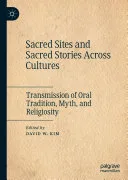
Sacred Sites and Sacred Stories Across Cultures
 83
83

Sacred Sites and Sacred Stories Across Cultures
David W. Kim's "Sacred Sites and Sacred Stories Across Cultures" presents a compelling argument for the enduring power of place in shaping human identity and spiritual understanding. The work's strength lies in its broad geographical scope, moving fluidly from Mediterranean traditions to Asian myths and Australian Dreamtime narratives. Kim effectively demonstrates how the stories attached to sites, whether natural wonders or built structures, are not mere historical footnotes but active forces in cultural transmission. A particular success is the examination of how visiting these sites offers a form of discovery, revealing historical facts through the very origin stories that define them. However, the book occasionally feels like a survey rather than a deep dive; the sheer breadth of cultures covered means certain regions receive less detailed attention than others. For instance, the section on Australian Aboriginal sites, while valuable, could benefit from more specific ethnographic detail to fully convey the profound connection to Country. Despite this, Kim's synthesis offers a valuable perspective for anyone contemplating the relationship between landscape and belief. It serves as a solid primer on the global phenomenon of sacred geography.
📝 Description
83
### What It Is David W. Kim's "Sacred Sites and Sacred Stories Across Cultures" is an exploration of global pilgrimage and the narratives that imbue specific locations with spiritual significance. The book examines how physical spaces—from ancient temples and natural landmarks to historical buildings and domestic settings—become focal points for cultural memory and identity. It draws on a wide array of geographic regions, including the Mediterranean, Asia, Australia, and the Americas, to illustrate the universal human impulse to connect with the sacred through place.
### Who It's For This work is designed for readers interested in the intersection of geography, history, mythology, and spirituality. It will appeal to travelers seeking deeper understanding of the sites they visit, students of comparative religion and folklore, and anyone curious about how origin stories and oral traditions shape regional and tribal histories. The book offers a global perspective, making it relevant to those interested in diverse cultural expressions of the sacred.
### Historical Context The book situates contemporary interest in sacred sites within a broader historical framework. It acknowledges that while modern tourism sees many visiting these locations, the practice of pilgrimage and the veneration of sacred places are ancient phenomena. Kim highlights how the transmission of oral tradition and myth has historically preserved the significance of these sites, demonstrating a continuity of human spiritual engagement across millennia. The work implicitly connects to earlier scholarship on mythography and sacred geography, which gained traction in the late 19th and early 20th centuries.
### Key Concepts Central to Kim's analysis is the concept of the sacred site as a repository of collective memory and identity. The book emphasizes the role of 'origin stories'—the foundational myths and historical accounts tied to a place—in maintaining cultural cohesion and transmitting values across generations. It explores how these narratives, often passed down through oral tradition, imbue landscapes and structures with meaning, transforming them from mere physical locations into potent symbols of belonging and spiritual connection. The interplay between tangible geography and intangible narrative is a recurring motif.
💡 Why Read This Book?
• Gain insight into the concept of 'origin stories' as vital cultural anchors, as explored through specific examples from Mediterranean and Asian regions, helping you understand how narratives shape identity. • Understand the historical continuity of pilgrimage and sacred site veneration, noting its presence from ancient times to the modern era, as detailed in the book's discussion of global traditions. • Appreciate how the physical landscape and built environments are imbued with meaning through myth and oral tradition, a concept illustrated by Kim's analysis of Australian and American indigenous sites.
⭐ Reader Reviews
Honest opinions from readers who have explored this book.
❓ Frequently Asked Questions
What types of locations are considered 'sacred sites' in David W. Kim's book?
The book examines a wide range of locations, including temples, mountains, castles, churches, and even houses. It emphasizes that sacredness is derived not just from the structure but from the stories and historical significance attached to them by communities.
Which cultures are featured in "Sacred Sites and Sacred Stories Across Cultures"?
Kim draws examples from global perspectives, specifically mentioning Mediterranean, Asian, Australian, and American cultures. This diverse selection highlights the universal nature of sacred sites and their associated narratives.
How does the book connect sacred sites to regional history?
The book explains that visiting sacred sites often leads to the discovery of new historical facts, particularly through the origin stories of the associated tribe, region, or nation. These narratives are presented as crucial elements of regional history.
What role does oral tradition play in the book's analysis?
Oral tradition and myth are presented as primary vehicles for transmitting the significance of sacred sites across generations. The book highlights how these intangible forms of knowledge maintain the spiritual and historical meaning of places.
Is "Sacred Sites and Sacred Stories Across Cultures" suitable for armchair travelers?
Yes, the book is highly suitable for armchair travelers. It offers global perspectives and detailed explorations of various sacred sites and their stories, allowing readers to virtually journey and learn without physical travel.
When was "Sacred Sites and Sacred Stories Across Cultures" first published?
The book was first published on January 18, 2021, making it a relatively contemporary exploration of these enduring themes.
🔮 Key Themes & Symbolism
The Narrative Power of Place
This theme explores how specific geographical locations are not merely physical spaces but are imbued with profound meaning through the stories and myths associated with them. Kim illustrates how these narratives, often rooted in ancient oral traditions, transform sites into potent symbols of cultural identity and collective memory. The book examines how the 'origin stories' of a region, tribe, or nation, when tied to a physical location like a temple or mountain, become essential for understanding that community's history and worldview, demonstrating a fundamental human need to connect the tangible world with intangible belief systems.
Cross-Cultural Pilgrimage
Kim's work highlights the universal human impulse to undertake journeys to sacred sites, a practice spanning diverse cultures and historical periods. The book examines how contemporary travelers, like ancient pilgrims, seek not only spiritual fulfillment but also historical and cultural discovery. By presenting examples from the Mediterranean, Asia, Australia, and the Americas, the author underscores the common threads in these journeys, showing how the act of visiting a sacred place often serves as a catalyst for learning about regional histories and tribal origins through the stories that are preserved there.
Myth, History, and Identity
This theme investigates the intricate relationship between myth, history, and the formation of individual and collective identity. The book argues that the origin stories associated with sacred sites act as a bridge between historical fact and mythological narrative, shaping how communities understand themselves and their past. Kim demonstrates that the transmission of these stories, often through oral tradition, is crucial for maintaining cultural cohesion and transmitting values. The sacred site thus becomes a focal point where history is remembered, myths are perpetuated, and identity is continuously reinforced.
The Sacred in the Mundane
Beyond grand temples and natural wonders, Kim's exploration extends to how the concept of the sacred can be found in seemingly ordinary places, including castles, churches, and houses. This theme emphasizes that the designation of a site as 'sacred' is less about inherent qualities and more about the human capacity to imbue locations with spiritual significance through belief and narrative. The book suggests that by understanding the stories attached to various sites, we can better appreciate the diverse ways in which people across cultures find and create meaning in their environments, blurring the lines between the everyday and the divine.
💬 Memorable Quotes
“Contemporary society witnesses many travelers visiting sacred sites... These visits often involve discovery of new historical facts through the origin stories of the associated tribe, region, or nation.”
— This passage encapsulates the book's core thesis: that physical journeys to sacred places are intrinsically linked to intellectual and historical discovery. It highlights how the narratives surrounding these sites serve as vital conduits to understanding a community's past and identity.
“The transmission of oral tradition and myth carries on the significance.”
— This concise statement underscores the vital role of storytelling in preserving the spiritual and cultural weight of sacred locations. It points to the enduring power of spoken word and myth in maintaining connections to place across generations.
“Global perspectives from Mediterranean, Asian, Australian, and American cultures on sacred sites and their related stories in regional history.”
— This phrase functions as a mission statement for the book, promising a wide-ranging comparative study. It signals the author's intent to bridge geographical and cultural divides through the common thread of sacred geography and its associated narratives.
“Temples, mountains, castles, churches, houses.”
— This list effectively illustrates the breadth of what constitutes a 'sacred site' within Kim's framework. It moves beyond conventional religious structures to include natural landmarks and even domestic spaces, emphasizing the subjective and culturally defined nature of sacredness.
“These visits often involve discovery of new historical facts.”
— This highlights the epistemological value of engaging with sacred sites. It suggests that these locations are not just objects of reverence but also sources of knowledge, offering insights into history that might otherwise remain obscured.
🌙 Esoteric Significance
Tradition
While not explicitly aligned with a single Western esoteric tradition like Hermeticism or Kabbalah, the book resonates with the broader esoteric interest in sacred geography and the power of place. It shares common ground with Theosophical ideas about ley lines and energetic centers, and Gnostic explorations of spiritual landscapes. Kim’s work can be seen as secularizing or universalizing these concepts, focusing on the cultural and historical transmission of meaning rather than specific occult doctrines, making the sacred accessible through shared human experience and narrative.
Symbolism
The book implicitly explores symbolism through the sacred sites themselves. Mountains, for instance, often symbolize proximity to the divine or a place of revelation across cultures. Rivers and water sources frequently represent purity, life, and transition. Temples and churches act as microcosms of cosmic order or portals between the earthly and spiritual realms. Kim's focus on origin stories means these symbols are not static but are actively interpreted and reinterpreted through narrative, giving them dynamic cultural relevance.
Modern Relevance
In an era of digital saturation and increasingly abstract global interactions, Kim's work speaks to a contemporary longing for tangible connection and rootedness. Thinkers and practitioners focused on place-based spirituality, eco-consciousness, and cultural heritage preservation find validation in his exploration. The book's emphasis on oral tradition also aligns with contemporary interests in decolonizing knowledge and valuing non-written forms of wisdom, making it relevant to activists and scholars seeking to understand and honor diverse cosmologies.
👥 Who Should Read This Book
• Cultural anthropologists and comparative religion scholars seeking a broad overview of how narratives shape the significance of physical locations across diverse societies. • Travelers and armchair explorers interested in understanding the deeper historical and spiritual context of the places they visit or dream of visiting. • Students of mythology and folklore looking for connections between storytelling, landscape, and the formation of collective identity.
📜 Historical Context
David W. Kim's "Sacred Sites and Sacred Stories Across Cultures" emerged in 2021, a period marked by increased global travel and a renewed academic and popular interest in heritage, place, and intangible cultural assets. The book engages with long-standing scholarly traditions in comparative mythology, religious studies, and anthropology that gained momentum in the late 19th and early 20th centuries, influenced by figures like Mircea Eliade and his work on the sacred and the profane. Kim's approach, however, focuses more on the direct link between narrative and geographical sites, drawing from a global palette rather than adhering strictly to a single Western esoteric or comparative religion framework. While not directly engaging in a public debate or facing censorship, the work implicitly responds to a contemporary landscape where globalization often threatens local traditions, offering a means to understand and preserve the cultural significance embedded in place. Its broad, synthesizing approach can be seen as a counterpoint to more specialized ethnographic studies.
📔 Journal Prompts
The concept of 'origin stories' and their connection to specific locations.
The role of oral tradition in preserving the meaning of sacred sites.
How visiting a sacred site can lead to historical discovery.
The transformation of ordinary places into sacred spaces through narrative.
Personal experiences with places that hold significant cultural or spiritual meaning.
🗂️ Glossary
Sacred Site
A location recognized by individuals or groups as having special spiritual, historical, or cultural significance, often imbued with meaning through associated myths and traditions.
Origin Story
A foundational narrative or myth that explains the beginning of a place, people, or phenomenon, crucial for understanding cultural identity and historical context.
Oral Tradition
The transmission of cultural knowledge, beliefs, and stories from one generation to the next through spoken word, rather than written records.
Regional History
The historical account specific to a particular geographical area, often shaped by the unique events, cultures, and narratives of that place.
Tribe
A social group existing in many cultures, typically consisting of a number of families or a community of clans with the same lineage and cultural traditions.
Myth
A traditional story, especially one concerning the early history of a people or explaining some natural or social phenomenon, and typically involving supernatural beings or events.
Pilgrimage
A journey or search of moral or spiritual significance, typically to a place considered sacred.