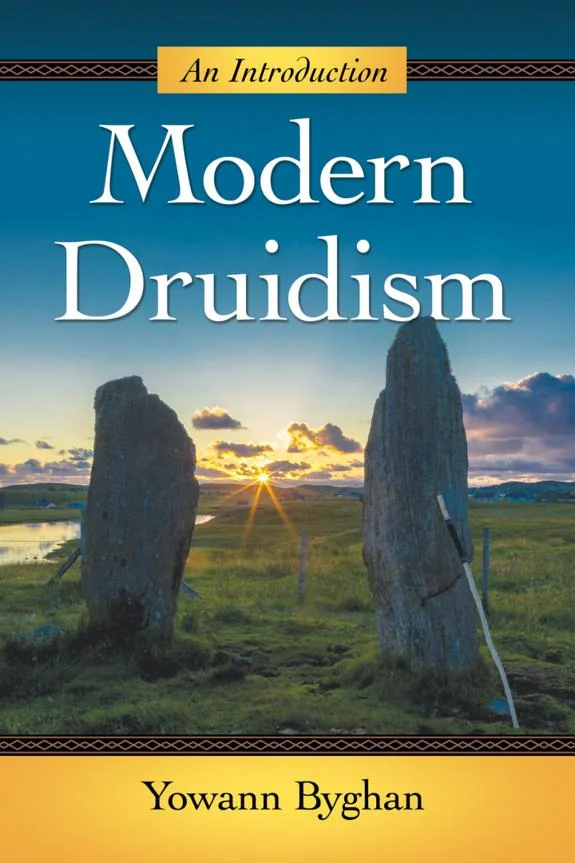
Modern Druidism
 72
72

Modern Druidism
Yowann Byghan’s "Modern Druidism" offers a surprisingly thorough introduction to a path often shrouded in romanticized notions. The work’s strength lies in its systematic approach, moving from the mythological origins to the practicalities of modern practice, including a useful gazetteer of sacred sites. Byghan’s clear prose demystifies concepts that could easily become opaque. However, the book occasionally feels more like a descriptive survey than a critical analysis, particularly when discussing the historical accuracy of certain Druidic revivals. A passage detailing the rituals of Awen, for instance, clearly outlines the practice but could benefit from a deeper exploration of its varied interpretations across different orders. Despite this, for newcomers seeking a factual overview of contemporary Druidry, "Modern Druidism" is an accessible and informative starting point.
📝 Description
72
### An Introduction to Modern Druidism Yowann Byghan's "Modern Druidism" serves as a foundational text for understanding contemporary Druidry, a spiritual path deeply rooted in the ancient Celtic societies of Britain and Ireland. This work meticulously outlines the religion and philosophy as it is practiced today. It navigates the historical trajectory and mythological underpinnings of this evolving tradition, introducing readers to its significant figures and foundational narratives.
### Beliefs, Morals, and Practices The book systematically explores the ethical framework and belief systems that inform modern Druid practice. Byghan details the rituals, ceremonies, and practical applications of Druidic philosophy, offering a clear picture of how these ancient traditions are adapted for the 21st century. The text aims to demystify the spiritual and ethical dimensions of contemporary Druidism, making its core tenets accessible to a wider audience.
### Sacred Sites and Modern Organizations Beyond theoretical exposition, "Modern Druidism" provides tangible connections to the physical and social landscape of the movement. A significant portion of the work is dedicated to a gazetteer of notable sacred sites, offering insights into places of historical and spiritual importance. Furthermore, it furnishes essential information on various modern Druid groups and organizations, facilitating engagement for those seeking to connect with the broader Druidic community.
### A Comprehensive Overview Ultimately, Byghan presents a holistic view of modern Druidism, balancing historical context with contemporary expression. The book is designed to equip readers with a solid understanding of its origins, its core tenets, and its living practice. It is an invaluable resource for anyone curious about this vibrant Pagan religion and its place in the modern spiritual world.
💡 Why Read This Book?
• Gain a structured understanding of modern Druidism's historical context, from its ancient Celtic roots to its 2018 revival, enabling you to differentiate historical fact from modern interpretation. • Learn about specific Druidic beliefs and moral systems, including core practices and ceremonial structures, as detailed in Byghan's exploration of the religion's ethical framework. • Discover key sacred sites and contemporary Druid groups through the included gazetteer, offering concrete avenues for further research and potential community engagement beyond the book's pages.
⭐ Reader Reviews
Honest opinions from readers who have explored this book.
❓ Frequently Asked Questions
What are the main historical roots of modern Druidism discussed in the book?
The book traces modern Druidism's roots to the Celtic tribal societies of ancient Britain and Ireland. It explores how these ancient traditions have been revived and reinterpreted, particularly during the 18th-century Druid revival and subsequent movements.
Does "Modern Druidism" cover specific rituals or ceremonies?
Yes, Yowann Byghan's work describes various practices, rituals, and ceremonies central to modern Druidic observance, offering readers insight into how the philosophy is enacted in practice today.
What kind of information is provided about modern Druid groups?
The book includes a section detailing modern Druid groups and organizations. This offers a practical guide for individuals interested in connecting with the contemporary Druidic community and understanding its structure.
Are mythological figures from Celtic history discussed?
Absolutely. The book delves into the mythology of Druidism, introducing important figures and foundational narratives that shape the belief system and spiritual understanding of modern practitioners.
Is there a guide to significant Druidic sites?
Yes, "Modern Druidism" features a gazetteer of important sacred sites. This section provides geographical and historical context for places of significance within the Druidic tradition.
When was "Modern Druidism" first published?
Yowann Byghan's "Modern Druidism" was first published on June 20, 2018, making it a contemporary overview of the subject.
🔮 Key Themes & Symbolism
Celtic Revivalism
The book examines the historical trajectory of Druidism, focusing on its revival and adaptation from ancient Celtic roots. It highlights how figures and movements from the 18th century onwards have shaped contemporary Druidic practice, moving beyond mere historical reconstruction to a living spiritual tradition. The work explores the continuity and evolution of beliefs and rituals, situating modern Druidry within a lineage that seeks to reconnect with pre-Christian European spirituality.
Mythology and Cosmology
Central to understanding modern Druidism is its rich mythological landscape. Byghan details the foundational myths and cosmology that inform the worldview of practitioners. This includes exploring the pantheon of Celtic deities, the concept of the Otherworld, and the symbolic significance of natural elements. These narratives provide the spiritual framework for rituals and ethical considerations within the tradition.
Ritual and Practice
Beyond philosophical underpinnings, "Modern Druidism" offers a practical look at how the tradition is lived. The book describes various ceremonies, rites, and everyday practices. This encompasses seasonal festivals, rites of passage, and devotional acts, illustrating how modern Druids engage with the sacred in their daily lives and within organized groups. The emphasis is on experiential engagement with nature and the divine.
Sacred Geography
The connection to land and place is paramount in Druidry. Byghan includes a gazetteer of important sacred sites, underscoring the geographical dimension of this spiritual path. These sites, ranging from ancient stone circles to natural landscapes, are treated not just as historical locations but as active centers of spiritual power and pilgrimage for modern Druids.
💬 Memorable Quotes
“Roots are in the Celtic tribal societies of ancient Britain and Ireland.”
— This foundational statement anchors modern Druidism, distinguishing it from purely modern inventions and linking it to a specific historical and cultural heritage. It suggests a lineage that is both ancient and actively maintained.
“A comprehensive overview of today's Pagan religion and philosophy.”
— This blurb snippet emphasizes the book's intent to provide a thorough and accessible introduction, covering both the spiritual beliefs and the ethical dimensions of contemporary Druidry.
“Describes practices, rituals and ceremonies.”
— This highlights the practical aspect of the book, indicating that it moves beyond theoretical discussion to explain the lived experience and devotional acts of modern Druids.
“A gazetteer of important sacred sites is included.”
— This points to the book's inclusion of tangible, geographical elements, suggesting that understanding the physical landscape is crucial to grasping the essence of Druidic spirituality.
“Information about modern Druid groups and organizations.”
— This indicates the book's utility for those seeking community or wanting to understand the social structures that support contemporary Druidic practice.
🌙 Esoteric Significance
Tradition
Modern Druidism, as presented by Byghan, aligns broadly with Neo-Paganism but draws specifically from reconstructed Celtic traditions and nature-based spirituality. While not strictly Hermetic or Kabbalistic, it shares with these traditions a focus on symbolic interpretation, cosmic cycles, and the interconnectedness of all things. It departs from them by emphasizing its distinct pre-Christian European roots and a strong connection to the natural world as a primary locus of the divine.
Symbolism
Key symbols explored include the oak tree, representing strength, endurance, and wisdom, often associated with the Druid ideal. The Ogham alphabet, an ancient Celtic script, is frequently used for divination and inscribed symbolism, linking practitioners to ancestral knowledge. The concept of Awen, often translated as 'inspiration' or 'poetic frenzy,' signifies divine light or creative energy, a central mystical experience for many modern Druids.
Modern Relevance
Byghan's work provides a framework that continues to inform contemporary Druidic practitioners and scholars. Its accessible overview is valuable for those exploring nature-based spirituality, Celtic Reconstructionism, and broader Neo-Paganism. Thinkers and groups focused on ecological spirituality, indigenous traditions, and the revitalization of pre-Christian European paths find common ground and reference points within the principles and historical context Byghan outlines.
👥 Who Should Read This Book
• Aspiring practitioners of modern Druidry seeking a foundational understanding of its history, beliefs, and practices. • Students of comparative religion and Paganism interested in the evolution of Neo-Pagan traditions and their connection to ancient European cultures. • Researchers of Celtic mythology and history looking for an overview of how these ancient traditions are interpreted and lived today.
📜 Historical Context
Published in 2018, Yowann Byghan's "Modern Druidism" emerged during a period of sustained growth and diversification within Pagan and Neo-Pagan movements. The work situates itself within the long history of Druidic revivalism, which began in earnest in the mid-18th century with figures like John Toland and William Stukeley attempting to reconstruct ancient Celtic practices. Byghan’s text engages with this legacy, acknowledging the scholarly debates surrounding the historical accuracy of these revivals, particularly the Romantic interpretations of the 19th century. The book implicitly contrasts with more esoteric or ceremonial orders that developed later, focusing instead on a broader spectrum of contemporary Druidic expression. Its publication offers a contemporary perspective, reflecting how Druidry has evolved beyond its earlier revivalist phases into a global spiritual path.
📔 Journal Prompts
The concept of Awen and its role in contemporary Druidic inspiration.
The historical revival of Druidism beginning in the 18th century.
Druidry's relationship with ancient Celtic tribal societies.
The significance of specific sacred sites mentioned in the gazetteer.
The moral system underpinning modern Druidic practice.
🗂️ Glossary
Awen
A Welsh word meaning 'inspiration' or 'poetic muse.' In modern Druidry, it represents divine inspiration, wisdom, and the creative light of the divine, often invoked during rituals.
Bard
In Druidic tradition, the Bard is the poet, storyteller, and lore-keeper, responsible for preserving history, myth, and inspiring the community through artistic expression.
Druid Revival
A historical movement, primarily from the 18th century onwards, that sought to reconstruct and practice Druidry based on interpretations of ancient Celtic traditions and mythology.
Ogham
An ancient Celtic alphabet, primarily used for inscriptions on stone monuments. In modern Druidry, it is often used for divination, magical purposes, and as a symbolic system.
Ovates
In the traditional three-fold order of Druidry, Ovates are healers, seers, and diviners, connected with the earth, nature, and the animal kingdom.
Sacred Sites
Locations of natural or historical significance (e.g., stone circles, groves, mountains) that hold spiritual importance for Druids and are often used for rituals and contemplation.
Threefold Order
A common structure in modern Druidry comprising three roles: Bard (poet/storyteller), Druid (teacher/philosopher), and Ovate (healer/seer), representing different aspects of spiritual development and service.