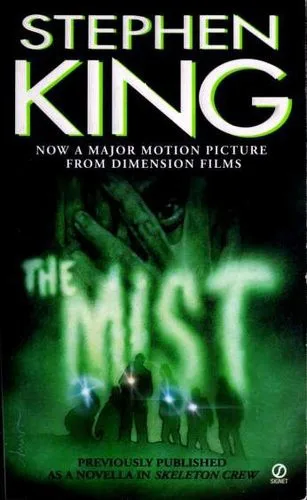
The Mist
 78
78

The Mist
Stephen King’s *The Mist* is less about the monstrous entities lurking in the titular fog and more about the creeping dread that festers within the human psyche when civilization’s thin veneer is stripped away. The novella excels in its claustrophobic setting, the Bargain World supermarket, which becomes a microcosm of society under siege. King masterfully contrasts the tangible, terrifying threat outside with the insidious, irrational fear that takes root among the survivors. The character of Mrs. Carmody, a religious zealot who gains a following as the situation deteriorates, is a chillingly effective portrayal of how faith can curdle into fanaticism under duress. However, the narrative occasionally leans into melodrama, and the resolution, while thematically resonant, can feel somewhat abrupt. Despite these minor points, *The Mist* remains a potent exploration of human nature’s darker impulses when faced with the incomprehensible. It’s a stark reminder that sometimes, the most terrifying monsters are the ones we create ourselves.
📝 Description
78
In 1980, Stephen King trapped Bridgton, Maine, in a supernatural fog filled with unseen horrors.
Stephen King's novella, 'The Mist,' plunges readers into the unsettling reality of a small Maine town suddenly enveloped by an unnatural, impenetrable fog. Within this mist lurks unseen, terrifying creatures, trapping the residents of Bridgton in their local supermarket, 'Bargain World.' The narrative focuses on a group of survivors, led by artist David Drayton, as they grapple with both the external monstrous threat and the escalating internal chaos among the trapped populace.
This work appeals to readers who appreciate psychological horror intertwined with creature features. Those interested in how societal structures break down under extreme pressure, and how fear can manifest in both external monsters and internal human conflict, will find fertile ground here. It is for individuals who enjoy narratives that confront the darker aspects of human nature when faced with the unknown and the inexplicable.
Published in 1980 within King's collection *Skeleton Crew*, 'The Mist' emerged during a period of renewed interest in cosmic horror and apocalyptic narratives, influenced by authors like H.P. Lovecraft. This era focused on existential dread and humanity's insignificance against vast, unknowable forces. King's novella taps into this vein, presenting a modern, localized manifestation of such cosmic terror, contrasting it with the immediate, primal fears of survival and societal collapse.
💡 Why Read This Book?
• You will learn how Stephen King uses a confined setting like the Bargain World supermarket to amplify psychological terror, a technique he first explored extensively in *The Mist*. • You will feel the visceral impact of how societal breakdown occurs under extreme duress, particularly through the escalating fanaticism embodied by Mrs. Carmody. • You will gain insight into the concept of "cosmic horror" as it applies to a modern, relatable setting, moving beyond traditional supernatural tropes.
⭐ Reader Reviews
Honest opinions from readers who have explored this book.
❓ Frequently Asked Questions
What is the primary setting for The Mist novella?
The primary setting is a Bargain World supermarket in Bridgton, Maine. The town is suddenly enveloped by an unnatural mist containing deadly creatures, trapping the main characters inside this store.
Who is the main antagonist in The Mist?
While the unseen creatures in the mist are the external antagonists, the novella also presents Mrs. Carmody as a significant internal antagonist, whose religious fanaticism incites fear and division among the survivors.
What is the significance of the mist in Stephen King's The Mist?
The mist represents the unknown and the breakdown of societal order. It is an impenetrable barrier that isolates the characters and brings forth unseen horrors, forcing them to confront both external threats and their own internal fears.
When was The Mist first published?
The Mist was first published in 1980 as part of Stephen King's short story collection *Skeleton Crew*.
What are the main themes explored in The Mist?
Key themes include societal collapse under pressure, the dangers of religious fanaticism, human nature's response to extreme fear, and the thin line between monstrosity and humanity.
Is The Mist a standalone story?
Yes, *The Mist* is a standalone novella. While it is part of the *Skeleton Crew* collection, it does not require prior knowledge of other King works to be understood.
🔮 Key Themes & Symbolism
Breakdown of Civilization
The novella vividly illustrates how quickly societal structures and rational behavior can disintegrate when faced with an existential threat. Confined within the Bargain World supermarket, the characters’ veneer of civility erodes, revealing primal instincts of fear, aggression, and desperation. This theme is central to understanding the human response to the inexplicable horror of the mist and its denizens, showing that the greatest danger may not be the creatures outside, but the chaos that erupts from within.
Religious Fanaticism
Mrs. Carmody embodies the destructive potential of blind faith. Her interpretation of the mist as divine punishment and her subsequent manipulation of the terrified populace highlight how fear can be exploited to gain power. Her rise from a minor character to a cult leader within the supermarket serves as a stark warning against unquestioning adherence to dogma, especially in times of crisis, demonstrating how a warped sense of divine will can lead to monstrous acts.
The Nature of Monsters
King plays with the concept of what constitutes a monster. While the alien beings from the mist are undeniably horrific, the novella also posits that human fear, paranoia, and cruelty can be equally monstrous. The escalating conflict between survivors, the descent into mob mentality, and the eventual acts of violence committed by the humans themselves question whether the true monsters are the unseen entities or the darkness that resides within humanity.
Confronting the Unknown
The titular mist serves as a powerful metaphor for the unknown and the incomprehensible. It is an alien, all-encompassing force that defies logical explanation, plunging the characters into a state of profound existential dread. Their struggle to survive highlights humanity's often-futile attempts to impose order and understanding on forces beyond its grasp, forcing a confrontation with the limits of human knowledge and control.
💬 Memorable Quotes
“The mist is coming.”
— This simple, repeated phrase underscores the pervasive and inescapable nature of the threat. It acts as a constant reminder of the encroaching danger, building suspense and signifying the loss of safety and normalcy.
“There are other worlds within worlds, David.”
— This line suggests a reality far more complex and strange than ordinary perception allows. It hints at the cosmic, multidimensional nature of the entities within the mist, expanding the horror beyond a simple invasion scenario.
“There's no God in the mist.”
— This interpretation reflects a loss of faith and the realization that conventional spiritual beliefs offer no protection against the alien horrors. It signifies the descent into a world governed by primal fear and survival, devoid of divine intervention.
“We have to be strong. Stronger than we ever thought possible.”
— This expresses the core challenge of survival: the need for immense fortitude in the face of overwhelming adversity. It highlights the psychological and emotional demands placed upon the characters as they confront both external and internal threats.
“The world outside is gone.”
— This statement captures the devastating realization that their former reality has been irrevocably altered or destroyed by the mist. It emphasizes the isolation and the finality of their predicament, leaving them with only the grim present.
🌙 Esoteric Significance
Tradition
While not explicitly aligning with a single esoteric lineage, *The Mist* draws heavily from the traditions of cosmic horror, a genre deeply intertwined with Gnostic and Lovecraftian themes. It explores a universe indifferent or hostile to human existence, where reality is far stranger and more terrifying than perceived. The novella departs from more structured esoteric systems by focusing on raw, primal fear and the breakdown of order rather than esoteric knowledge or spiritual ascent.
Symbolism
The mist itself is a potent symbol of the unknown and the breakdown of perceived reality, akin to the veils separating the mundane from the divine or terrifying in esoteric thought. Mrs. Carmody's fanatical interpretations represent the dangers of misconstrued spiritual authority and the manipulation of faith, a recurring cautionary theme in many mystical traditions. The supermarket, Bargain World, becomes a profane temple, symbolizing the inversion of societal values and the struggle for survival in a world stripped of its familiar order.
Modern Relevance
Contemporary horror fiction and film continue to explore themes of societal collapse and existential dread, often echoing the anxieties presented in *The Mist*. Thinkers and artists grappling with themes of ecological collapse, societal fragmentation, and the psychological impact of global crises find resonance in King's depiction of a community unraveling under an incomprehensible threat. The novella remains a touchstone for stories that examine the fragility of civilization and the dark potential within human nature when confronted by the abyss.
👥 Who Should Read This Book
• Readers fascinated by psychological horror and the darker aspects of human nature under extreme pressure. • Students of the horror genre interested in Stephen King's early explorations of cosmic dread and societal breakdown. • Fans of confined-setting narratives that build tension through interpersonal conflict and an unseen external threat.
📜 Historical Context
Published in 1980 within Stephen King's *Skeleton Crew*, *The Mist* arrived during a period when cosmic horror, influenced by H.P. Lovecraft, was experiencing a resurgence in popular fiction. This era saw a focus on existential dread and humanity's insignificance against vast, unknowable forces, a theme King masterfully adapts to a contemporary, small-town setting. The novella offers a grounded, visceral take on such grand cosmic terrors, focusing on the immediate breakdown of social order. It contrasted with the more traditional supernatural horror prevalent at the time, like that found in early works by Clive Barker, by emphasizing psychological realism and the horror of human behavior under duress. The collection *Skeleton Crew* was critically well-received, further solidifying King's status as a master storyteller and his ability to tap into widespread cultural anxieties.
📔 Journal Prompts
The overwhelming presence of the mist and its unseen inhabitants.
Mrs. Carmody's influence on the survivors within Bargain World.
David Drayton's internal struggle between reason and primal fear.
The symbolism of the mist as a barrier to the known world.
The moment societal order collapses in favor of mob mentality.
🗂️ Glossary
Bargain World
The specific supermarket in Bridgton, Maine, that serves as the primary, claustrophobic setting for the novella's events, trapping the characters.
Mrs. Carmody
A fanatical and manipulative character who gains a following among the survivors by preaching a doomsday prophecy related to the mist.
The Mist
An unnatural, impenetrable fog that descends upon Bridgton, Maine, containing unknown and deadly creatures, serving as the central external threat.
David Drayton
The protagonist of the novella, an artist who tries to maintain reason and protect his son amidst the chaos and terror.
Arrowhead Project
A mysterious military project hinted at as a possible cause for the mist, suggesting a scientific or extradimensional origin for the phenomena.
Cthulhu Mythos
While not explicitly named, the nature of the creatures and the cosmic horror elements evoke the influence of H.P. Lovecraft's fictional universe.
Fanaticism
The excessive zeal, particularly in matters of religion or belief, leading to irrational behavior and intolerance, exemplified by Mrs. Carmody.