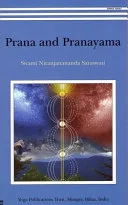
Prana and Pranayama
 73
73

Prana and Pranayama
Swami Niranjanananda Saraswati’s Prana and Pranayama offers a scholarly yet accessible exposition on yogic breathwork, grounding the practice in classical yogic philosophy. Its strength lies in the systematic breakdown of prana's role in the energetic and psycho-spiritual systems, drawing directly from the Satyananda Yoga Tradition. The detailed explanation of koshas, chakras, and nadis provides a robust theoretical framework that is often missing in more superficial guides. However, the sheer depth of theoretical discussion might prove daunting for absolute beginners seeking only practical instructions. A particularly illuminating section discusses the subtle effects of specific pranayama techniques on consciousness, moving beyond the physical to the energetic and mental planes. This work is an essential reference for those committed to understanding the science behind the breath.
📝 Description
73
Swami Niranjanananda Saraswati's Prana and Pranayama, published in December 2009, examines vital energy and its manipulation through breathwork.
This book provides a thorough study of prana, the vital energy that sustains life, and pranayama, the yogic science of consciously controlling breath. Swami Niranjanananda Saraswati details the theoretical basis of prana within yogic philosophy, moving beyond simple breathing exercises to discuss the subtle energetic body and its link to consciousness. It is written for dedicated students of yoga and esoteric studies who desire a deep, philosophical grasp of yogic practices. The text is especially useful for those interested in yoga's energetic anatomy, covering concepts such as koshas, chakras, and nadis. Practitioners seeking to improve their pranayama techniques with a strong theoretical framework will find this work valuable.
The central focus is prana, identified as the fundamental life force. The book outlines different types of prana, like prana vayu and apana vayu, and their roles in the body. Pranayama is shown to be a complex system for directing this energy, affecting mental states, physical well-being, and spiritual consciousness. The author explains the close connection between breath, the mind, and awareness.
Authored by Swami Niranjanananda Saraswati, a significant figure in the Satyananda Yoga Tradition, this book draws from the lineage of his guru, Swami Satyananda Saraswati. It is grounded in classical yogic texts and the teachings of the Bihar School of Yoga, an institution active since 1964 in spreading yogic knowledge. The work appeared during a time of increased global interest in Eastern spiritual philosophies. It reflects a tradition that synthesizes yogic philosophy with practical application, aiming to provide students with a comprehensive understanding of energetic practices.
💡 Why Read This Book?
• Gain a foundational understanding of prana, the vital life force, and its energetic role in the human system, as explained through the lens of the Satyananda Yoga Tradition, providing context often absent in basic breathwork guides. • Learn the philosophical and physiological basis of pranayama, moving beyond simple technique to grasp how breath control influences koshas, chakras, and nadis, as detailed in the book’s exploration of yogic science. • Understand the connection between breath, mind, and consciousness as presented by Swami Niranjanananda Saraswati, offering a pathway to refined mental states and deeper self-awareness rooted in classical yogic principles.
⭐ Reader Reviews
Honest opinions from readers who have explored this book.
❓ Frequently Asked Questions
What is the primary focus of Swami Niranjanananda Saraswati's 'Prana and Pranayama'?
The book's primary focus is the comprehensive philosophical and scientific explanation of prana, the vital life force, and pranayama, the yogic practice of its control and expansion, as taught within the Satyananda Yoga Tradition.
When was 'Prana and Pranayama' by Swami Niranjanananda Saraswati first published?
The book 'Prana and Pranayama' by Swami Niranjanananda Saraswati was first published in December 2009.
What yogic concepts are explored in relation to prana and pranayama in this book?
The work explores related yogic concepts such as the koshas (sheaths of existence), chakras (energy centers), nadis (energy channels), and mantras, detailing their interaction with prana.
Is this book suitable for beginners in yoga?
While comprehensive, the book's depth in philosophical and scientific explanation makes it most suitable for dedicated students seeking a thorough understanding, rather than absolute beginners solely looking for basic techniques.
What is the Satyananda Yoga Tradition's approach to pranayama presented in the book?
The book presents pranayama as taught within the Satyananda Yoga Tradition, originating from the Bihar School of Yoga, emphasizing its systematic and philosophical integration with yogic philosophy.
Does the book cover the physical aspects of breathing exercises?
Yes, it discusses respiratory mechanics and their role in pranayama, but within a broader context of prana's energetic and consciousness-altering functions.
🔮 Key Themes & Symbolism
The Science of Prana
This work meticulously deconstructs prana, the fundamental life force, as understood in classical yogic texts and the Satyananda Yoga Tradition. It moves beyond a simple definition to explore prana's pervasive influence on physical health, mental states, and spiritual development. The book details various manifestations and functions of prana within the energetic system, providing a scientific framework for understanding its role in all life processes. It lays the groundwork for comprehending how its manipulation through pranayama can lead to profound changes.
Pranayama as Energetic Control
Pranayama is presented not as mere breathing exercises but as a sophisticated science for the expansion and control of prana. Swami Niranjanananda Saraswati elucidates how specific breath retention (kumbhaka) and regulation techniques actively direct vital energy through the nadis (energy channels) and influence the chakras (energy centers). This section details the physiological and subtle energetic effects, positioning pranayama as a key tool for harmonizing the body and mind.
Subtle Anatomy and Consciousness
The book intricately links the concepts of prana and pranayama to the subtle anatomy of the yogic system, including the koshas, chakras, and nadis. It explains how the practice of pranayama directly impacts these energetic structures, leading to shifts in consciousness. Mantras are also discussed as tools that work synergistically with breath to amplify the effects of pranayama, facilitating deeper meditative states and spiritual awareness.
Classical Yogic Philosophy
Drawing heavily from classical yogic scriptures and the teachings of the Bihar School of Yoga, this book offers a scholarly yet practical exposition. It situates prana and pranayama within the broader philosophical field of yoga, providing context from traditions that have studied these forces for millennia. The work serves as a bridge, translating ancient wisdom into a form accessible to contemporary practitioners seeking authentic yogic knowledge.
💬 Memorable Quotes
Direct passages from the work, attributed to the author.
“Prana is the basic life force. It is the source of all energy, life and consciousness.”
— This foundational statement establishes prana as the ultimate principle of existence, underpinning not just biological life but also mental awareness and the very essence of being.
“Pranayama is the science of controlling prana.”
— This concise definition highlights the active, scientific approach to breathwork within yoga, emphasizing conscious direction and mastery over the life force rather than passive observation.
“The koshas are subtle sheaths that cover the physical body.”
— This interpretation clarifies the concept of koshas as energetic layers or envelopes surrounding the physical form, crucial for understanding how prana interacts with different levels of being.
“Chakras are psychic centers that are centres of power.”
— This defines chakras not merely as anatomical points but as energetic hubs, vital for the flow and transformation of prana, and central to yogic practices influencing consciousness.
“Nadis are channels through which prana flows.”
— This explanation clarifies the function of nadis as a network of subtle pathways within the energetic body, essential for distributing prana and maintaining physiological and psychological equilibrium.
🌙 Esoteric Significance
Tradition
This work is firmly rooted in the yogic and Tantric traditions, specifically as systematized by the Satyananda Yoga Tradition. It aligns with classical Hatha and Raja Yoga philosophies, emphasizing the energetic and consciousness-altering dimensions of yogic practice. It departs from purely academic or purely physical interpretations of yoga, focusing on the subtle body and the manipulation of prana as central to spiritual evolution.
Symbolism
Key symbols include 'prana' itself, representing the universal life force animating all existence. 'Nadis' function as the energetic circulatory system, with the central Sushumna nadi being a primary focus for advanced pranayama. 'Chakras' are depicted as vortexes of energy and consciousness, where prana is transformed and amplified, influencing mental and spiritual states.
Modern Relevance
Contemporary practitioners and scholars of consciousness studies, somatic psychology, and integrative health are increasingly drawn to the detailed explanations of prana and pranayama. Thinkers exploring the mind-body connection and the potential of breathwork for well-being and cognitive enhancement find the book's systematic approach invaluable. It provides a classical framework for understanding phenomena often explored anecdotally in modern wellness circles.
👥 Who Should Read This Book
• Dedicated yoga practitioners seeking to deepen their understanding of breathwork beyond physical technique, exploring the energetic and philosophical underpinnings as presented by the Satyananda Yoga Tradition. • Students of esoteric philosophy and comparative religion interested in the yogic concept of prana, subtle anatomy (koshas, chakras, nadis), and its role in consciousness studies. • Yoga teachers and therapists looking for a comprehensive, authoritative text on pranayama that integrates classical teachings with practical application, rooted in the lineage of Swami Satyananda Saraswati.
📜 Historical Context
Published in December 2009, Swami Niranjanananda Saraswati's 'Prana and Pranayama' emerges from the rich lineage of the Satyananda Yoga Tradition, founded by Swami Satyananda Saraswati in 1964. This work builds upon the extensive yogic scholarship and dissemination efforts of the Bihar School of Yoga. It arrives in an era where Western science increasingly investigates the physiological and psychological effects of practices like meditation and breathwork, yet often with limited understanding of the subtle energetic principles. The book stands in contrast to more recent, less traditional interpretations of yoga that sometimes divorce asana from its deeper yogic context. Its thorough grounding in classical texts and the systematic teachings of a specific guru lineage provides an alternative to the fragmented, often commercialized, yoga prevalent in the early 21st century.
📔 Journal Prompts
The concept of prana as the universal life force, its manifestations, and its connection to consciousness.
The role of pranayama in harmonizing the nadis and activating the chakras.
Exploration of the koshas and how prana influences each energetic layer.
Personal experience with controlling prana through specific pranayama techniques.
The interplay between mantras, breath, and the energetic centers.
🗂️ Glossary
Prana
The fundamental life force or vital energy that pervades the universe and animates all living beings. It is the subtle energy that governs physical, mental, and spiritual functions.
Pranayama
The yogic science of breath control and regulation, aimed at expanding and directing prana (life force) to influence consciousness, health, and spiritual awareness.
Koshas
The five subtle sheaths or layers that cover and protect the Atman (self) or consciousness, ranging from the physical (annamaya) to the blissful (anandamaya).
Chakras
The primary energy centers or vortexes located along the spine in the subtle body, responsible for receiving, assimilating, and transmitting life energies. There are typically considered to be seven major chakras.
Nadis
The intricate network of subtle energy channels or pathways through which prana flows throughout the body. There are thousands of nadis, with Ida, Pingala, and Sushumna being the most important.
Kumbhaka
The practice of breath retention in pranayama, involving holding the breath after inhalation (antara kumbhaka) or exhalation (bahya kumbhaka), crucial for accumulating and directing prana.
Mantra
A sacred sound, syllable, word, or group of words that is chanted or meditated upon to invoke spiritual qualities or aid concentration. Mantras are often used in conjunction with pranayama.