Redwall
 77
77

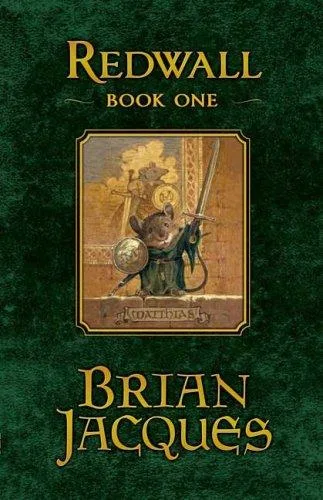
Redwall
Brian Jacques' Redwall, his debut in 1986, presents a world of anthropomorphic animals with a singular focus on the defense of Mossflower Abbey. The narrative excels in establishing a vivid, communal atmosphere within the abbey walls, making its inhabitants feel like a genuine, if furry, society. Matthias's journey from a young novice to a warrior is a predictable but well-executed arc. The primary limitation lies in the stark, almost binary, portrayal of good versus evil; the villains, like Cluny the Scourge, often feel archetypal rather than nuanced. A particularly memorable sequence involves Matthias's quest for the legendary sword of Martin the Warrior, a classic hero's journey condensed. Ultimately, Redwall succeeds as a comforting, if somewhat simple, tale of courage found in the small and the peaceful.
📝 Description
77
Brian Jacques' 1986 novel Redwall introduces the world of Mossflower Abbey and its gentle inhabitants.
Redwall, the first book in Brian Jacques' popular series, was published in 1986. It tells the story of Matthias, a young mouse living at Mossflower Abbey, a peaceful sanctuary for woodland creatures. Their quiet existence is threatened when a band of vicious rats, led by the fearsome Cluny the Scourge, attacks the abbey seeking to claim it for themselves.
Matthias, initially a timid acolyte, finds himself drawn into a quest to find a legendary sword hidden within the abbey's walls. This quest is crucial to defending their home against Cluny's onslaught. The narrative follows Matthias and a diverse group of abbey dwellers as they band together, discovering their own courage and resourcefulness in the face of danger. The book emphasizes the idea that bravery can emerge from the most unexpected individuals.
While not strictly esoteric in a mystical sense, Redwall taps into archetypal narratives of defense and sanctuary found in many traditions. The abbey itself functions as a sacred space, a microcosm of community that must be protected from external chaos, a theme echoed in myths and folklore worldwide. The struggle against Cluny the Scourge can be seen as a representation of primal forces disrupting order. The book's focus on the virtues of its animal inhabitants, embodying courage and steadfastness, aligns with fables that use animal characters to convey moral lessons.
💡 Why Read This Book?
• Gain an appreciation for the foundational narrative of the Redwall series, understanding the initial introduction to Mossflower Abbey and its inhabitants as established in 1986. • Experience a classic tale of unlikely heroism, following Matthias's transformation, which illustrates how courage can emerge from humble beginnings. • Explore the symbolic importance of sanctuary and community defense, as depicted through the steadfast resistance of the abbey's creatures against invaders.
⭐ Reader Reviews
Honest opinions from readers who have explored this book.
❓ Frequently Asked Questions
What is the main conflict in Brian Jacques' Redwall?
The primary conflict involves the peaceful inhabitants of Mossflower Abbey, primarily mice, defending their home from the brutal invasion led by Cluny the Scourge, a one-eyed rat warlord, shortly after the publication of the book in 1986.
Who is the protagonist of Redwall?
The central protagonist is Matthias, a young, adventurous mouse who lives at Mossflower Abbey. His journey from a novice to a hero is a key element of the story.
What makes the world of Redwall unique?
Redwall features a society of intelligent, anthropomorphic woodland creatures, such as mice, badgers, otters, and squirrels, living in a medieval-style setting, a concept Jacques developed extensively.
What are the key themes explored in Redwall?
The book explores themes of courage, heroism, community, the defense of home, and the classic struggle between good and evil, often showing that bravery can be found in the smallest of creatures.
Is Redwall part of a series?
Yes, Redwall is the first book in a highly successful and long-running series of the same name by Brian Jacques, with numerous sequels and prequels exploring the world of Mossflower.
When was Redwall first published?
Redwall was first published in 1986, marking the beginning of Brian Jacques' celebrated career in children's fantasy literature.
🔮 Key Themes & Symbolism
Unlikely Heroism
The narrative powerfully illustrates that heroism is not confined to the physically imposing or inherently strong. Matthias, a young mouse, embodies this theme, discovering his inner courage and strength through adversity. His journey from a somewhat overlooked novice to an important defender of Mossflower Abbey underscores the idea that bravery and valor can emerge from any individual, regardless of size or initial perceived capability. This concept challenges traditional notions of heroism and emphasizes the importance of spirit and determination over brute force.
Sanctuary and Defense
Mossflower Abbey serves as a potent symbol of sanctuary, a peaceful haven for its inhabitants. The core conflict arises when this sanctuary is threatened by external forces, forcing the residents to defend their home. This theme explores the intrinsic human (or in this case, animal) drive to protect one's community and way of life. The abbey's defense is not just about physical survival but also about preserving their culture, peace, and shared existence against those who seek to dominate and destroy.
Community and Cooperation
The success of Mossflower Abbey's defense hinges on the cooperation and unity of its diverse inhabitants. Despite their differences, the mice, badgers, otters, and squirrels must work together, pooling their unique skills and strengths to overcome Cluny the Scourge's forces. This theme highlights the power of collective action and mutual reliance. The story suggests that a strong community, bound by shared purpose and loyalty, can withstand even the most formidable threats.
The Nature of Good and Evil
Redwall presents a relatively clear delineation between good and evil, personified by the abbey dwellers and the invading vermin, respectively. However, within this framework, the novel also subtly explores the motivations behind actions. While Cluny the Scourge represents pure malevolence, the narrative emphasizes the inherent goodness and nobility of the abbey residents, suggesting that maintaining one's moral compass is paramount even in the face of overwhelming darkness.
💬 Memorable Quotes
Direct passages from the work, attributed to the author.
“Peace is precious, but it must be defended.”
— This concept expresses the central tension of the novel. It suggests that tranquility is not a passive state but requires active vigilance and the willingness to fight for its preservation.
“A small creature can possess a great heart.”
— This interpretation highlights the theme of unlikely heroism. It points to the narrative's focus on characters like Matthias, demonstrating that courage and strength are qualities of spirit, not just physical stature.
“The Abbey stands for all that is good.”
— This statement defines Mossflower Abbey not merely as a building, but as a symbol. It represents the values of peace, community, and order that the inhabitants strive to protect from external chaos.
“Even the smallest paw can strike a mighty blow.”
— This idea reinforces the motif of underestimated strength. It suggests that individuals, often overlooked due to their size or perceived weakness, can achieve significant feats when motivated and determined.
💡 Key Ideas
Editorial paraphrase of the work's core concepts — not direct quotes.
The legends of Martin the Warrior were true.
This line validates the power of history and myth in shaping present actions. It signifies Matthias's discovery of courage and purpose, drawing strength from ancestral heroes to face contemporary threats.
🌙 Esoteric Significance
Tradition
While Redwall does not overtly belong to a specific esoteric tradition like Hermeticism or Kabbalah, it can be viewed through the lens of archetypal mythology and the perennial philosophy. Its emphasis on the battle between good and evil, the quest for sacred artifacts (like the sword of Martin the Warrior), and the establishment of a sacred space (Mossflower Abbey) echoes themes found in many ancient mythologies and spiritual narratives that explore the hero's journey and the defense of the sacred order.
Symbolism
Mossflower Abbey itself functions as a potent symbol of sanctuary, representing a protected sacred space analogous to temples or monasteries in various traditions, a refuge against the profane world. The sword of Martin the Warrior symbolizes righteous authority, divine right, and the power of a legendary past to inspire present action. The vermin, particularly Cluny the Scourge, represent chaotic, destructive forces that threaten the established, ordered world, akin to primordial chaos monsters in creation myths.
Modern Relevance
Contemporary fantasy authors and storytellers continue to draw inspiration from Redwall's model of anthropomorphic worlds and community-focused narratives. While not directly cited in academic esoteric circles, its enduring popularity demonstrates a persistent human fascination with tales of courage found in the unexpected, the defense of home, and the symbolic struggle against destructive forces, themes that remain relevant in psychological and philosophical discussions.
👥 Who Should Read This Book
• Young readers aged 8-12 looking for an engaging entry point into fantasy epics, offering clear morality and exciting adventure. • Adult readers interested in foundational works of modern anthropomorphic fantasy, appreciating detailed world-building and character-driven plots. • Comparative mythology enthusiasts seeking examples of archetypal hero's journeys and the symbolism of sanctuary in accessible narrative forms.
📜 Historical Context
Brian Jacques' Redwall, released in 1986, arrived during a vibrant period for fantasy literature, building upon the legacies of authors like J.R.R. Tolkien and C.S. Lewis, who had firmly established the genre. Jacques carved a unique niche by focusing on anthropomorphic animals rather than traditional elves or dwarves, creating a world populated by mice, badgers, and other woodland creatures. This approach distinguished it from much of the high fantasy prevalent at the time. While not facing significant censorship, the book's reception was overwhelmingly positive, leading to a prolific series that became a central to children's and young adult literature. Its success can be seen as part of a broader trend in the 1980s that saw increased diversity and imaginative scope within the fantasy genre, appealing to a growing readership eager for new worlds and narratives.
📔 Journal Prompts
Matthias's discovery of the sword of Martin the Warrior.
The symbolism of Mossflower Abbey as a sanctuary.
The contrast between Cluny the Scourge's ambition and the abbey dwellers' desire for peace.
The role of legends and historical accounts in motivating present actions.
The cooperative efforts of different species in defending the abbey.
🗂️ Glossary
Mossflower Abbey
The central setting of the novel, a peaceful sanctuary inhabited primarily by mice and other woodland creatures, which becomes the target of an invasion.
Cluny the Scourge
The primary antagonist, a formidable and cruel one-eyed rat who leads a horde of vermin in an attempt to conquer Mossflower Abbey.
Martin the Warrior
A legendary mouse hero of the past, whose bravery and deeds are recounted in abbey lore. His sword becomes a key artifact in the story.
Woodland Creatures
The anthropomorphic animal inhabitants of the Redwall world, including mice, badgers, otters, squirrels, and others, who live in a medieval-like society.
Vermin
A general term used in the Redwall series to describe the antagonists, typically rats, stoats, ferrets, and weasels, who often seek to dominate or destroy peaceful communities.
Abbey Dwellers
Refers to the peaceful inhabitants of Mossflower Abbey, emphasizing their communal life and shared values in contrast to the invading forces.
Salamandastron
A legendary mountain fortress inhabited by badgers, mentioned in Redwall as a place of historical significance and a potential ally.
🔮 Readers Also Liked
Browse all →









More by Brian Jacques
All books →



More Free Occult Philosophy Books
View all →



![Reiki - Manual Original del Dr. Mikao Usui [Spanish]](/img/thumb/reiki-manual-original-del-dr-mikao-usui-spanish-f-arjava-petter-551356.webp)