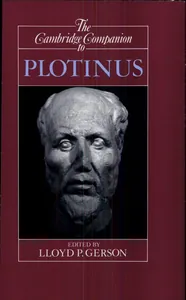
Plotinus

 83
83

Plotinus
Lloyd Gerson's *Plotinus* offers a commendable scholarly overview of the philosopher's intricate system. Gerson excels at elucidating the logical progression of Plotinus's thought, particularly his emanationist metaphysics, charting how the multiplicity of the sensible world arises from the singular, transcendent One. The strength of this work lies in its rigorous philosophical exposition. However, for readers seeking a more direct engagement with the mystical or esoteric dimensions that Plotinus undeniably inspired, Gerson's focus remains firmly on the philosophical architecture. The discussion of the 'One' and its relation to 'Intellect' is particularly dense, requiring sustained attention. While Gerson provides a solid intellectual framework, the spiritual allure that draws many to Plotinus is, by necessity of the critical approach, somewhat subdued. This is a scholar's guide, not a mystic's primer, and it succeeds admirably on its own terms.
📝 Description
83
### What Plotinus Offers This volume presents a critical examination of Plotinus, the Neoplatonist philosopher whose thought profoundly shaped subsequent Western philosophy and esoteric traditions. Gerson's work unpacks the intricate philosophical system developed by Plotinus in the 3rd century CE, focusing on his metaphysical concepts and their impact.
### For the Serious Student of Philosophy This book is intended for readers with a prior interest in ancient philosophy, metaphysics, and the history of ideas. It assumes a degree of familiarity with philosophical discourse and offers detailed analysis rather than introductory summaries. Scholars of Neoplatonism and late antiquity will find Gerson's interpretations particularly valuable.
### The Philosophical Landscape of Late Antiquity Plotinus operated within a complex intellectual milieu in the Roman Empire, blending Platonic thought with Stoic and Aristotelian elements, and influencing nascent Christian theology. His writings, compiled as the *Enneads* by his student Porphyry, emerged during a period of significant philosophical and religious ferment, laying groundwork for centuries of intellectual development.
### Core Tenets of Plotinian Thought Gerson's analysis explores Plotinus's hierarchical cosmology, beginning with the ineffable One, from which emanate Intellect (Nous) and Soul. This emanationist model explains the diversity of existence as a necessary outflow from the ultimate, simple reality. The work also covers Plotinus's ethics and his concept of the soul's ascent back to the One.
💡 Why Read This Book?
• Understand the philosophical underpinnings of Plotinus's emanationism, learning how the transcendent 'One' gives rise to 'Intellect' and 'Soul' as described in the *Enneads*. • Grasp the historical significance of Plotinus's work within Late Antiquity, recognizing its influence on subsequent philosophical and theological developments by the 3rd century CE. • Analyze Plotinus's concept of the soul's ascent, discerning the philosophical steps involved in returning to the ineffable One as detailed by Gerson.
⭐ Reader Reviews
Honest opinions from readers who have explored this book.
❓ Frequently Asked Questions
What is the primary philosophical contribution of Plotinus discussed in Gerson's book?
Gerson focuses on Plotinus's emanationist metaphysics, the concept that all reality flows from a single, transcendent source known as the 'One', subsequently generating 'Intellect' (Nous) and 'Soul'.
Who was Porphyry in relation to Plotinus?
Porphyry was Plotinus's student and editor, responsible for compiling and organizing his teacher's writings into the collection known as the *Enneads*, preserving his philosophical legacy.
When did Plotinus live and develop his philosophy?
Plotinus lived and taught in the 3rd century CE, roughly from 204/5 to 270 CE, a period of significant intellectual and religious transition in the Roman Empire.
How does Gerson explain the relationship between the One and the many in Plotinus?
Gerson details Plotinus's view that the 'One' is utterly simple and beyond being, yet it 'emanates' lower levels of reality, such as Intellect and Soul, in a hierarchical fashion, creating the multiplicity of existence.
Is Gerson's book suitable for beginners in philosophy?
No, the book is geared towards readers with existing knowledge of philosophy, particularly ancient metaphysics and Neoplatonism, due to its detailed analytical approach.
What role does the concept of 'Intellect' (Nous) play in Plotinus's system?
According to Gerson's analysis, 'Intellect' (Nous) is the first emanation from the One, a realm of pure thought containing the Platonic Forms, and it is the source from which Soul subsequently emanates.
🔮 Key Themes & Symbolism
The Ineffable One
Gerson examines Plotinus's concept of the 'One,' the ultimate, transcendent principle of reality that is beyond all description and predication. This absolute unity is the source from which all existence emanates, not through creation, but as a necessary outflow. Understanding the One is central to Plotinus's metaphysics and his system's explanation for the existence of the diverse cosmos, a core tenet explored rigorously in this work.
Emanationism and Hierarchy
Central to Plotinus's philosophy, as detailed by Gerson, is the principle of emanation. Reality unfolds in a hierarchical series of hypostases: the One, Intellect (Nous), and Soul. Each subsequent level proceeds from the one above it, diminishing in unity and power. This framework explains the diversity of the universe without compromising the absolute simplicity of the One, a concept crucial for understanding Late Antique philosophical thought.
The Soul's Ascent
Gerson's analysis covers Plotinus's ethical and soteriological doctrines, particularly the soul's journey back to its source. This ascent involves a process of purification and intellectual contemplation, moving from the sensible world through the realms of Soul and Intellect to achieve union with the One. This spiritual and philosophical telos is a key aspect of Plotinian thought that influenced many later esoteric traditions.
Intellect and the Forms
The hypostasis of Intellect (Nous) is presented as the realm where the Platonic Forms exist in a divine, unified consciousness. Gerson elucidates how Plotinus reinterprets Plato's Forms, locating them within the divine mind. This intellectual realm is the immediate emanation from the One and the source of the World Soul, forming a critical link in the metaphysical chain.
💬 Memorable Quotes
“The One is not 'a being' but is prior to being.”
— This statement captures the ineffable nature of Plotinus's ultimate principle. By asserting it is 'prior to being,' Plotinus emphasizes its absolute transcendence, existing beyond any category of existence or comprehension, a foundational concept in his metaphysics.
“The Soul, seeking to return to the One, must first turn inwards.”
— This paraphrased concept highlights Plotinus's view on spiritual development. The journey towards the divine is not external but an internal process of self-knowledge and contemplation, moving away from the distractions of the material world towards the soul's own divine essence.
“All things look to the One.”
— This interpretation conveys Plotinus's belief in the fundamental unity and origin of all reality. Despite the apparent diversity of the cosmos, every existing thing, in its own way, derives its existence and nature from the ultimate source, the One.
“Intellect contains the intelligible Forms.”
— This paraphrased concept refers to the hypostasis of Nous (Intellect). Here, Plotinus posits that the eternal blueprints or Forms of all things reside within this divine mind, serving as the archetypes from which the lower realms of reality are patterned.
“Evil is not a positive entity but a privation of good.”
— This interpretation reflects Plotinus's stance on the nature of evil. He viewed it not as a force in itself, but as a deficiency or absence of the divine goodness that emanates from the One, a common theme in Neoplatonic thought.
🌙 Esoteric Significance
Tradition
Plotinus is the foundational figure of Neoplatonism, a philosophical system that became a primary conduit for the transmission of Platonic and Hermetic ideas into later esoteric traditions. His emanationist cosmology and emphasis on mystical union with the transcendent One directly informed later Hermeticism, Gnosticism, and medieval Kabbalah, providing a philosophical scaffolding for mystical and occult practices.
Symbolism
Key symbols in Plotinus's system, as interpreted esoterically, include the 'One' representing absolute unity and the ineffable divine source. 'Intellect' (Nous) symbolizes divine wisdom and the realm of archetypes, while 'Soul' represents the mediating principle between the divine and the material. The journey of the soul's ascent back to the One is often symbolized by a return from multiplicity to unity, from darkness to light.
Modern Relevance
Contemporary esoteric thinkers and practitioners, particularly within Western Hermeticism and ceremonial magic, continue to draw heavily on Plotinian metaphysics. His concepts of emanation, the hierarchy of being, and the soul's potential for deification provide a rich source for meditation, ritual, and understanding the divine architecture of the cosmos. Modern interpretations often focus on the practical application of these principles for personal spiritual growth.
👥 Who Should Read This Book
• Students of comparative religion and philosophy seeking to understand the roots of Western esoteric thought and its philosophical underpinnings. • Advanced philosophy undergraduates and graduate students specializing in ancient metaphysics or Neoplatonism, requiring rigorous textual analysis. • Mystically inclined individuals interested in the philosophical frameworks that have historically informed contemplative practices and the pursuit of union with the divine.
📜 Historical Context
Plotinus, active in the mid-3rd century CE, emerged during a period of intense philosophical and religious synthesis within the Roman Empire. His thought synthesized Platonic metaphysics with Stoic ethics and Aristotelian logic, forming the bedrock of Neoplatonism. This intellectual current competed with Gnosticism and nascent Christian theology, both of which Plotinus addressed in his writings. His student Porphyry compiled the *Enneads* around 270 CE. The reception was significant; by the 4th century, figures like Julian the Apostate sought to revive pagan philosophy based on Neoplatonic principles. Plotinus's work provided a sophisticated metaphysical framework that influenced Christian thinkers like Augustine and pagan philosophers for centuries, though direct engagement by named contemporaries outside his immediate school is less documented than its later impact.
📔 Journal Prompts
The concept of the One as a source beyond being.
The soul's inward turn towards Intellect.
Plotinus's explanation for the existence of evil as privation.
The hierarchical structure of emanations: One, Intellect, Soul.
The process of achieving henosis (union with the One).
🗂️ Glossary
The One
The ultimate, transcendent, and ineffable principle of reality in Plotinus's philosophy, from which all existence emanates. It is absolute simplicity and beyond all categories of being and thought.
Nous (Intellect)
The first emanation from the One. It is the realm of divine thought, containing the intelligible Forms or archetypes of all things. It is the locus of pure contemplation and the source of the World Soul.
Soul (Psyche)
The third hypostasis, emanating from Intellect. It mediates between the intelligible and sensible realms, possessing both a higher, contemplative aspect and a lower, creative aspect that animates the physical universe.
Emanation
The process by which reality flows or proceeds from a higher principle to lower ones, without diminishing or dividing the source. In Plotinus, it describes the generation of Intellect and Soul from the One.
Henosis
The Plotinian concept of mystical union with the One. It represents the ultimate goal of the soul's ascent, a state of ecstatic communion where the soul transcends its individual identity.
Privation
In Plotinus's ethics, evil is understood not as a positive force but as a 'privation' – an absence or lack of the good, which is synonymous with being and emanation from the One.
Hypostasis
A fundamental reality or principle within Plotinus's metaphysical system, particularly referring to the distinct levels of existence: the One, Intellect (Nous), and Soul (Psyche).