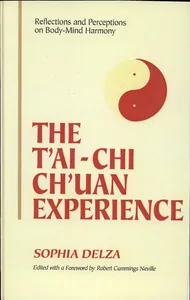
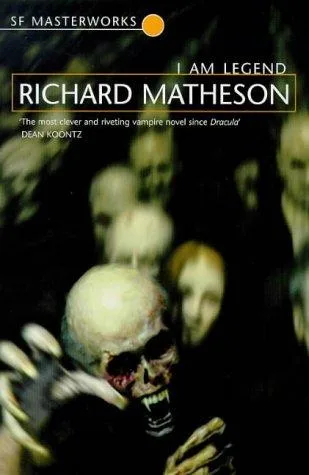
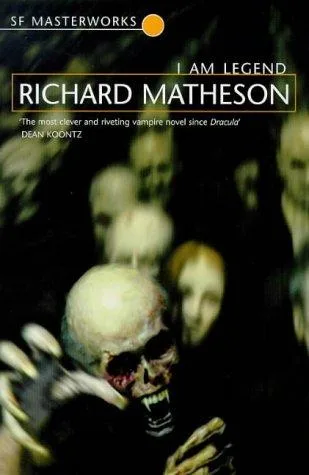
I am Legend
 79
79

I am Legend
Richard Matheson's *I Am Legend* is less a tale of supernatural horror and more a chilling dissection of solitude and the redefinition of humanity. Robert Neville’s existence, a solitary bastion against a world overrun by infected beings, is rendered with a raw, unflinching gaze. Matheson excels at portraying the psychological erosion that comes with absolute isolation; Neville's meticulous routines and desperate attempts at normalcy are a poignant, almost desperate, ritual against encroaching madness. The novel’s strength lies in its scientific reimagining of the vampire, grounding the terror in biological possibility rather than arcane curses. However, the narrative's pacing occasionally falters in its middle sections, with Neville’s internal monologues sometimes becoming repetitive. A particularly striking passage details his meticulous preparations for the nightly siege, a mundane yet terrifying testament to his will to survive. This work is a potent, albeit bleak, exploration of what it means to be the last of one's kind.
📝 Description
79
Richard Matheson's 1954 novel reimagines the vampire as a product of scientific contagion.
Robert Neville believes he is the last uninfected human in Los Angeles following a pandemic that turns victims into nocturnal, vampiric beings. The novel follows his daily struggle against these creatures, his profound isolation, and his search for a cure. Matheson moves away from supernatural explanations for vampirism, instead presenting the infected as results of a biological agent. This grounding in a plausible, if grim, scientific reality shapes the horror. The narrative focuses on Neville's psychological fortitude as he confronts his solitude and the constant threat of the infected, examining his own memories and grip on sanity.
Published in 1954, *I Am Legend* reflects post-war anxieties about scientific collapse and contagion, aligning with a trend in science fiction to explore the unknown through a rational, scientific lens. Matheson secularizes the vampire, shifting from gothic tradition to a biologically based horror. This approach grounds the supernatural threat in a recognizable, modern fear, making the narrative a commentary on societal vulnerability and the potential for humanity's own creations to bring about its downfall. The novel’s focus on a solitary individual’s fight against a widespread biological threat resonated with contemporary concerns about atomic warfare and pandemics.
💡 Why Read This Book?
• Learn how Richard Matheson deconstructs the classic vampire myth by presenting them as products of a scientifically plausible pandemic, offering a distinct departure from supernatural lore. • Experience the profound psychological impact of absolute isolation through Robert Neville's perspective, understanding the human mind's resilience and fragility when utterly alone. • Contemplate the evolving definition of 'humanity' and 'monster' as presented in the novel's climax, challenging traditional notions of good and evil in a post-apocalyptic landscape.
⭐ Reader Reviews
Honest opinions from readers who have explored this book.
❓ Frequently Asked Questions
What year was Richard Matheson's I Am Legend first published?
Richard Matheson's seminal novel, *I Am Legend*, was first published in 1954, marking a significant contribution to post-war science fiction and horror literature.
How does I Am Legend differ from traditional vampire stories?
Unlike traditional vampire tales rooted in the supernatural, *I Am Legend* posits that the creatures are the result of a scientific, albeit devastating, pandemic, grounding the horror in biological rather than mystical explanations.
What is the central theme explored in I Am Legend?
The central themes include extreme isolation, the psychological effects of solitude, the redefinition of what constitutes humanity, and the primal will to survive against overwhelming odds.
Is Robert Neville truly the last man on Earth in I Am Legend?
Robert Neville believes himself to be the last uninfected human for most of the novel. However, the ending reveals a complex shift in perspective regarding his status and the nature of the new society.
Which city serves as the primary setting for I Am Legend?
The primary setting for Richard Matheson's *I Am Legend* is Los Angeles, California, depicted in a state of post-pandemic desolation and overrun by the infected.
What kind of creatures are the antagonists in I Am Legend?
The antagonists are humans transformed by a pandemic into vampiric, nocturnal beings. They are driven by instinct and a thirst for blood, posing a constant threat to the uninfected.
🔮 Key Themes & Symbolism
The Solitary Survivor
The narrative profoundly explores the psychological ramifications of being the sole uninfected human in a world overrun by a vampiric plague. Robert Neville's existence is a meticulous, desperate battle against crushing loneliness and the erosion of his sanity. His daily rituals—fortifying his home, hunting the infected, searching for a cure—become a bulwark against despair. This theme examines the fundamental human need for connection and the immense strength required to maintain identity when utterly isolated, questioning the very essence of life when stripped of all social context.
Redefining the Monster
Matheson fundamentally alters the vampire archetype by presenting the creatures not as supernatural entities, but as products of a scientifically explicable disease. This approach shifts the narrative from gothic horror to a more grounded, biological terror. The infected possess a primitive, instinctual existence, driven by a thirst for blood and a hatred for the remaining human. This redefinition forces readers to confront the blurred lines between humanity and monstrosity, challenging the reader to consider what truly defines a 'human' and who are the 'monsters' in a collapsed society.
The Nature of Belief and Reality
The novel critically examines how belief systems and perceptions of reality are constructed, particularly when faced with existential threats. Neville's scientific mindset clashes with the apparent irrationality of his situation, yet he clings to empirical evidence and logical deduction. As the story progresses, particularly in its final chapters, the reader is compelled to question Neville's own perspective and the 'legend' he has become. The work suggests that reality is often a matter of perspective, shaped by the dominant societal narrative, be it human or otherwise.
Legacy and Humanity's End
The title itself, *I Am Legend*, points to the theme of legacy and the potential end of humanity as we know it. Neville's struggle is not just for personal survival but for the preservation of his species and its legacy. However, the novel subverts this by suggesting that his 'legend' might be that of a monster to the new inhabitants of Earth. This exploration prompts reflection on what it means to be the last of a kind and how history is written by the victors, or in this case, the survivors who inherit the Earth.
💬 Memorable Quotes
Direct passages from the work, attributed to the author.
“They were dead, all of them, dead, and he was the only living man in the world.”
— This stark declaration captures Robert Neville's profound isolation and the overwhelming sense of being the sole survivor. It highlights the existential terror of his situation and the psychological burden of being the last bastion of humanity.
“He was the new god of the world, and they were his people.”
— This interpretation, reflecting a shift in perception, challenges the reader to reconsider who the 'monster' truly is. It suggests that from the perspective of the new dominant species, Neville himself might be the anathema.
“The world was dead, and he was the only living thing in it.”
— This sentiment underscores the pervasive theme of loneliness and the near-total extinction of humanity. It emphasizes Neville's singular existence against a backdrop of desolation and the absence of any familiar life.
“He was a god to them. He was the lord of the world.”
— This interpretation captures the ironic twist where the last human, fighting for survival, becomes a figure of immense power and fear to the transformed beings who now populate the Earth.
💡 Key Ideas
Editorial paraphrase of the work's core concepts — not direct quotes.
He was a legend. He was a myth. He was a nightmare.
This quote, or its conceptual equivalent, speaks to the redefinition of identity in a post-apocalyptic world. Neville's significance shifts from survivor to a figure of fear and legend for the new inhabitants, blurring the lines of heroism and villainy.
🌙 Esoteric Significance
Tradition
While not directly adhering to a specific esoteric lineage, *I Am Legend* can be viewed through a lens of Gnostic or existentialist thought. The protagonist, Robert Neville, experiences a profound sense of alienation from a world that has fundamentally changed, mirroring the Gnostic idea of the soul being trapped in a material world that is not its true home. His struggle against the 'archons' (the infected) can be interpreted as a fight for individual consciousness and survival against forces that seek to extinguish it, a common theme in many mystical traditions that emphasize the inner battle for enlightenment or salvation.
Symbolism
The primary symbol is the solitary house, representing not just a physical refuge but a fortress of the ego and the last bastion of human reason against the encroaching chaos. The sun becomes a potent symbol of life and protection, as the infected are creatures of the night, forcing a cyclical struggle between light and darkness. The act of drinking blood, central to the vampire mythos, can be seen as a perversion of life-force consumption, representing the parasitic nature of the new order that feeds on the remnants of the old.
Modern Relevance
In contemporary discourse, *I Am Legend* remains highly relevant to discussions of pandemic preparedness, societal collapse, and the psychological impact of isolation, amplified by recent global events. Its exploration of the 'last man' trope continues to inspire post-apocalyptic fiction and survivalist narratives. Furthermore, the novel's questioning of what constitutes 'normalcy' and 'humanity' appeals to ongoing debates in transhumanism and bioethics, considering how scientific advancement might alter our understanding of life and identity.
👥 Who Should Read This Book
• Aspiring writers of speculative fiction seeking to understand how to deconstruct classic genre tropes and imbue them with psychological depth. • Students of 20th-century literature interested in how post-war anxieties about science, society, and survival shaped narrative. • Readers of existentialist philosophy who appreciate explorations of solitude, meaning, and the human condition under extreme pressure.
📜 Historical Context
Published in 1954, *I Am Legend* arrived at a cultural moment defined by the pervasive dread of the Cold War and the potential for global annihilation through nuclear conflict or biological warfare. Richard Matheson’s novel tapped into these anxieties by presenting a plausible, scientifically-grounded apocalypse. Unlike the supernatural horror prevalent in earlier vampire fiction, Matheson's infected are victims of a pandemic, aligning the narrative with the era's scientific optimism and fears. This secularization of the vampire myth was a departure from works like Bram Stoker's 1897 *Dracula*, offering a more immediate, existential terror. The book's stark realism and exploration of human psychology under extreme duress distinguished it from much contemporary science fiction and horror, influencing a generation of writers. Its themes of isolation and the potential collapse of civilization found resonance in a society grappling with unprecedented technological power and global instability.
📔 Journal Prompts
Robert Neville's meticulous routines as a defense against madness.
The transformation of the infected into a new societal norm.
The symbolic significance of sunlight in the narrative.
Neville's internal conflict between scientific reason and primal fear.
The concept of being the 'last man' and its existential weight.
🗂️ Glossary
Infected
Humans transformed by a pandemic into nocturnal, vampiric beings. They exhibit heightened senses, a thirst for blood, and a collective, instinctual animosity towards uninfected humans.
Pandemic
In the context of the novel, a disease that sweeps across the globe, causing widespread death and transforming the survivors into the 'infected', rather than being a supernatural curse.
Solitude
The state of being utterly alone, as experienced by Robert Neville. The novel extensively explores the psychological toll and potential for madness that extreme solitude can inflict.
Last Man
A common trope in post-apocalyptic fiction, referring to the sole survivor of a catastrophic event. In *I Am Legend*, Robert Neville embodies this trope, struggling to survive and maintain his humanity.
Vampire
In Matheson's work, the traditional vampire figure is re-envisioned as a biological entity created by a virus, losing its supernatural elements and gaining a scientific basis for its existence and behaviors.
Siege
The nightly defense Robert Neville mounts against the infected who gather outside his fortified home, seeking to enter and attack him. This represents the constant, pervasive threat he faces.
Legend
The title's central concept, referring to how Robert Neville is perceived by the new dominant species; he becomes a figure of myth and fear, rather than a hero of humanity.
🔮 Readers Also Liked
Browse all →







More by Richard Matheson
All books →




More Free Occult Philosophy Books
View all →