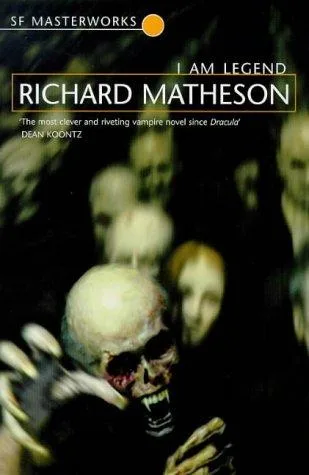
I am Legend and Other Stories

 79
79

I am Legend and Other Stories
Matheson's collection, 'I am Legend and Other Stories,' remains a potent exploration of existential dread, anchored by the iconic novella. The strength lies in Matheson's unflinching gaze into the abyss of isolation and the human psyche pushed to its limits. His prose, economical and sharp, renders the terror of Robert Neville's solitary struggle with visceral clarity. However, the anthology's unevenness is a notable limitation; while the titular story is a masterclass, some of the shorter pieces, though competent, do not quite reach the same conceptual or emotional heights. The concept of Neville’s desperate attempts to maintain scientific rationality in the face of an inexplicable plague, only to confront the possibility that he has become the monster in a transformed world, is particularly arresting. It’s a collection that, despite minor fluctuations, powerfully interrogates the very definition of humanity when stripped bare.
📝 Description
79
### What It Is
Richard Matheson's 'I am Legend and Other Stories' is a collection that probes the boundaries of human experience under extreme pressure. While the titular novella, 'I Am Legend,' is a foundational text in post-apocalyptic and vampiric horror, the anthology encompasses a broader range of Matheson's unsettling speculative fiction. These narratives often strip away societal veneers to reveal primal fears and existential quandaries, exploring isolation, transformation, and the definition of humanity itself. The collection showcases Matheson's skill in crafting taut, psychologically intense scenarios that linger long after reading.
### Who It's For
This collection is for readers who appreciate speculative fiction that prioritizes psychological depth and existential dread over gratuitous gore. Fans of classic horror and science fiction, particularly those interested in the evolution of the vampire mythos or the exploration of solitary protagonists facing overwhelming odds, will find much to engage with. It appeals to those who seek stories that question societal norms and individual identity, offering a stark, often bleak, but always compelling vision of what it means to survive.
### Historical Context
Published initially in 2006, 'I am Legend and Other Stories' gathers works that reflect Matheson's prolific output across several decades of speculative fiction. The novella 'I Am Legend' itself, first published in 1954, emerged during a period of intense Cold War anxiety and burgeoning interest in scientific explanations for the inexplicable. Matheson's work in this vein diverged from more supernatural interpretations of vampirism, offering a biological and scientific rationale that influenced later works. His contemporaries, such as Robert Heinlein with 'Starship Troopers' (1959) and Philip K. Dick with 'The Man in the High Castle' (1962), were also grappling with societal collapse and altered realities, though Matheson's focus remained intensely personal and claustrophobic.
### Key Concepts
The stories frequently engage with the concept of the 'last man,' a trope explored in depth in 'I Am Legend,' where Robert Neville is the sole apparent human survivor of a plague that transforms the rest of the world's population into vampiric creatures. This scenario serves as a crucible for examining human resilience, the descent into madness, and the redefinition of normalcy. Other stories touch upon themes of artificial intelligence, the nature of consciousness, and the uncanny valley, where manufactured beings blur the lines of sentience. Matheson consistently uses isolated protagonists to dissect societal constructs and individual identity, often revealing the fragility of both.
💡 Why Read This Book?
• Understand the foundational science-fiction horror of 'I Am Legend,' appreciating how Richard Matheson reimagined the vampire mythos in 1954 by grounding it in a biological apocalypse. • Experience the psychological intensity of extreme isolation, as depicted through Robert Neville's descent and struggle for survival in a world overrun by transformed beings. • Examine Matheson's exploration of humanity's darker aspects and the uncanny, particularly in how he blurs the lines between victim and monster in his narratives.
⭐ Reader Reviews
Honest opinions from readers who have explored this book.
❓ Frequently Asked Questions
What is the primary theme of the novella 'I Am Legend'?
The primary theme is the existential struggle of the last human, Robert Neville, against a world transformed by a plague into vampiric creatures. It explores isolation, sanity, and the redefinition of 'humanity' and 'monster'.
When was Richard Matheson's 'I Am Legend' novella first published?
The novella 'I Am Legend' was first published in 1954, a significant year for science fiction that saw other influential works emerge.
How does Matheson's 'I Am Legend' differ from traditional vampire lore?
Matheson offers a scientific, biological explanation for the vampiric condition, presenting it as a disease rather than a supernatural curse, which was a departure from much of the gothic horror tradition.
Are there other notable stories included in 'I am Legend and Other Stories' besides the novella?
Yes, the collection typically includes several other short stories by Matheson, showcasing his range in speculative and horror fiction, often touching on themes of psychological dread and the uncanny.
What is the significance of Robert Neville's character arc?
Neville's arc is crucial as he grapples with becoming the 'monster' in the eyes of the new dominant species, forcing a re-evaluation of who the true protagonist and antagonist are.
What is the publication year for the collection 'I am Legend and Other Stories'?
The collection 'I am Legend and Other Stories' was first published in 2006, compiling works that span Matheson's career.
🔮 Key Themes & Symbolism
The Last Human
The concept of the solitary survivor, epitomized by Robert Neville in 'I Am Legend,' forms a central pillar. This theme probes the psychological toll of absolute isolation, forcing the protagonist to confront not only external threats but also the erosion of sanity and identity. Matheson uses this extreme scenario to dissect the fundamental need for connection and the definition of what it means to be human when all societal structures have collapsed. The fear of becoming the 'monster' in a world that no longer recognizes your species adds a profound layer of existential dread.
Redefining the Monster
Matheson radically reinterprets the vampire mythos, presenting the creatures not as supernatural beings but as victims of a biological contagion. This scientific approach shifts the narrative focus, making the 'monsters' pitiable and the protagonist, Neville, potentially monstrous from their perspective. This theme challenges readers to question established archetypes and consider the relativity of perceived monstrosity. The collection explores how fear and survival can warp perceptions, blurring the lines between the 'us' and 'them'.
The Fragility of Society
Through narratives of societal breakdown and individual survival, Matheson underscores the precariousness of civilization. When the plague sweeps through, the established order vanishes, leaving individuals to contend with primal instincts and the remnants of a collapsed world. This theme examines how quickly social norms dissolve under pressure and what fundamental aspects of humanity persist or perish. The isolated settings and desperate circumstances highlight the artificiality of much of our daily social constructs.
Confronting the Uncanny
Several stories study the unsettling nature of the uncanny, exploring artificial intelligence, doppelgängers, or beings that mimic humanity yet are fundamentally alien. This theme plays on our innate discomfort with the familiar made strange. Matheson excels at creating scenarios where the distinction between human and non-human, real and artificial, becomes dangerously blurred, forcing characters and readers alike to question the nature of consciousness and reality.
💬 Memorable Quotes
Direct passages from the work, attributed to the author.
“The world was a graveyard, and he was the last living man.”
— This stark sentence captures the profound isolation and existential horror faced by Robert Neville in 'I Am Legend,' setting the stage for his desperate struggle against overwhelming odds.
“Fear was a weapon, and he was its sole target.”
— This highlights the psychological warfare inherent in Neville's situation. He is not just fighting physical threats but the pervasive terror that threatens to consume his sanity as the last human.
“They were the new humanity, and he was the relic.”
— This interpretation reflects Neville's dawning realization that he is no longer the dominant species. He is an anomaly, a vestige of a past world, facing extinction by the transformed populace.
“Every shadow held a threat, every silence a waiting enemy.”
— This emphasizes the constant, gnawing paranoia and hyper-vigilance required for survival in Neville's world. The environment itself becomes a source of perpetual dread.
“He was the monster now, by their definition.”
— This captures the thematic pivot where Neville understands his position from the perspective of the transformed beings. His fight for survival makes him the antagonist in their evolving world.
🌙 Esoteric Significance
Tradition
While not overtly tied to a specific esoteric lineage like Hermeticism or Gnosticism, Matheson's work taps into a broader current of Western esotericism concerned with the dissolution of the self and the confrontation with primal forces. The 'last man' trope appeals to alchemical ideas of reduction and transformation, where the individual must be broken down to achieve a new state of being. It reflects Gnostic themes of a fallen world and the struggle for true knowledge (or survival) against pervasive ignorance or corruption, albeit through a secular, scientific lens.
Symbolism
The primary symbol is the **isolated protagonist** (Robert Neville), representing the last vestige of a dying order, forced into a crucible of self-discovery and transformation. The **vampiric creatures** symbolize societal decay, the loss of individuality, and the primal fears that emerge when civilization collapses. They represent the 'other' that forces the protagonist to confront his own humanity and potential monstrosity. The **plague** itself can be seen as a force of chaotic change, an agent of destruction that necessitates a radical redefinition of existence.
Modern Relevance
Matheson's exploration of pandemic, societal collapse, and the psychological impact of isolation remains acutely relevant. Contemporary thinkers and practitioners in existentialist philosophy and post-apocalyptic studies frequently cite 'I Am Legend' as a foundational text. Its influence is visible in modern zombie fiction and survival horror, where the focus remains on the human element amidst global catastrophe. The work continues to inform discussions on the nature of humanity when stripped of its social constructs.
👥 Who Should Read This Book
• Readers interested in the origins of modern post-apocalyptic fiction, particularly those seeking to understand the evolution of the vampire mythos beyond gothic conventions. • Students of existentialism and psychology who wish to explore literary depictions of extreme isolation, sanity, and the human psyche under duress. • Fans of speculative fiction that blends horror with philosophical inquiry, offering a bleak yet compelling examination of survival and the definition of humanity.
📜 Historical Context
Richard Matheson's 'I am Legend and Other Stories,' particularly the novella 'I Am Legend' (1954), emerged during a central era for science fiction. The post-World War II period and the escalating Cold War fostered a cultural climate ripe for narratives of societal collapse and existential threat. Matheson’s approach, offering a biological rather than supernatural explanation for vampirism, aligned with a growing scientific rationalism in speculative fiction, differentiating him from earlier gothic horror traditions. Contemporaries like Ray Bradbury were exploring similar themes of alienation and the future, while authors such as Robert Heinlein were crafting epic visions of space exploration and societal structures. Matheson’s work, however, often retained a claustrophobic, intensely personal focus. The novella was notably adapted into the film 'The Last Man on Earth' (1964), demonstrating its immediate impact and resonance within popular culture, even as it challenged traditional monster tropes.
📔 Journal Prompts
Robert Neville's meticulous scientific documentation as a bulwark against despair.
The symbolic weight of the final confrontation in 'I Am Legend.'
How the transformed beings represent a societal 'other.'
The concept of being the 'monster' from a different perspective.
The function of routine and ritual in maintaining sanity for the isolated protagonist.
🗂️ Glossary
Vampiric Contagion
Matheson's term for the scientifically-explained plague that transforms humans into vampiric creatures, differing from supernatural curses in traditional folklore.
Robert Neville
The protagonist of 'I Am Legend,' depicted as the last apparently human survivor in a world overrun by vampiric beings, struggling against isolation and madness.
Transformed Beings
The collective term for the infected population in 'I Am Legend,' who exhibit vampiric traits and represent the 'new humanity' that has replaced the old.
The Last Man Trope
A recurring theme in speculative fiction where a sole survivor faces a desolate world, exploring themes of isolation, survival, and the end of civilization.
Uncanny Valley
A concept, relevant to some of Matheson's other works, describing the unsettling feeling evoked by entities that appear almost, but not exactly, human.
Existential Dread
A profound sense of unease and anxiety stemming from the contemplation of human existence, freedom, and mortality, often explored in Matheson's narratives.
Societal Collapse
The disintegration of social structures, institutions, and order, a common backdrop in Matheson's stories that examines human behavior under extreme duress.
🔮 Readers Also Liked
Browse all →








More by Richard Matheson
All books →




More Free Occult Philosophy Books
View all →