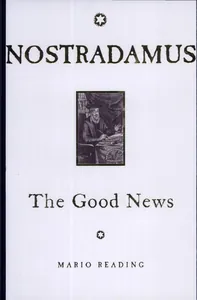
Het Nostradamuscomplot

 75
75

Het Nostradamuscomplot
Mario Reading's *Het Nostradamuscomplot* offers a refreshing, critical lens on the persistent mythos surrounding Nostradamus. Rather than simply recounting alleged predictions, Reading meticulously dissects *how* these quatrains are interpreted, particularly their application to 20th-century events. The strength lies in its analytical rigor, showing how expectation can shape perception. One limitation is the inherent challenge of definitively proving or disproving speculative interpretations, leaving the reader to grapple with the author's conclusions. The detailed examination of how specific quatrains were retroactively applied to events like the rise of Hitler provides a strong example of this analytical approach. Reading’s work is a sober examination of a phenomenon often shrouded in uncritical belief.
📝 Description
75
Mario Reading's 2010 book investigates how Nostradamus's prophecies have been interpreted throughout history.
Published in 2010, Mario Reading's Het Nostradamuscomplot looks at the ways Michel de Nostredame's prophecies have been understood and applied. The book goes beyond simply listing predictions. Instead, it analyzes how these cryptic verses have been connected to real historical events, especially those of the 20th century. It also examines the persistent human desire to find meaning in prophecy and predict the future.
Reading's work is for anyone interested in the history of prophecy, the cultural effect of Nostradamus, and the psychology behind belief in predictions. It will particularly engage those who consider how foresight is understood and how texts might be interpreted to fit events after they happen. Students of esotericism, comparative religion, and cultural history will find its analytical method useful.
Nostradamus published his *Centuries* in 1555 amidst significant European upheaval. His intentionally obscure prophecies have been a focal point for centuries, with individuals and groups linking his quatrains to historical occurrences. This practice saw renewed attention in the early 20th century through esoteric circles and modern historical study. Reading's book examines this tradition of interpreting prophetic texts, a practice central to many esoteric belief systems that seek hidden meanings and future insights within ancient writings.
💡 Why Read This Book?
• Understand the mechanics of retrospective prophecy by analyzing how specific quatrains from Nostradamus's *Centuries* (1555) have been mapped onto 20th-century events, revealing the interpretive process. • Gain insight into the phenomenon of 'Nostradamus fever,' exploring why certain prophecies capture public imagination during periods of uncertainty. • Critically evaluate the nature of predictive texts and the psychology of belief by examining how interpretations are formed and perpetuated.
⭐ Reader Reviews
Honest opinions from readers who have explored this book.
❓ Frequently Asked Questions
What is the primary focus of Het Nostradamuscomplot?
The book primarily focuses on the historical interpretation of Nostradamus's prophecies, particularly how they have been applied to events of the 20th century and the reasons for the enduring public fascination.
When was Het Nostradamuscomplot first published?
Het Nostradamuscomplot was first published in 2010, offering a contemporary analysis of a long-standing phenomenon.
Does the book present new prophecies by Nostradamus?
No, the book does not present new prophecies. Instead, it critically examines existing quatrains and their subsequent interpretations throughout history.
Who is Mario Reading?
Mario Reading is the author of Het Nostradamuscomplot, a work that critically analyzes the legacy and interpretation of Nostradamus's prophecies.
What historical period does the book primarily analyze regarding Nostradamus's prophecies?
While acknowledging the historical context of Nostradamus's original writings from 1555, the book heavily analyzes the application of these prophecies to events of the 20th century.
Is this book a biography of Nostradamus?
No, it is not a biography. The book focuses on the impact and interpretation of Nostradamus's prophecies rather than his life story.
🔮 Key Themes & Symbolism
The Mechanics of Interpretation
Reading dissects the methods employed to link Michel de Nostredame's quatrains, originally published in 1555, to subsequent historical events. This theme explores how vague verses are retroactively fitted to specific occurrences, such as political upheavals or wars, demonstrating a pattern of expectation shaping perception. The work investigates the cognitive biases and cultural narratives that facilitate these interpretations, highlighting the subjective nature of deciphering prophetic texts and the power of suggestion in creating meaning where none may have been intended.
Cultural Obsession with Prophecy
The book examines the persistent cultural phenomenon known as 'Nostradamus fever,' a recurring public fascination with the seer's predictions. This theme delves into why, especially during times of global uncertainty or crisis, people turn to prophetic texts for answers or reassurance. Reading analyzes how media and popular culture have amplified this interest, creating a self-perpetuating cycle of prediction and interpretation that transcends historical periods and geographical boundaries.
Nostradamus and the 20th Century
A significant focus is placed on how Nostradamus's prophecies have been applied to, and interpreted in light of, major 20th-century events. This includes analyses of predictions attributed to figures like Hitler or events such as World War II. The work scrutinizes the validity and motivations behind these retrospective connections, questioning whether the quatrains genuinely foretold these events or if they were ingeniously manipulated to fit them after the fact.
The Nature of Foresight
Reading's work implicitly questions the very concept of verifiable foresight. By deconstructing the interpretative process, the book encourages readers to consider whether true prediction is possible or if what we perceive as prophecy is merely a sophisticated form of pattern recognition, psychological projection, and historical narrative construction. It prompts a deeper consideration of how humanity seeks order and meaning in the face of the unknown.
💬 Memorable Quotes
“The 'Nostradamus fever' often surges during times of perceived global crisis.”
— This highlights the psychological connection between uncertainty and the search for prophetic guidance. It suggests that societal anxiety fuels the demand for interpretations of Nostradamus's cryptic verses.
“Quatrains are often forced to fit events that have already occurred.”
— This points to the core of retrospective prophecy, where interpretations are shaped by knowledge of the outcome, rather than predictive accuracy. It questions the genuine foresight of the predictions.
“The interpretation of Nostradamus's verses is a historical and cultural act.”
— This emphasizes that understanding the prophecies involves not just deciphering the text, but also understanding the context, beliefs, and historical moments of those who interpret them.
“The 20th century became a fertile ground for applying Nostradamus's predictions.”
— This signifies the period when grand historical narratives and the desire to find hidden meanings in past events converged, making the 20th century a prime target for prophetic mapping.
“Vague language allows for multiple, often contradictory, readings.”
— This observation underscores the inherent ambiguity of Nostradamus's quatrains, explaining why they can be 'fit' to so many different events and perspectives over time.
🌙 Esoteric Significance
Tradition
While Nostradamus himself operated outside formal esoteric lineages of his time, his work has been heavily adopted and interpreted by various occult traditions, including Hermeticism and Theosophy. *Het Nostradamuscomplot* engages with this legacy by analyzing how these groups have historically sought to align his prophecies with their own cosmological or prophetic frameworks. Reading's critical stance, however, departs from uncritical acceptance, positioning the work as a meta-analysis of how such traditions engage with predictive texts.
Symbolism
Key symbolic elements often debated in Nostradamus's work include celestial bodies (sun, moon, stars) representing major shifts or individuals, and animal imagery (lions, eagles) often signifying powerful leaders or nations. The concept of 'fire from the sky' is frequently interpreted as a sign of war or divine judgment. Reading's work examines how these symbols, through centuries of interpretation, become fluid signifiers for a vast array of historical events, their meaning shifting based on the interpreter's agenda and historical context.
Modern Relevance
Contemporary thinkers in fields ranging from cultural studies to fringe historical analysis continue to engage with Nostradamus's legacy. The book's critical examination of how prophecies are interpreted remains relevant to understanding persistent popular beliefs in foresight and destiny. Modern online communities dedicated to prophecy interpretation and alternative history frequently reference and debate the applications of Nostradamus's quatrains, demonstrating the enduring, albeit often speculative, interest in his predictive claims.
👥 Who Should Read This Book
• Students of Western esotericism and occult history seeking to understand the historical interpretation of prophetic texts. • Readers interested in the psychology of belief and how individuals and societies interpret ambiguous information, particularly during times of crisis. • Comparative history researchers examining how ancient texts are retroactively applied to modern events and the cultural impact of such interpretations.
📜 Historical Context
Michel de Nostredame published his *Centuries* in 1555, a period marked by the Reformation and widespread anxieties about the future in Europe. His cryptic quatrains, written in a mix of French, Greek, and Latin, were designed to predict events centuries in advance. Over time, these verses became a focal point for various esoteric and occult circles. The 20th century, with its cataclysmic wars and rapid technological advancement, became a particularly fertile ground for applying Nostradamus's prophecies. Figures like Charles de Gaulle famously claimed Nostradamus predicted his rise. In contrast to purely mystical interpretations, Mario Reading's 2010 work engages with a more analytical, historical approach, examining the methodology of prophecy interpretation itself, a practice that has seen varying academic and popular reception, often dismissed by mainstream historians but embraced by enthusiasts.
📔 Journal Prompts
The application of 20th-century events to Nostradamus's quatrains.
The recurring 'Nostradamus fever' and its societal triggers.
Nostradamus's symbolic language and its interpretive flexibility.
The distinction between foresight and retrospective interpretation.
The role of historical context in deciphering prophetic texts.
🗂️ Glossary
Quatrain
A verse or stanza consisting of four lines. Nostradamus famously published his prophecies in collections of quatrains, known as the Centuries.
Retrospective Prophecy
The practice of interpreting a text as predicting events only after those events have already occurred, often by fitting vague passages to known outcomes.
Nostradamus Fever
A term describing the recurring periods of intense public fascination and speculation surrounding Nostradamus's prophecies, particularly during times of societal upheaval.
Cryptohistory
The search for hidden historical narratives or secret knowledge within texts, often esoteric or prophetic in nature.
Esotericism
Belief systems and practices that focus on hidden knowledge or spiritual truths accessible only to a select few, often involving mystical or occult elements.
Hermeticism
A religious, philosophical, and esoteric tradition based primarily upon writings attributed to Hermes Trismegistus, emphasizing divine knowledge and cosmic interconnectedness.
Theosophy
A syncretic spiritual movement established in the late 19th century, seeking to understand the underlying unity of all religions and to explore the hidden spiritual laws of the universe.